Brockwell Park, September 2026
It’s been one hell of a summer.
Official hottest day of the year was 13th August, one of the Met’s weather stations recorded 38.2 degrees somewhere in Gloucestershire. My closest Weather Underground station - one of the personal ones people put in their gardens - recorded 41 degrees that day.
And that meant I wasn’t out as much as I’d like in August. Wandering around in 30+ degrees isn’t entirely pleasant at the best of times, doing it while lugging around several kilos of camera equipment even less so.
September, on the other hand, has been great. I’d been meaning to write this up for ages but I kept seeing more unusual stuff to put in it, so it’s ended up with one post for the month rather than a one for each walk.
It was still hot at the start of the month. The whole place felt blow-dried, less a green and pleasant land than a world made of yellow and dust, but that gives its own character for photographs. I found myself making more of a thing of the landscape - particularly when it came to crows.
Crows lend themselves to more abstract shots. Because they are, as a rule, dark and the world is, as a rule, bright, they become shape rather than detail. This lone bird strutting across the dried-out grass had a very western feel to it:
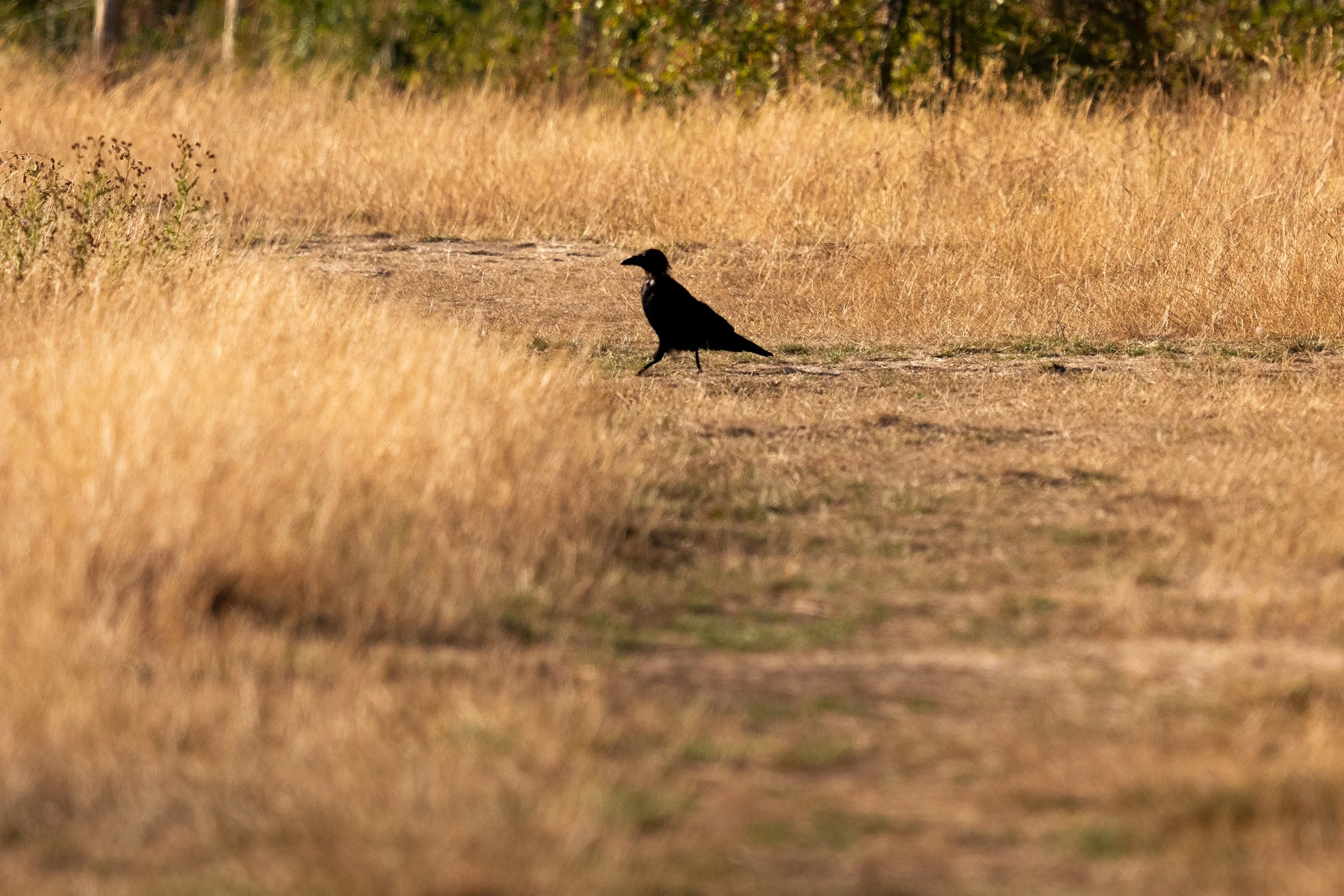
I think you people need a new sheriff.
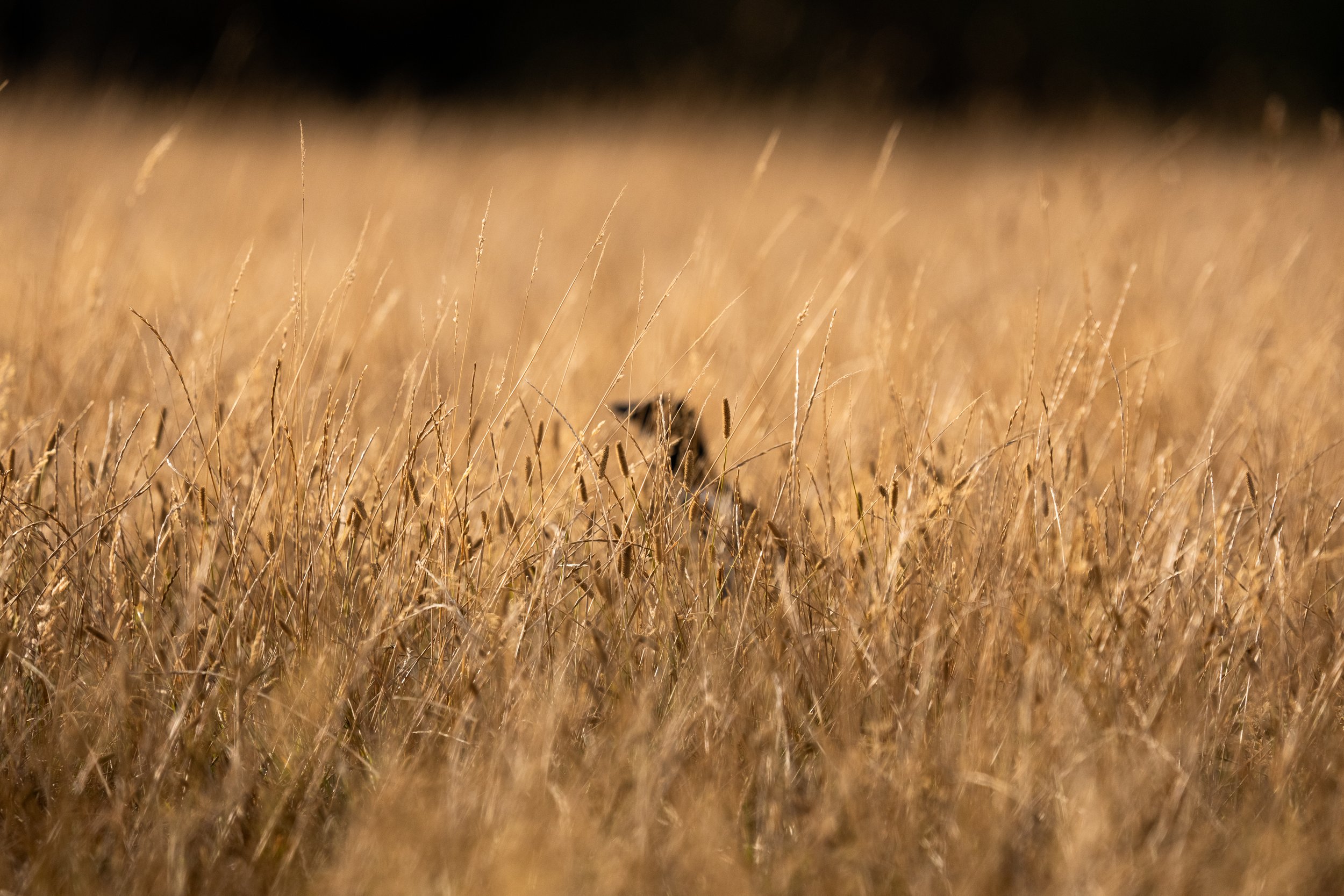
This one’s actually a Magpie, but the point stands.
And in this one I liked how the bird was just an ink-splatter on the sky, like some lost god flicked paint and then called it to life.
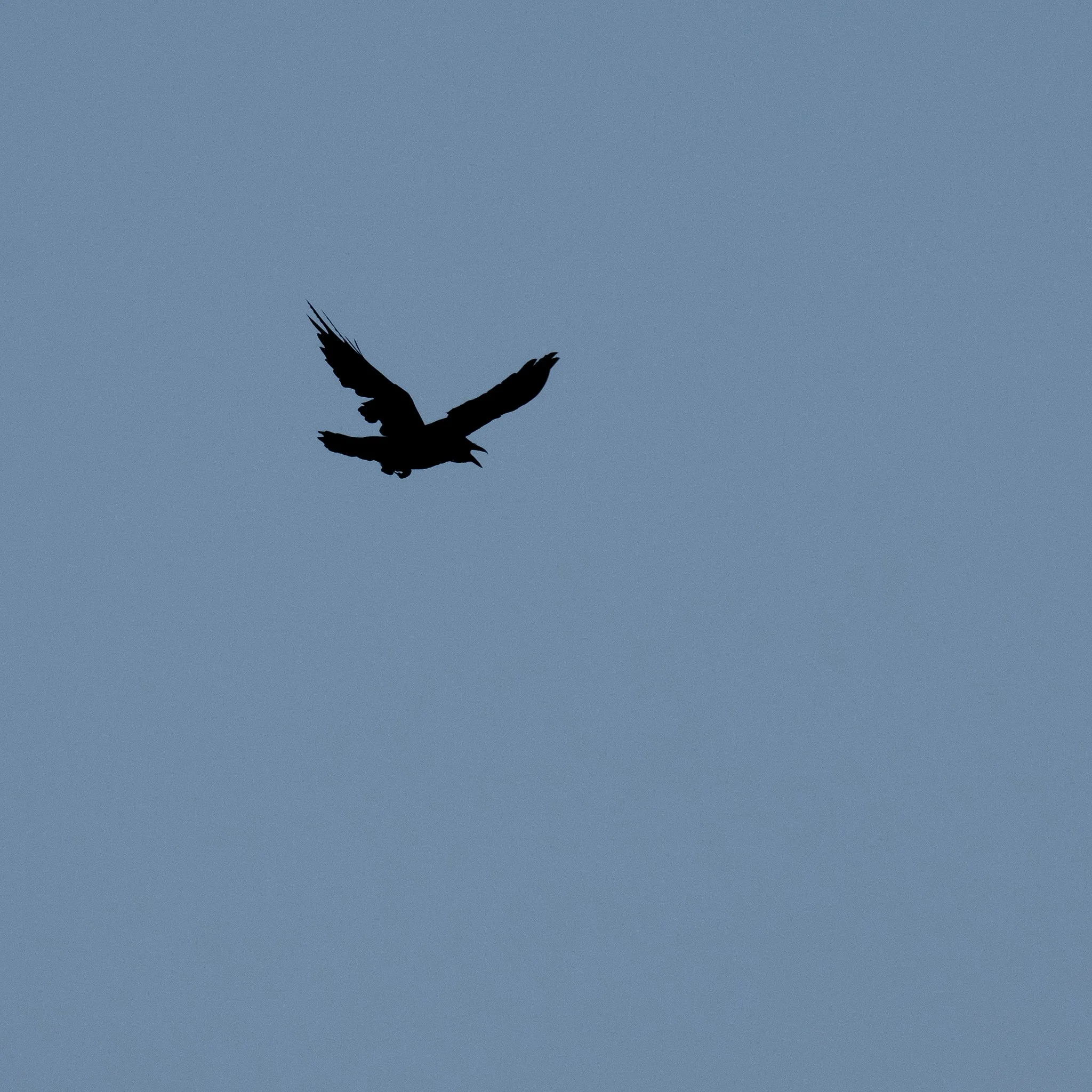
Inkblot Crow
There were also, of course, the ever-present tits in the trees. They’re always busy. They’re not hard to find but they don’t stay still, getting a good picture still feels like an achievement.
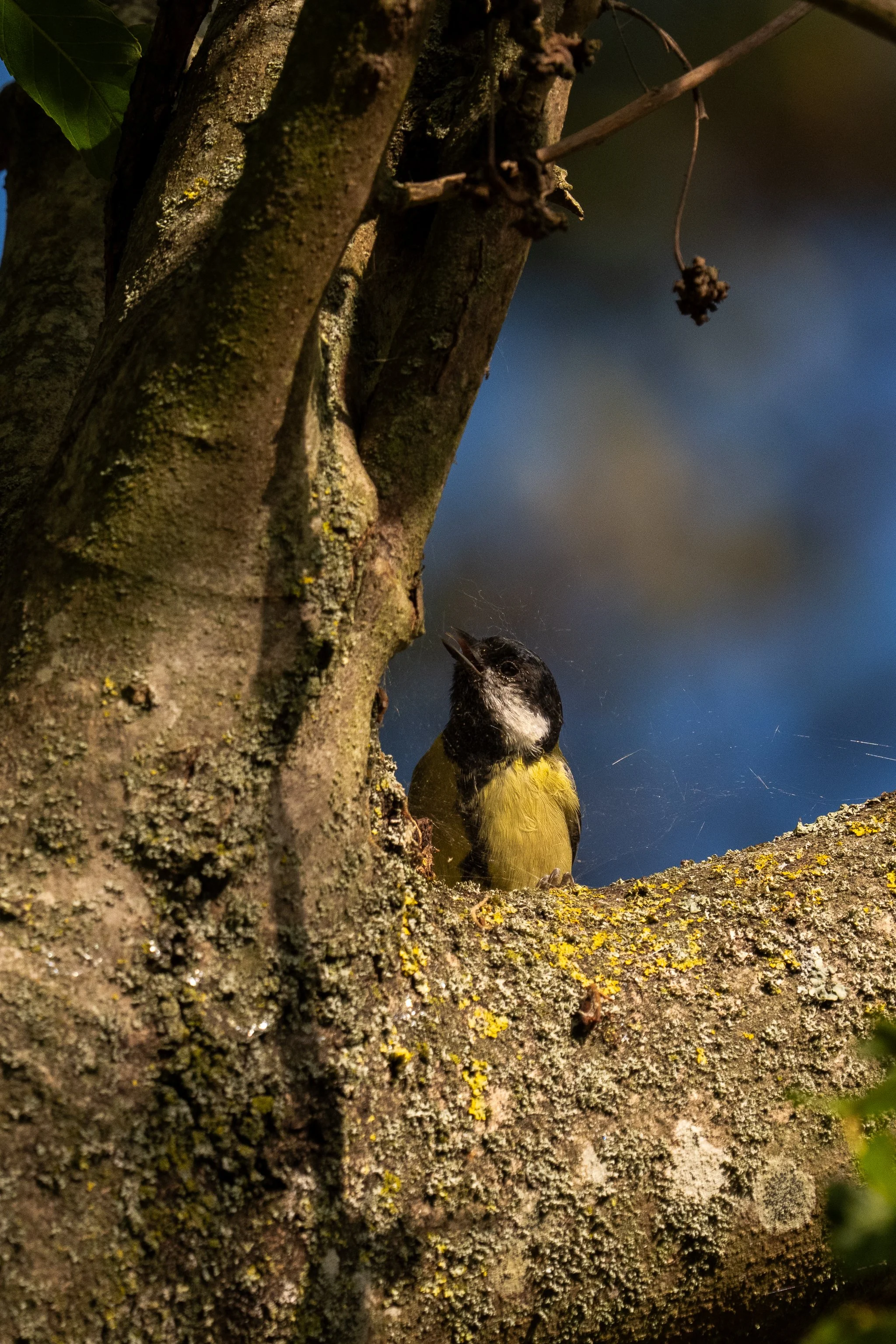
Great Tit munching on lichen
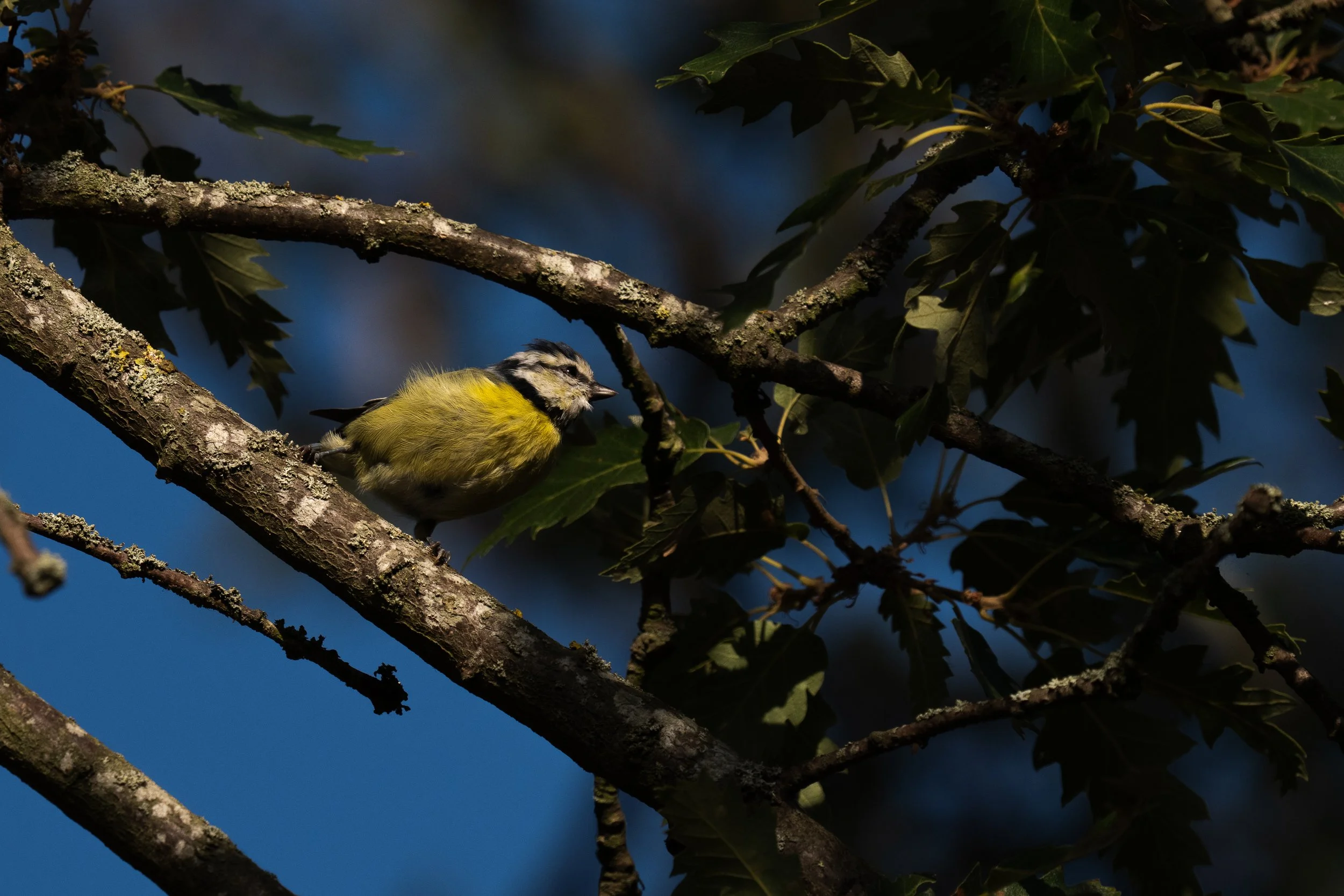
Blue tit, intent
And one thing a high summer is very good for is butterflies. I had a very entertaining hour in the walled garden, pointing at flowers with a lens broadly the same size as a dachshund to the amusement of several people nearby.
Joke’s on them, I was actually taking pictures of the butterflies, which is a far more sensible thing to be doing with a lens the size of a dachshund.
I found some Common Blues and what I think was a Small Copper - the markings look closest from all the pictures I’ve found online. Not the same, but close enough that maybe there’s some local variation.
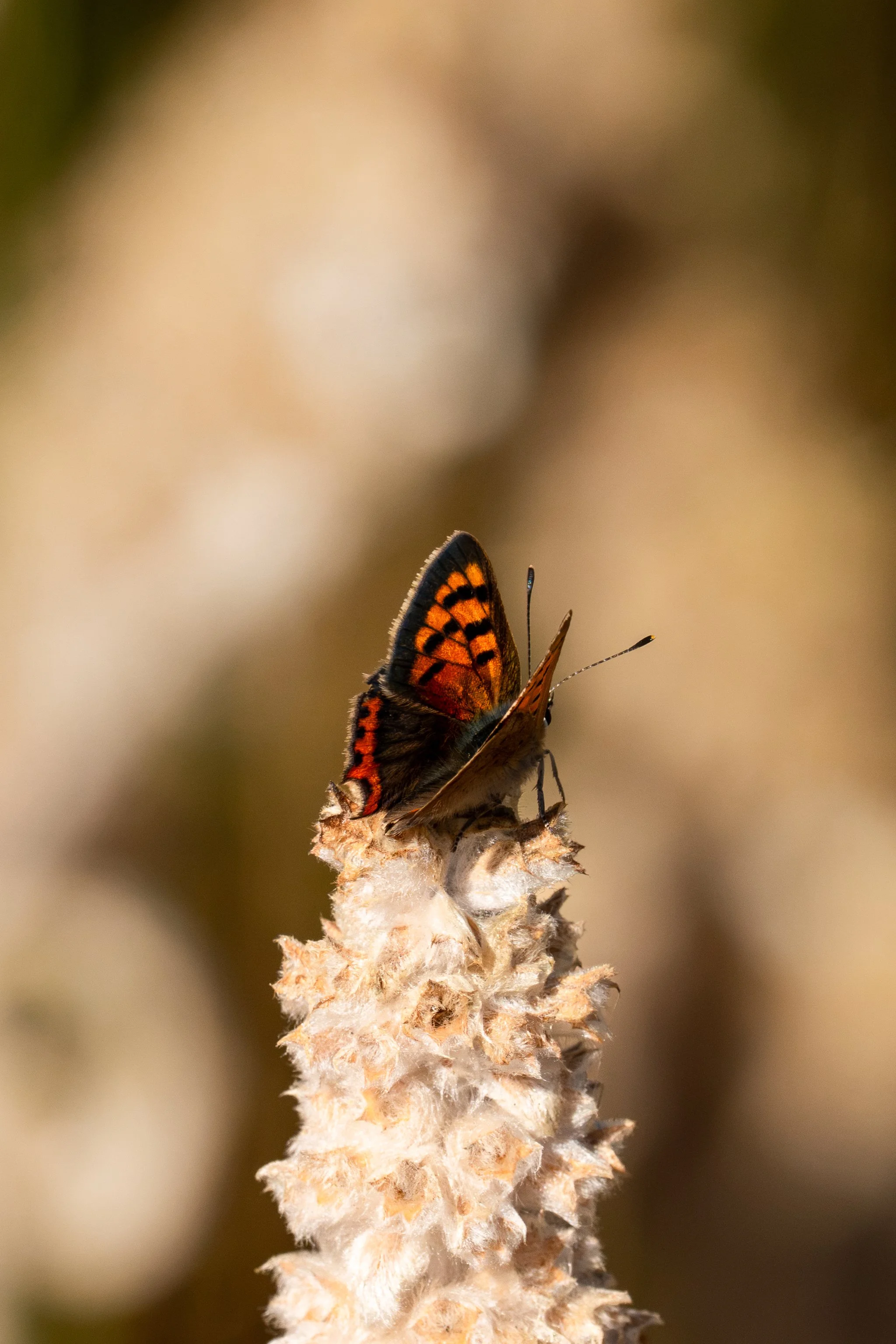
Small Copper. Probably.
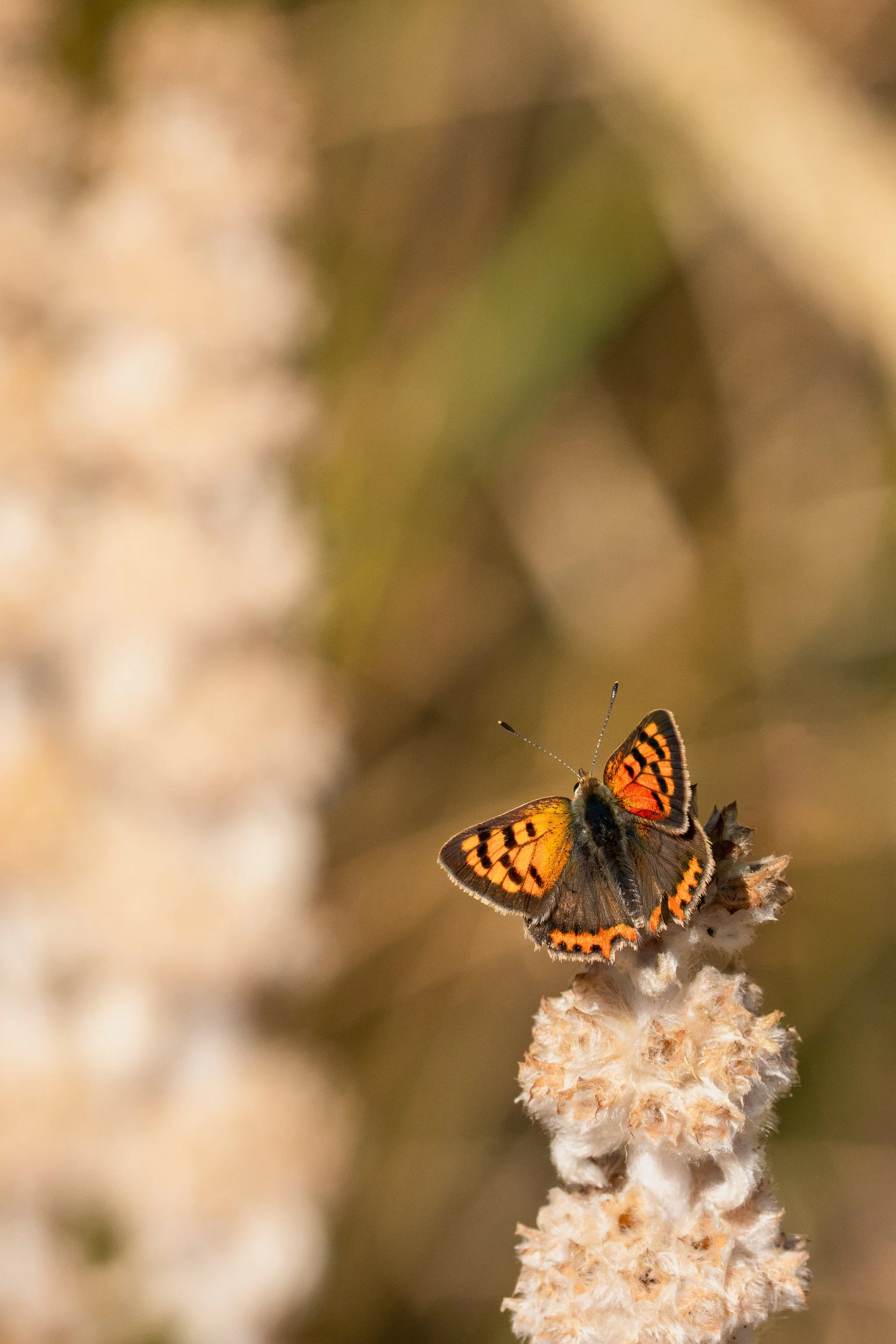
Small Copper. Potentially.
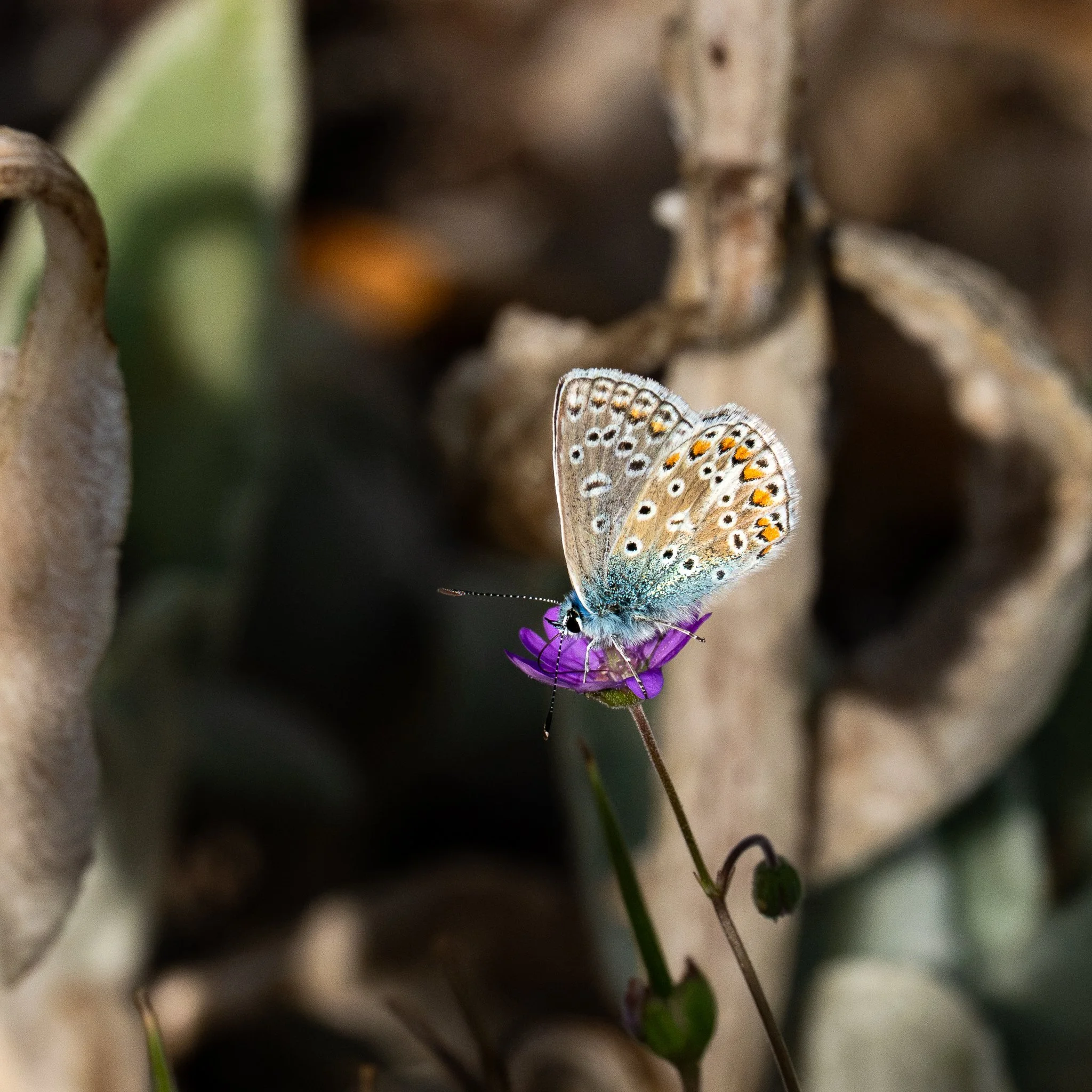
Common Blue. Far more confidently.
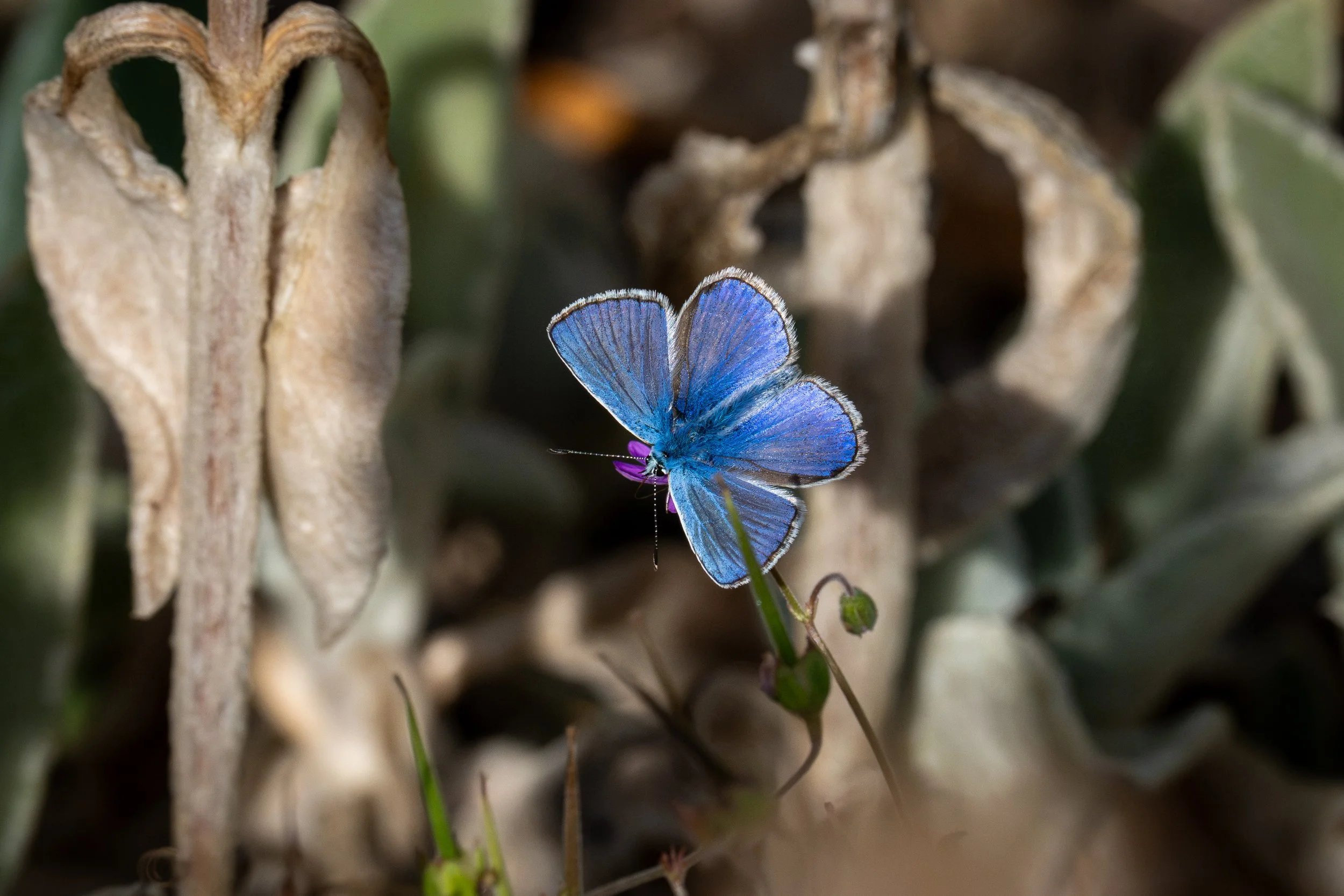
Common Blue. Almost certainly.
The ponds dried up more than I’d ever seen. They’ve started to refill now but it’s still low, the various rock banks that were placed underneath for bug habitat forming tiny islands.
This caused all sorts of issues for all sorts of things, but because nature is a system and there’s rarely such a thing as an entirely good or bad event, it also encouraged some birds that I’d not seen on the Brockwell ponds very often.
One of them was a pair Grey Wagtails - you can tell they’re Grey Wagtails due to how they’ve got yellow on them - which have been hanging around the newly-exposed shoreline. A large part of their diet are the bugs and molluscs found in the shoreline mud, so having more of it means the pond’s a more attractive spot.
They’re easy to get pictures of but hard to get good pictures of, since they’re small and tend to hang around at the far shore, but I managed to get this one when one came to the near side. The water is dehazed a bit to make the reflection pop. I tried making the net-o-rocks less bright so the bird stood out more, but struggled to do it in any way that looked natural. Still like the shot.
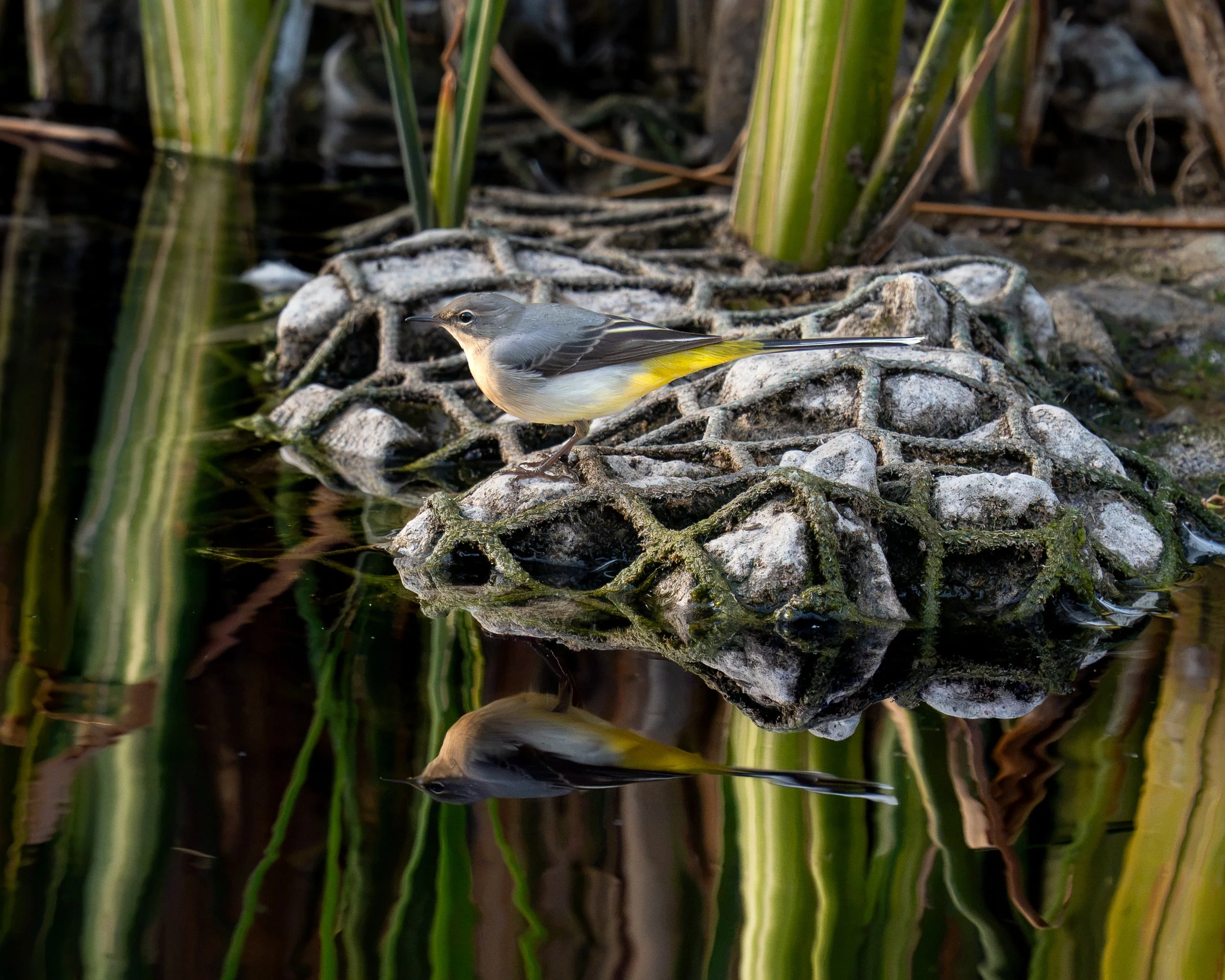
Grey Wagtail
Moorhens, of course, are always there. But I was particularly pleased with the shot of this one in the reeds. Something about the shadows and the lines draws your eye away from the bird itself, camouflaging itself in the picture much like it does in real life.
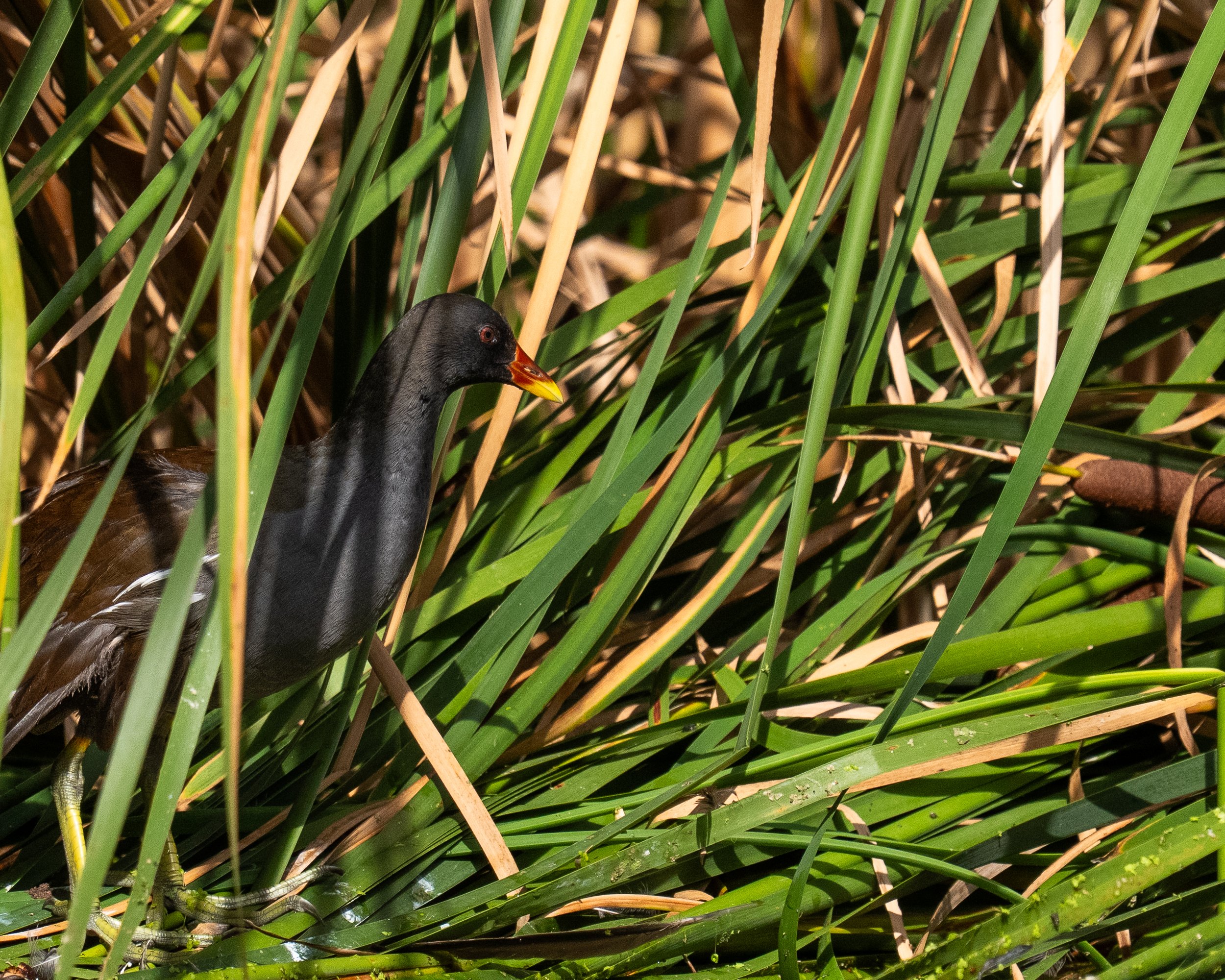
Moorhen, stealthy like ninja.
It finally cooled off as the month wore on, and a bit of green trickled back into the plants.
On a walk around the park one evening, when I hadn’t brought a camera, there was a Mandarin duck sat on the southern shore, something I’d not seen in Brockwell before. It was too dark by that point for it to be worth fetching the camera, but I did go back with it the next day to see if it was still there.
It was not, but in an attempt not to waste the trip I wandered to the overgrown patch that stretches behind the wild area and the cinders. Being a bit more off the beaten track it’s one of the best spots in the park for birds, and that day there was a Spotted Flycatcher which I spotted, flycatching.
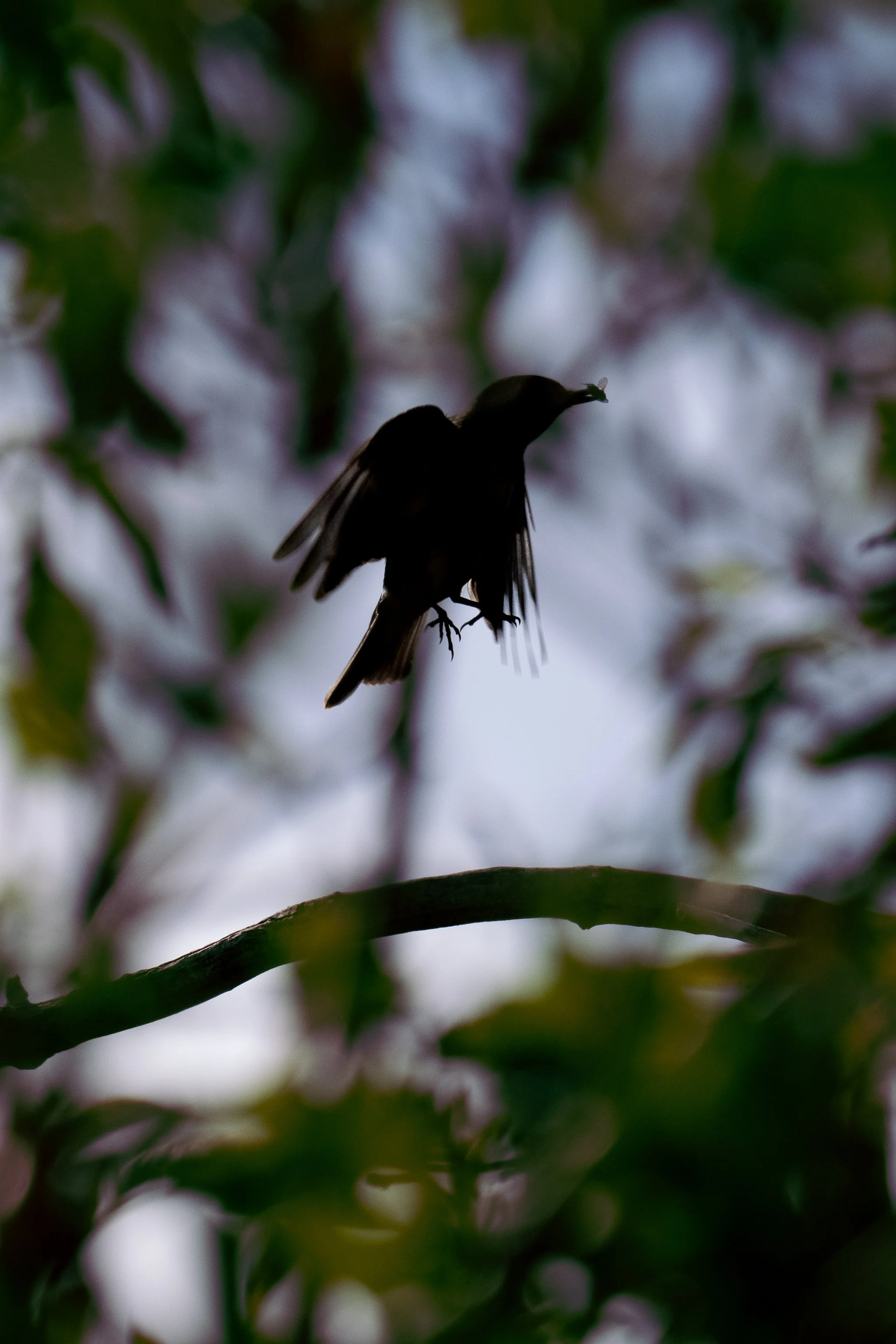
Spotted Flycatcher, flycatching
You can find these flycatchers everywhere but they’re not particularly common anywhere. I spent an absolute age just watching it flit off, land back on its branch, and flit off again.
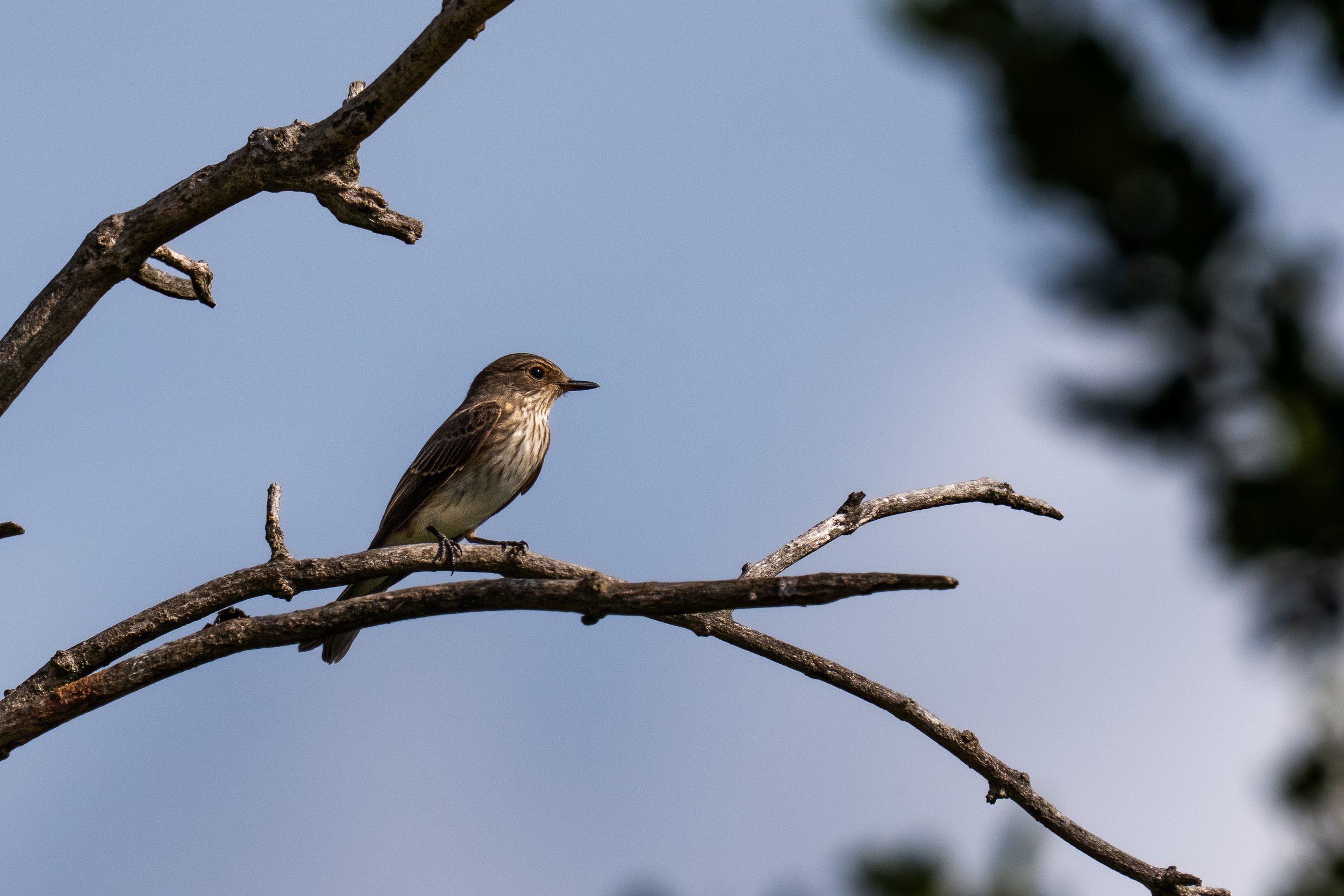
Spotted Flycatcher, perching
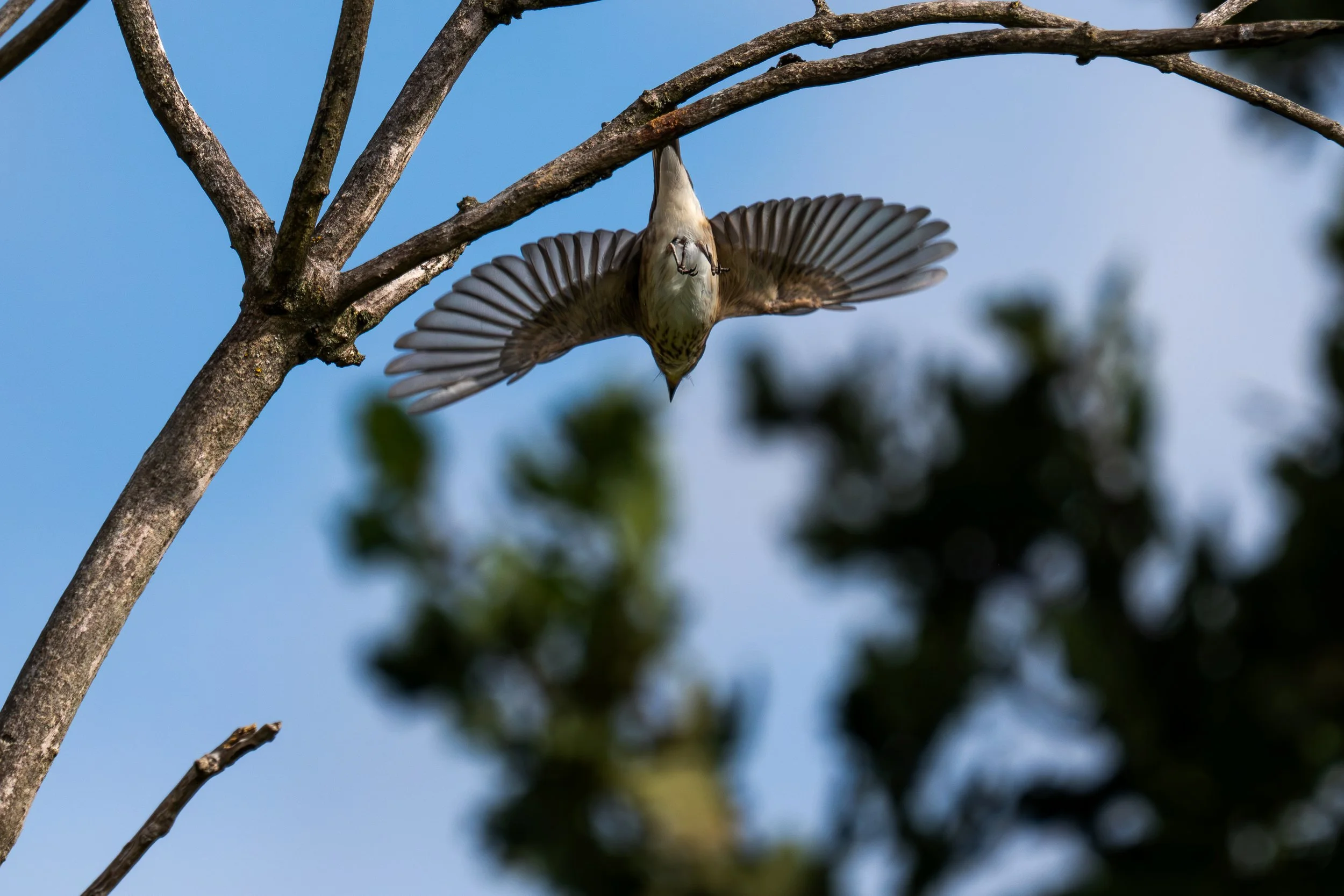
Spotted Flycatcher, leaving
That trip also found this little blackcap snacking on the last few elderberries (yes, the cap is brown, we named the species after the male, something something patriarchy):
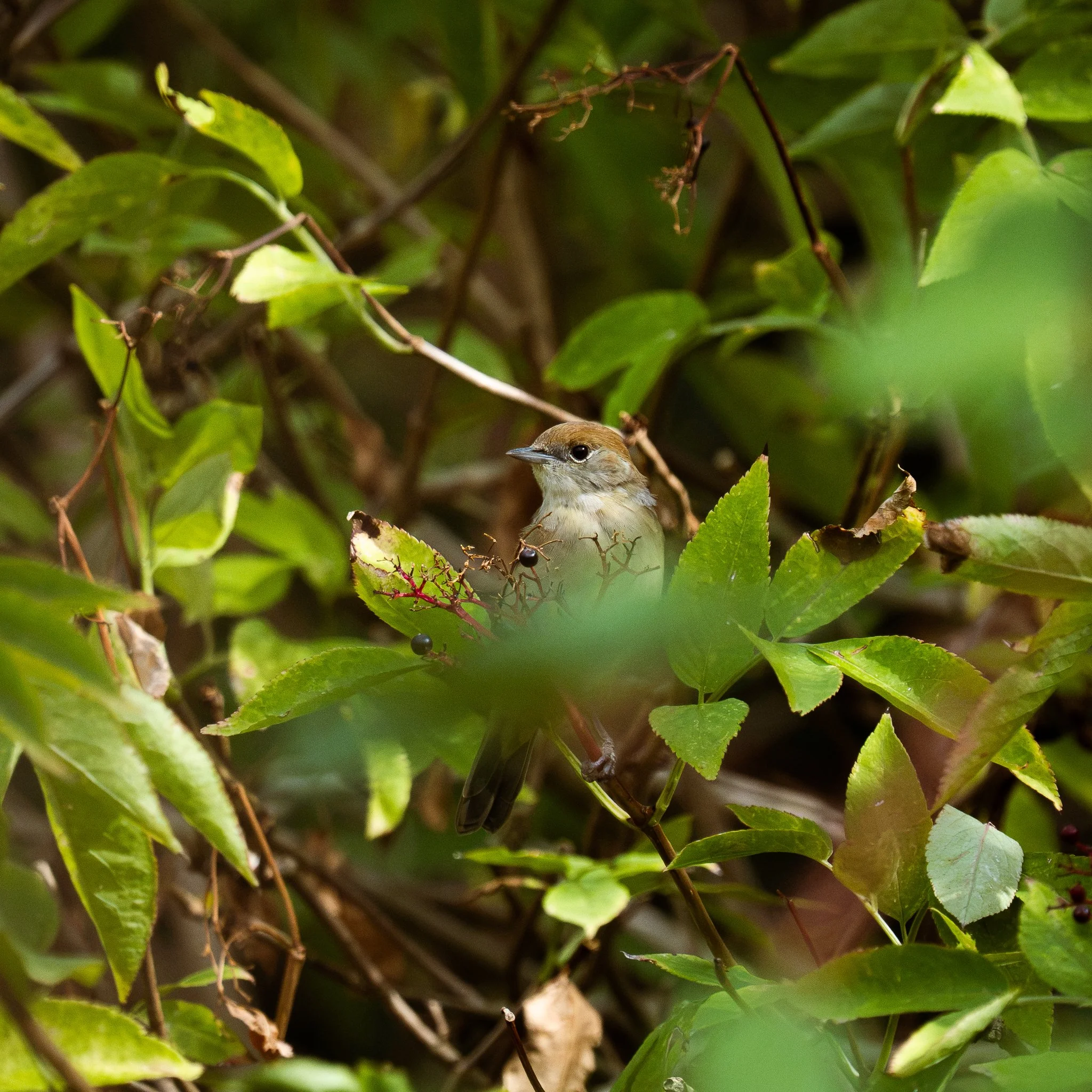
Blackcap. Do not let the fact that the cap is not black fool you.
And this juvenile greenfinch, still speckled:
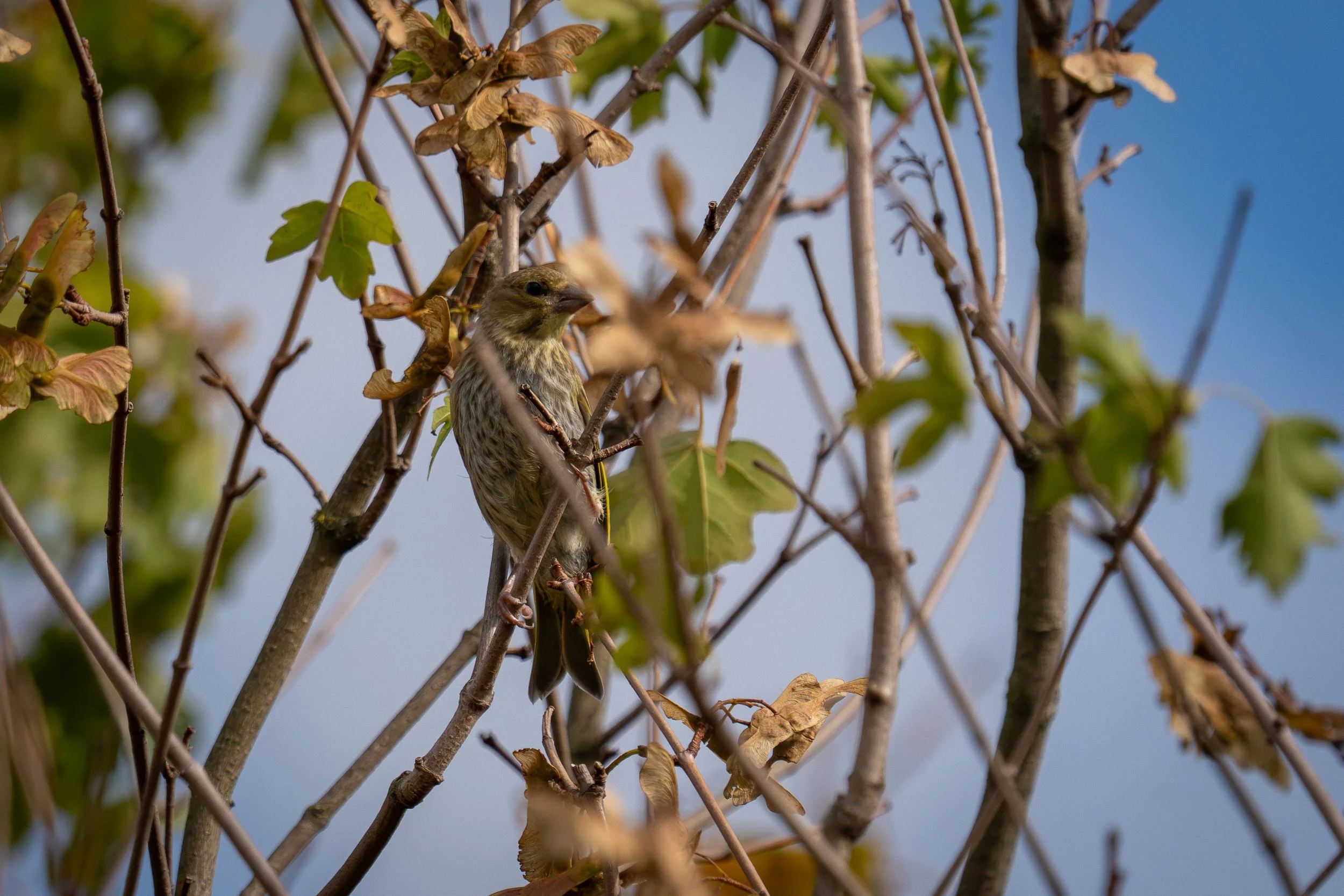
Greenfinch
Despite the cooling weather the ponds kept attracting more unusual visitors. This Lesser Black-Backed Gull hung around briefly, looking giant next to the Black-Headed Gulls that usually occupy the place.
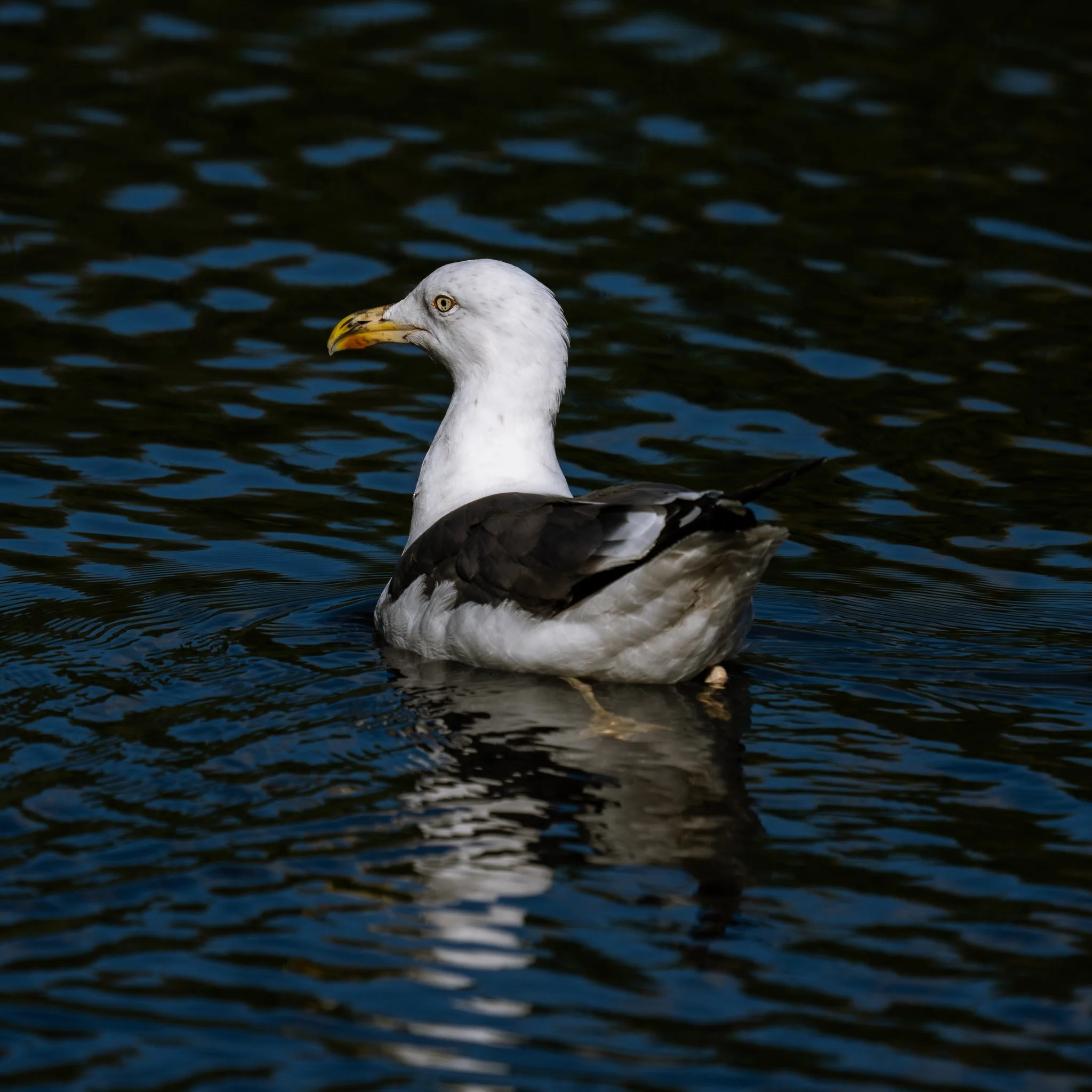
Lesser Black-Backed Gull
And a pair of Little Grebes showed up - and at time of writing, are still there. I’ve written before about trying to catch one of these with the lens, but I had enough chances that I finally got some decent pictures:
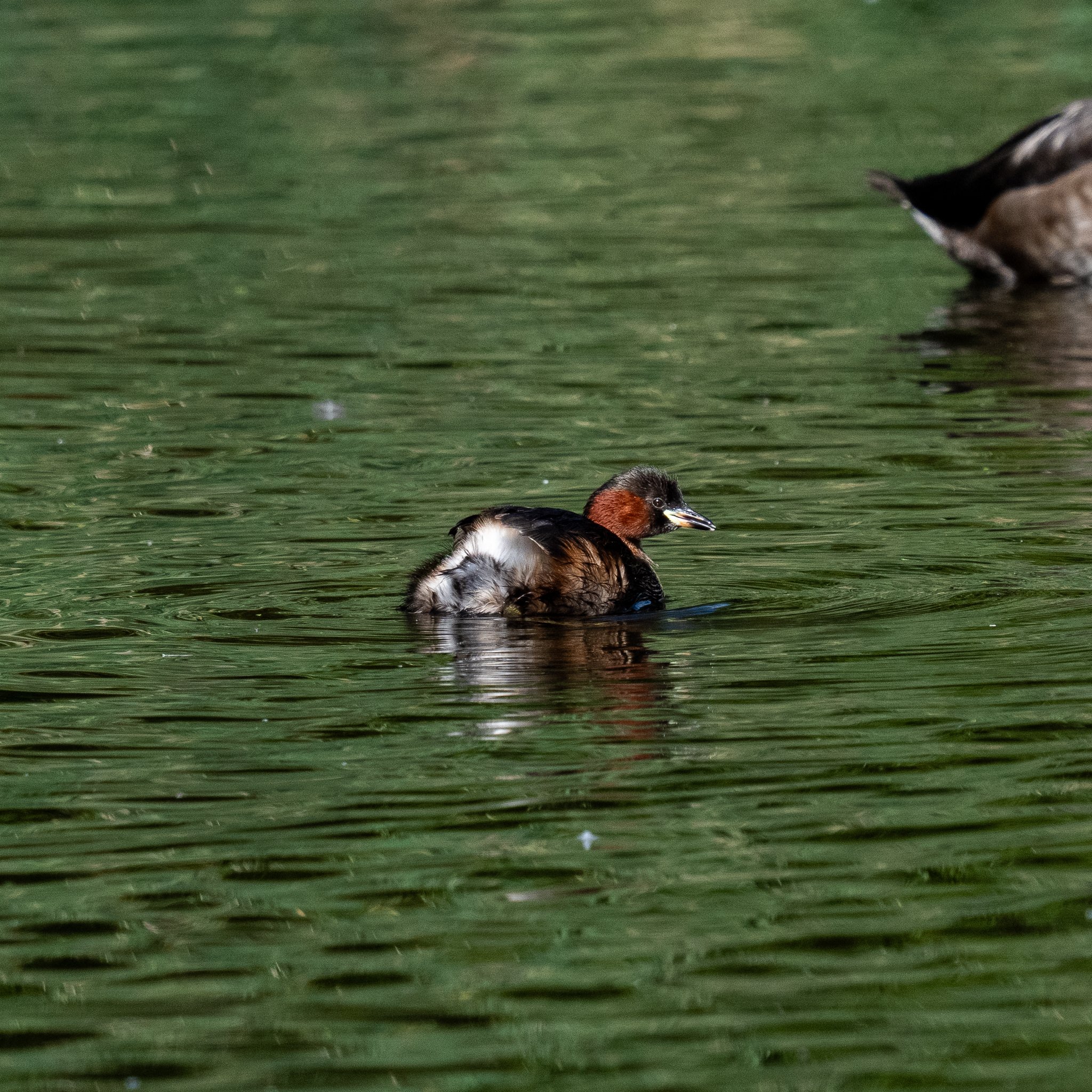
Little Grebe, male
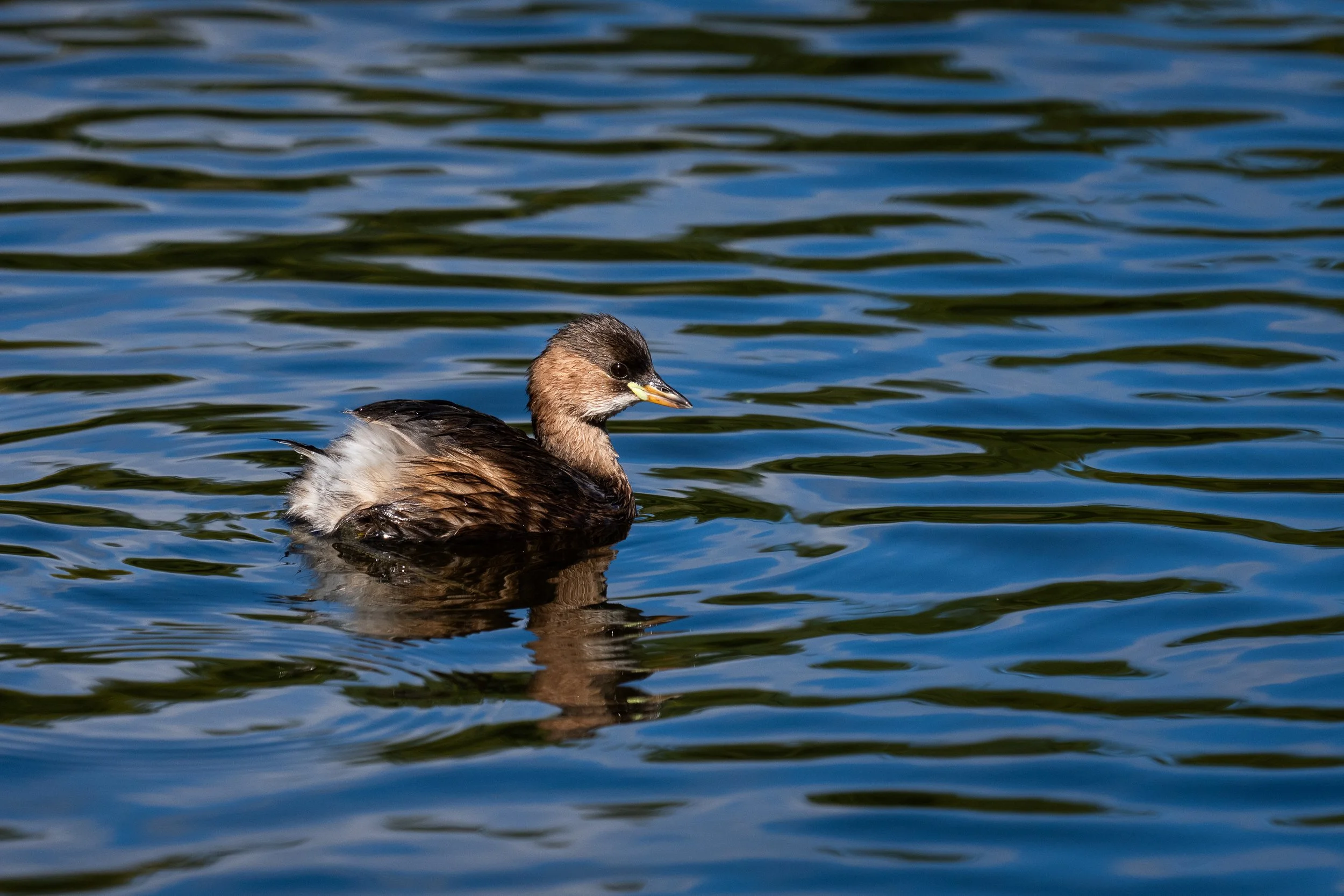
Little Grebe, female
But the most exciting part is that this pair look like they’re planning on staying. If they overwinter there’s a chance they’ll breed here next year, and there’ll be even littler grebes around.
As the month closed out and the water rose a bit higher, the overflows between the ponds began flowing again, and the sparrows moved back to bathing there. I got this dreamy shot midmorning:
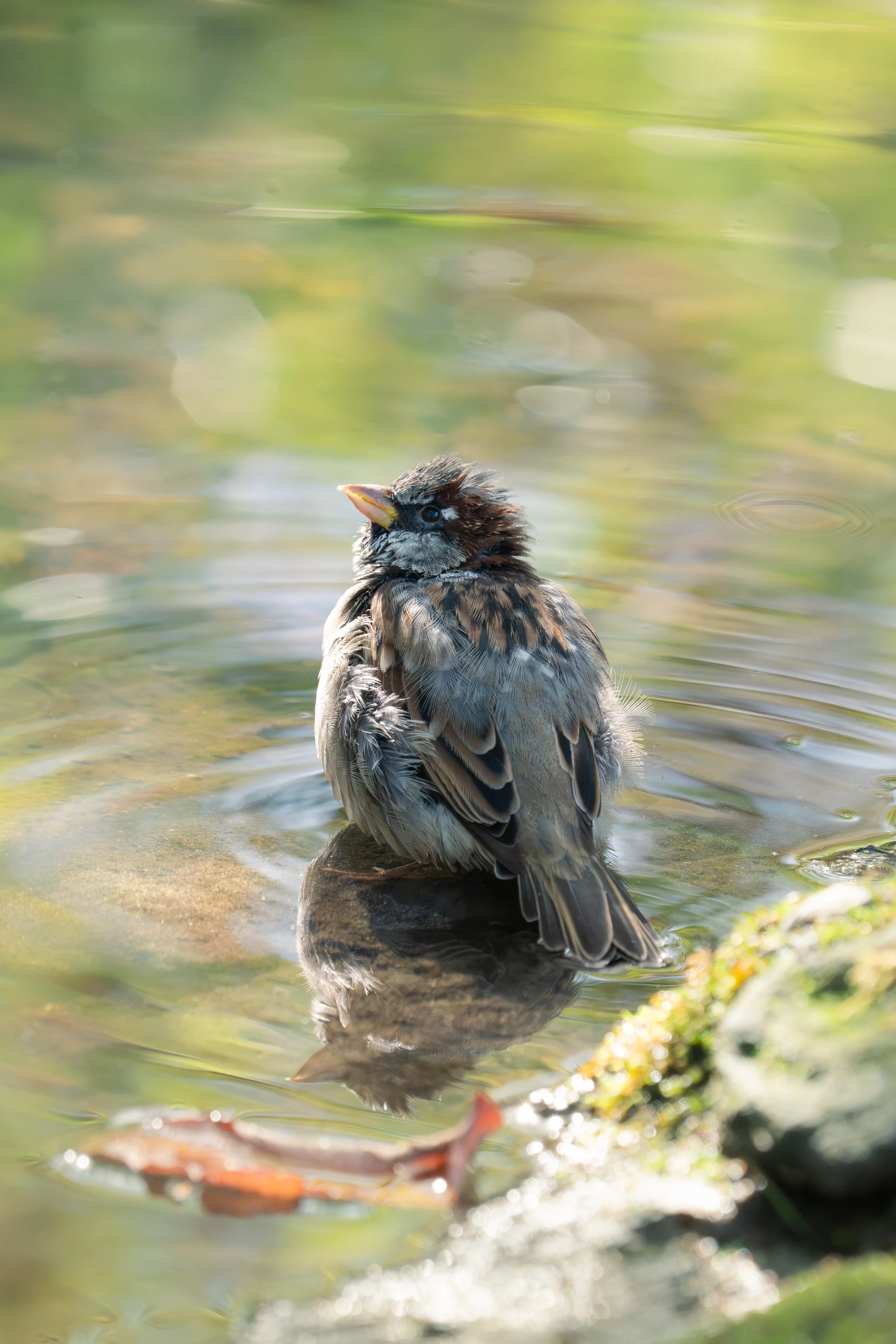
Bathing House Sparrow
And back in the wild area, I saw this probably Willow Warbler stealing a spider’s dinner. As a shot, this one isn’t really great - the focus isn’t quite in and it’s a very tight crop, but I love the behaviour so I kept it anyway.
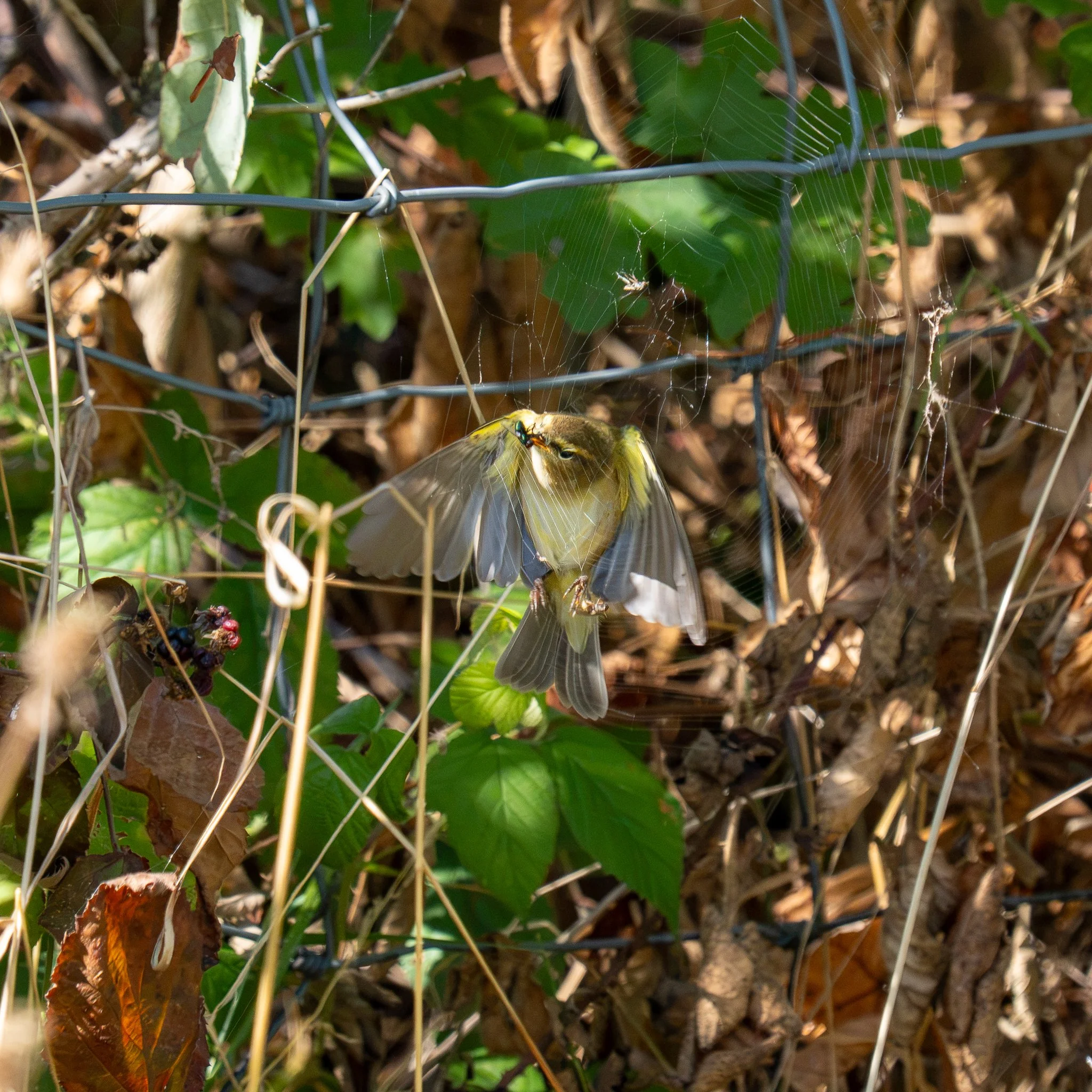
Willow Warbler. Probably. It wasn’t singing and it’s quite yellow and the legs look fairly light so it seems more Willow Warbler than Chiffchaff to me, but honestly who can tell.
Another day, another walk without the camera. This time because I was actually going to the Herne Hill market rather than to look at birds, but since I was there anyway I did wander past the ponds on the way back, finding the Mandarin had come back, and had a female with him as well.
Obviously I wasn’t going to let this happen twice, so I dropped off whatever it was I’d bought (probably sausages, it usually is) and went straight back out actually carrying a camera this time.
Anyway, got a few pictures:
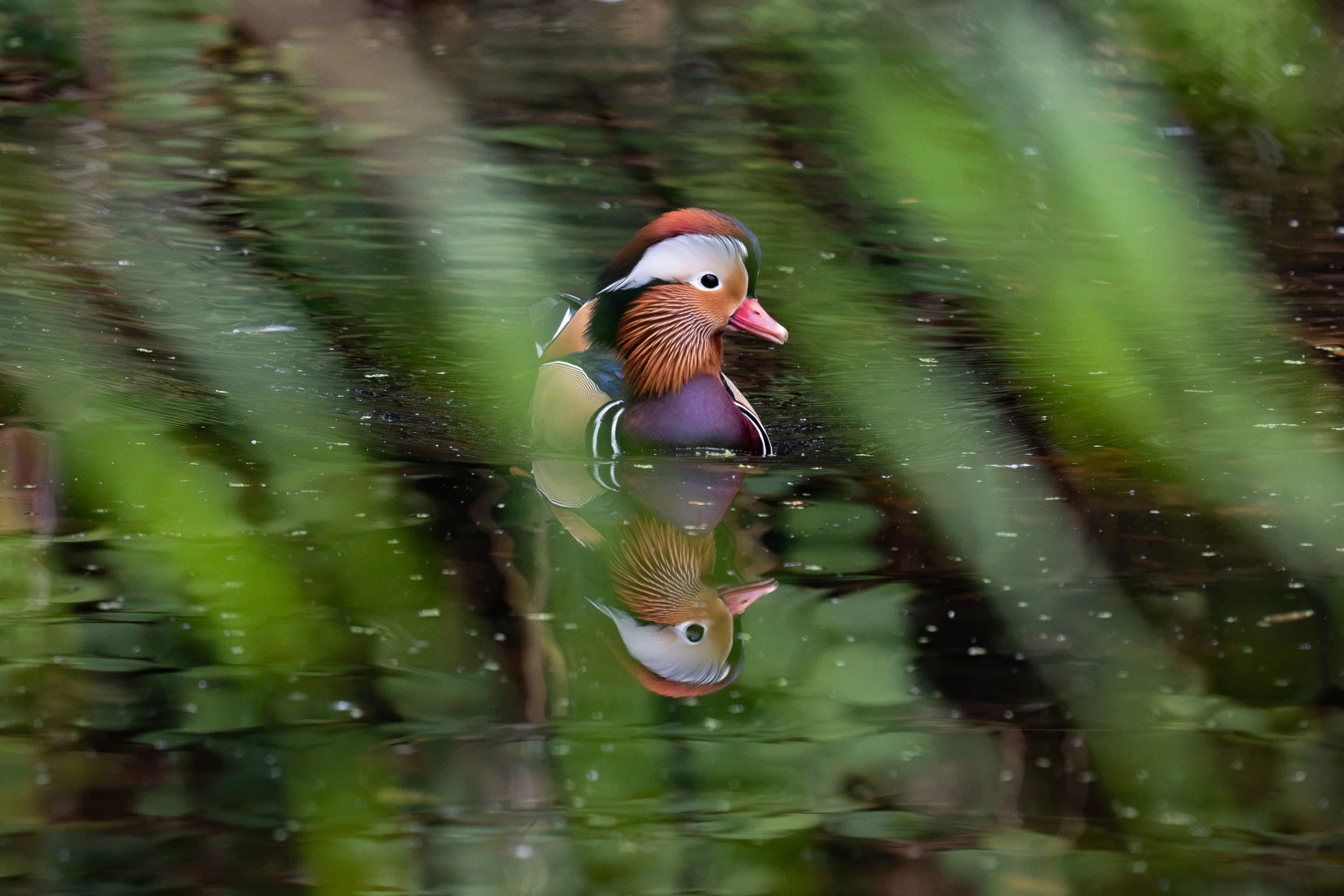
Mandarin, male
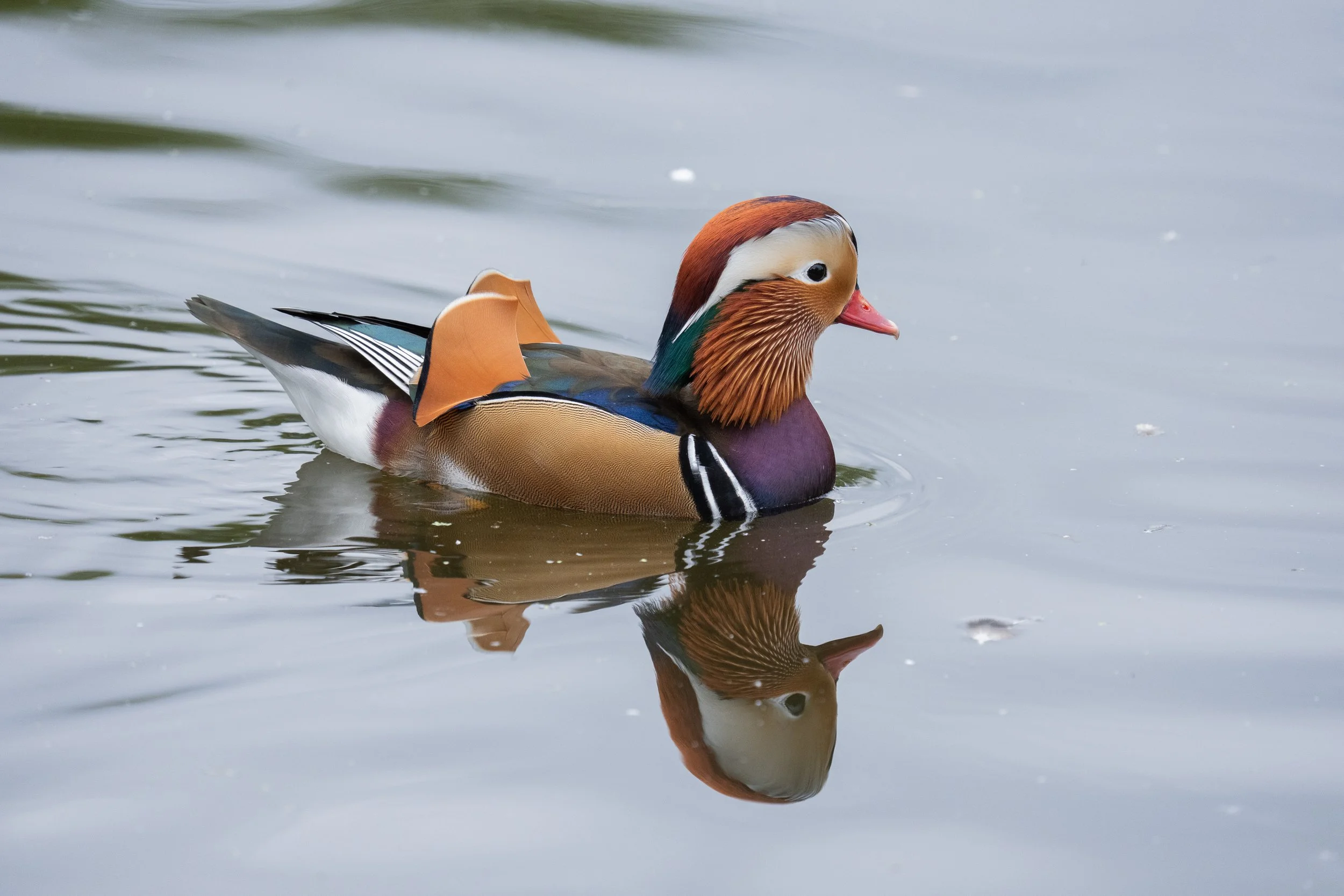
Mandarin, male
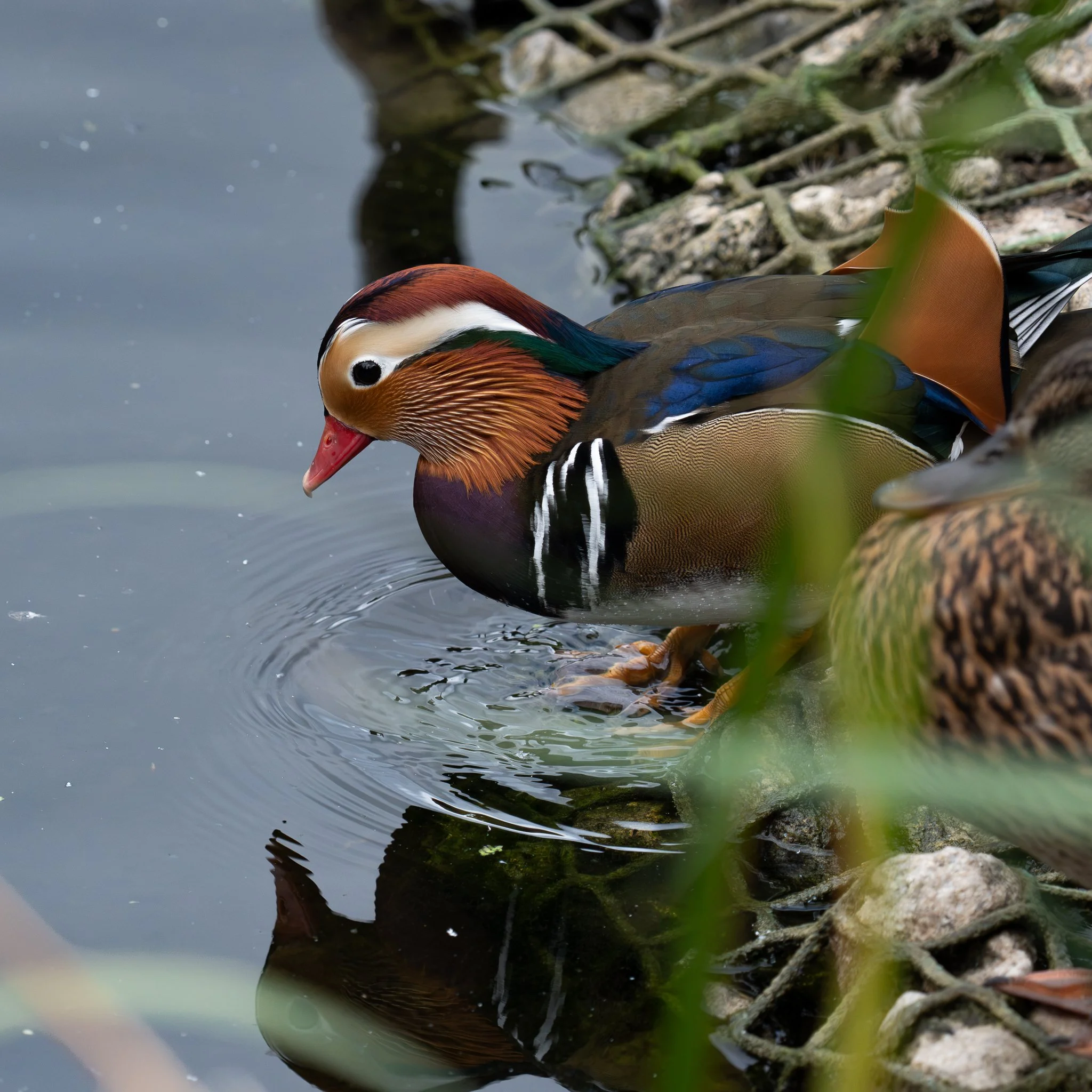
Mandarin, male
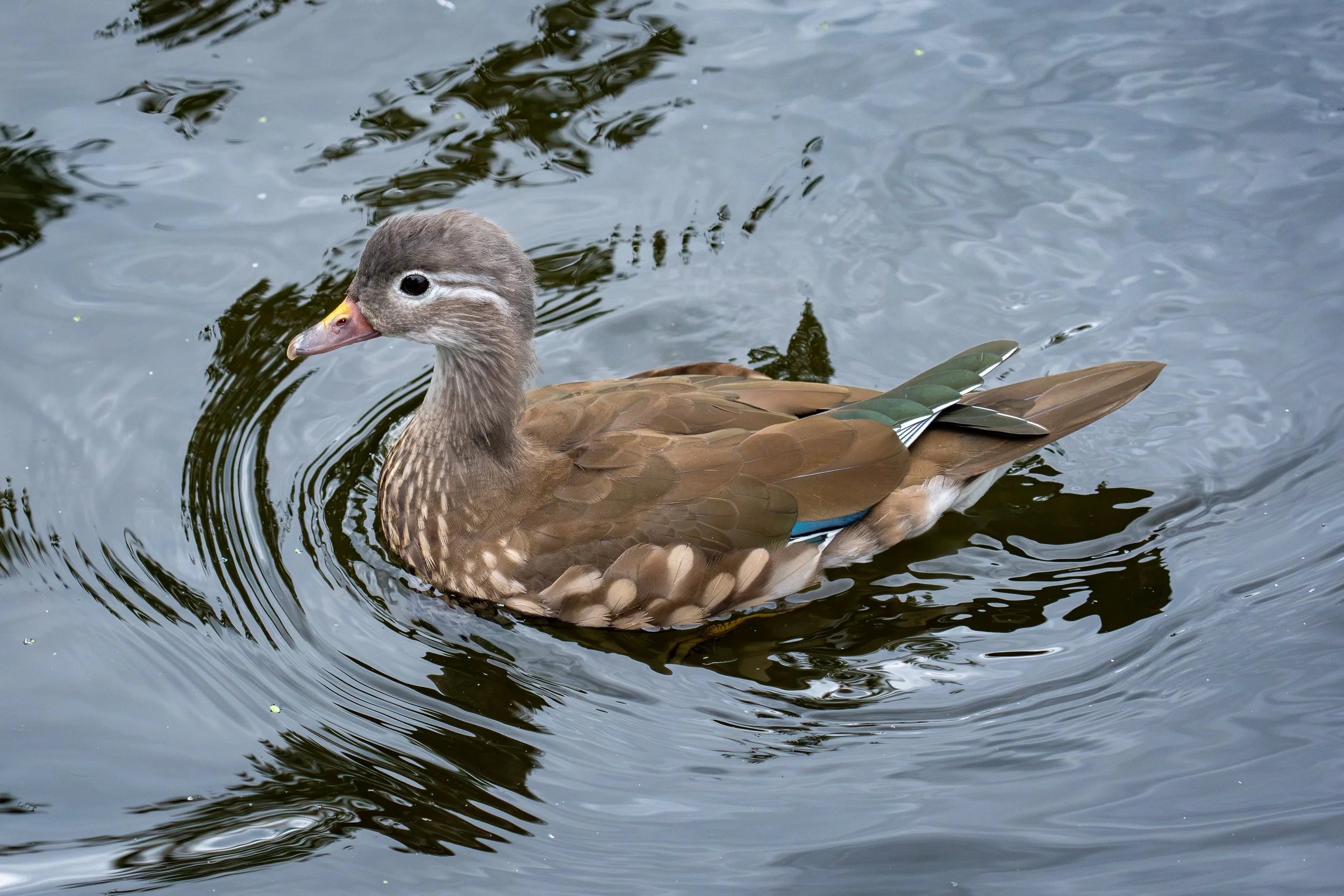
Mandarin, female
Mandarins are small, excessively pretty ducks. As the name suggests, they’re from China originally, introduced as exotic birds on private lakes and then escaped to form a feral population. There’s a few thousand of them around now. I’d always assumed it was the Victorians who introduced them because it usually is, but apparently it was a 20th Century thing.
On the way back from paparazzing the Mandarins, I saw a Coal Tit and a Goldcrest bouncing around one of the pine-adjacent things on the western path.
I’m not very good at trees.
I’m also not very good at getting pictures of Goldcrests, none of them came out well. The coal tit was a bit more helpful, also pausing on its way off to pose in something ornamental.
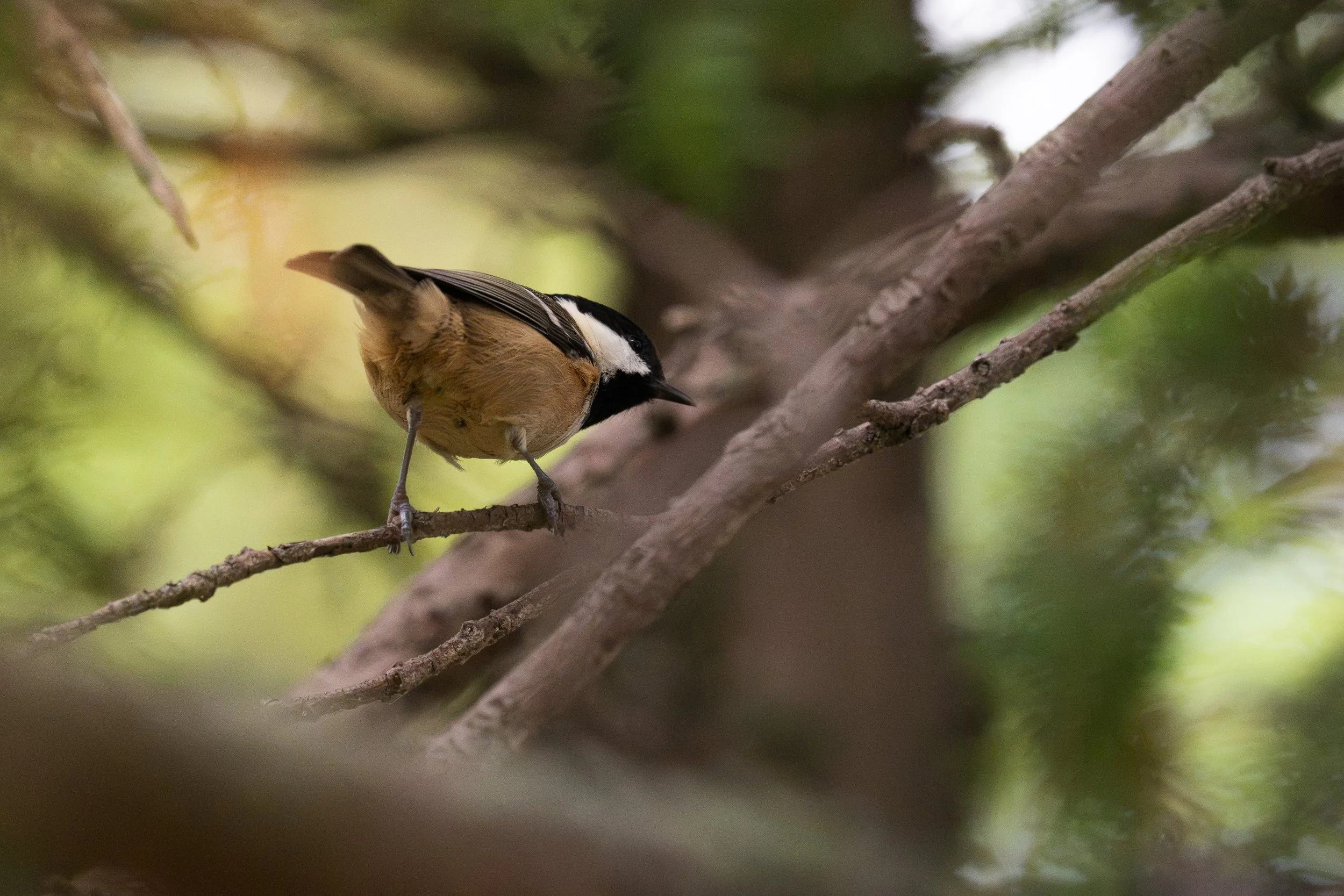
Coal Tit
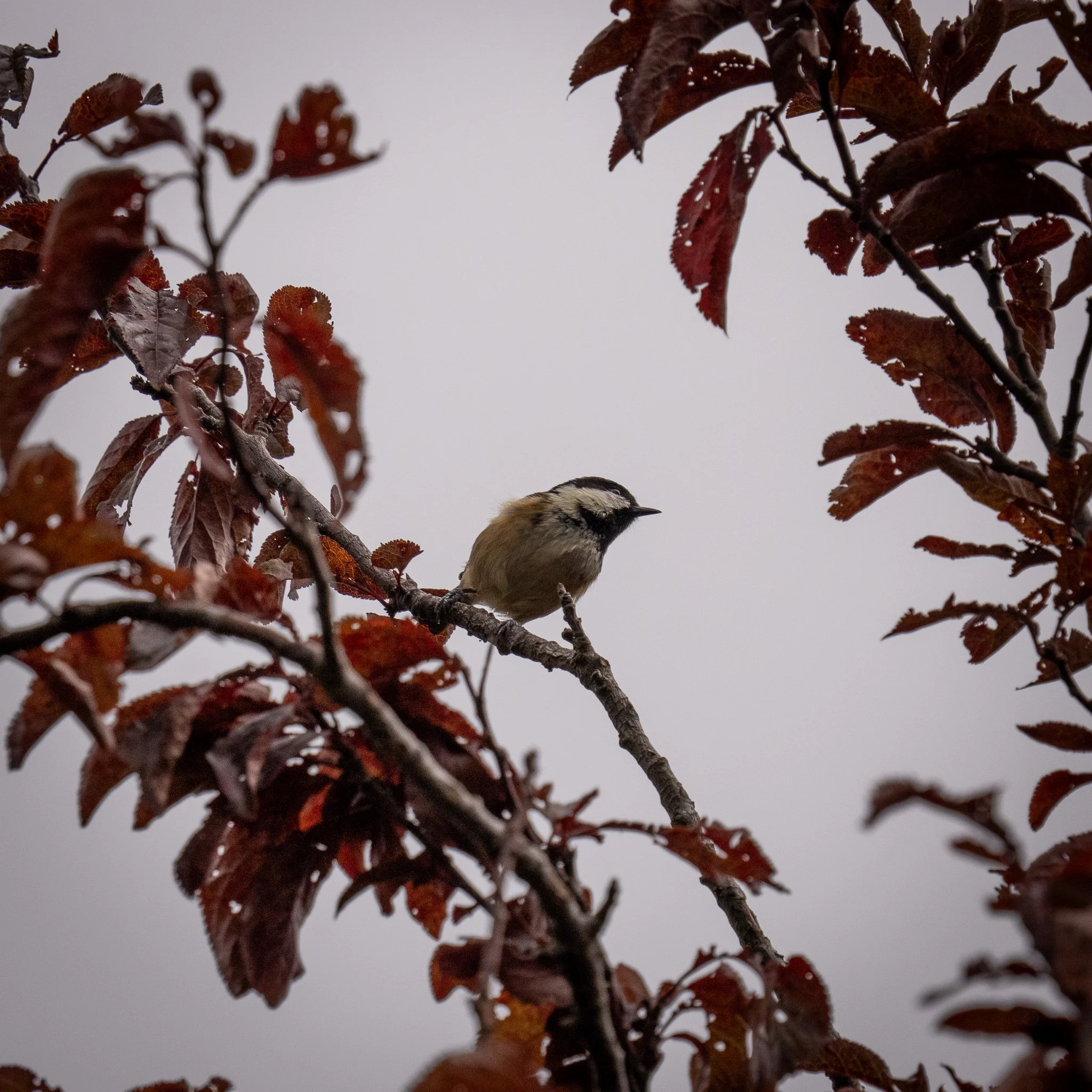
Coal Tit
Coal tits aren’t rare, but there’s a lot fewer of them than there are Blue Tits and Great Tits. They’re tiny, and often overlooked.
Finally, a tap-tap-tapping on the way back helped me spot a Greater Spotted Woodpecker in the high branches. The overcast day and bare branches make this shot look wintery, even though it was still over twenty degrees when I took it.
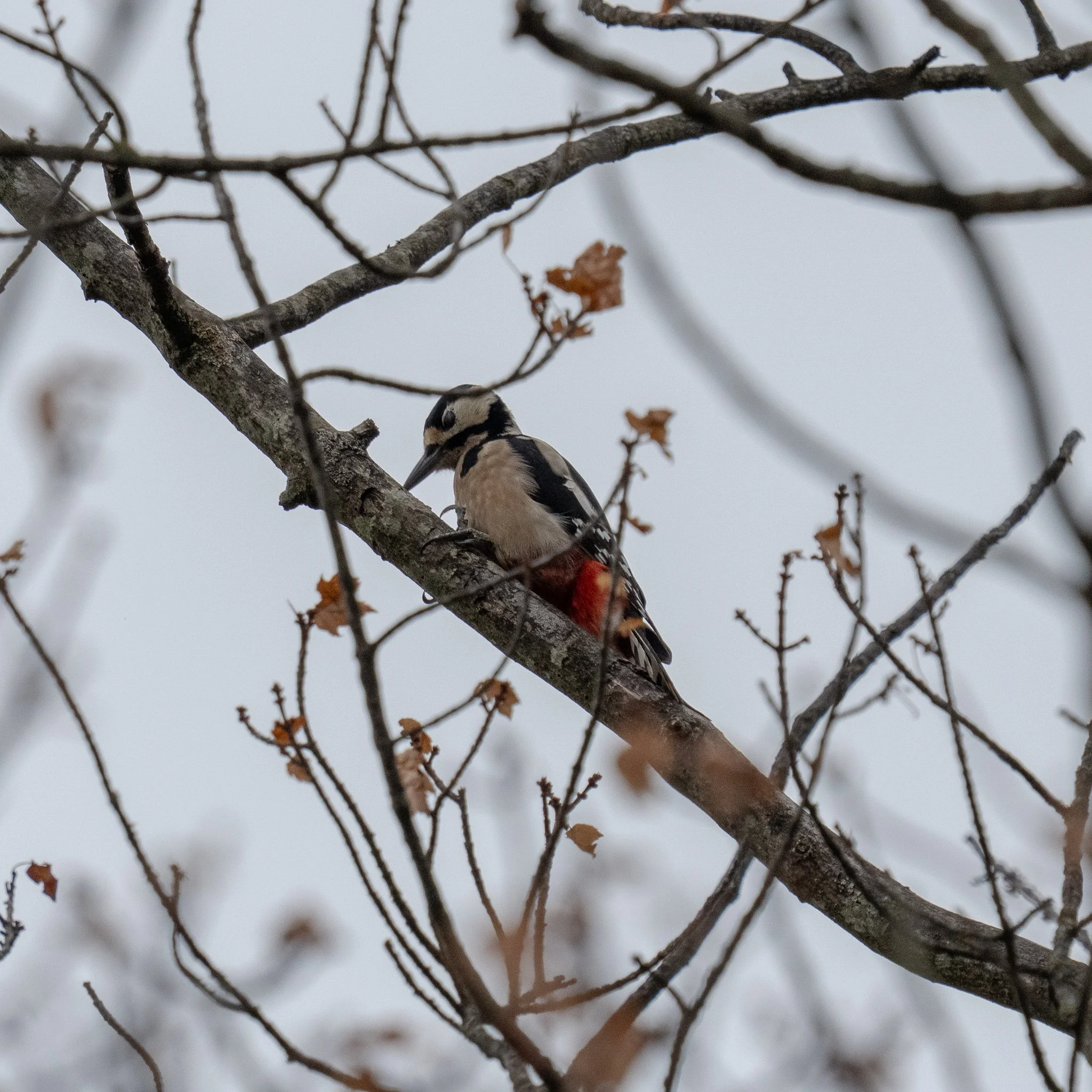
Greater Spotted Woodpecker
Now we’ve actually hit autumn, I’m looking forward to cooler days and winter migrants. But it really was one hell of a summer.
