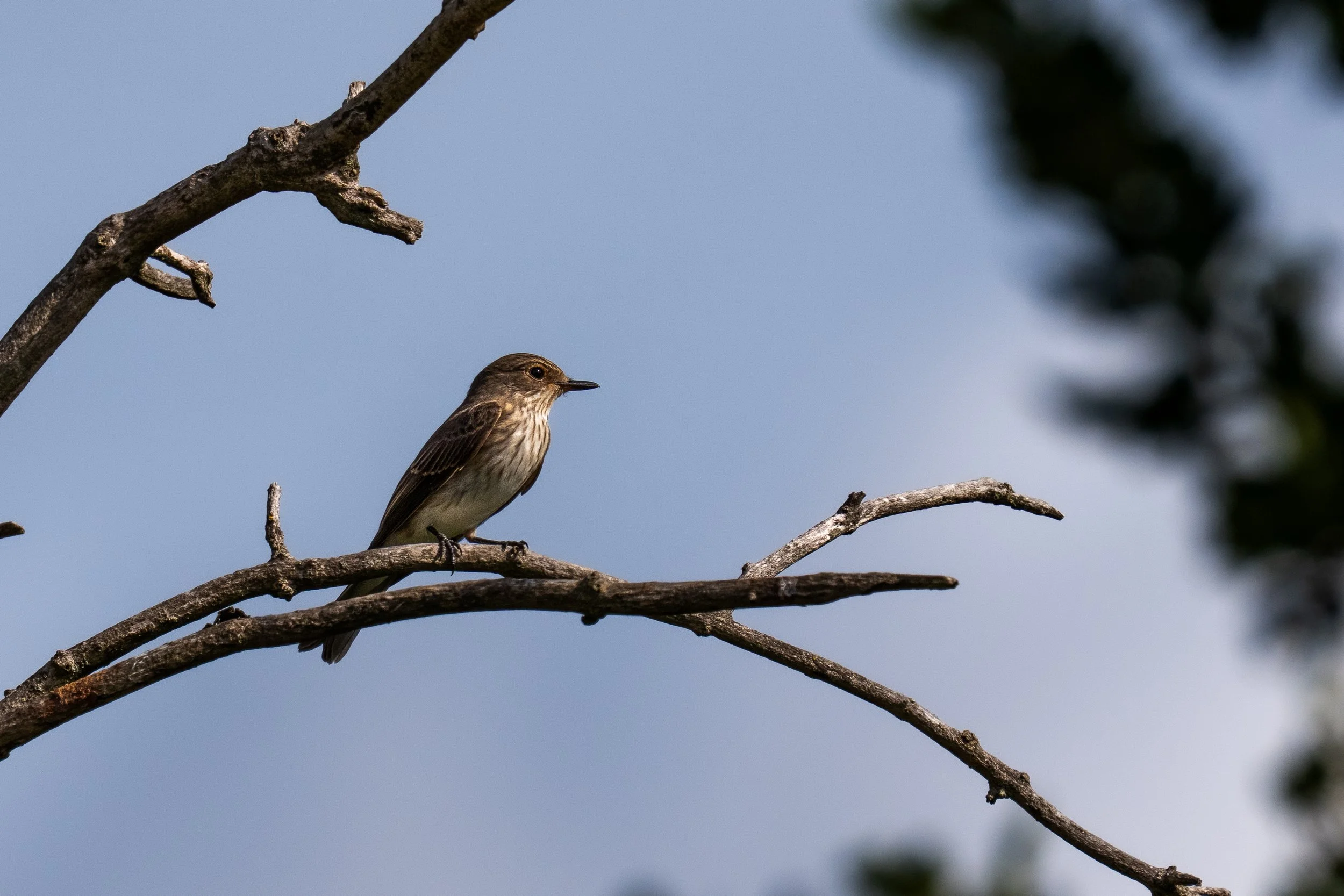
Brockwell Park, September 2026
It’s been one hell of a summer.
Official hottest day of the year was 13th August, one of the Met’s weather stations recorded 38.2 degrees somewhere in Gloucestershire. My closest Weather Underground station - one of the personal ones people put in their gardens - recorded 41 degrees that day.
And that meant I wasn’t out as much as I’d like in August. Wandering around in 30+ degrees isn’t entirely pleasant at the best of times, doing it while lugging around several kilos of camera equipment even less so.
September, on the other hand, has been great. I’d been meaning to write this up for ages but I kept seeing more unusual stuff to put in it, so it’s ended up with one post for the month rather than a one for each walk.
It was still hot at the start of the month. The whole place felt blow-dried, less a green and pleasant land than a world made of yellow and dust, but that gives its own character for photographs. I found myself making more of a thing of the landscape - particularly when it came to crows.
Crows lend themselves to more abstract shots. Because they are, as a rule, dark and the world is, as a rule, bright, they become shape rather than detail. This lone bird strutting across the dried-out grass had a very western feel to it:
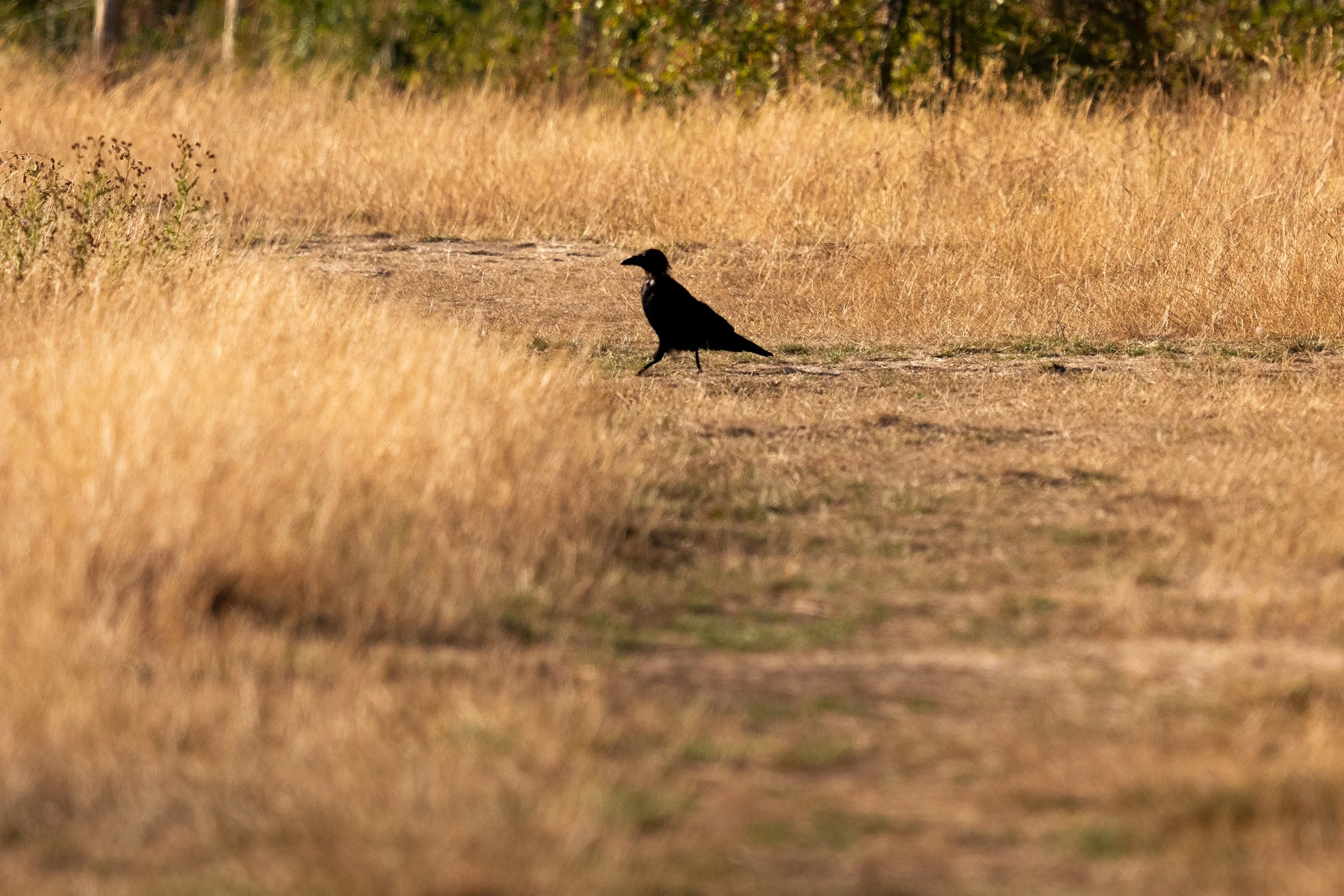
I think you people need a new sheriff.
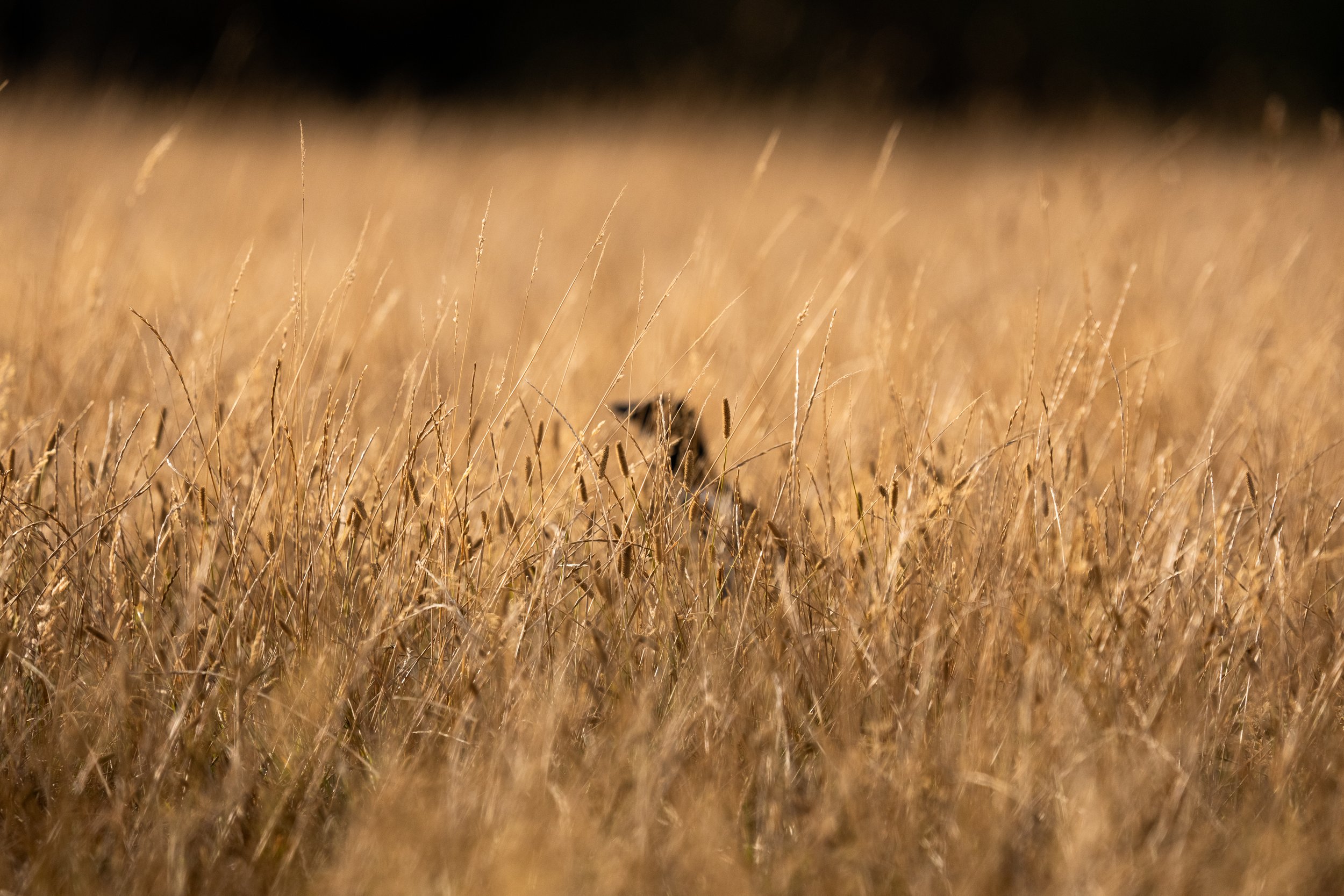
This one’s actually a Magpie, but the point stands.
And in this one I liked how the bird was just an ink-splatter on the sky, like some lost god flicked paint and then called it to life.
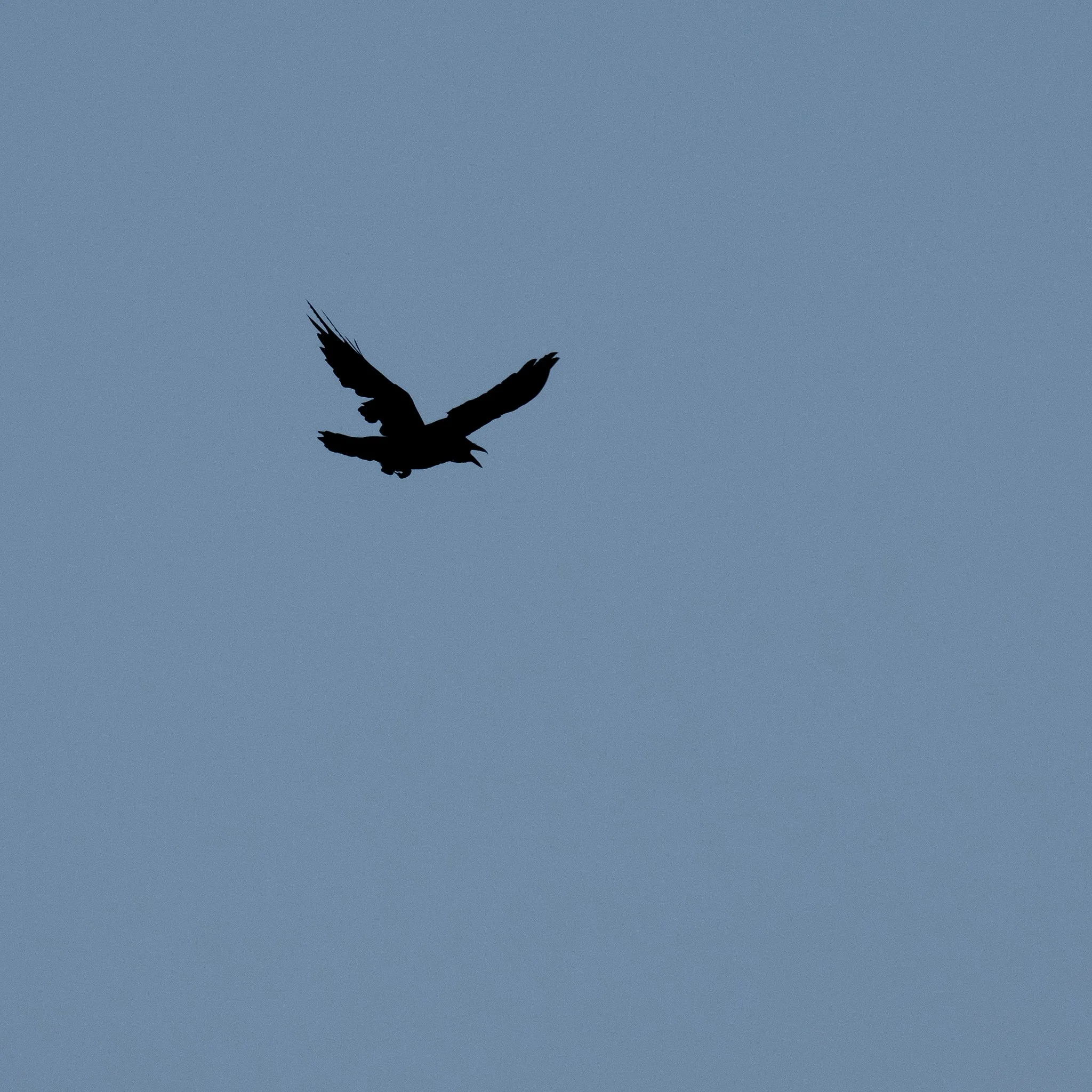
Inkblot Crow
There were also, of course, the ever-present tits in the trees. They’re always busy. They’re not hard to find but they don’t stay still, getting a good picture still feels like an achievement.
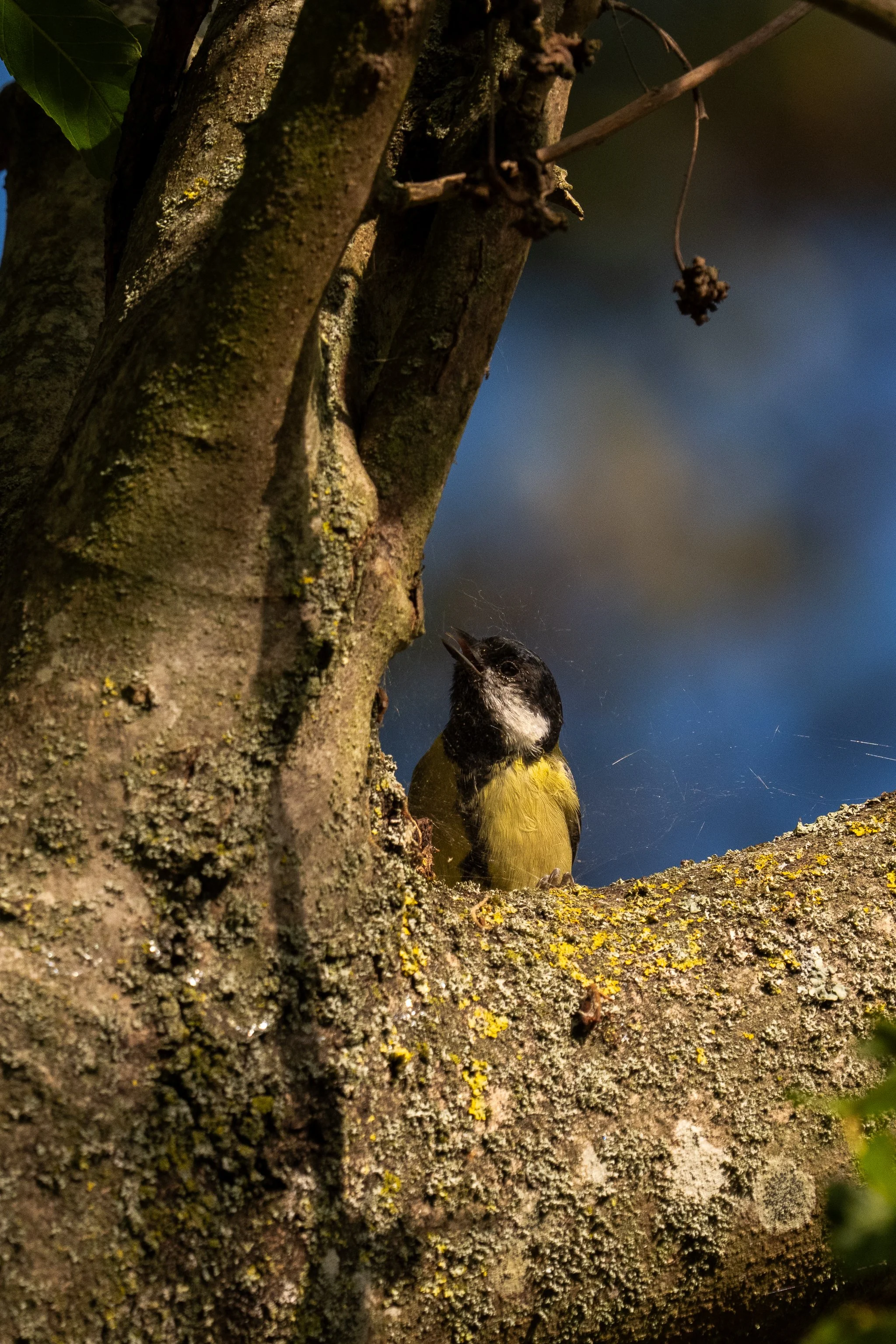
Great Tit munching on lichen
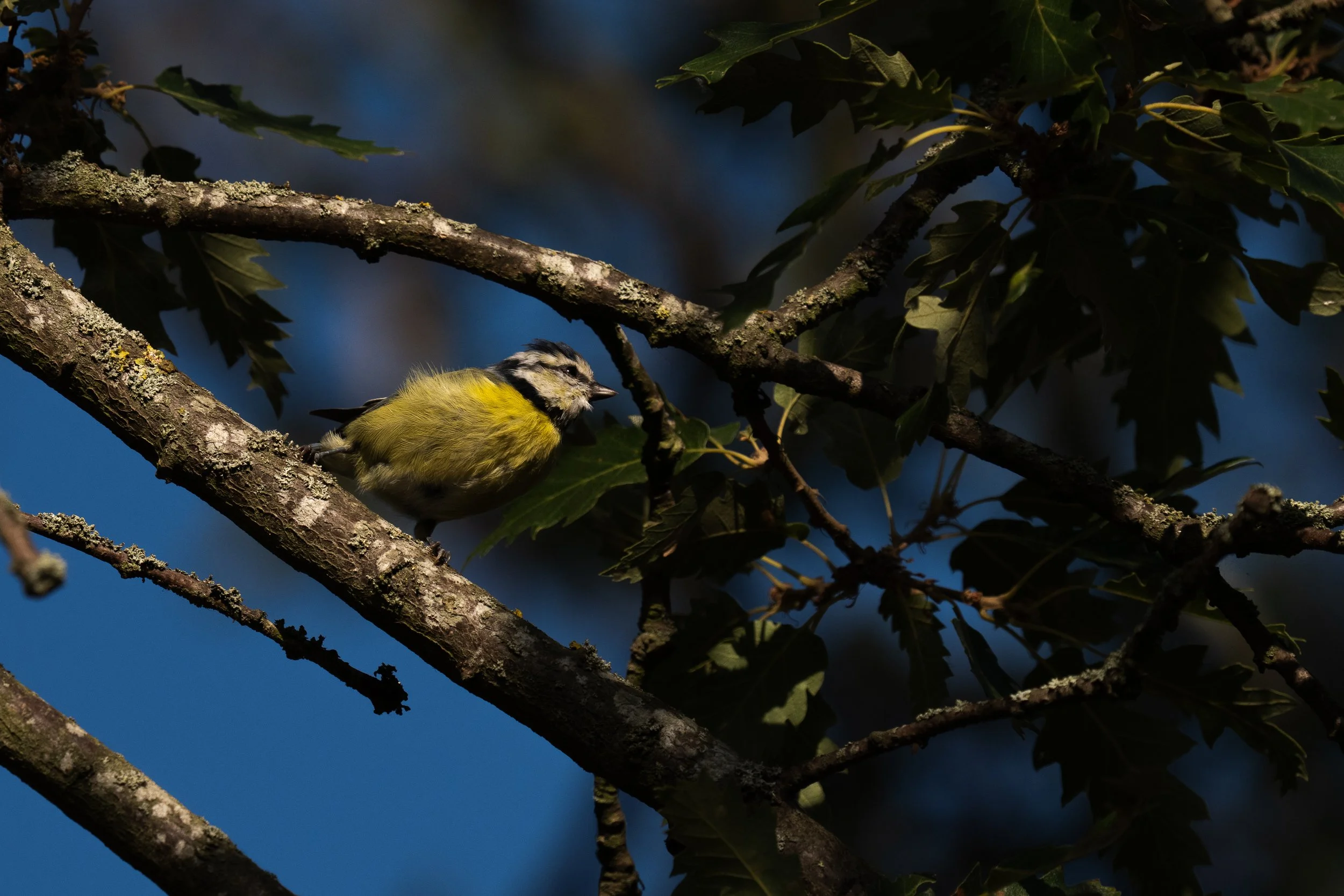
Blue tit, intent
And one thing a high summer is very good for is butterflies. I had a very entertaining hour in the walled garden, pointing at flowers with a lens broadly the same size as a dachshund to the amusement of several people nearby.
Joke’s on them, I was actually taking pictures of the butterflies, which is a far more sensible thing to be doing with a lens the size of a dachshund.
I found some Common Blues and what I think was a Small Copper - the markings look closest from all the pictures I’ve found online. Not the same, but close enough that maybe there’s some local variation.
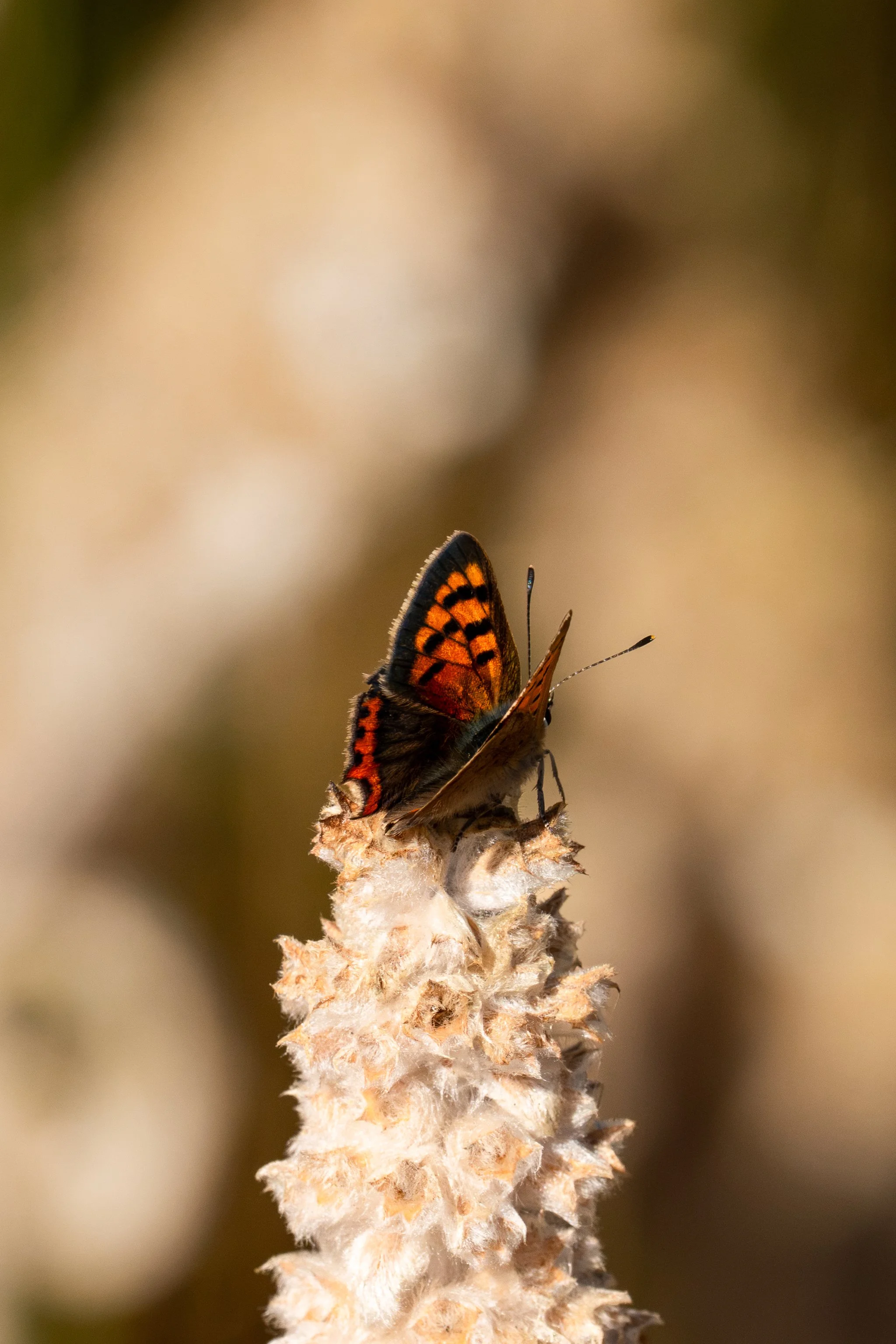
Small Copper. Probably.
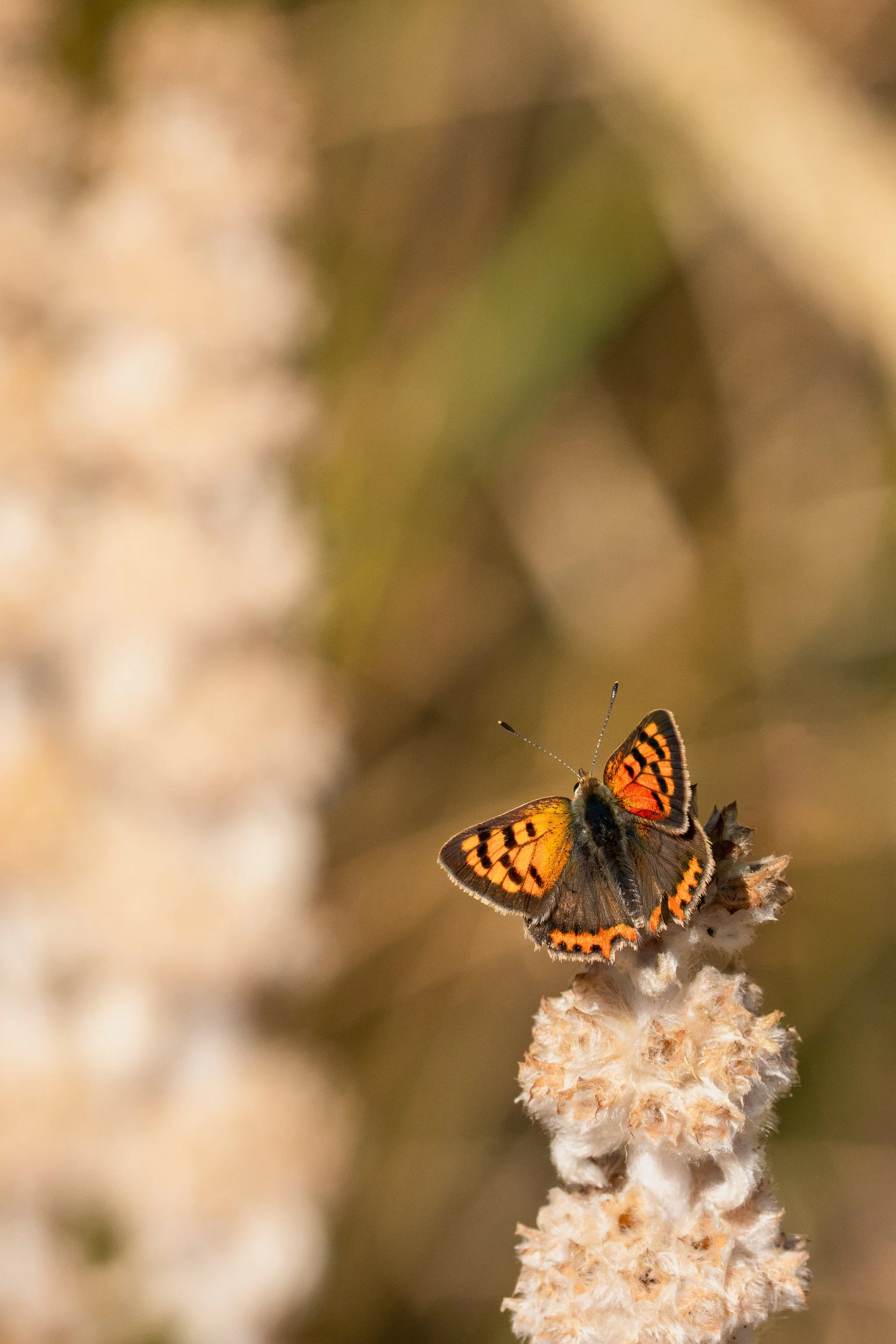
Small Copper. Potentially.
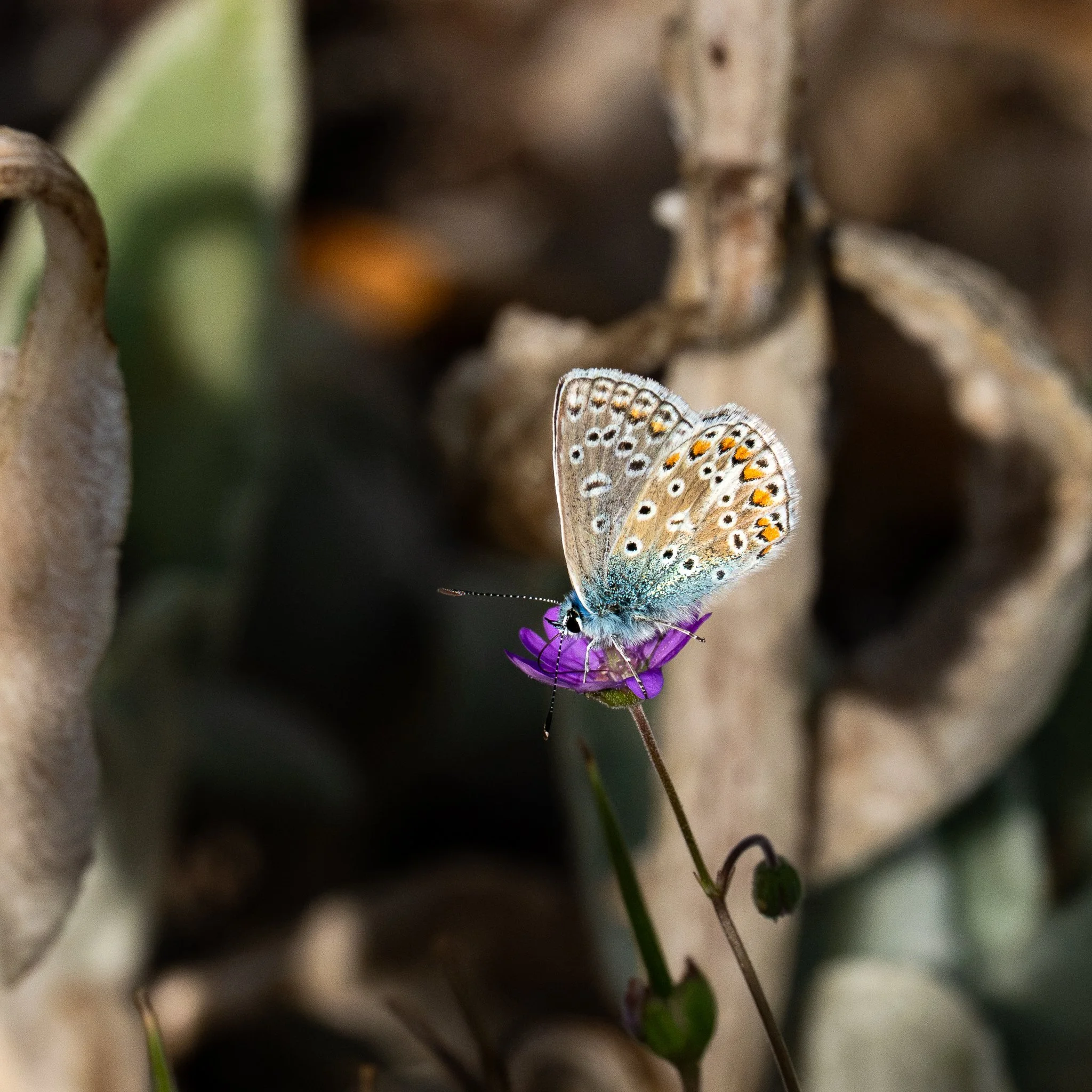
Common Blue. Far more confidently.
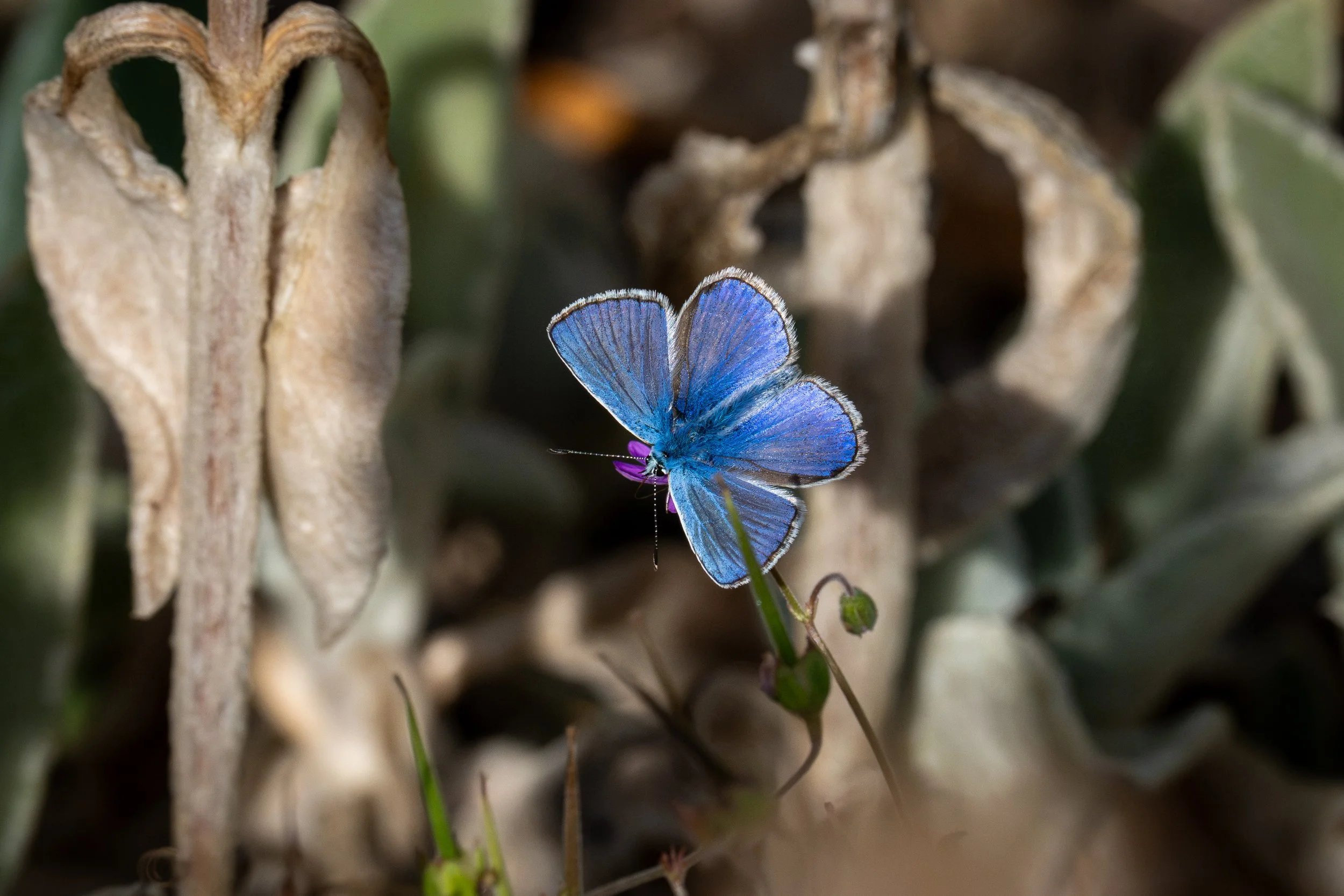
Common Blue. Almost certainly.
The ponds dried up more than I’d ever seen. They’ve started to refill now but it’s still low, the various rock banks that were placed underneath for bug habitat forming tiny islands.
This caused all sorts of issues for all sorts of things, but because nature is a system and there’s rarely such a thing as an entirely good or bad event, it also encouraged some birds that I’d not seen on the Brockwell ponds very often.
One of them was a pair Grey Wagtails - you can tell they’re Grey Wagtails due to how they’ve got yellow on them - which have been hanging around the newly-exposed shoreline. A large part of their diet are the bugs and molluscs found in the shoreline mud, so having more of it means the pond’s a more attractive spot.
They’re easy to get pictures of but hard to get good pictures of, since they’re small and tend to hang around at the far shore, but I managed to get this one when one came to the near side. The water is dehazed a bit to make the reflection pop. I tried making the net-o-rocks less bright so the bird stood out more, but struggled to do it in any way that looked natural. Still like the shot.
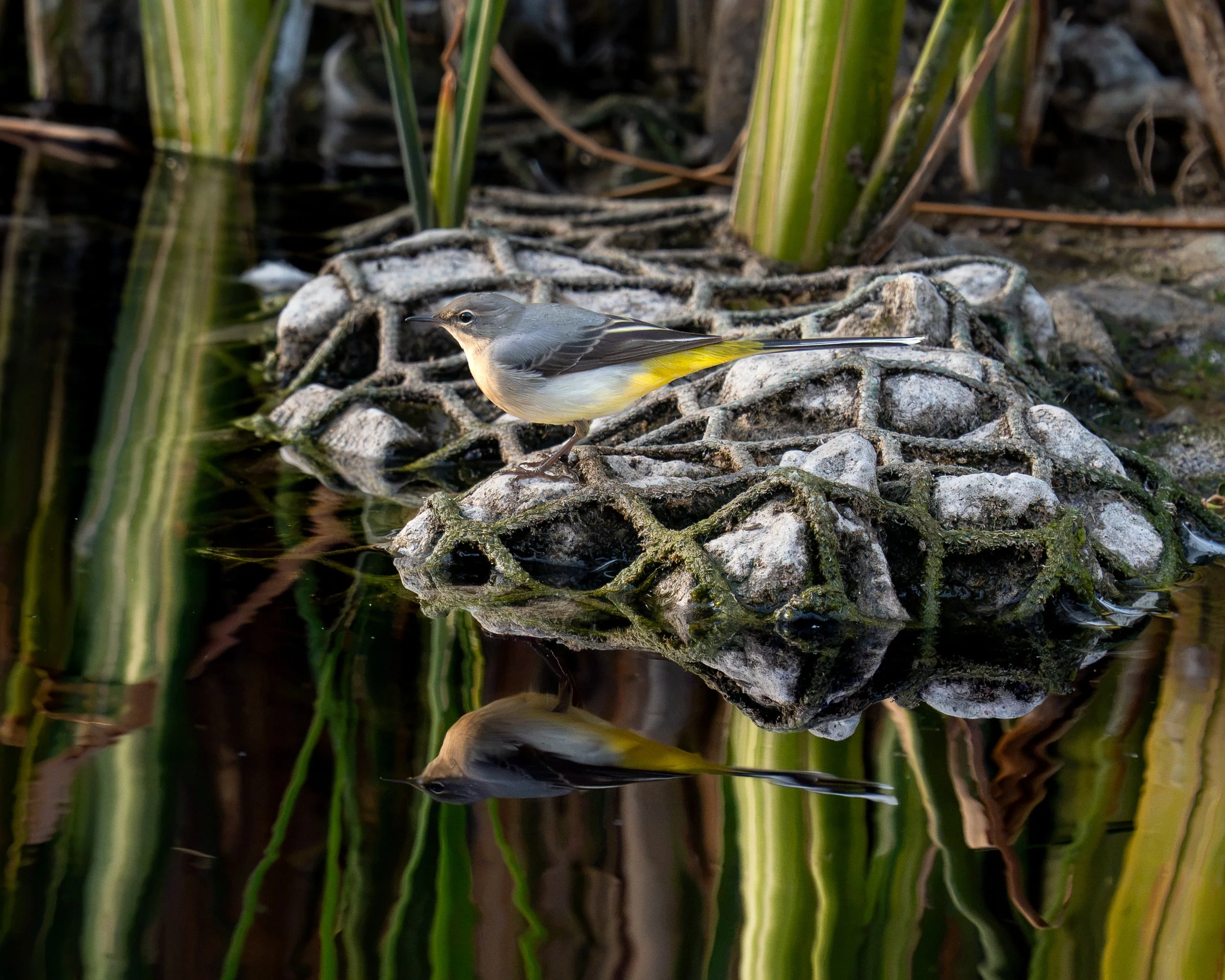
Grey Wagtail
Moorhens, of course, are always there. But I was particularly pleased with the shot of this one in the reeds. Something about the shadows and the lines draws your eye away from the bird itself, camouflaging itself in the picture much like it does in real life.
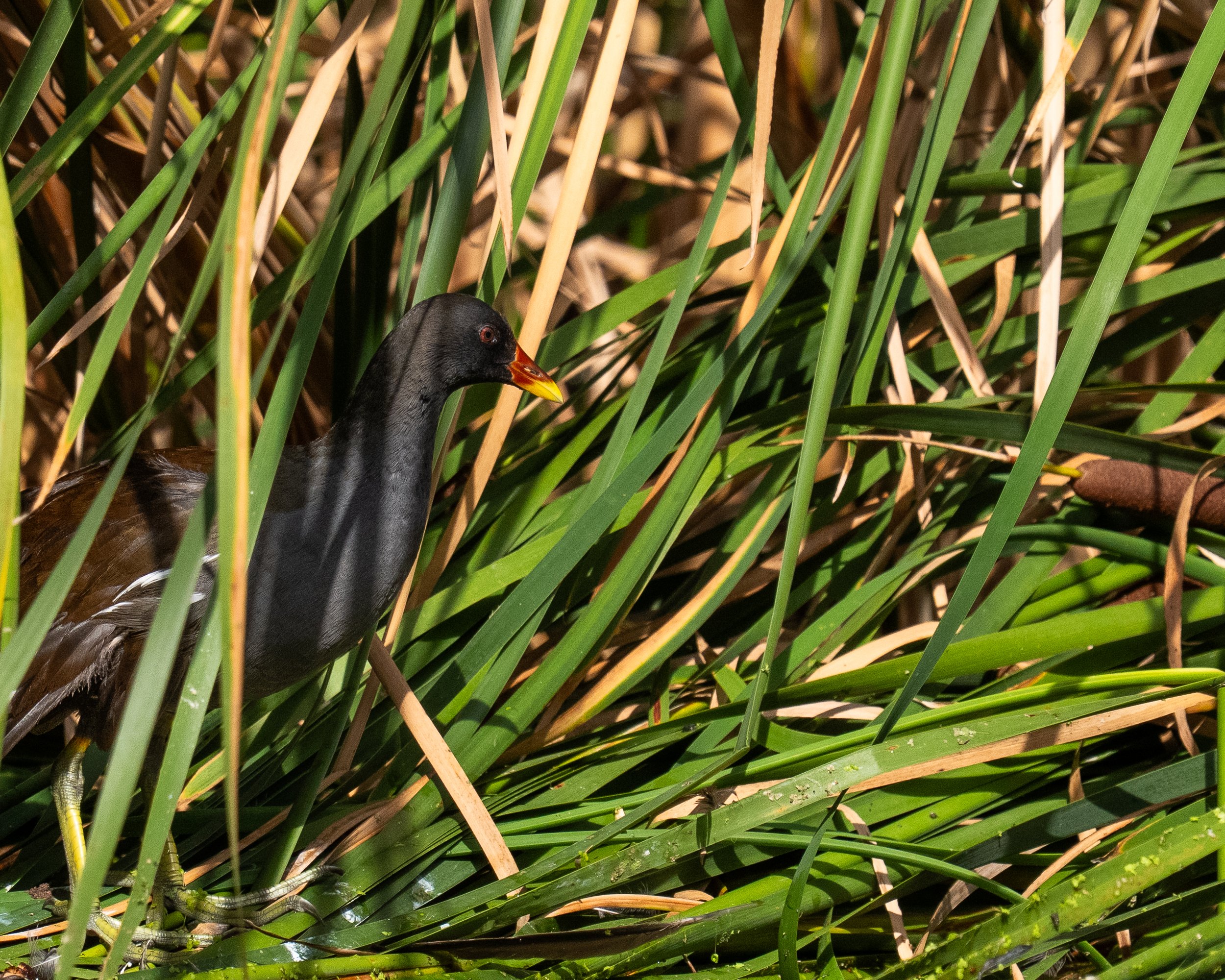
Moorhen, stealthy like ninja.
It finally cooled off as the month wore on, and a bit of green trickled back into the plants.
On a walk around the park one evening, when I hadn’t brought a camera, there was a Mandarin duck sat on the southern shore, something I’d not seen in Brockwell before. It was too dark by that point for it to be worth fetching the camera, but I did go back with it the next day to see if it was still there.
It was not, but in an attempt not to waste the trip I wandered to the overgrown patch that stretches behind the wild area and the cinders. Being a bit more off the beaten track it’s one of the best spots in the park for birds, and that day there was a Spotted Flycatcher which I spotted, flycatching.
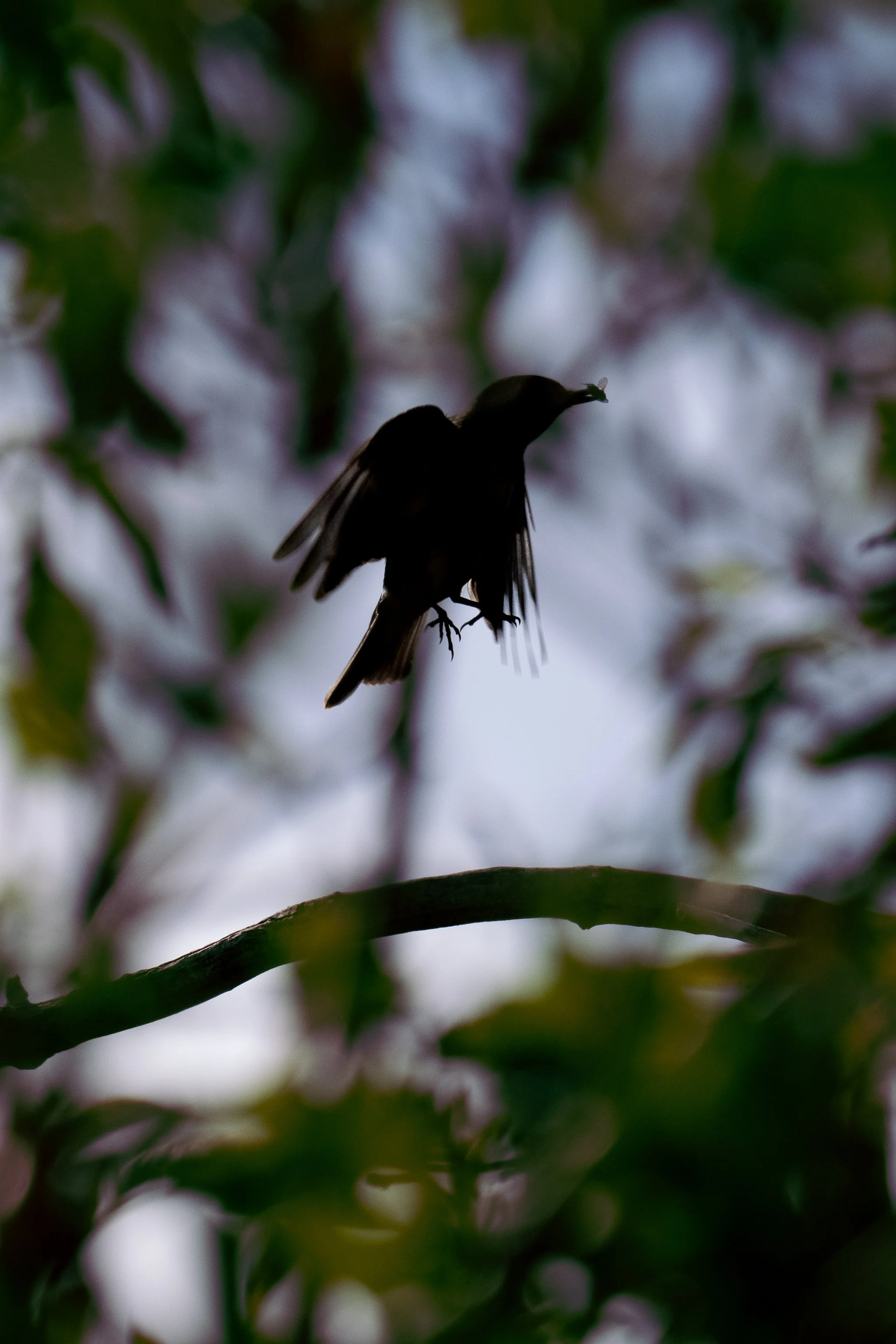
Spotted Flycatcher, flycatching
You can find these flycatchers everywhere but they’re not particularly common anywhere. I spent an absolute age just watching it flit off, land back on its branch, and flit off again.
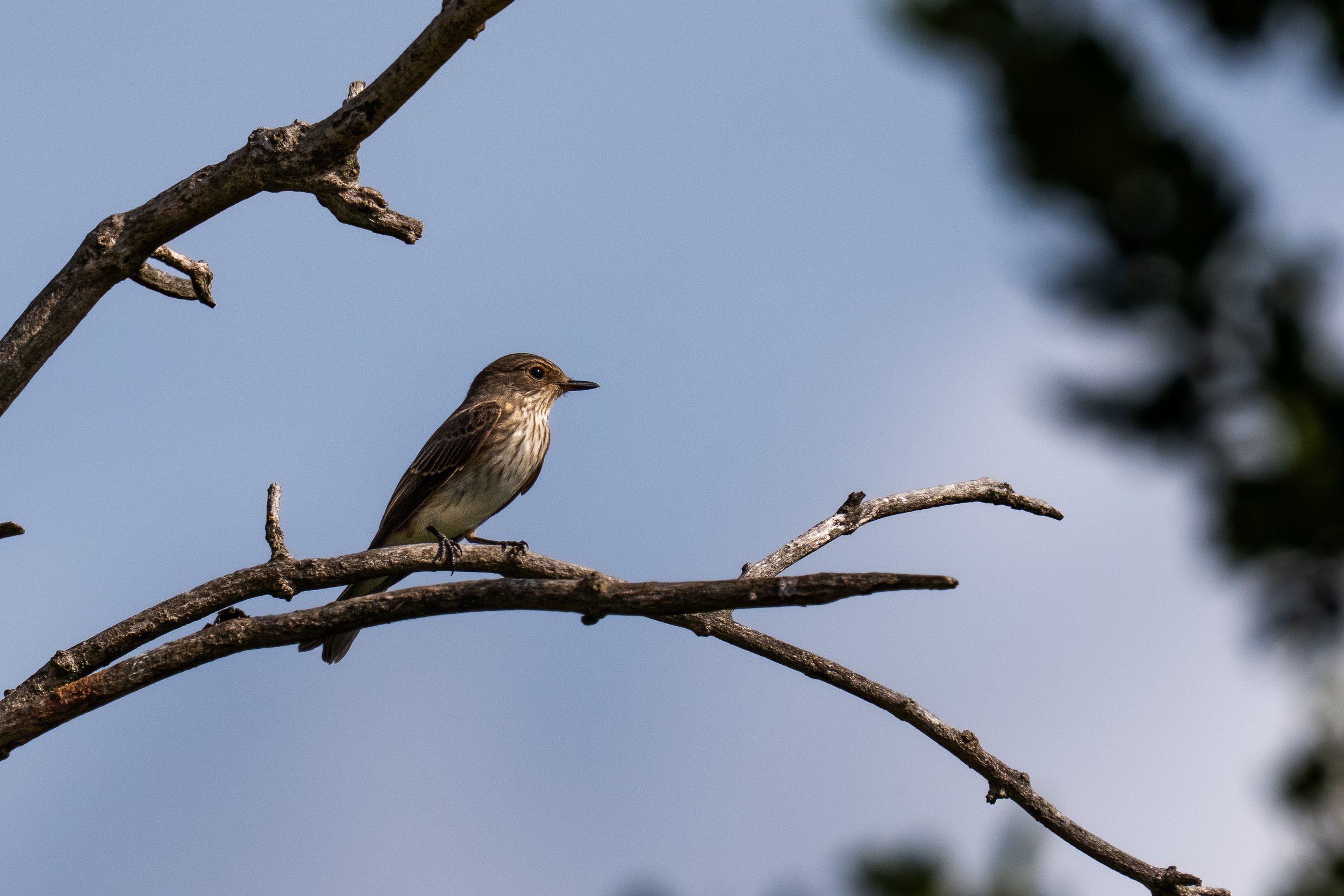
Spotted Flycatcher, perching
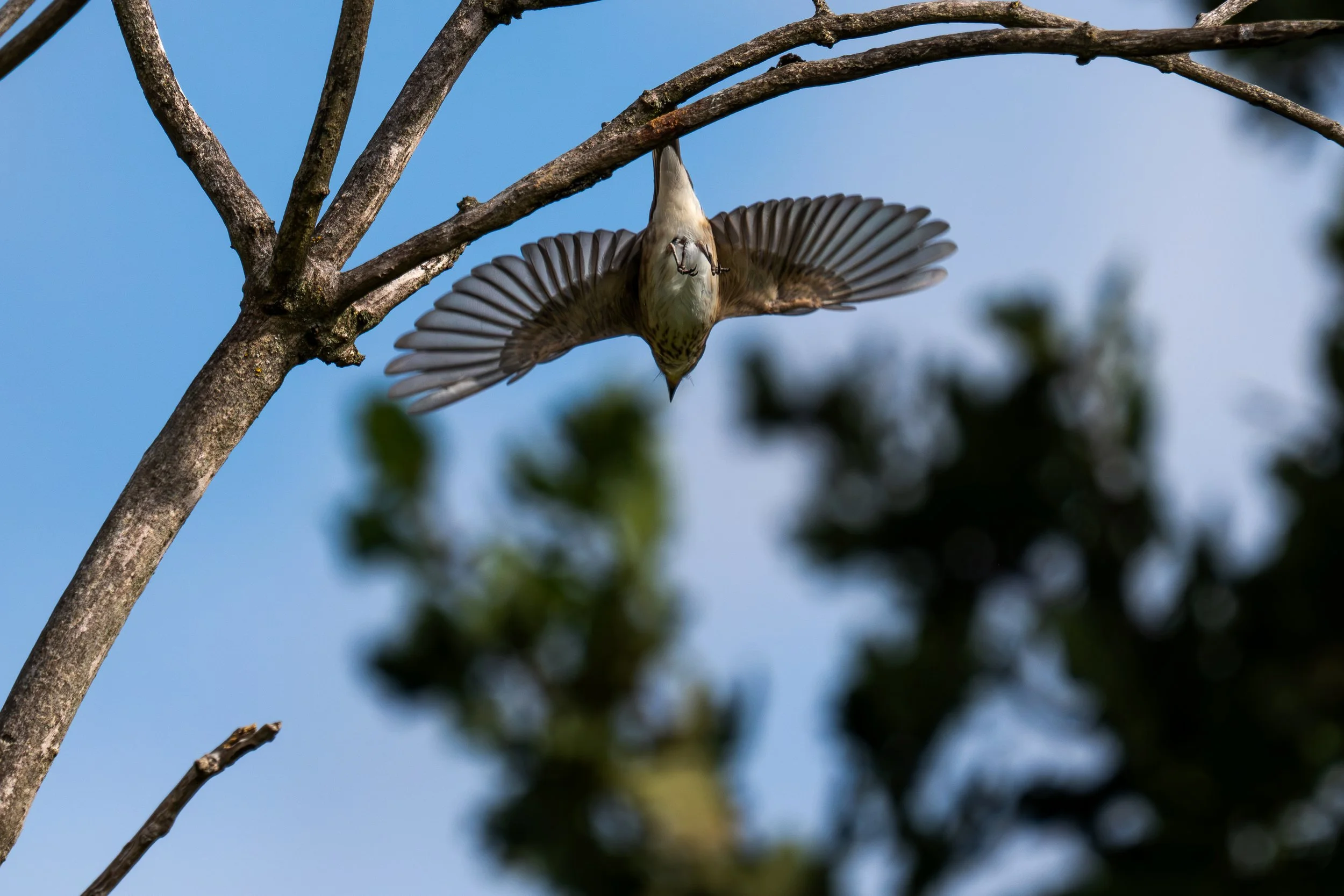
Spotted Flycatcher, leaving
That trip also found this little blackcap snacking on the last few elderberries (yes, the cap is brown, we named the species after the male, something something patriarchy):
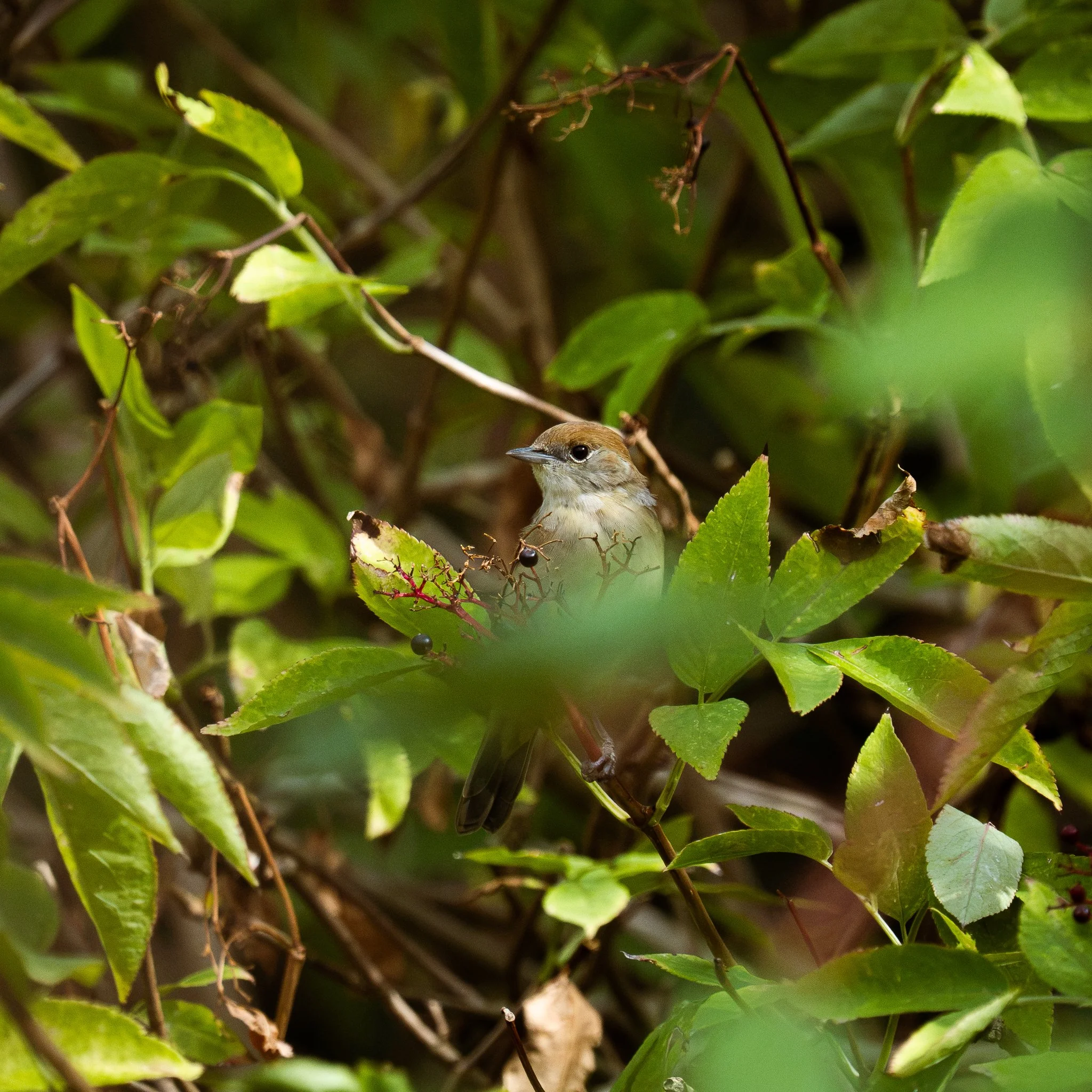
Blackcap. Do not let the fact that the cap is not black fool you.
And this juvenile greenfinch, still speckled:
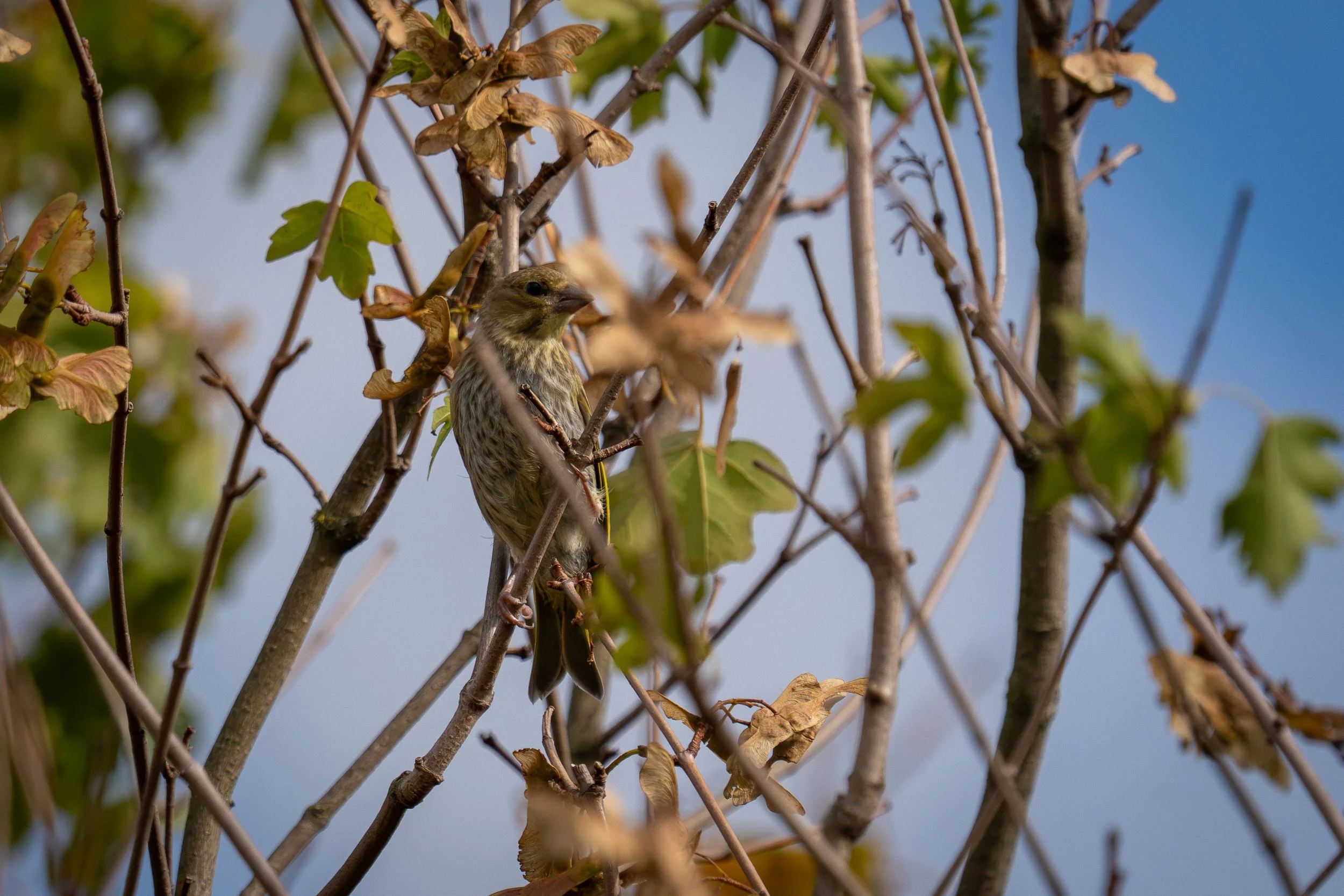
Greenfinch
Despite the cooling weather the ponds kept attracting more unusual visitors. This Lesser Black-Backed Gull hung around briefly, looking giant next to the Black-Headed Gulls that usually occupy the place.
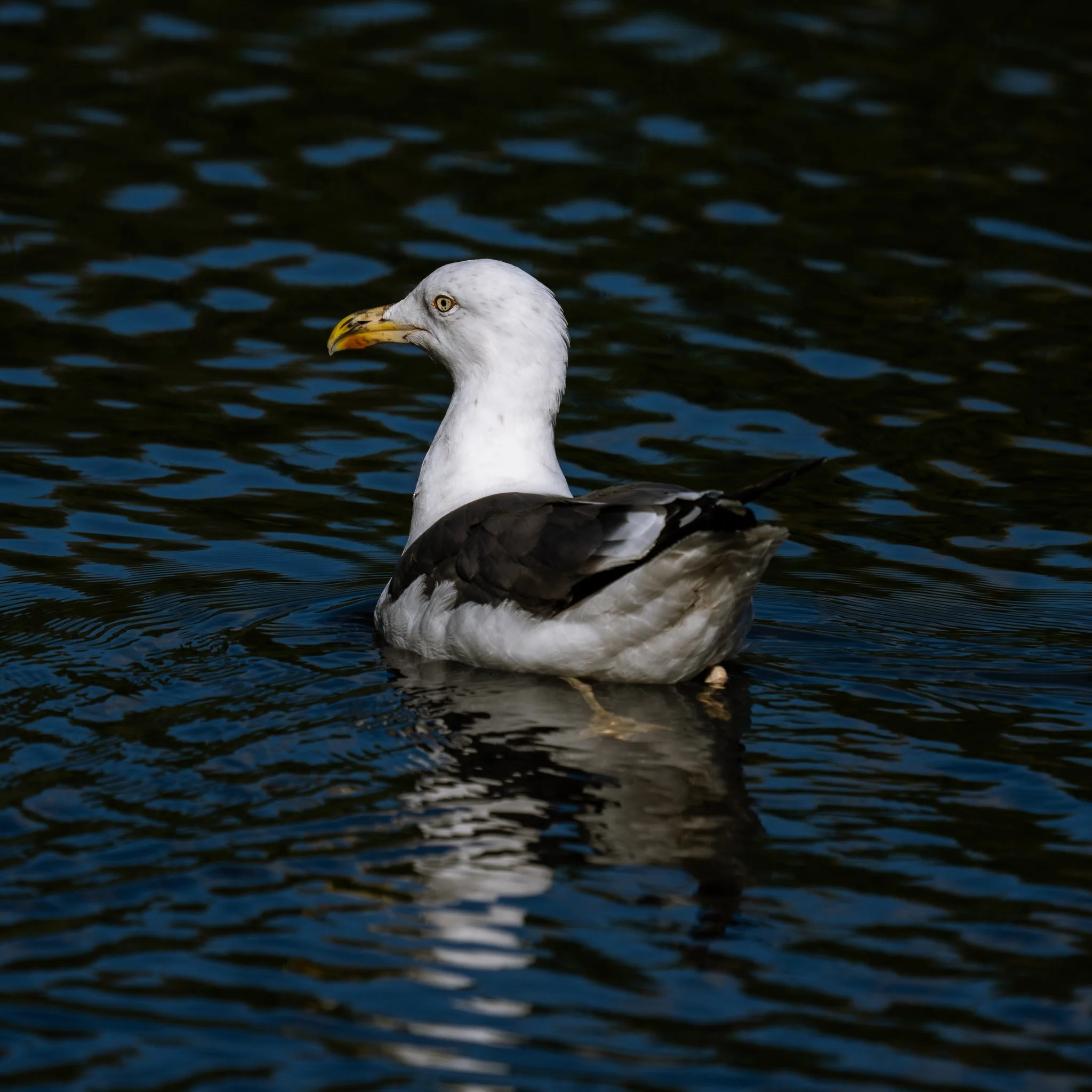
Lesser Black-Backed Gull
And a pair of Little Grebes showed up - and at time of writing, are still there. I’ve written before about trying to catch one of these with the lens, but I had enough chances that I finally got some decent pictures:
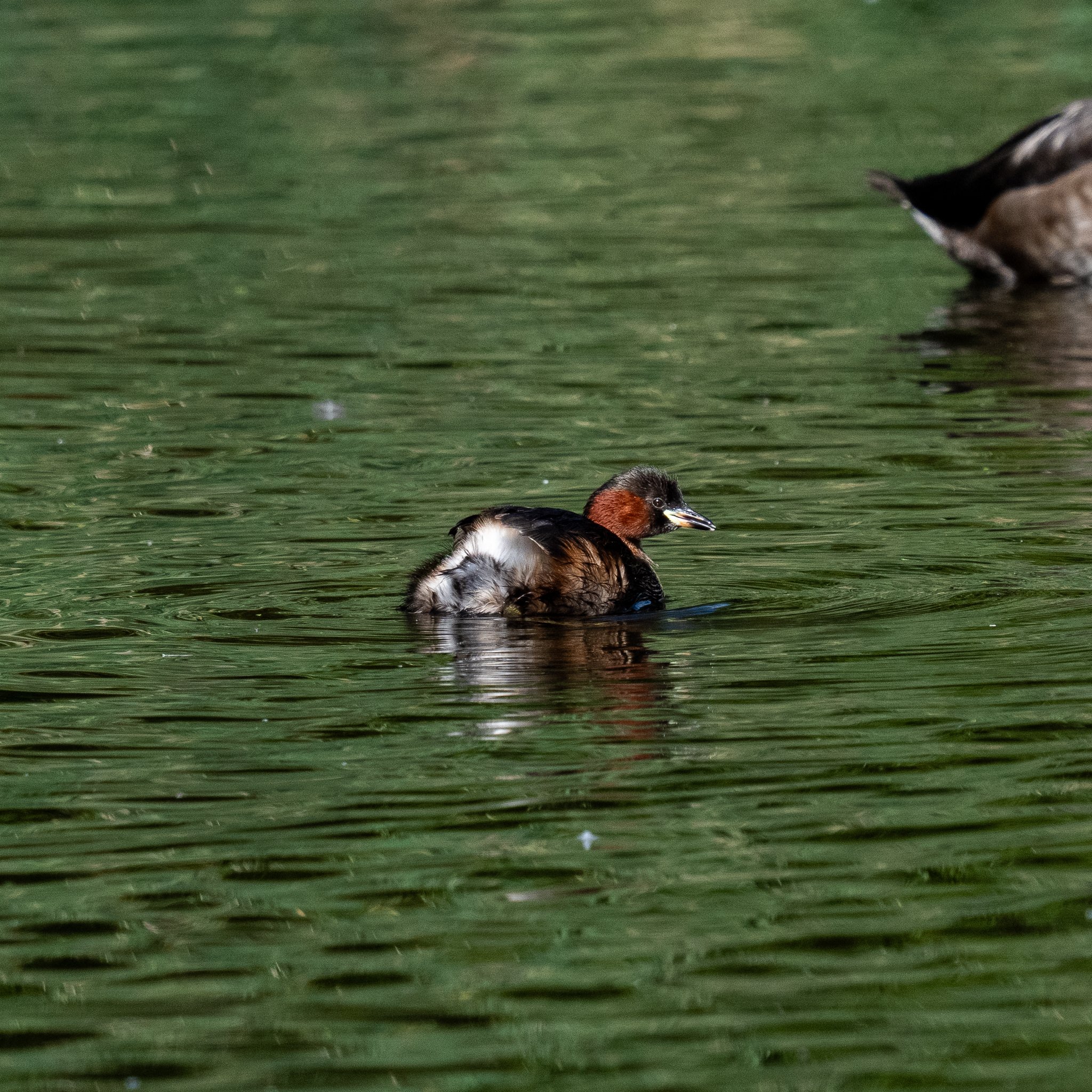
Little Grebe, male
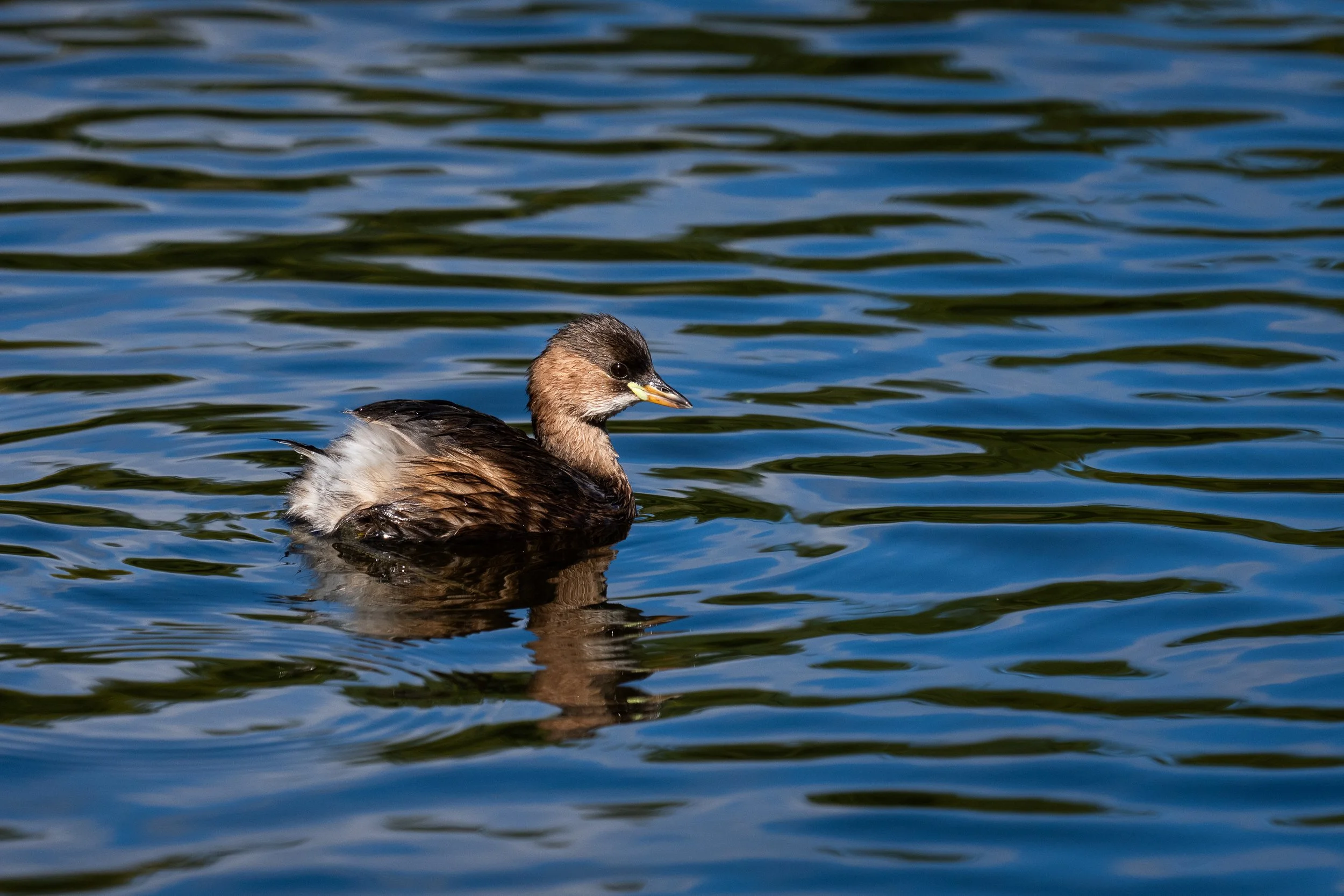
Little Grebe, female
But the most exciting part is that this pair look like they’re planning on staying. If they overwinter there’s a chance they’ll breed here next year, and there’ll be even littler grebes around.
As the month closed out and the water rose a bit higher, the overflows between the ponds began flowing again, and the sparrows moved back to bathing there. I got this dreamy shot midmorning:
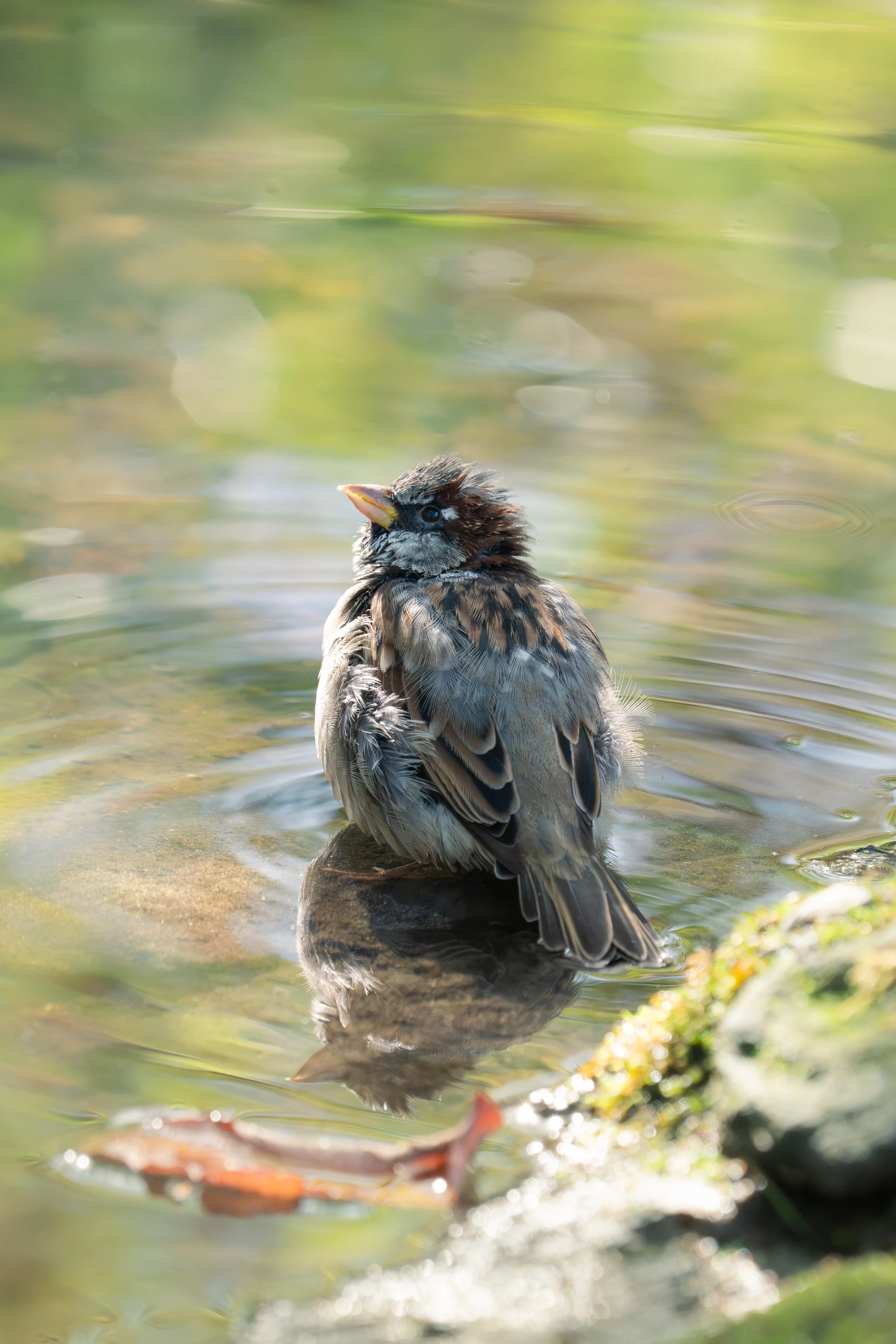
Bathing House Sparrow
And back in the wild area, I saw this probably Willow Warbler stealing a spider’s dinner. As a shot, this one isn’t really great - the focus isn’t quite in and it’s a very tight crop, but I love the behaviour so I kept it anyway.
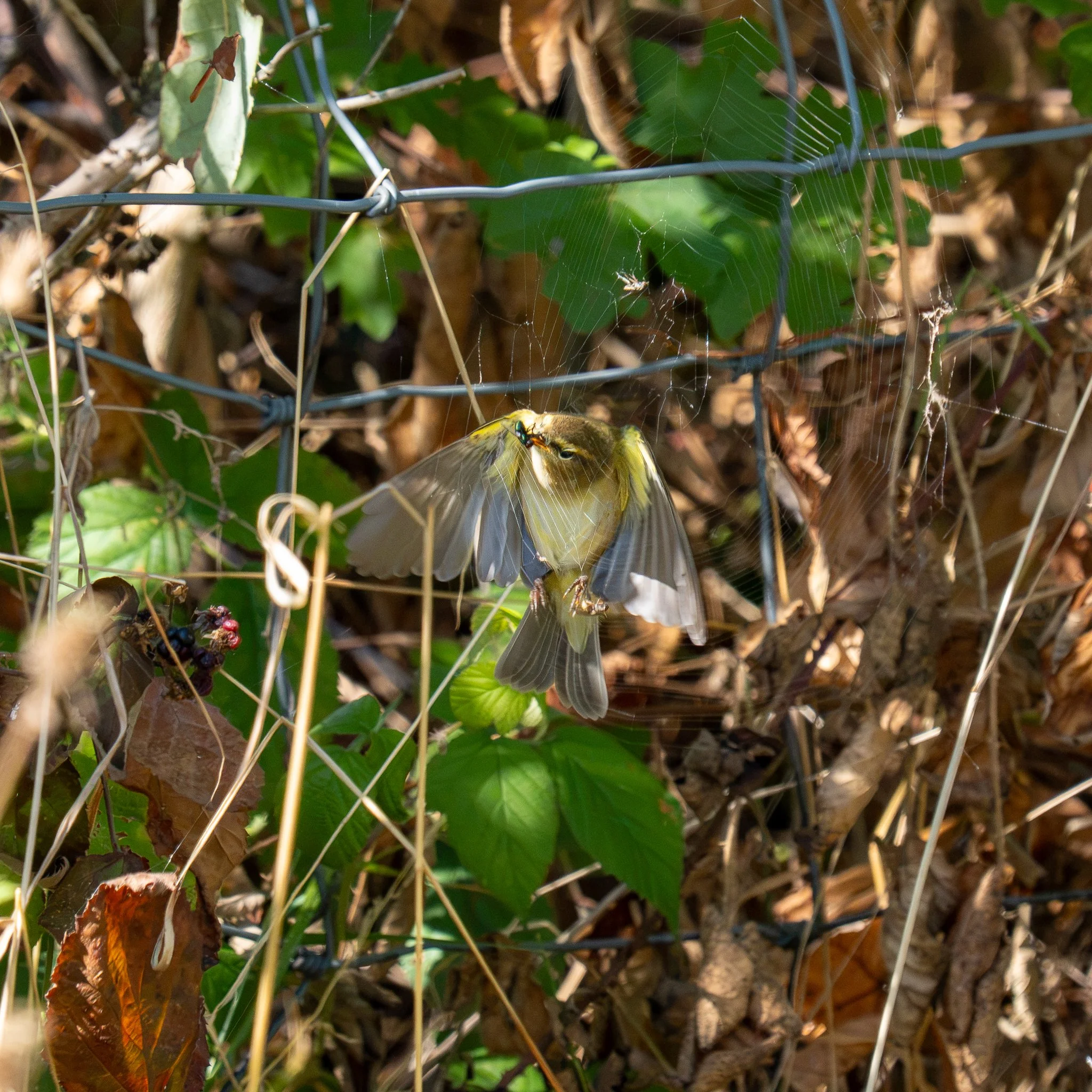
Willow Warbler. Probably. It wasn’t singing and it’s quite yellow and the legs look fairly light so it seems more Willow Warbler than Chiffchaff to me, but honestly who can tell.
Another day, another walk without the camera. This time because I was actually going to the Herne Hill market rather than to look at birds, but since I was there anyway I did wander past the ponds on the way back, finding the Mandarin had come back, and had a female with him as well.
Obviously I wasn’t going to let this happen twice, so I dropped off whatever it was I’d bought (probably sausages, it usually is) and went straight back out actually carrying a camera this time.
Anyway, got a few pictures:
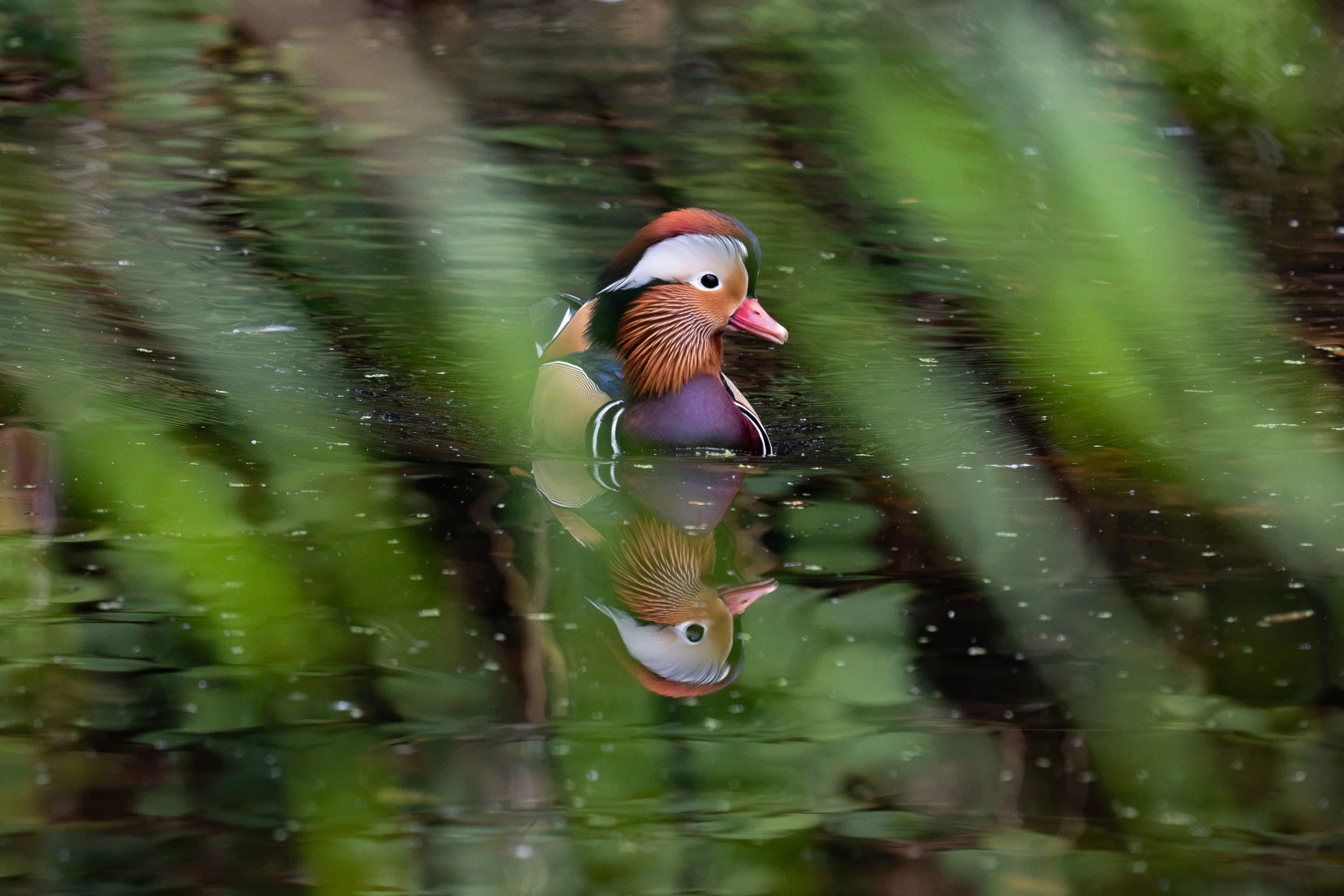
Mandarin, male
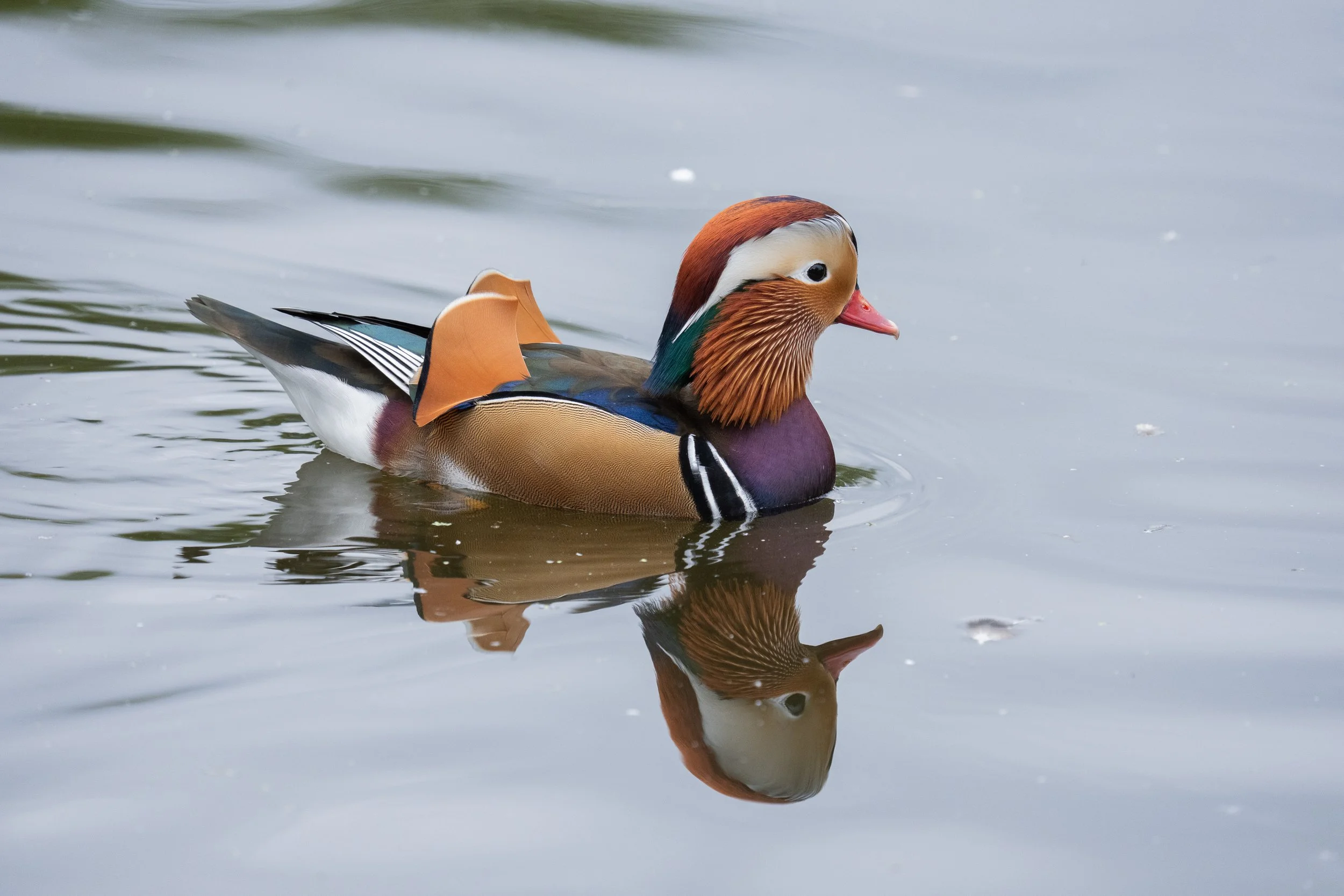
Mandarin, male
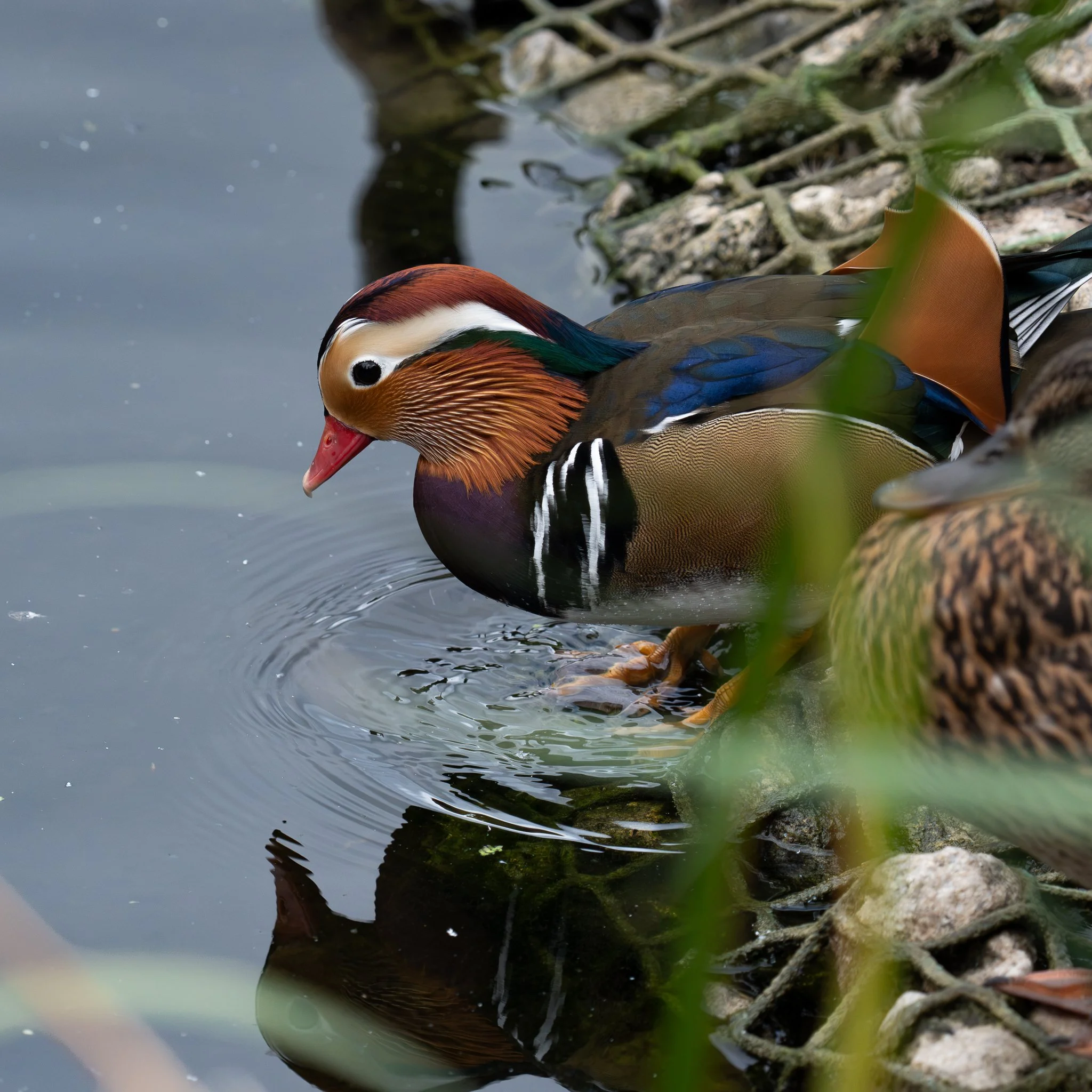
Mandarin, male
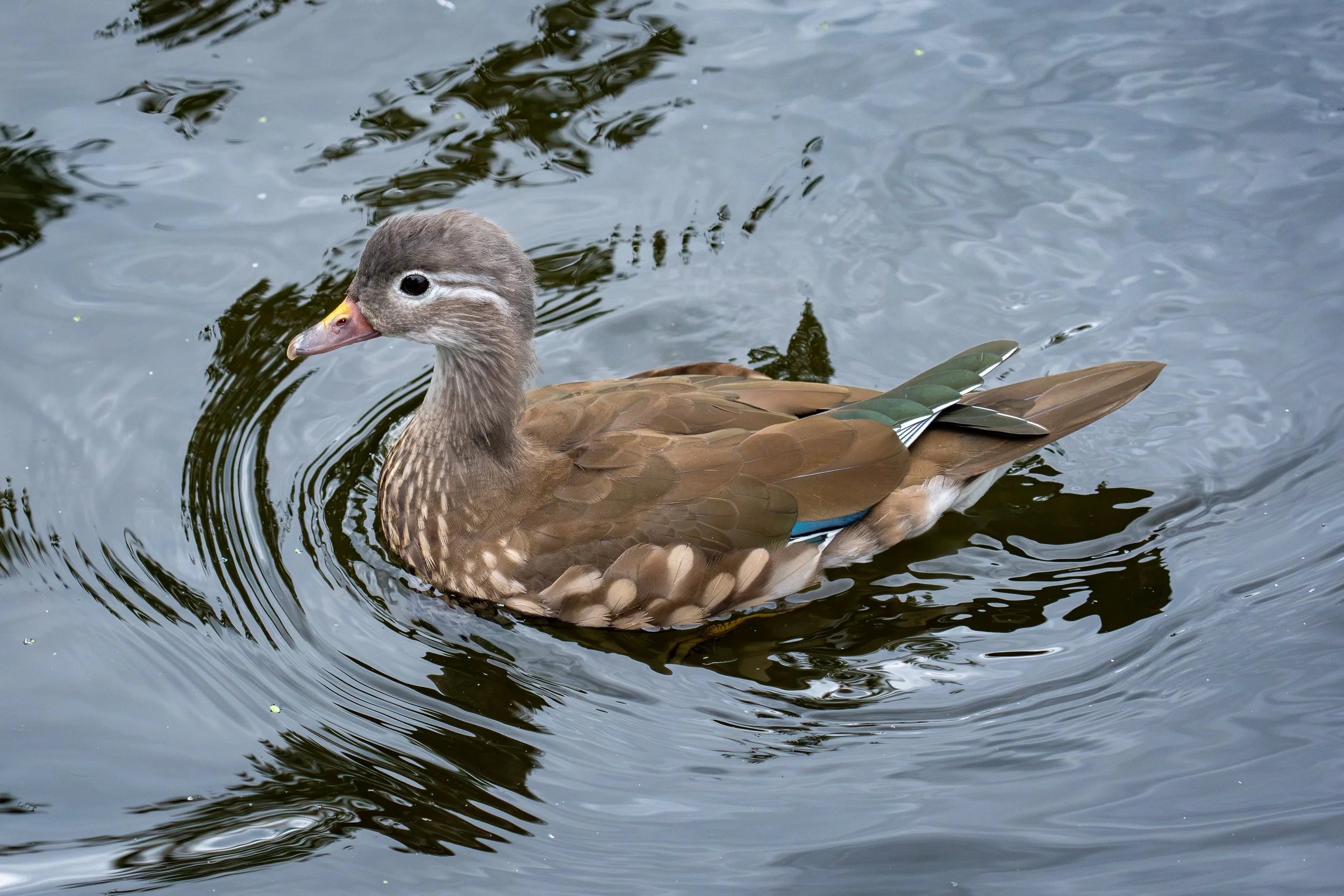
Mandarin, female
Mandarins are small, excessively pretty ducks. As the name suggests, they’re from China originally, introduced as exotic birds on private lakes and then escaped to form a feral population. There’s a few thousand of them around now. I’d always assumed it was the Victorians who introduced them because it usually is, but apparently it was a 20th Century thing.
On the way back from paparazzing the Mandarins, I saw a Coal Tit and a Goldcrest bouncing around one of the pine-adjacent things on the western path.
I’m not very good at trees.
I’m also not very good at getting pictures of Goldcrests, none of them came out well. The coal tit was a bit more helpful, also pausing on its way off to pose in something ornamental.
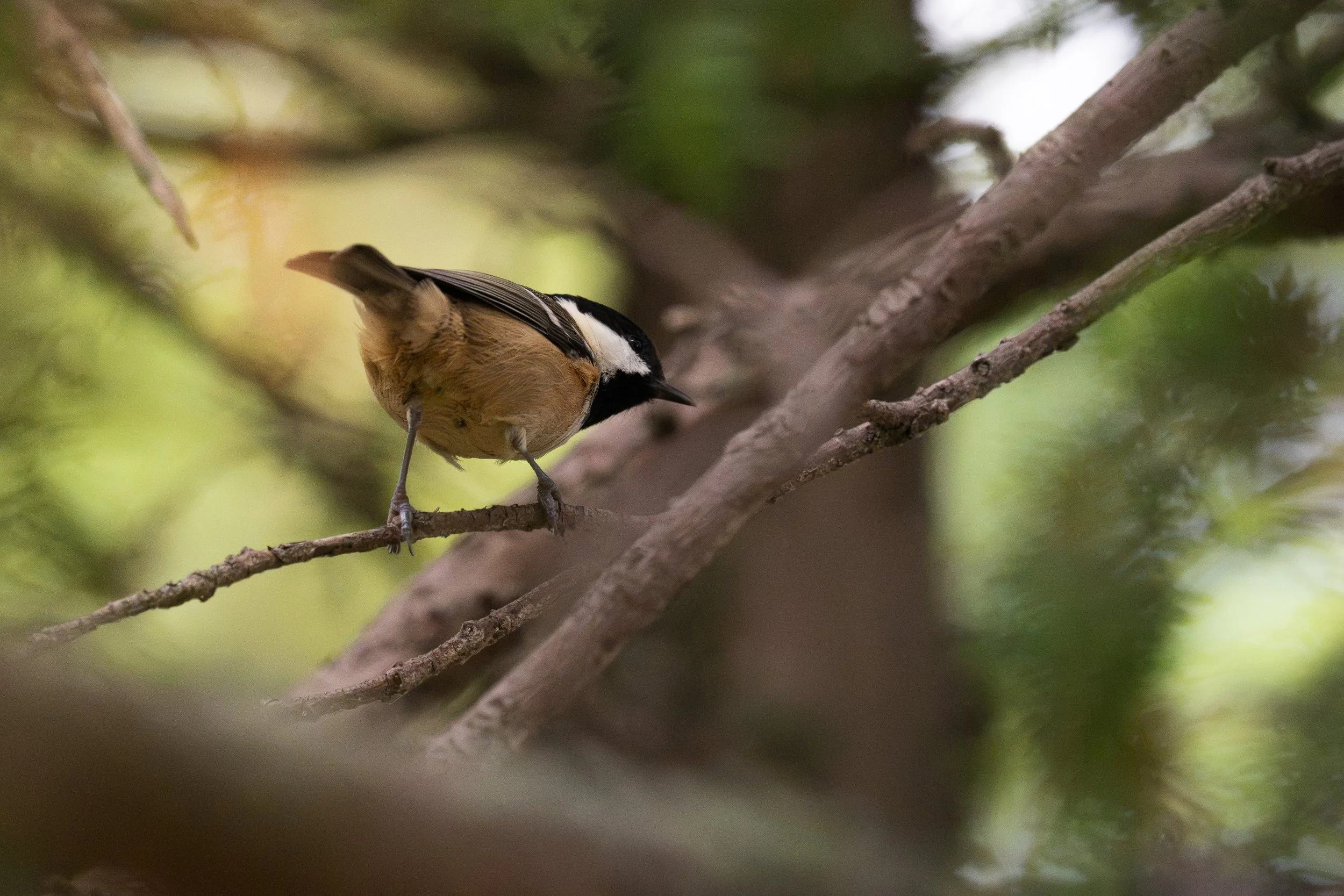
Coal Tit
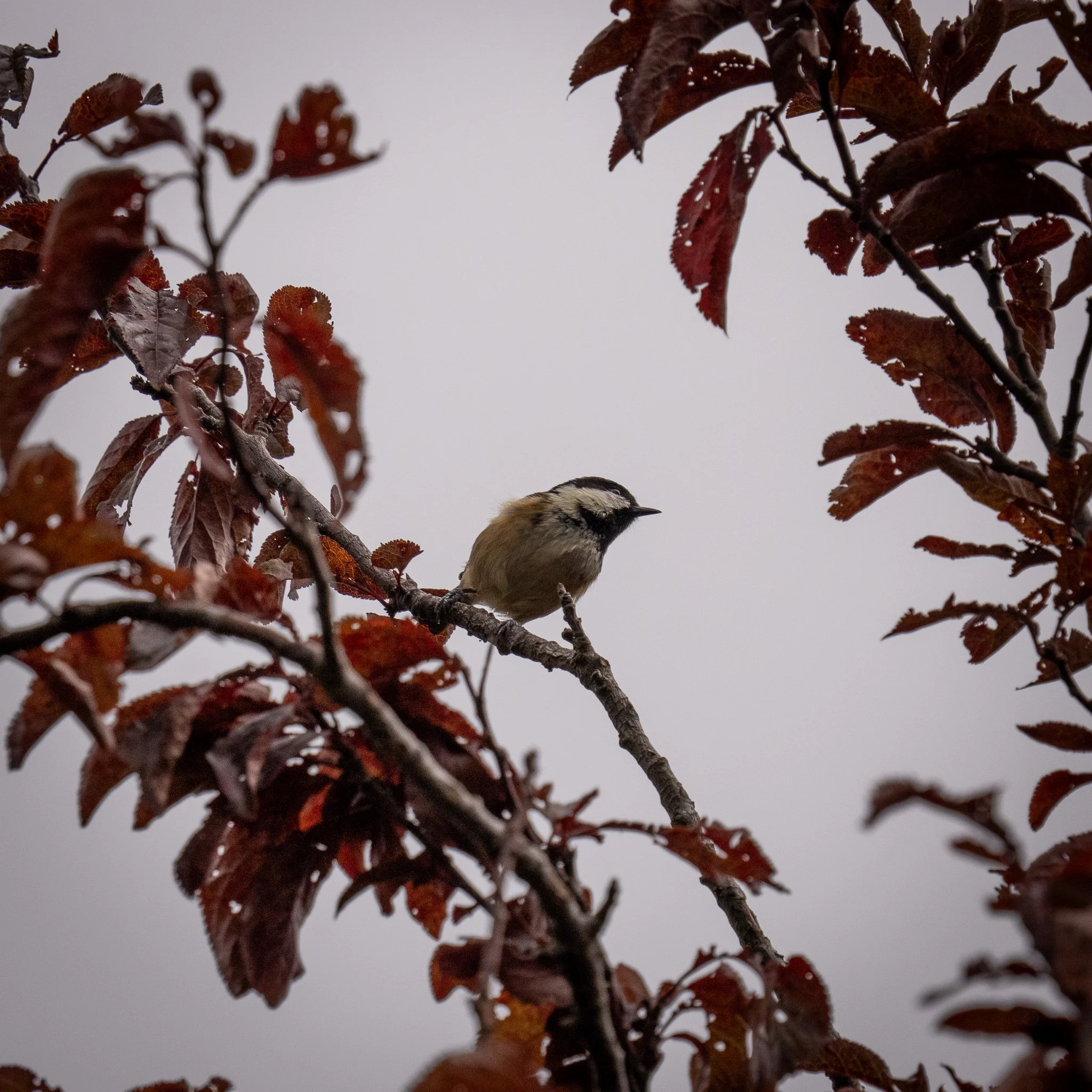
Coal Tit
Coal tits aren’t rare, but there’s a lot fewer of them than there are Blue Tits and Great Tits. They’re tiny, and often overlooked.
Finally, a tap-tap-tapping on the way back helped me spot a Greater Spotted Woodpecker in the high branches. The overcast day and bare branches make this shot look wintery, even though it was still over twenty degrees when I took it.
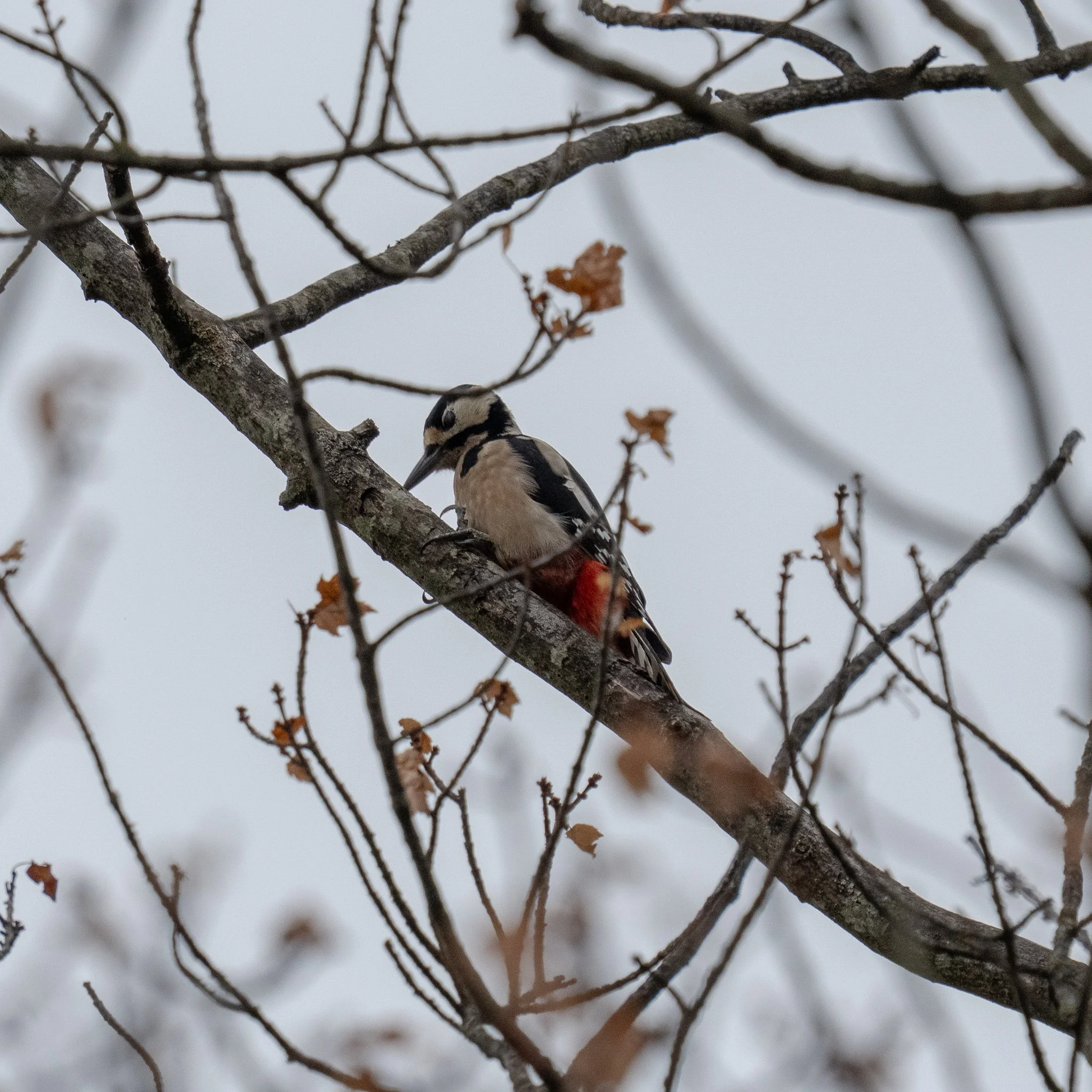
Greater Spotted Woodpecker
Now we’ve actually hit autumn, I’m looking forward to cooler days and winter migrants. But it really was one hell of a summer.
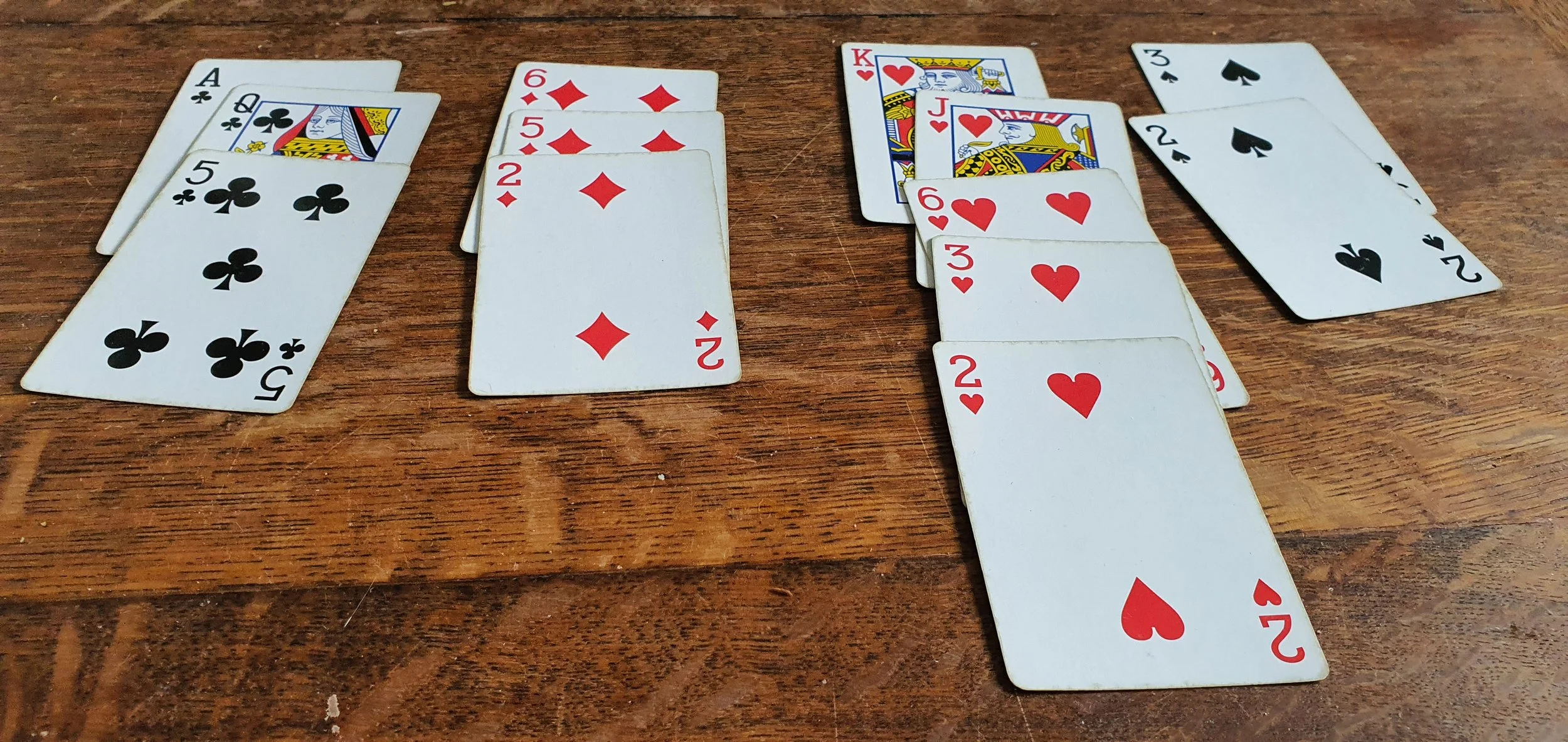
Slam Bidding in Zar Bridge
So I’ve been doing some statistical analysis of bridge hands, and I realise this may come a bit out of left-field on a blog otherwise devoted to pictures of ducks.
I’ll try to get around to explaining where this came from in another post later. For now, I want to write about numbers.
Numbers
Quick note on the methodology:
I’ve built up a set of randomly generated partnerships and assigned each of them an ‘ideal contract’ based on a set of baseline criteria, e.g.
7NT: Total points = 67+, no singleton or void in either hand, 4 aces, 8+-card fit
Contracts can have multiple criteria, e.g there is also:
7NT: Total points = 72+, no singleton or void in either hand, 4 aces, no fit
Points are counted using Zar, because it doesn’t suck. It does not include any adjustments for superfit, honours in Partner’s suit etc. It does include an adjustment down for unsupported honours.
Each partnership is then tested against its ideal contract across 50 samples, with the remaining cards dealt randomly to the opposing partnership in each sample. Cardplay is simulated with a double-dummy engine, and the number of tricks taken in each sample recorded to provide a distribution for each hand.
The whole dataset includes 27,819 partnerships, with a 98.9% sample resolution rate.
I’ve then sliced down the dataset to ask questions like ‘of all the partnerships assigned 6NT, how did the ones with 3 kings compare to the ones with 4 kings?’ by looking at the total % of samples which made the contract.
I started out writing this as a set of notes to the slam bidding system I’d come up with, only to realise as I was writing the notes that the system didn’t really match the conclusions I was drawing, so the conventions themselves will get written up in a new post when I have, yet again, completely revised them.
So for now, numbers.
Small Slam
My baseline contract criteria follow the standard Bridge precept that if a partnership has no singleton or void, it should be in no-trumps; if it has one, it should in a trump contract, so that’s how trump/no-trump has been divided. It would be interesting to test some of these partnerships against the other contract at some point, but for now I’m assuming the received wisdom is true.
Percentages below show the % of samples which make the contract under each set of conditions. ‘N’ is the total number of partnerships in that slice.
62-66 points, 8-card fit, 6-trump slam (n=318):
4 aces, K of trumps: 79.9% (missing Q, 70.2%; with Q, 87.3%)
4 aces, missing K of trumps: 54.0% (missing Q, 37.1%; with Q, 58.4%)
3 aces, K of trumps: 53.4% (missing Q, 34.5%; with Q, 64.7%)
3 aces, < 4 kings, K of trumps: 49.2% (missing Q, 31.2%; with Q, 60.0%)
62-66 points, 9+-card fit, 6-trump slam (n=382):
4 aces, K of trumps: 95.8% (missing Q, 93.4%; with Q, 96.8%)
4 aces, missing K of trumps: 82.1% (missing Q, 66.6%; with Q, 88.2%)
3 aces, K of trumps: 81.2% (missing Q, 66.7%; with Q, 84.0%)
3 aces, < 4 kings, K of trumps: 80.7% (missing Q, 69.9%; with Q, 82.5%)
3 aces, missing K of trumps: 55.2% (missing Q, 40.0%; with Q, 56.1%)
62-66 points, 8-card fit, 6NT (n=65):
4 aces: 79.9%
4 aces, < 4 kings: 79.3% ( < 3 kings, 64.2%; no data for < 2)
3 aces: 67.8%
3 aces, 4 kings: 73.4% (3, 54.7%, n=6)
62-66 points, 9+-card fit, 6NT (n=45):
4 aces: 82.3%
4 aces, < 4 kings: 79.9% ( < 3 kings, 75.6%; no data for < 2)
3 aces: 77.7%
3 aces, 4 kings: 83.1% (not enough data for < 4 kings)
Standard bridge wisdom, based on the usual scoring systems, is that if you’ve got a 50% chance of making a small slam you should go for it. Conversely, you need a 75-80% chance of making a grand slam to bid it over a small slam, as the rewards are relatively less and the small slam, with this kind of point count, basically certain.
So this leads to a few rules:
62-66 points, 8 card fit, unbalanced:
If you’ve got 4 aces and either the K or Q of trumps, go for it.
If you’ve got 3 aces and both the K and Q of trumps, go for it.
If you’ve got 4 aces and don’t have space to ask about the K or Q of trumps, you should probably bug out. If you need to ask about them, it means you can’t see either of them, and that 54% includes all the partnerships where they’re in your hand too.
62-66 points, 9+-card fit, unbalanced:
If you’ve got 4 aces, you’re good, even missing both K and Q you’ve got a 2/3 chance of success.
If you’ve got 3 aces, you’re probably still good, holding either the K or Q will put you over 50%.
62-66 points, balanced:
Bid the slam with 3+ aces. You’ll have a better shot at making if you’ve got the superfit or have most of the kings – but even without the superfit you make it more often than not, and with a point count this high hands without at least 2 kings are ridiculously rare.
Grand Slam
With Grand Slams things are a bit different. We’re going to assume you always have 4 aces here, if you’re missing one you should be bugging out.
I’ll spare you the full breakdown for this, if only because it just means less – the sample sizes are getting pretty damn thin for hands of this size. But the tl;dr:
8-card fit:
For a 75% hit rate, you need both the K and Q of trumps. You can get away with 3 kings total as long as one of them is the trump, but you still need the Q to put you over the 75% chance of making. 4 kings without the Q doesn’t get you there.
9-card fit:
3+ kings, one of which is the king of trumps, is the ballgame. Having the Q of trumps always makes things better, but she never puts you over 75% if you weren’t there already.
3 kings but missing the king of trumps is interesting – in the data these partnerships get wrecked (24% make) but there’s only 2 partnerships out of the whole dataset with this combination, so not really good for a conclusion. I would avoid, regardless.
7NT:
Not enough data. Only 9 partnerships meet the baseline of 67+ points and balanced, so there’s nowhere near enough to slice up to see what’s really needed.
No Fit:
If you’ve got 67+ points and don’t have a fit, you’re basically always in 6NT. 4 aces is best, 3 still has a 55.4% make-rate.
***
Right now what’s standing out most to me is that the biggest deciding factor is the fit. If you’ve got a 9+-card fit, you can get away with having far less, so you want to know if that’s there before you get to the slam-bidding part of the auction.
Next up, I’ll need to adjust the bidding system so that it actually makes sense with these numbers.
And after that, I’ll go back to my ducks.
South Norwood Country Park, 28th August 2026
Wanderer, this is a refuge.
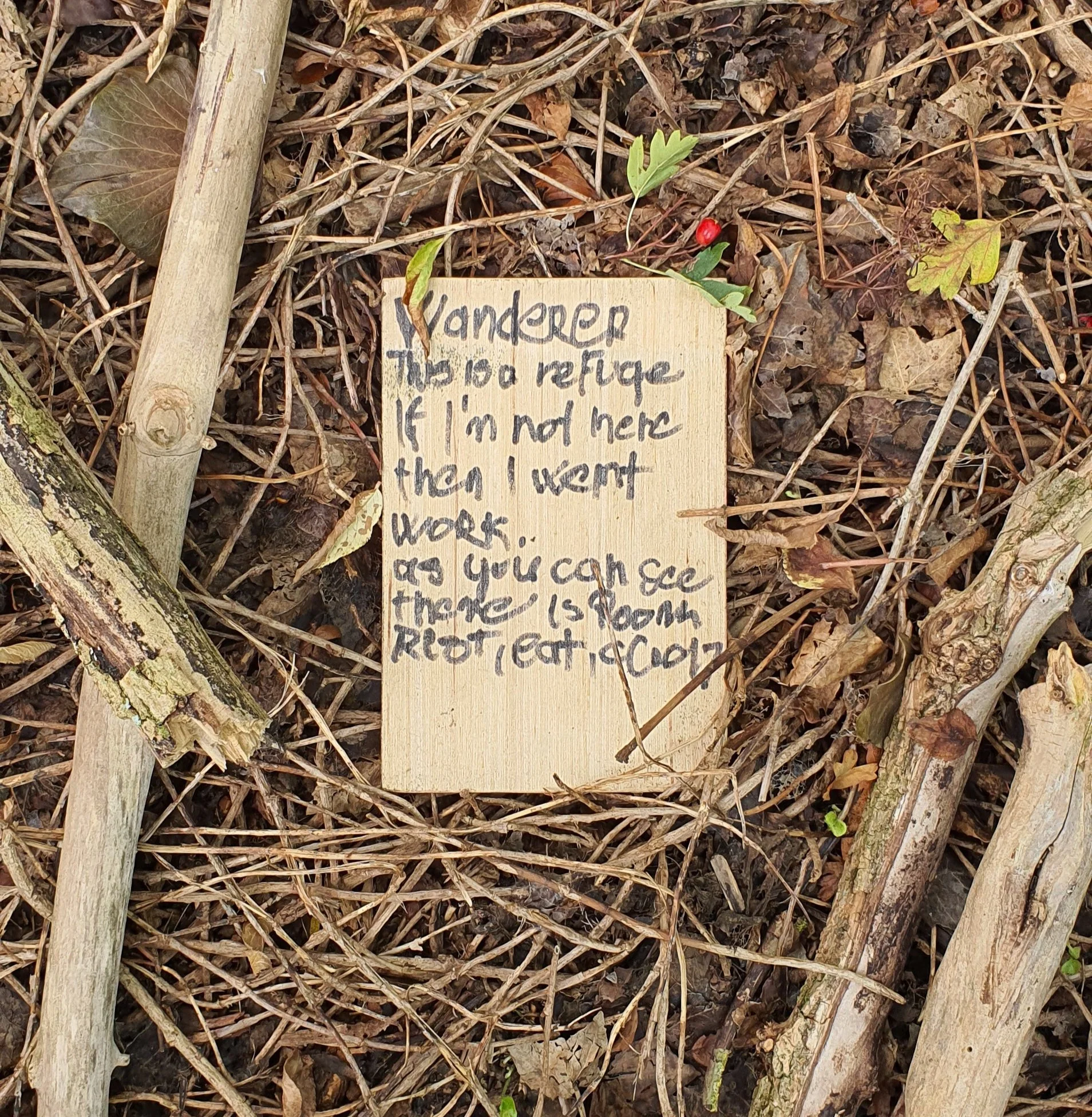
Welcome mat
I find that note following what looks like a desire path into some scrub in South Norwood Country Park. I’m expecting to cut through and end up in another meadow, burnt brown by this furnace of a summer we’ve been having. Instead, there’s a small clearing with a few signs of life, if not actual living. No shelter, but the remains of an old bounded fire, a pile of large branches which might have been a shelter once, a couple of personal items and an invitation.
I don’t stay long, just enough to grab a picture of the note on my phone. The note itself is clearly recent, and welcoming as it may be, it feels intrusive to hang around. There’s plenty more of this place to walk through.
I’m there too late, really. Birds get less active as the sun gets higher so my original plan was to drag myself out of bed early and get there between 8 and 9. In the end, bed is more attractive so I don’t actually make it there until 10:30.
But the lake still delivers. As well as the usual collection of geese, ducks, seagulls, coots and moorhens, there’s a little grebe bobbing up and down as it dives for food and a grey heron overseeing everything from a nearby tree.
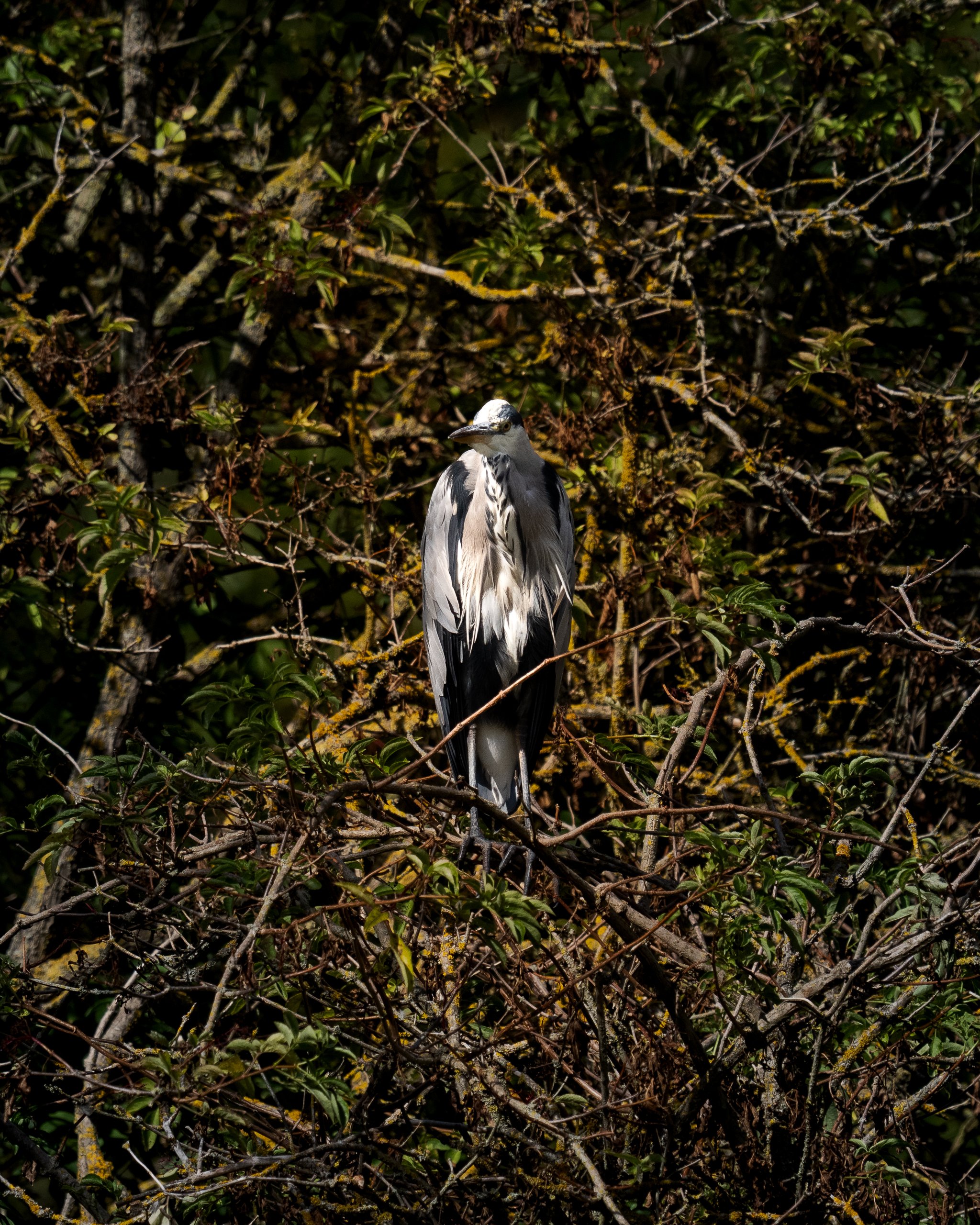
Grey Heron
Little grebes can be a right pain to get a picture of. They can dive for ages, eventually springing up in an entirely different bit of the lake, and you need to spot and swing the lens over before they go down again, constantly playing photographic whackamole.
I do get some shots of it, but it’s too distant for them to be worth sharing.
A little egret stands on the edge of the island repeatedly stabbing at something in the water. There might have been fish there, but the only thing I saw it catch was a leaf.
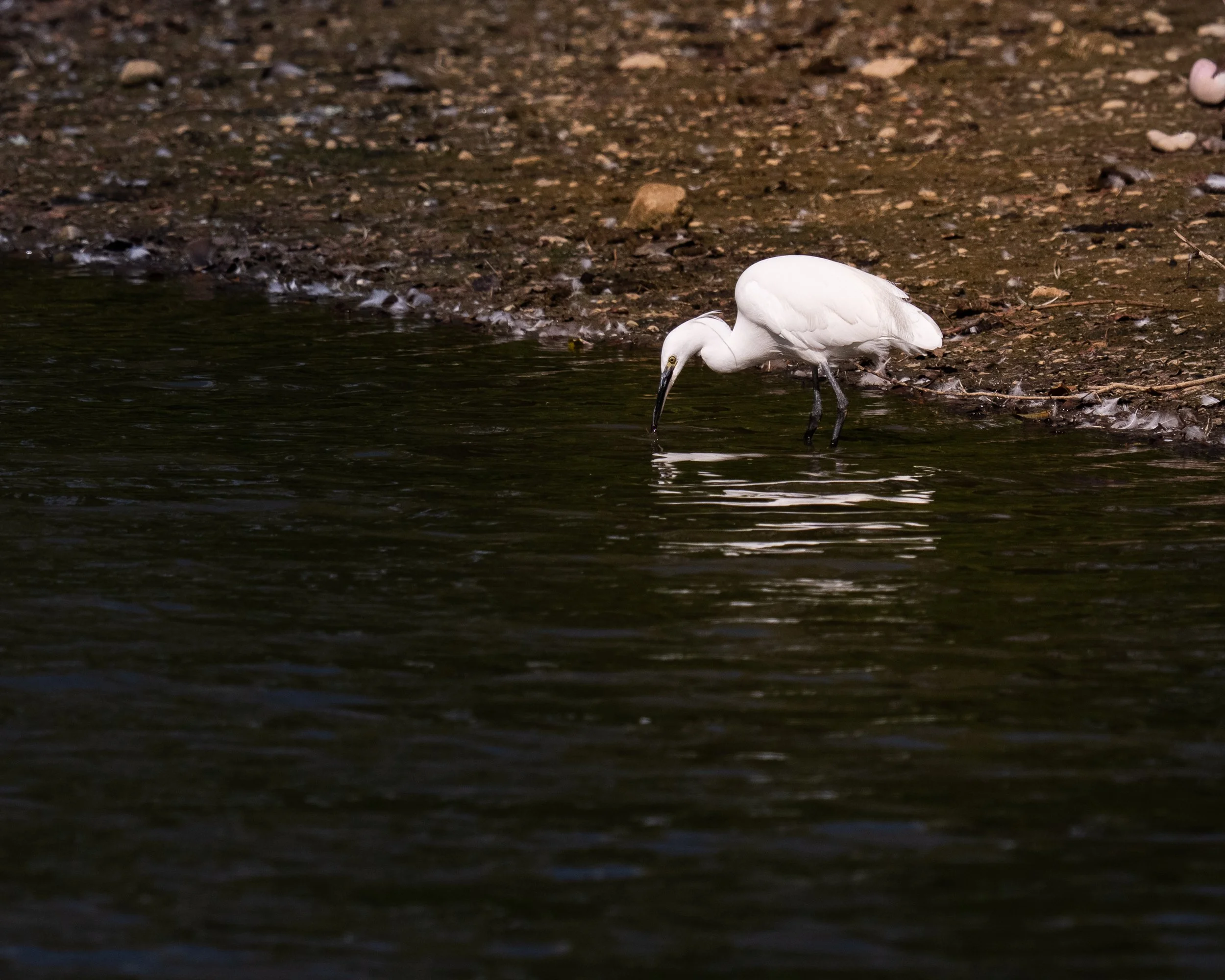
Little Egret, trying to catch something that isn’t a leaf
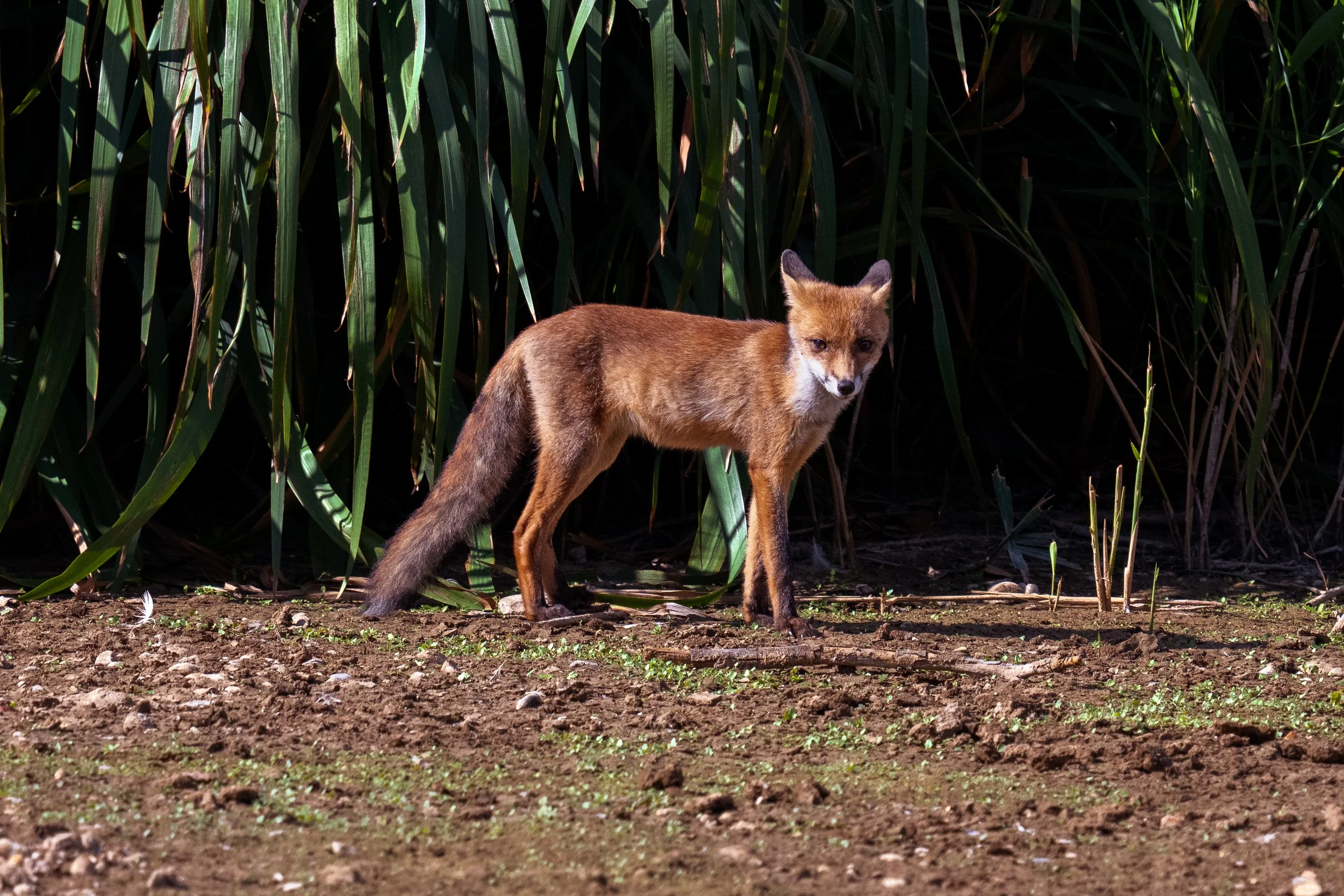
I’m briefly distracted from the egret by movement over to the left. There’s a fox there, trotting across some of the shoreline, newly revealed as the lake has shrunk over summer. It watches me for a couple of seconds before slipping off into the reeds.
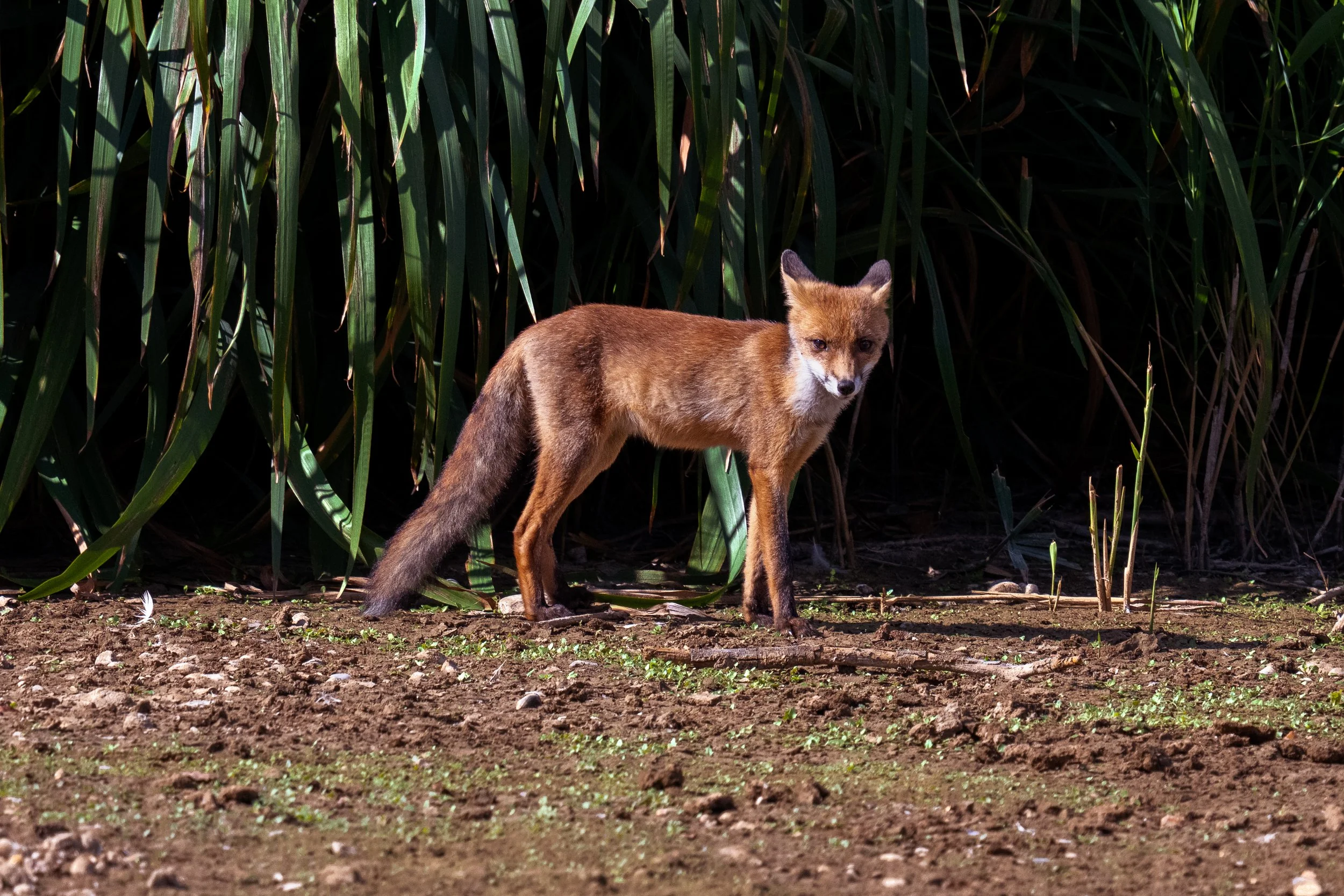
Fox, as we spotted each other
Movement up top - a female kestrel flies in and wheels around the lake. It’s hawking rather than hovering, jack-knifing so much through the sky that for a minute I think it’s a hobby, but the barred tail and stubbier wings give it away as it comes closer.
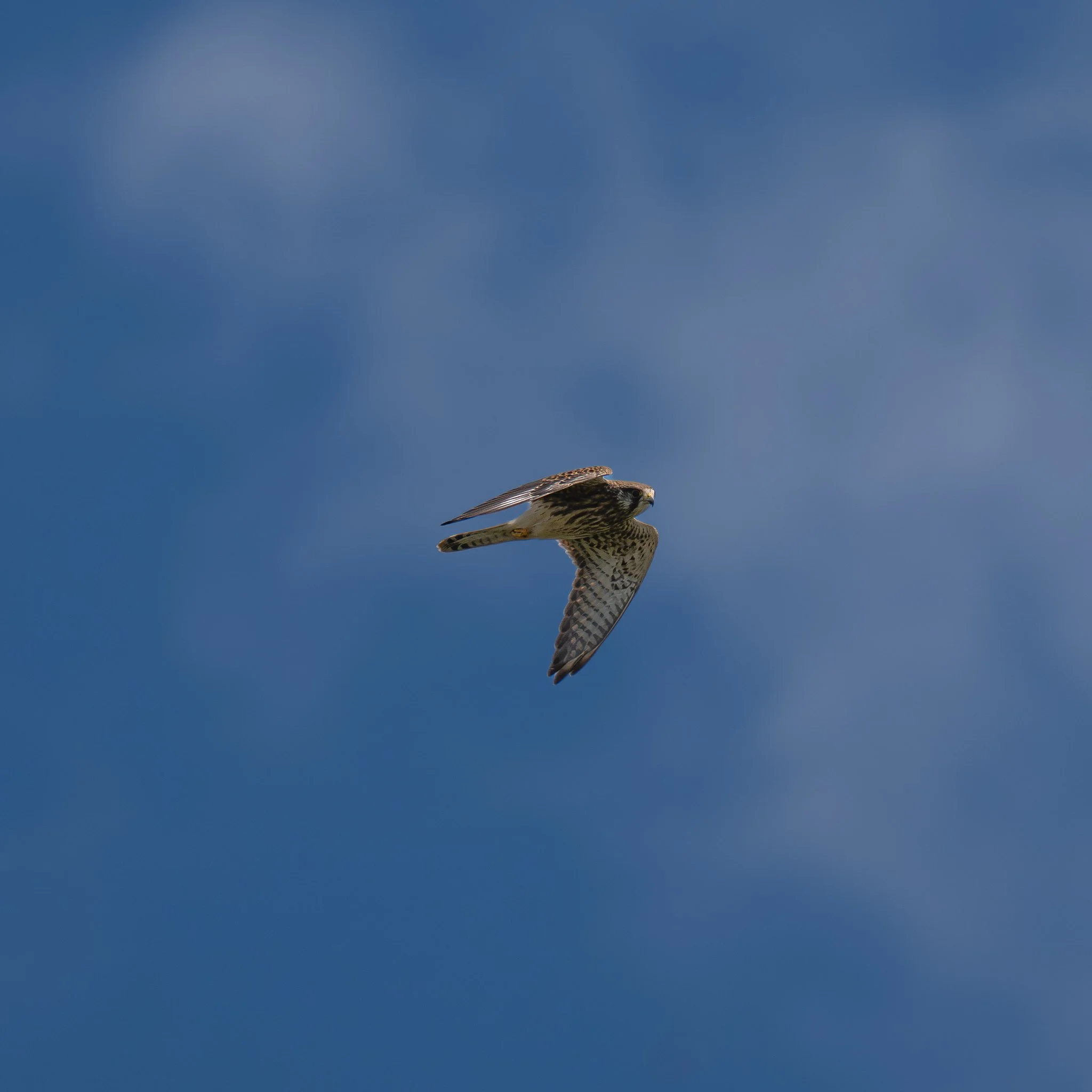
Kestrel swooping over the lake.
And that’s about it for pictures on this trip.
I hear plenty of tits in the overgrowth, the occasional chiffchaff, warbler and robin, but they’re all hidden in the branches. I see a couple of great tits but don’t get a lens on them, even with today’s tech focusing on a small bird in the middle of a hedge is a big ask. Earlier, they would have been moving more, and I would have had more chance, but I was lazy so instead it’s birdsong only.
Instead I find myself noticing the landscape itself. Dust-dry paths, metre-high stalks topped with crumbling seed heads. The blackberries are almost done, being replaced by big red hawberries and fat sloes. I remember blackberries being at their best at this time of year, gathering tubs of them at the end of the summer holidays back in Cornwall. But that was years ago, and I’m not sure if earlier ripening is geography, climate change, incorrect memory or a combination of all three.
The land here is still a tinderbox, but it’s noticeably fresher after some rain. Even the dried-out stems in the wildflower meadows don’t feel so brittle. It’s like it’s breathing a bit again.
This place feels more wild than a standard London park. It is scrub and meadow, lake and copse, not lawn or formal garden. But it’s just a veneer. The habitats here are managed, there are signs explaining what species are being encouraged. The wildflower meadow is not what would grow if this area was left to its own devices, it’s planted specifically for a type of butterfly. A brief conversation at the top of the viewing mount with a woman who came exploring in flip flops reveals someone is thinking of introducing beavers here in 2027.
“They want to put them in the river here,” she says, “so I thought I’d go and have a look at it.”
I think the river here feels a bit small, but that’s not coming from an informed opinion on the requirements of beavers, and I say as much.
“Yes,” she says. “I was wondering about that too.”
So this place is still more Park than Country, not so much an outcrop of wilderness in London as a place where we’re trying to give homes to things that don’t have them.
But that’s OK. This is a refuge, after all.
Horsegirl @ Islington Assembly Hall, 21st August 2026
Back in 2020, Horsegirl released one of the best songs of the decade.
Sea Life Sandwich Boy is just under five minutes of fuzzy, reverby joy. From the opening anticipatory few seconds to the building crash as everything kicks into gear to the pair of guitar lines, one chiming and clear, the other drenched in so much feedback you feel genuinely sorry for the amp it’s going through.
It’s over a minute before they start singing, and when they do it’s echoey, distant, hard to make out the actual words. This is fine, the lyrics make fuck-all sense (as you might expect from something called Sea Life Sandwich Boy), but the vocal line itself is the most perfect complement to the music underpinning it.
They wrote that song when they were all around 17, the kind of age where you just meet up with your mates and say ‘hey let’s write the best song ever’ and then just do it because you haven’t internalised that you shouldn’t be able to just do that yet.
In case I haven’t yet made this clear: it’s brilliant. I saw them perform it once, in Paper Dress Vintage, a cupboard above a charity shop near Hackney station. I still remember the euphoria in the room when those opening chords took off.
And I was pretty convinced, going to this gig, that it wasn’t going to be in the set.
But that’s later. I get to Islington Assembly Hall expecting to have missed the start of the support band, but someone somewhere messed something up and they don’t come on until half an hour later than advertised.
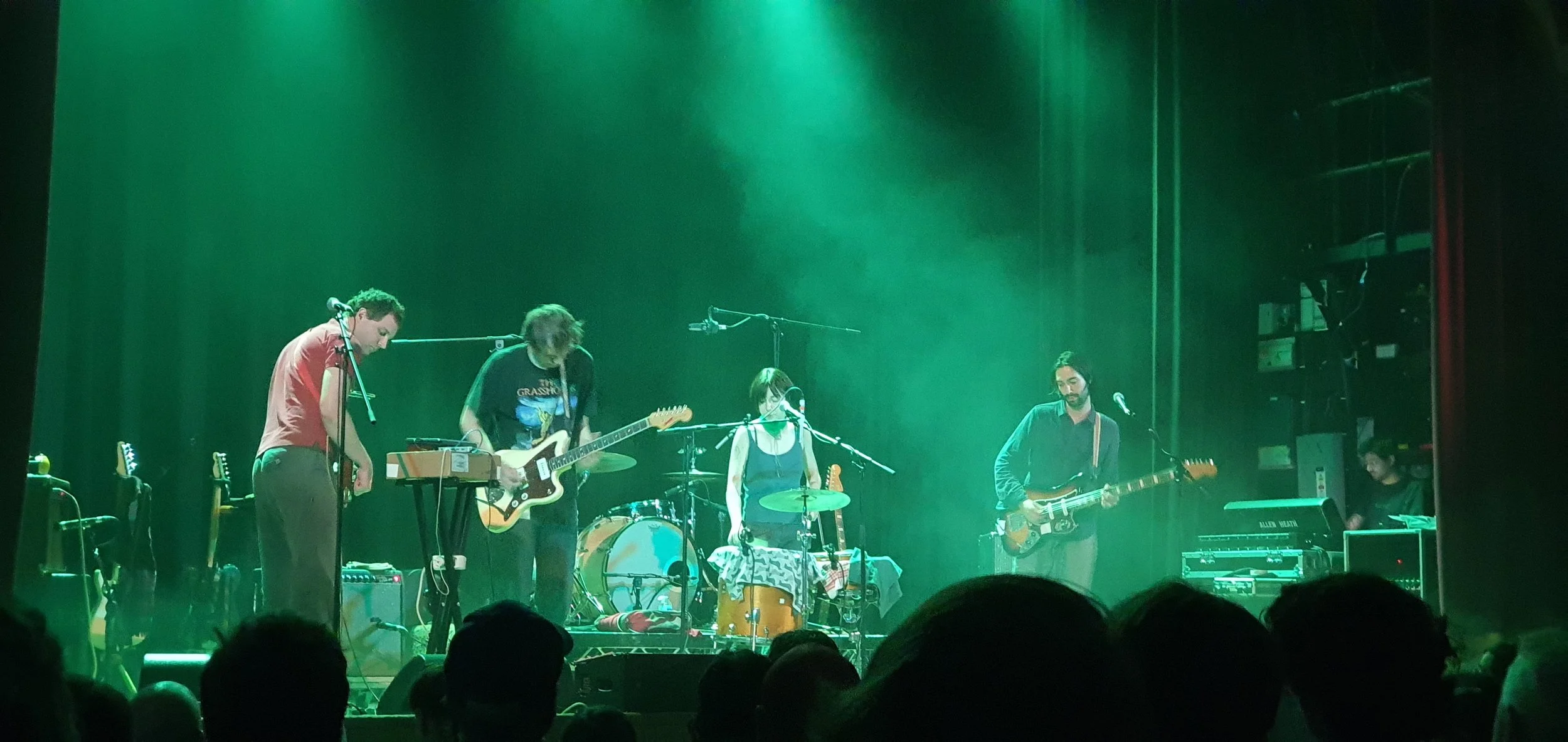
From 2, when they turn up, are Art. I’m not sure if it’s Art-Grunge, Art-Folk, Art-Rock or something else, but it’s clearly the ‘art’ part which is important. They play serious, grown up music for serious, grown up people to nod along appreciatively to.
Artists, doing art.
They have a driving rhythm but a near allergy to anything approaching a melody. Every song needs to have something in it - a spoken word section, a twangy slide-guitar break. On one song the rhythm guitarist takes over vocal duties and shouts the last verse into his guitar stock for, I can only assume, reasons. The set closes with the main vocalist (the drummer, which is cool, you don’t see many of them) holding a note while slapping her throat to create a pitch-wave.
It’s a performance. I don’t think this band play gigs, I think they have installations. I spent most of the set feeling like I should be ticking things off on a ‘is this band too pretentious for its own good’ bingo card.
And yet, I’ve got to admit, the crowd seemed to love it. These guys have a niche, I’m just not in it.
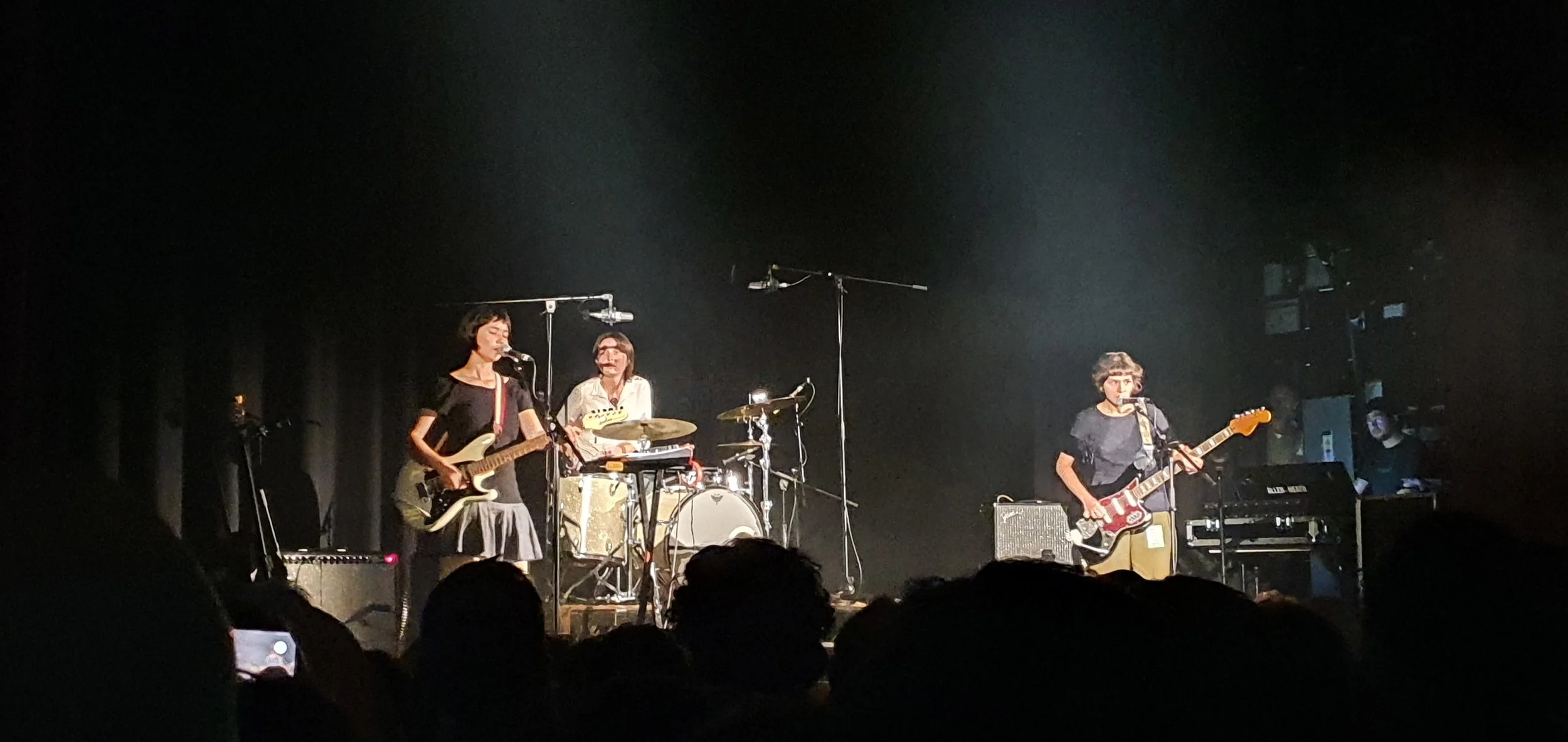
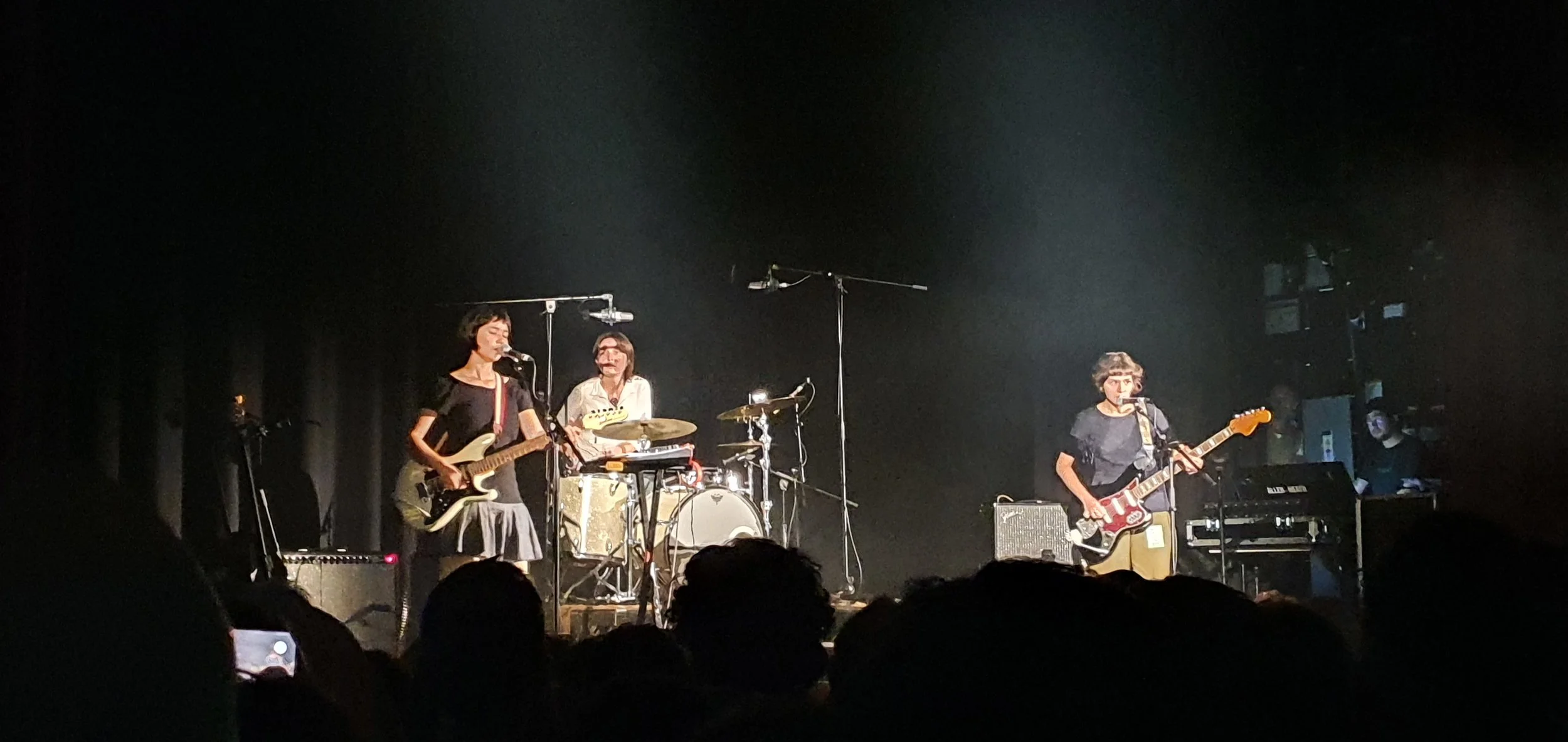
Horsegirl are still so young. But immediately, when they come on, you can tell they’re just better.
Horsegirl, being better.
The bass and drums were the MVPs of From 2, giving their songs a bit of backbone and direction. Horsegirl’s drumming just runs, picking you up and dragging you with it. They don’t even have a bass guitar on stage, Gigi’s being the whole rhythm section on her lonesome and she kills it.
Horsegirl’s music is short, snappy and janky, little jumping spiders of songs that move in quick bursts. Live, they’re still snappy and janky, but the songs extend themselves. This doesn’t mean they’re long - the whole set of 13-ish songs is barely an hour - but the spaces on the record which have all the instruments they haven’t brought out get filled in with more guitar and drums and the whole thing flows more smoothly.
They also have their moments of Art - a keyboard gets taped down to provide a constant drone background for a new song called B. Face - but it feels like an accent rather than the point.
It’s good. It’s some of the best indie-rock to come out in the past few years.
But I do miss the band they used to be.
Last year, they released their second album, Phonetics On and On. It’s a very different beast to their first, Versions Of Modern Performance. It’s more jangly, less shoegaze. Overall, it’s a better record - and if the highs, for me, are not as high, that’s just a personal preference.
But Horsegirl are not a band that looks backward. They’re still in the process of inventing themselves, something they might never stop doing. They don’t feel like the same band which released Versions of Modern Performance, so they don’t do much from it. We only get Anti-Glory out of everything they did before 2025, but we get four songs that are completely new.
But that’s who they are. They don’t perform many of the older songs because they don’t feel like the same band that wrote them. They didn’t feel like the same band that wrote Sea Life Sandwich Boy and Ballroom Dance Scene even when Versions of Modern Performance came out, so a song which would be the pinnacle of most bands’ careers didn’t even make the album.
There’s a good chance they’ll never play it again, because it’s a song from a band which doesn’t really exist any more.
But if that’s how it is, that’s how it is. We’ll always have Paper Dress Vintage.
Brockwell Park, 29th June 2026
I am not a child of summer.
I like wearing layers. I like boots crunching through frosted grass. I like seeing my breath fog out in front of me when I leave the house in the morning. The heat can, respectfully, do one.
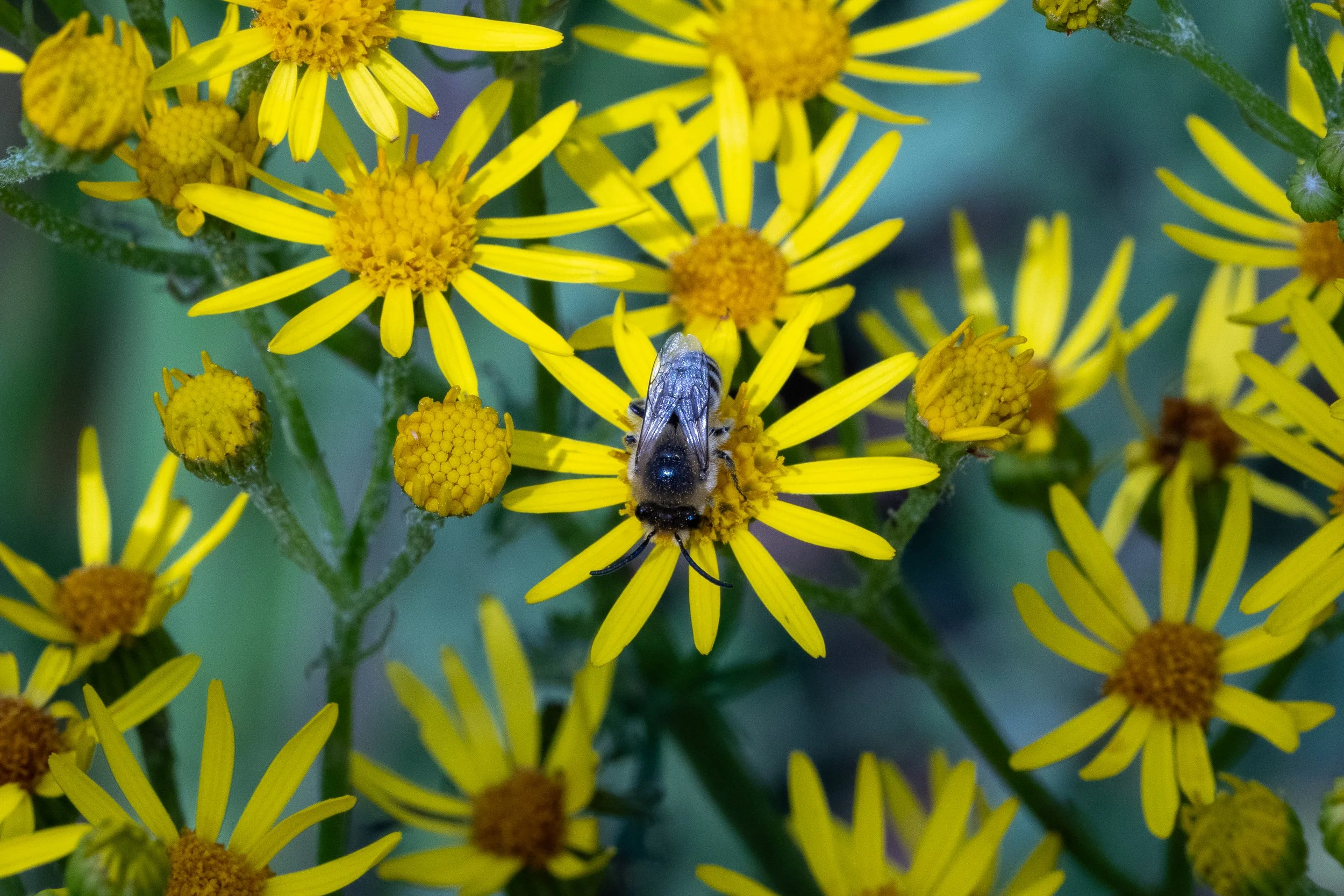
But there are some good parts about the thoroughly uncivilised British summer. Long twilights, when the bats chitterflit above the garden. Grass-court tennis. And the warm afternoons are great for photographing bugs.
The 90mm macro f2.8 was the second lens I bought, and it’s seen a lot of use. The thing is sharp enough to cut steel and as well-balanced as a Shaolin monk.
I have, guiltily, late at night, looked at the new 100mm macro GM, which as well as having a little extra reach is apparently significantly faster focusing, but it still feels like a relatively marginal upgrade for what would be close to £1,000 even on the grey market.
And when the 90mm still gives results like these, it’s hard to argue it’d be a noticeable difference.
All the pictures here were taken at either 1/640 or 1/800 to try and freeze the movement of the plants in the breeze, and f13 for the depth of field.
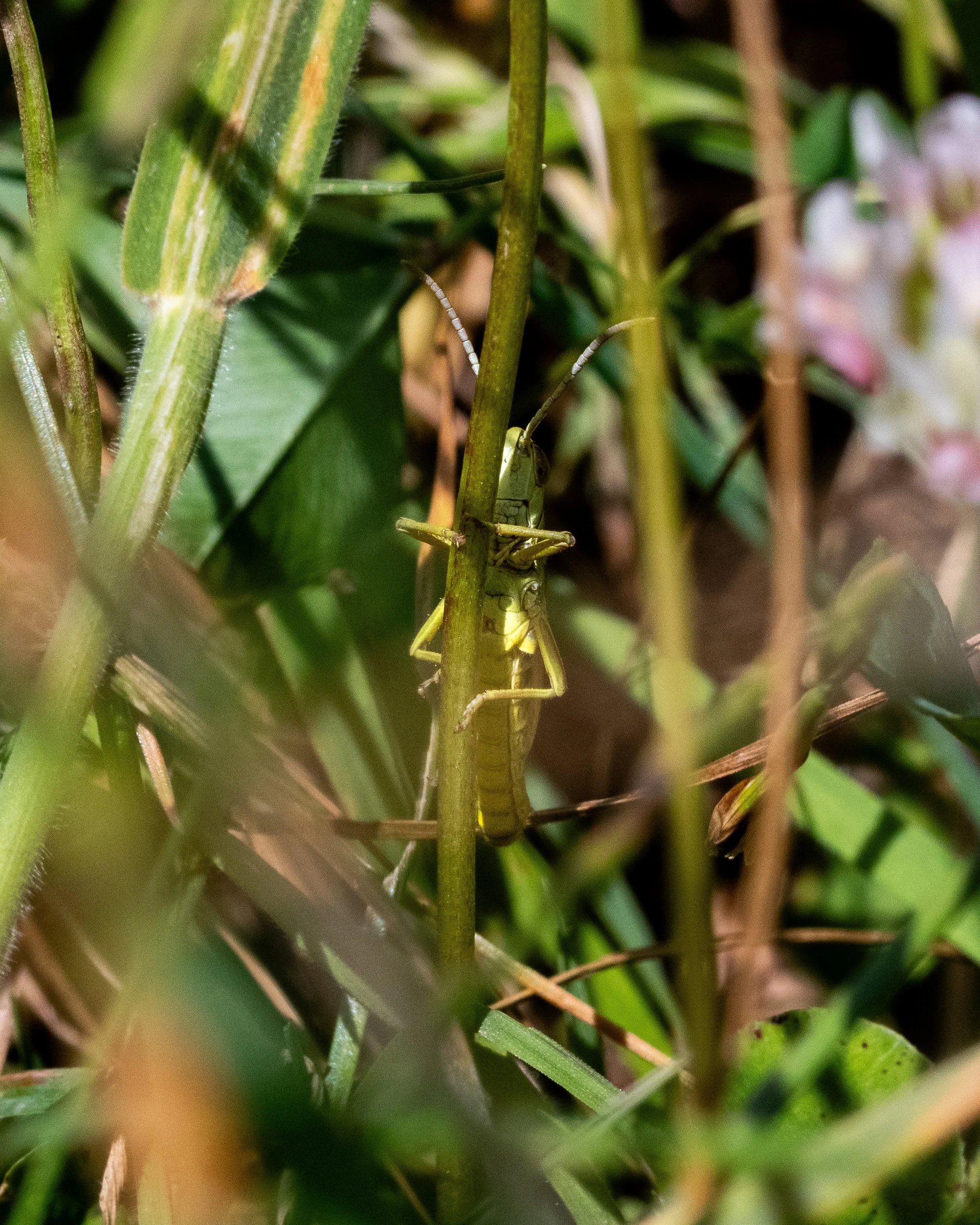
Grasshopper
The top half of Brockwell is given over to meadow and left unmowed for a large amount of the year. This means the air is constantly fizzing with grasshopper song. They can be hard to spot amongst the forest of stalks, you’ll just see a twitch of movement as they bounce and then vanish again.
The best way to spot them, I find, is just to sit watching a patch of grass for a few minutes. Eventually, some of the green will resolve into a grasshopper.
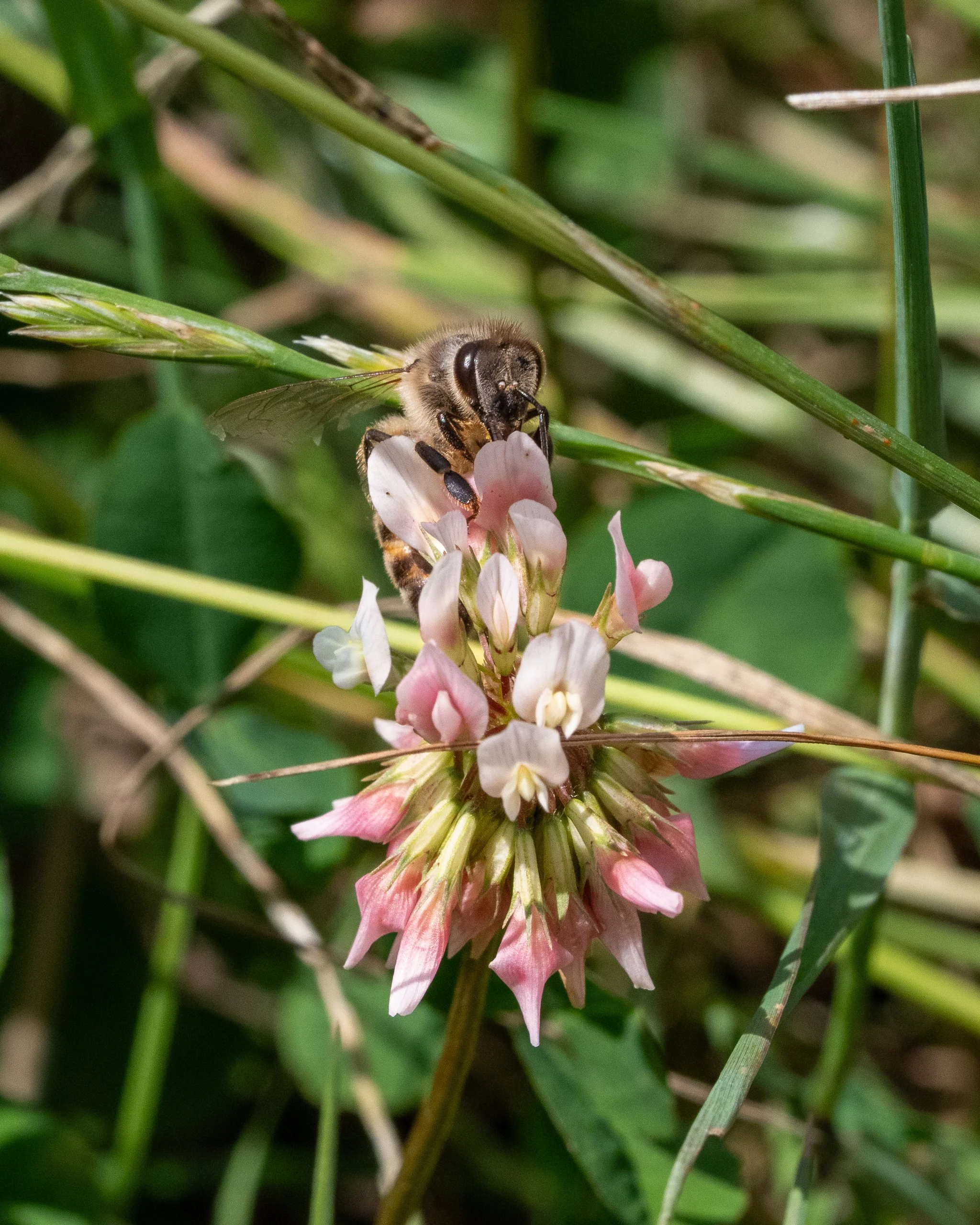
Honey bee
The meadow is also run through with clover and Oxford ragwort, honey bees being industrious in the sunshine.
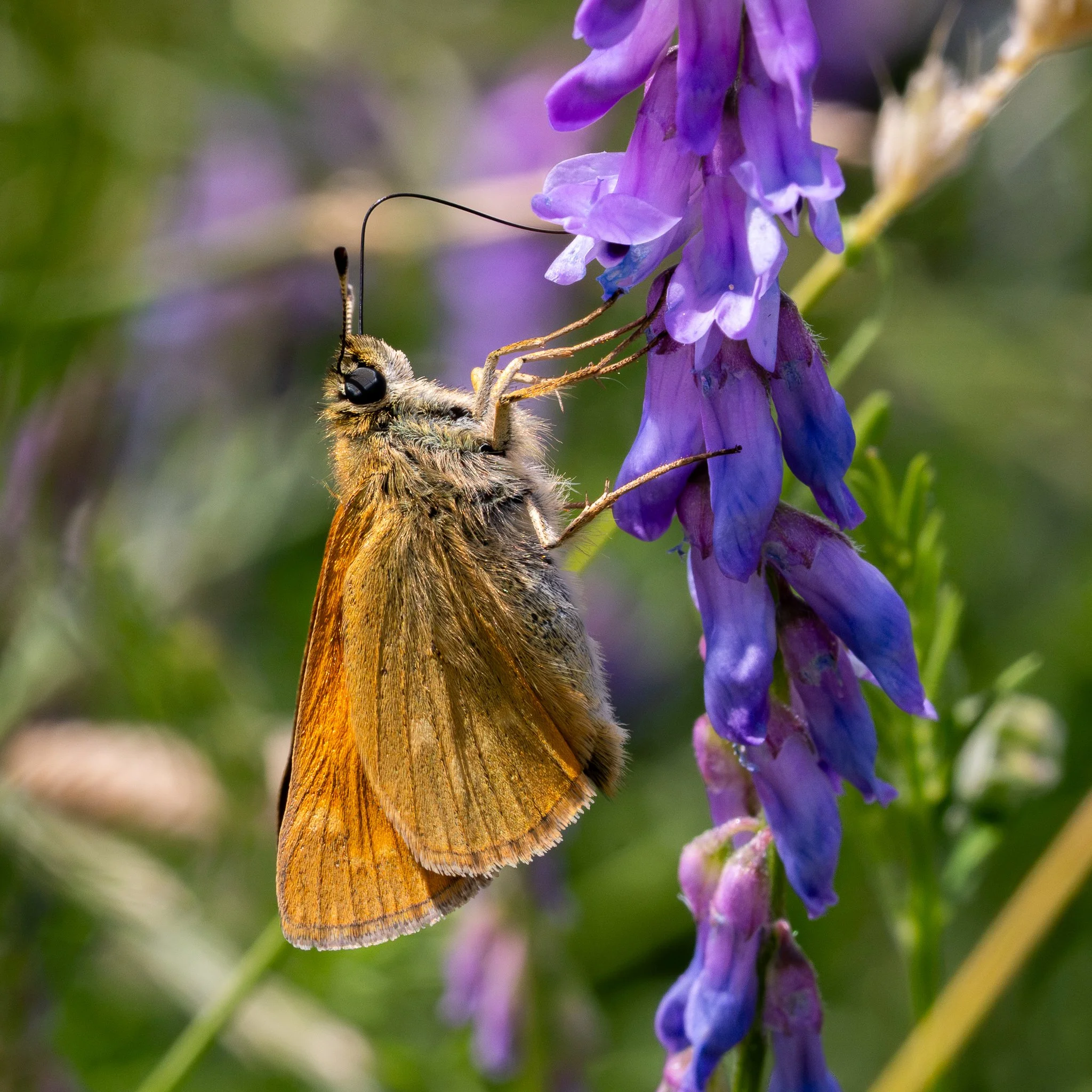
Skipper
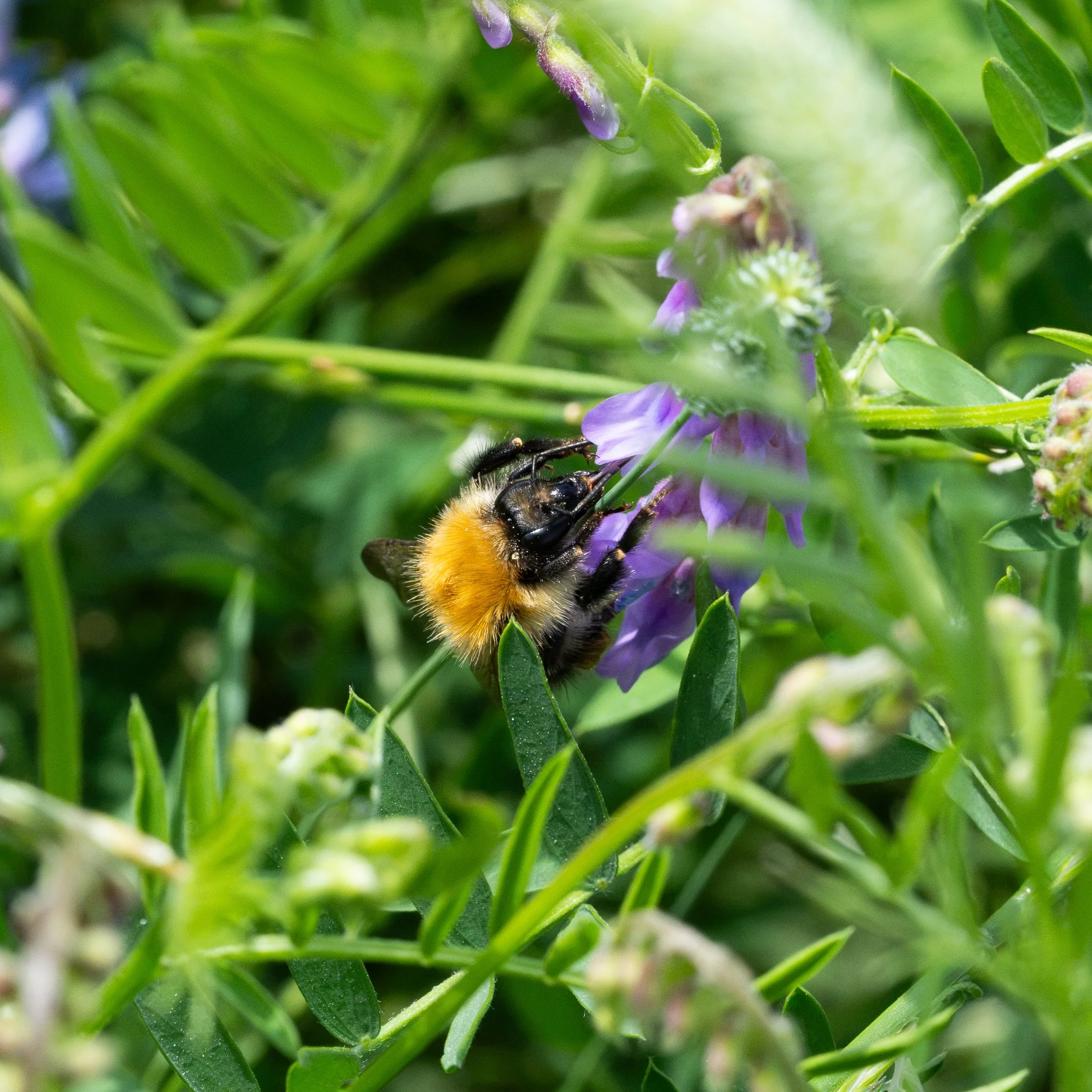
Carder bee
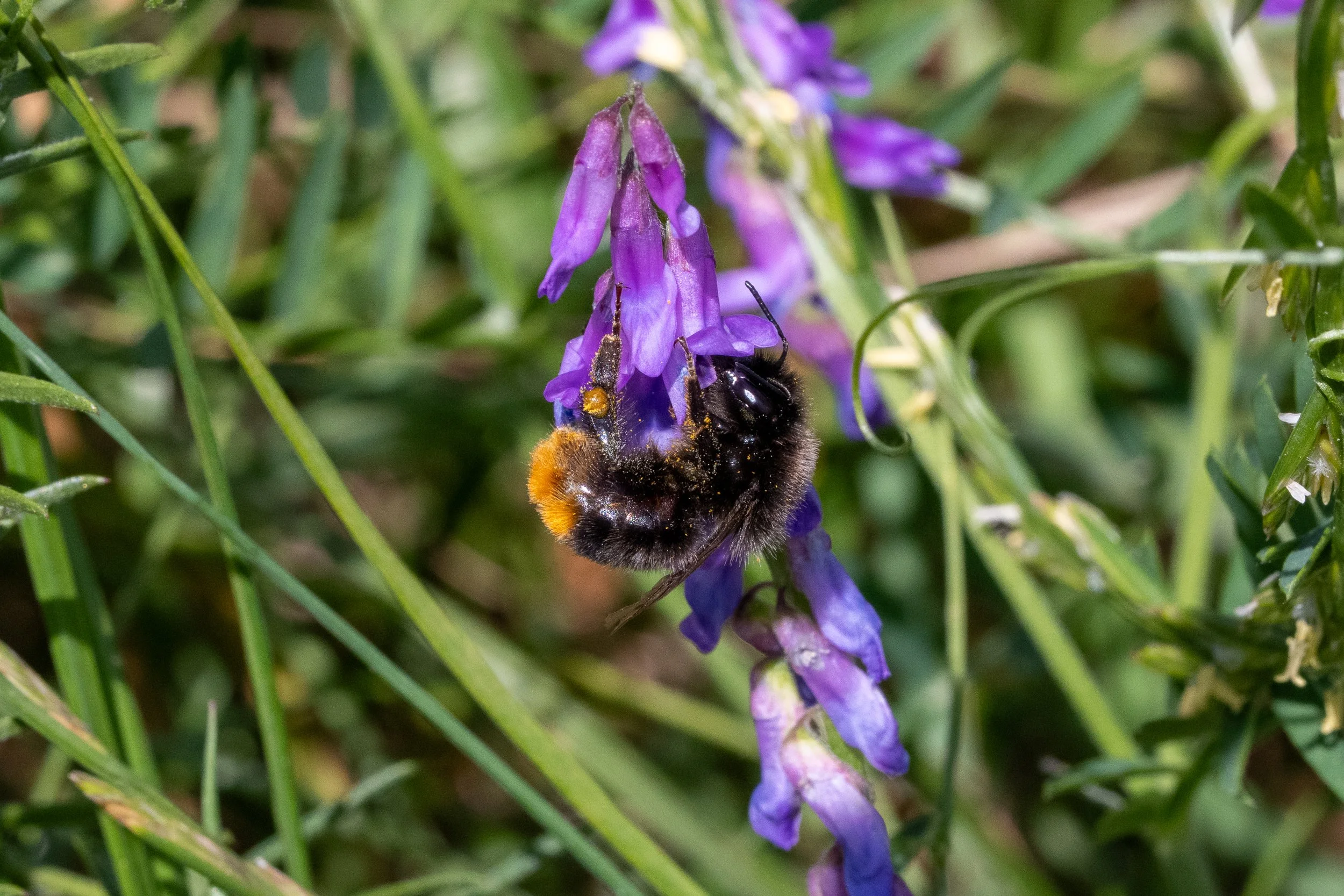
Red-tailed bumblebee
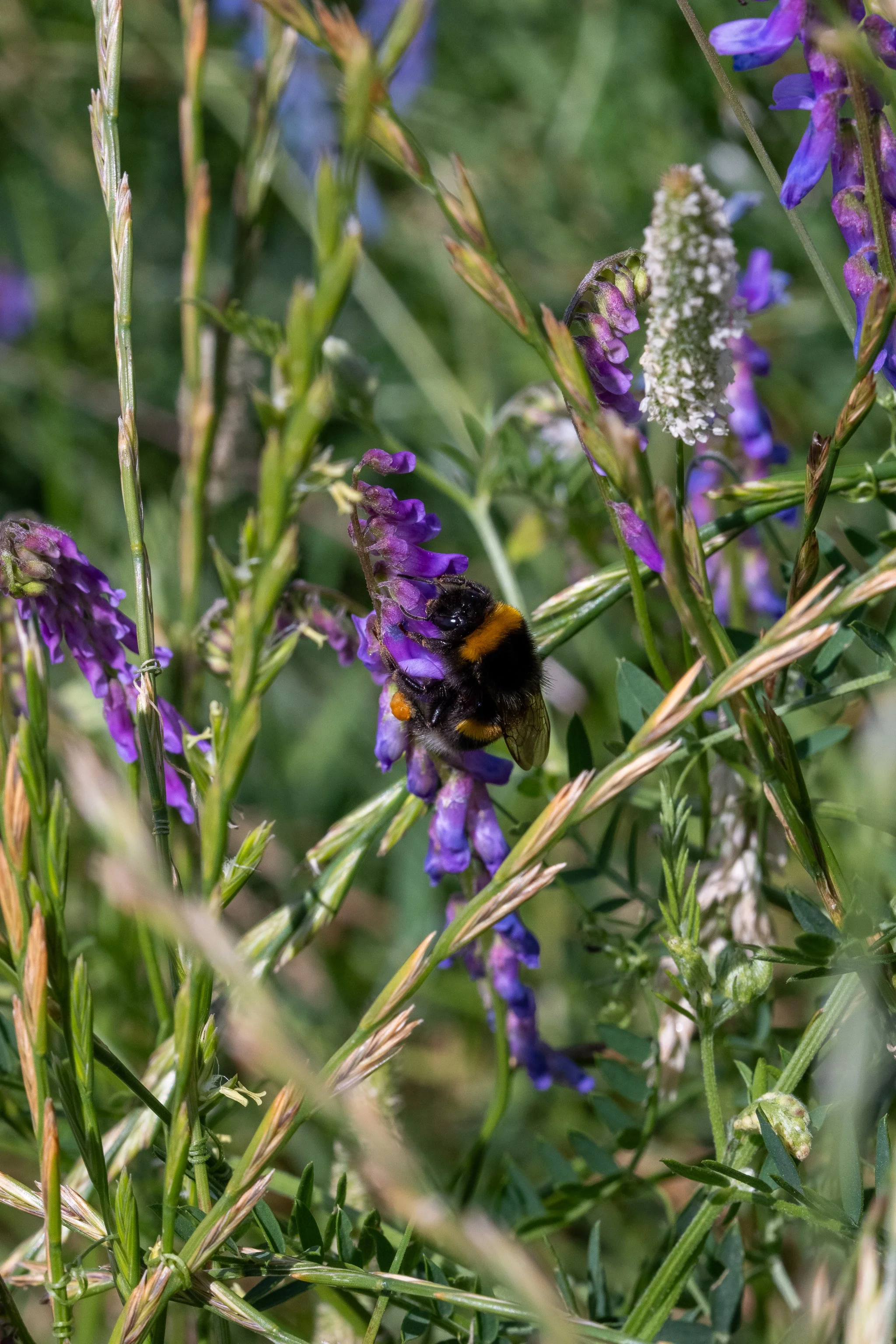
Buff-tailed bumblebee
In the crook of the small valley at the bottom of the meadow is a patch of tufted vetch, and it was covered in skipper butterflies and bumblebees. Bumblebees like this flower because they’re strong enough to pry open the flowerhead to get the nectar inside.
There were three different bumblebee species at a quick glance - Buff Tailed, Red Tailed and Carder, but there could well have been more in the mix.
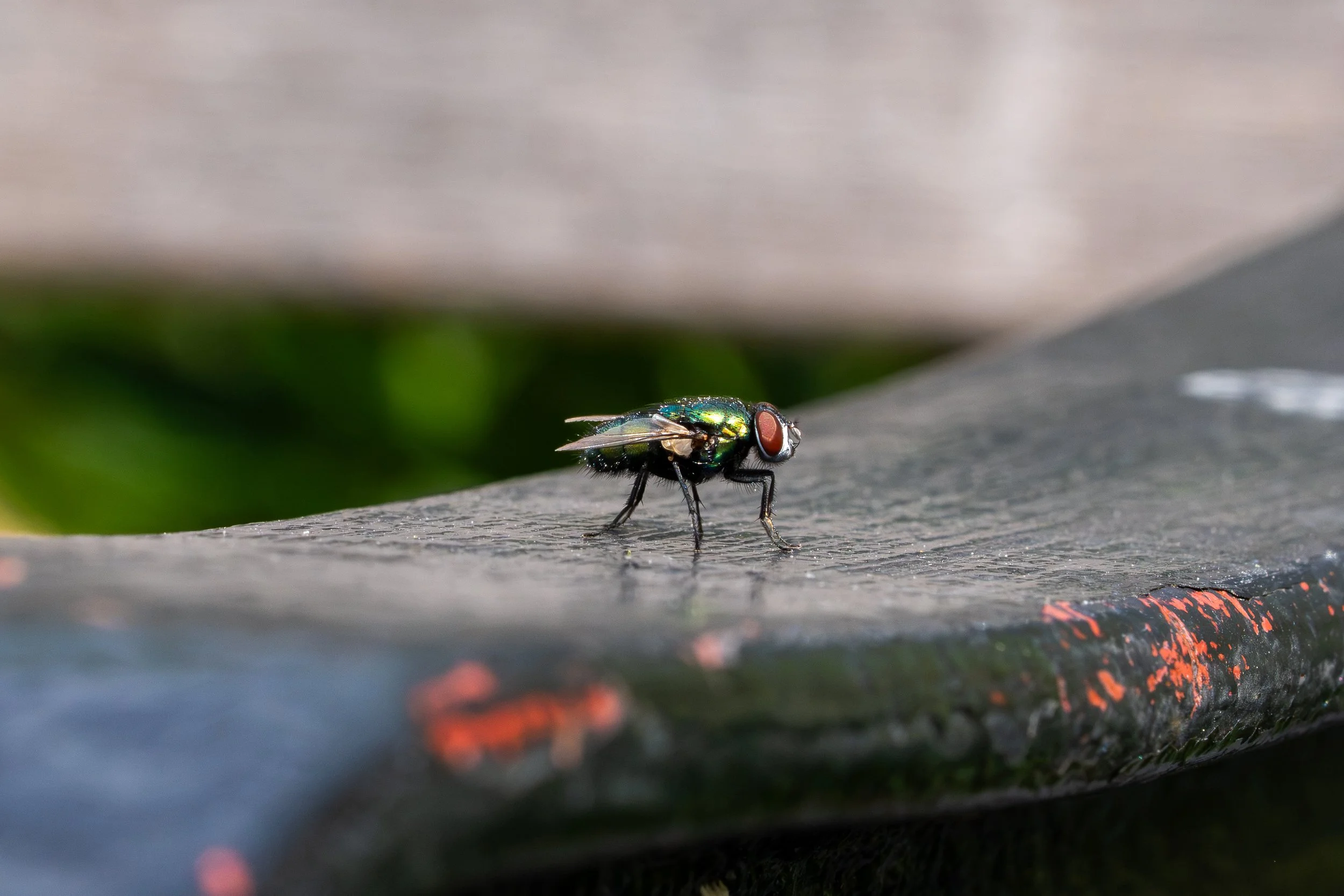
Greenbottle
In the formal garden, the wide variety of flowers leads to a large variety of bugs. Various kinds of fly are plentiful. The greenbottle will be familiar to everyone and mostly considered an annoyance, but they don’t bite and the colours are beautiful.
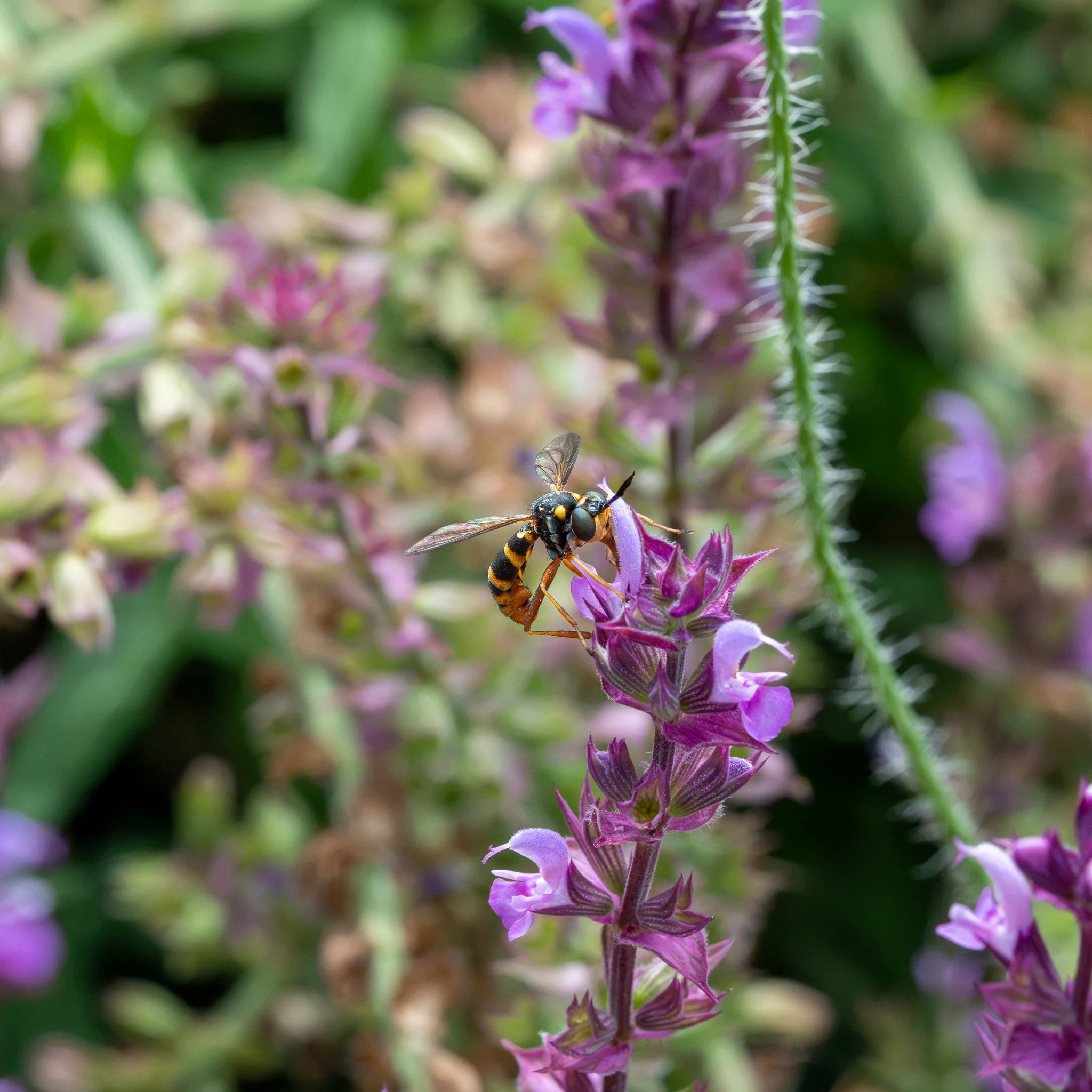
Thick-headed fly
Thick-headed flies are mimics, and aren’t wasps even if they look like them. I’m not sure which particular type of thick-headed fly that is; there are several and they look pretty similar to the untrained eye (by which I mean me).
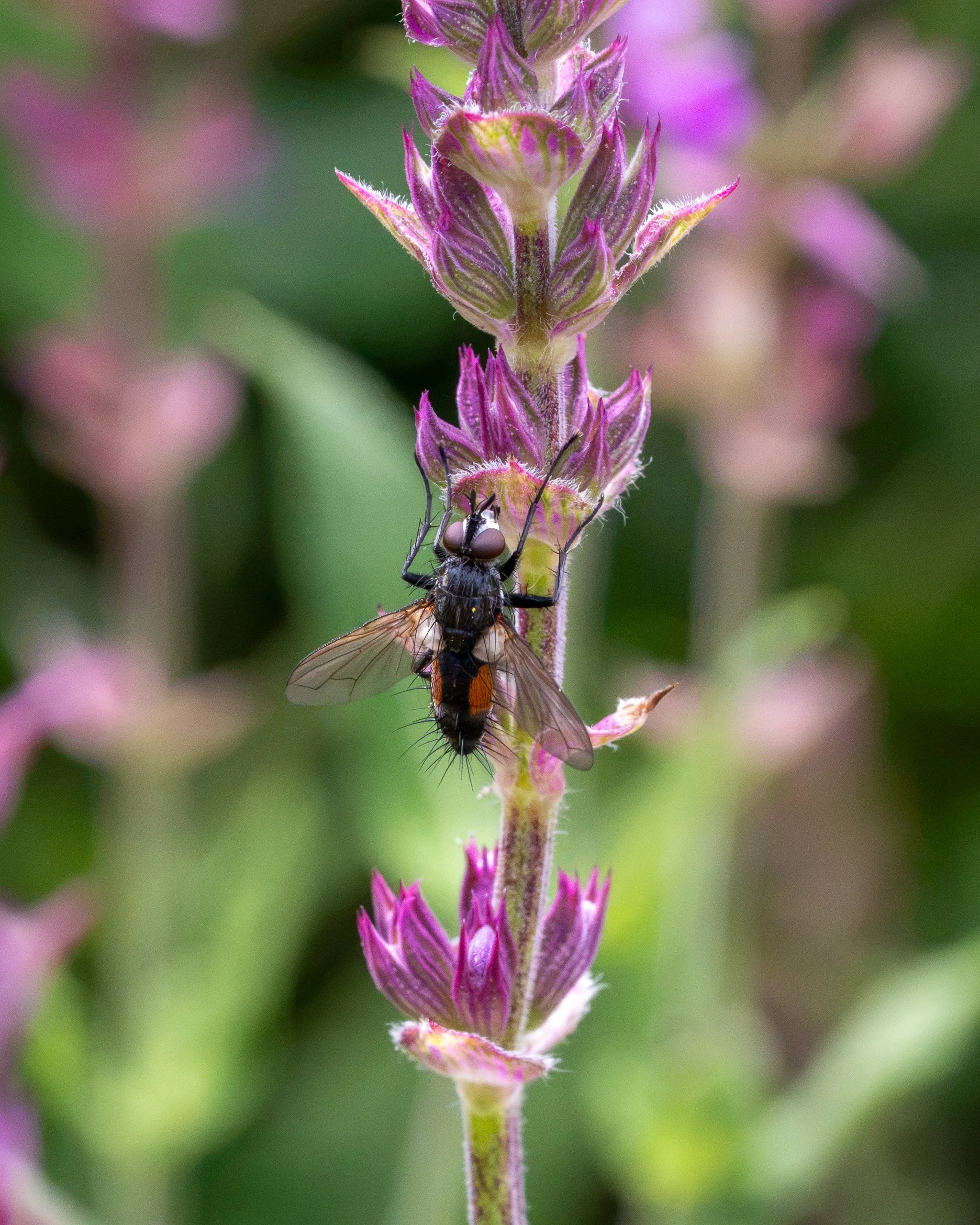
Red-sided parasite fly
The red-sided parasite fly doesn’t look friendly but is good for pest control. As their name suggests, they are parasites, generally on caterpillars. Some of these in the garden will mean less of the garden gets eaten.
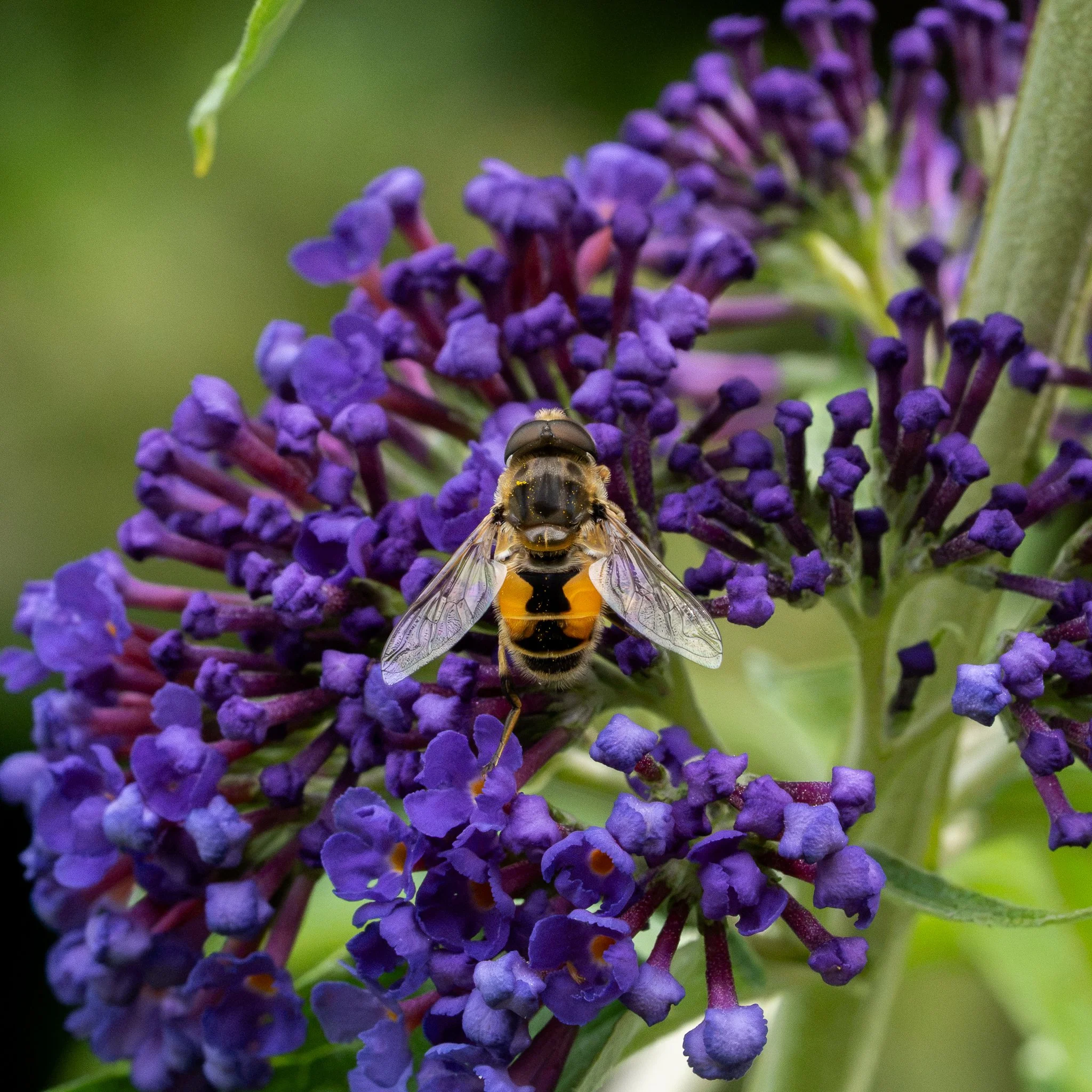
Tapered hoverfly
This one is another mimic - it looks like a bee but it’s actually a type of hoverfly. The key giveaway is the eyes, stretching like a shield all the way across the head.
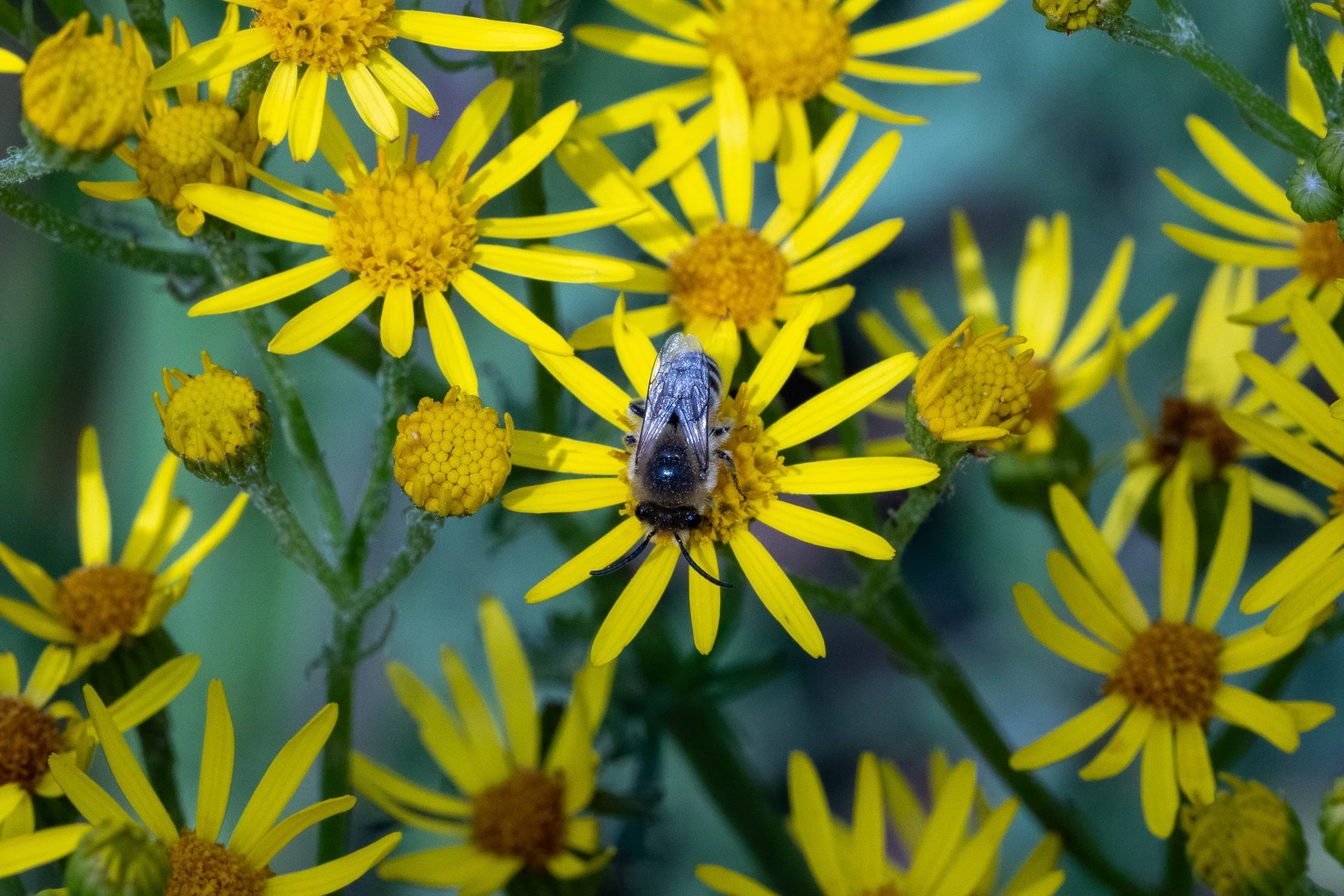
Unidentified mining bee
There were also some actual bees. This one is some kind of mining bee, though I’m not sure which one.
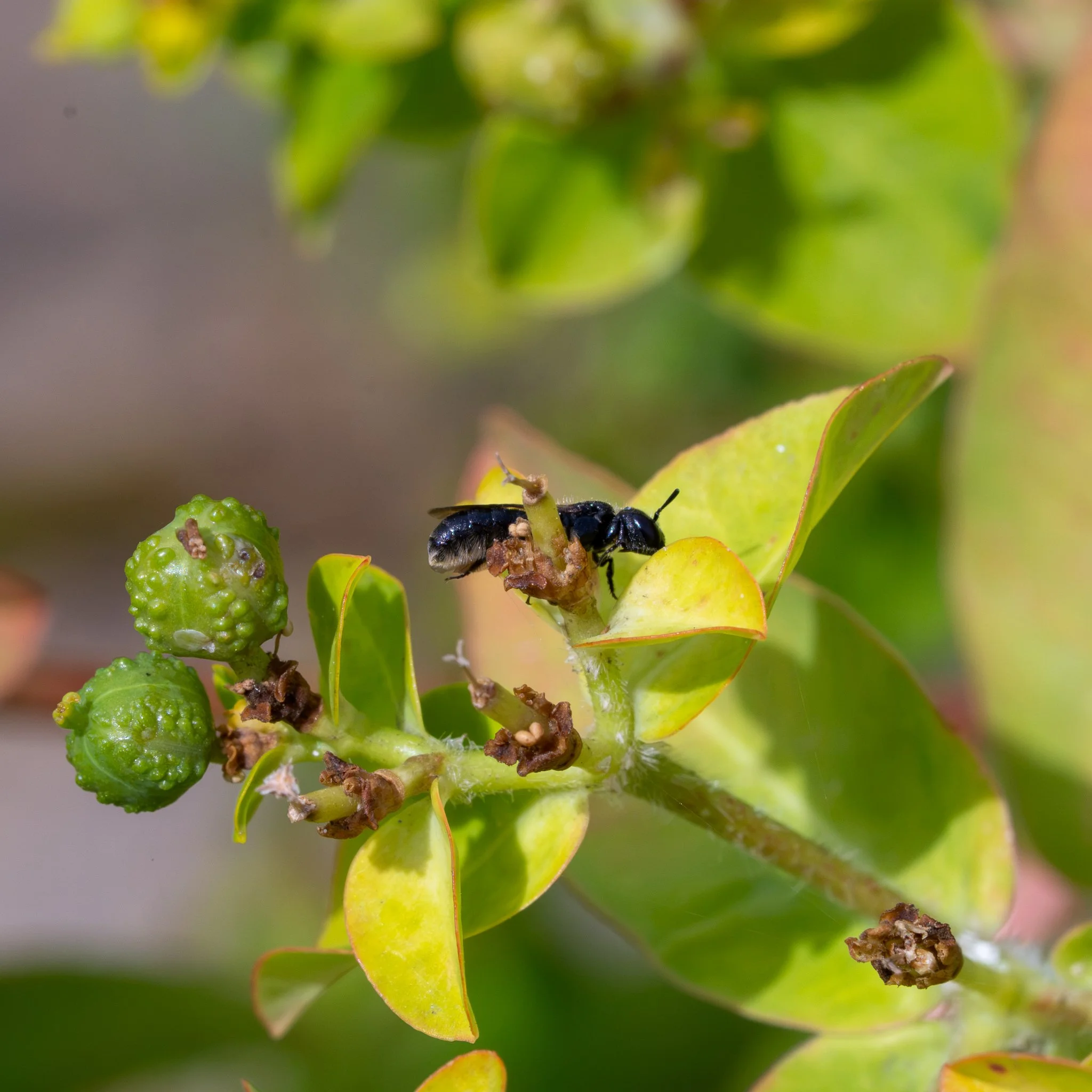
Blue carpenter bee
This one’s fun. I’m pretty certain it’s a blue carpenter bee, which are still considered to be quite scarce - albeit increasing - in this bit of the world. It’s a tiny little inkdrop of a thing, just a few millimetres long. They’ll dig out a nest in bramble or rose stems, and overwinter in groups.
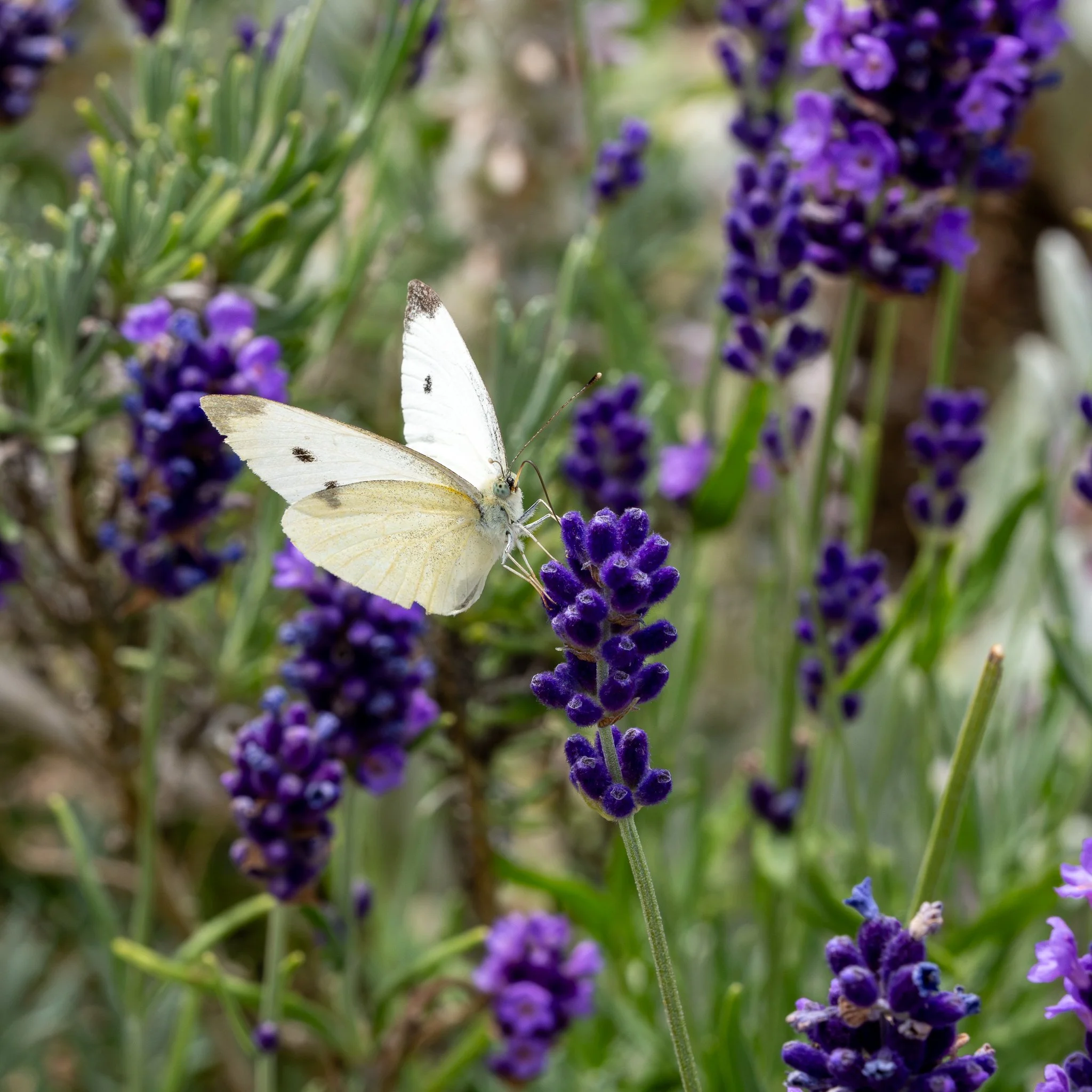
Small white butterfly
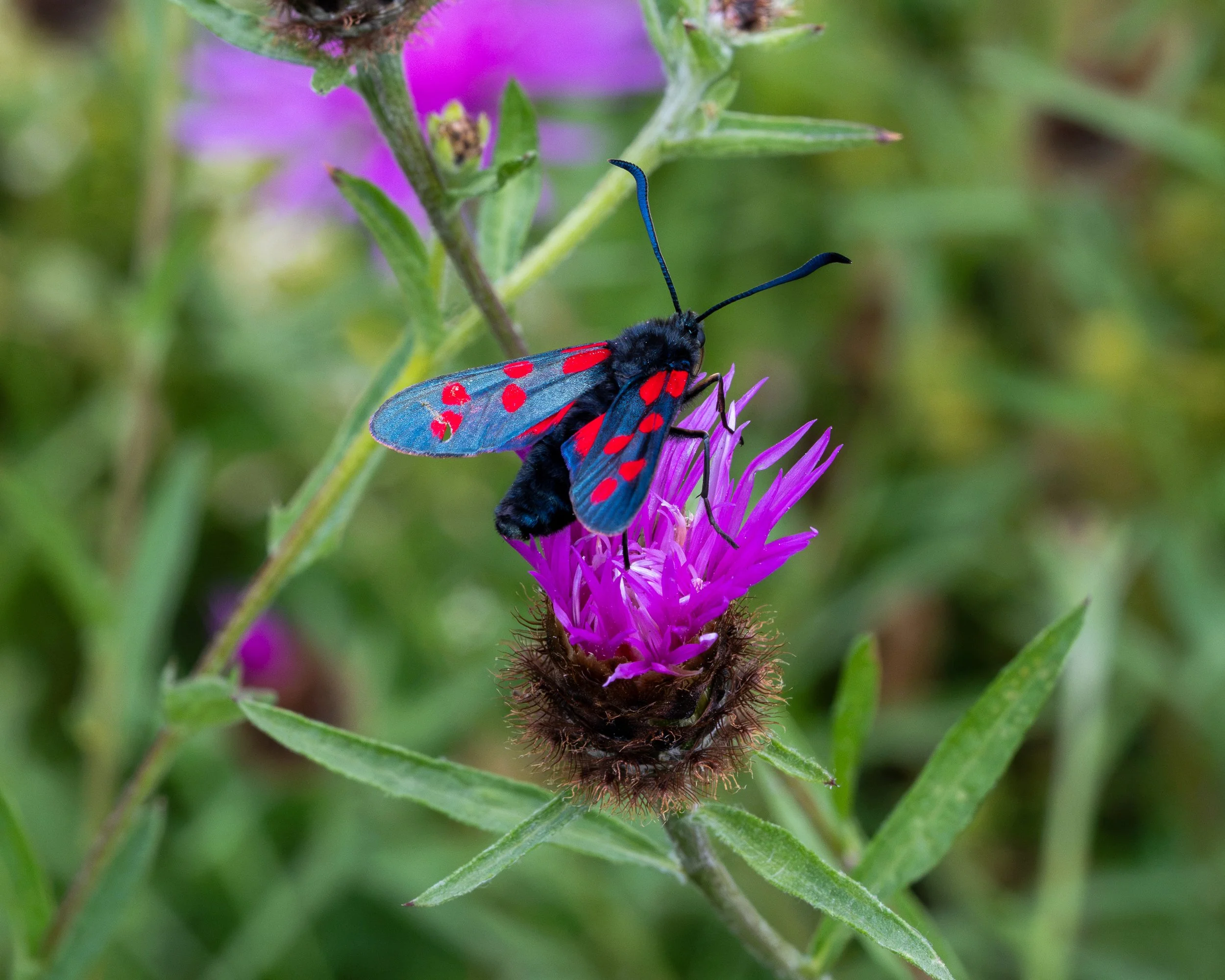
Six-spotted burnet moth
Finally I wandered up toward what used to be the wild area, just to the west of the cinders, pausing briefly to get some pictures of a Small White butterfly on the lavender patch. The fence which once separated the wild area is gone, presumably because it was so frequently ignored by people wanting a quieter area to sunbathe or walk their dogs there was no point in repairing it, but there’s a still a swathe of wildflowers growing here rather than just manicured lawn, and on them was a six-spotted burnet moth (not a botnet moth, as my autocorrect is currently insisting). This is a relatively common moth, but very dramatic and goth as absolute fuck.
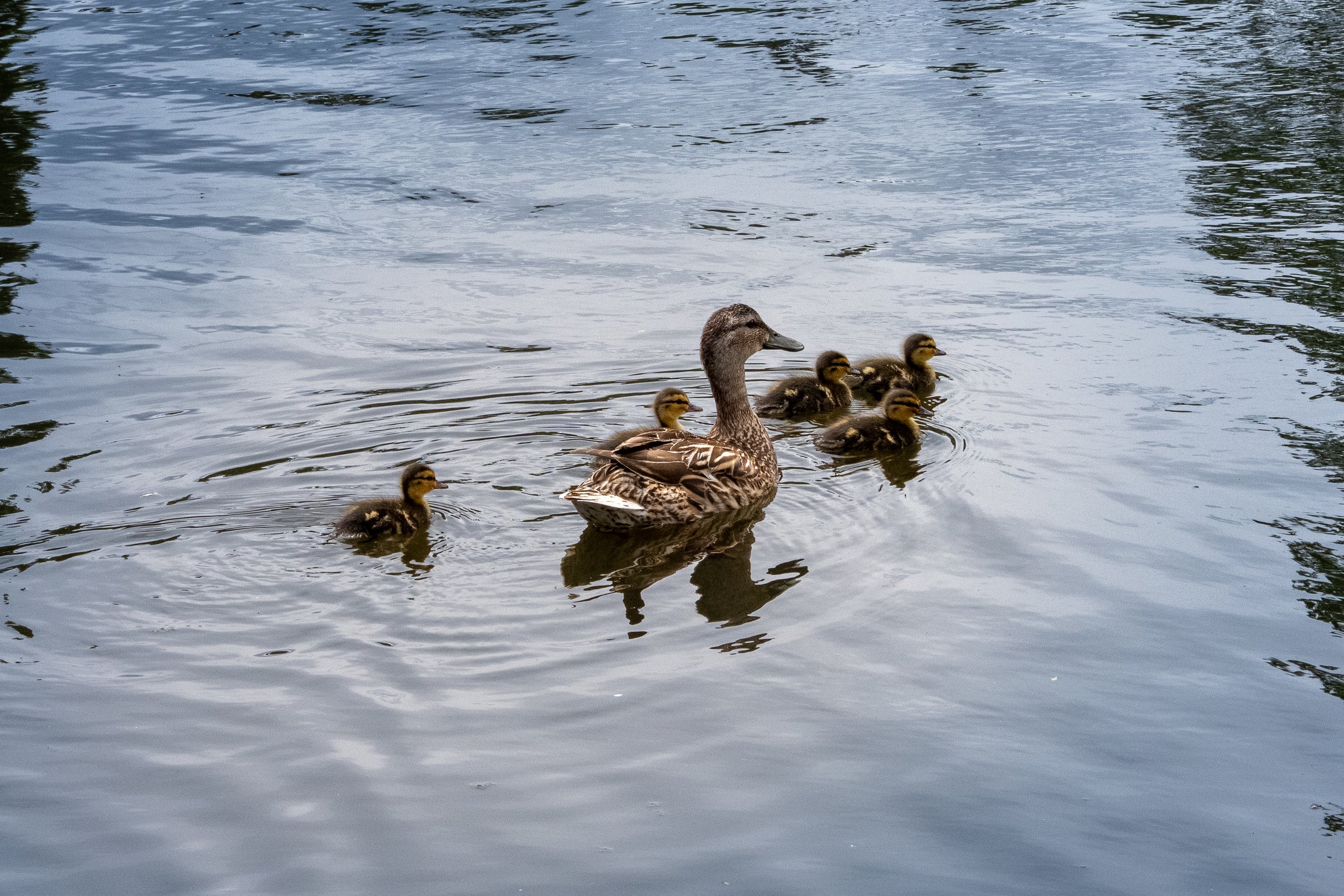
Miniducks
I put the camera away at that point, but had to get it out again as I passed the ponds on the way home. We may have lost the cygnets, but there’s a few new arrivals to make up for it.
They are children of summer. I’m still looking forward to frost.
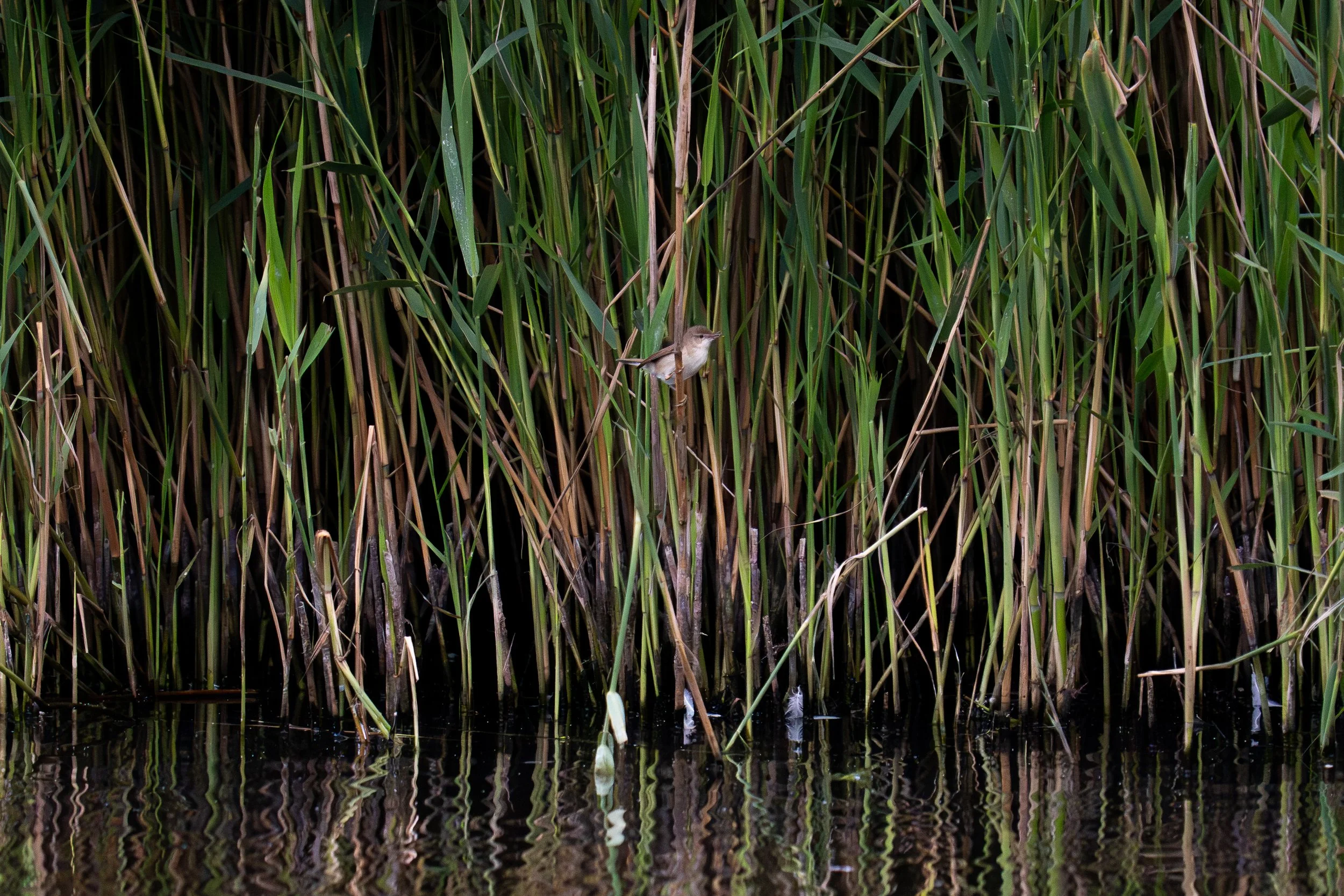
Brockwell Park, 15th June 2026
This was a late one.
I wandered down to the park after the Queen of Spades had gone dancing. It was almost midsummer so the light was persistent, but what had been a fairly bright day had clouded over, flattening out the world’s contrast.
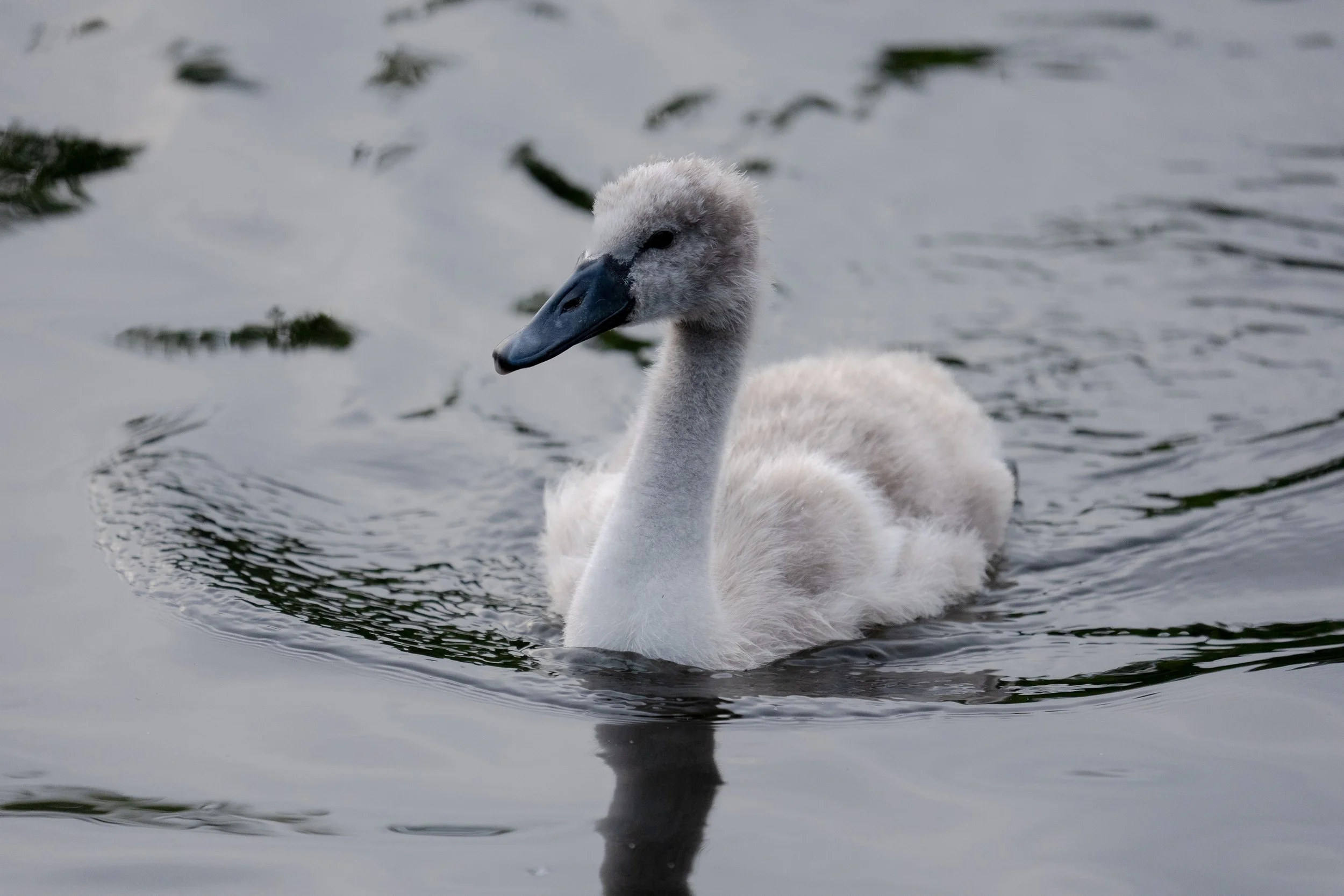
Cygnets, we hardly knew ye.
Something has happened to the cygnets.
They were down from 8 to 6 when I took this photo. A little later they dropped to 5. Now, two weeks later, they’re all gone.
A man and his wife were having the same conversation I was thinking, and was on his phone looking for why they’d gone.
“They tried to fly,” he said. “So they got relocated.”
As an explanation, that seems weird to me. It was human intervention that moved them, I’m pretty certain - foxes aren’t likely to suddenly take 5 cygnets and flu wouldn’t have been so specific - but the cygnet in the photo above does not look two weeks away from trying to fly. 2 months, maybe.
Equally I can’t think of any reason why anyone would lie about why they were moved. Possibly whatever information he’d found was just wrong, someone spitballing in a Facebook group. Still leaves the question of why they were taken so early.
So turns out this was my last baby swan photo for this year. Next April, there will be more.
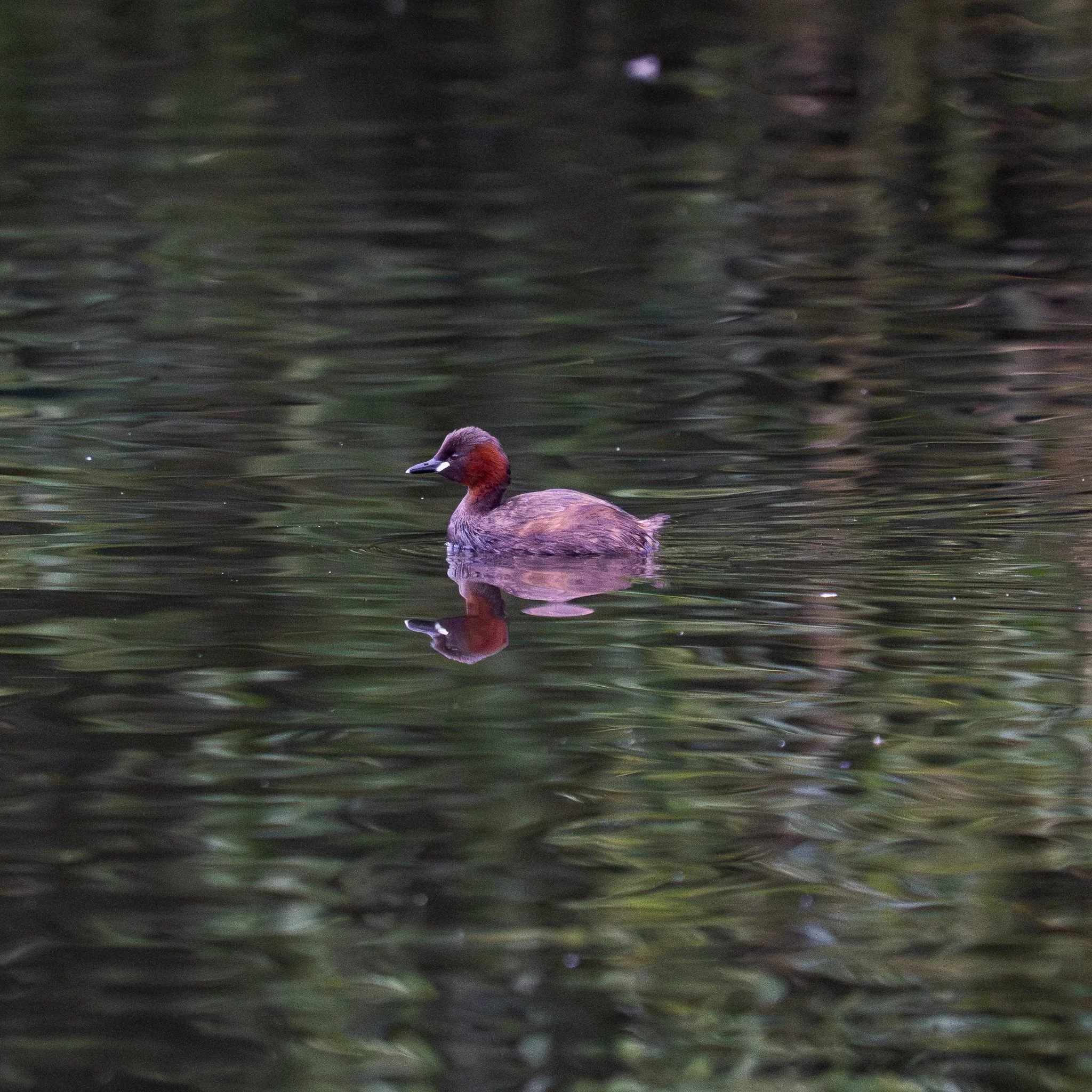
Little Grebe
Also on the lake was this Little Grebe.
These are relatively rare in Brockwell. Sometimes one or a pair will hang around for a while, but usually they’ll be gone after a couple of days and return a few weeks later.
They are tiny things, Moorhen-sized at most, and can be hard to spot because they tend to hang around in the far reeds, and can vanish in half a second with a graceful hopping dive taking them far under the surface, only to reappear again on the other side of the lake.
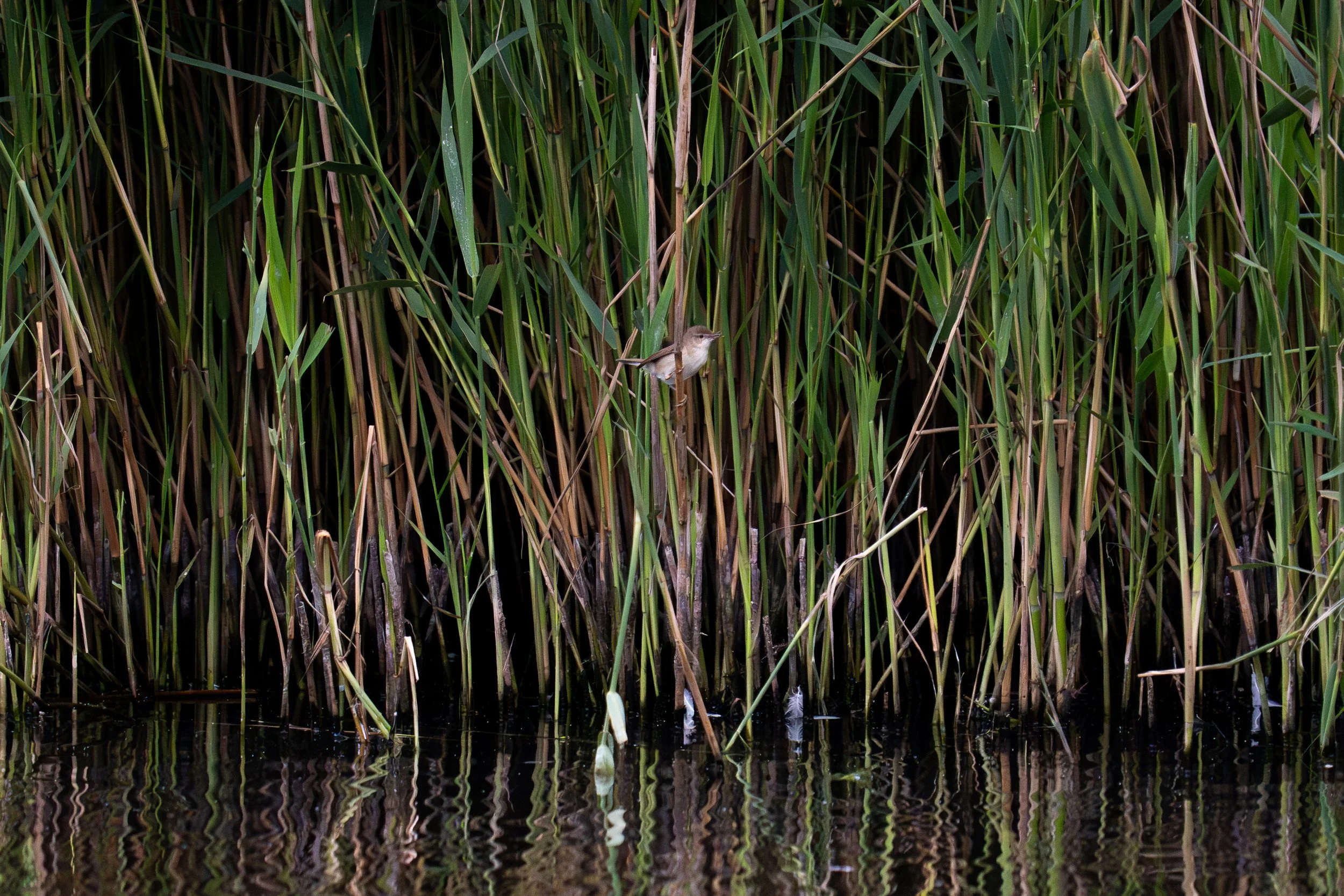
Reed Warbler
I spent ages trying to catch this bird.
While watching the Little Grebe, I noticed something small and brown flitting from one patch of reeds to another. So I wandered over to the other end of the lake and stood there waiting for it to reappear. Which it did, only to vanish back into the reeds before I could bring the lens up and focus.
So I stood there for half an hour, waiting for the flicker of wings, while a couple of guys behind me smoked weed and played piano-jazz on a loudspeaker.
Honestly, not a bad way to spend an evening.
The eventual reward was this photo - taken at a distance and cropped to almost 100%, but visibly a Reed Warbler, the first one I’ve seen in Brockwell, and the first one I’ve ever got a shot of.
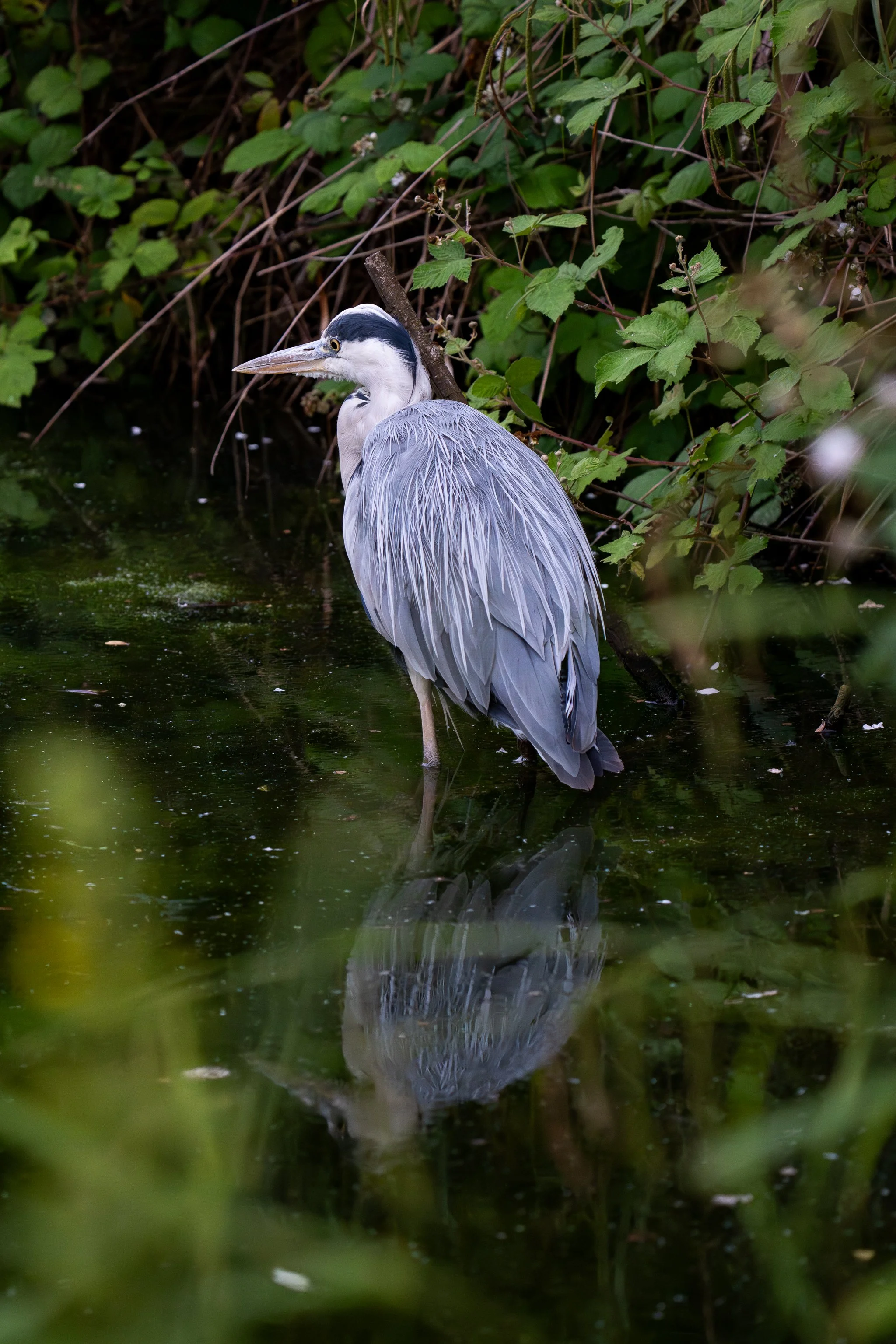
Grey Heron
The usual park residents were also hanging around. This Grey Heron was on the middle pond, showing off a good reflection.
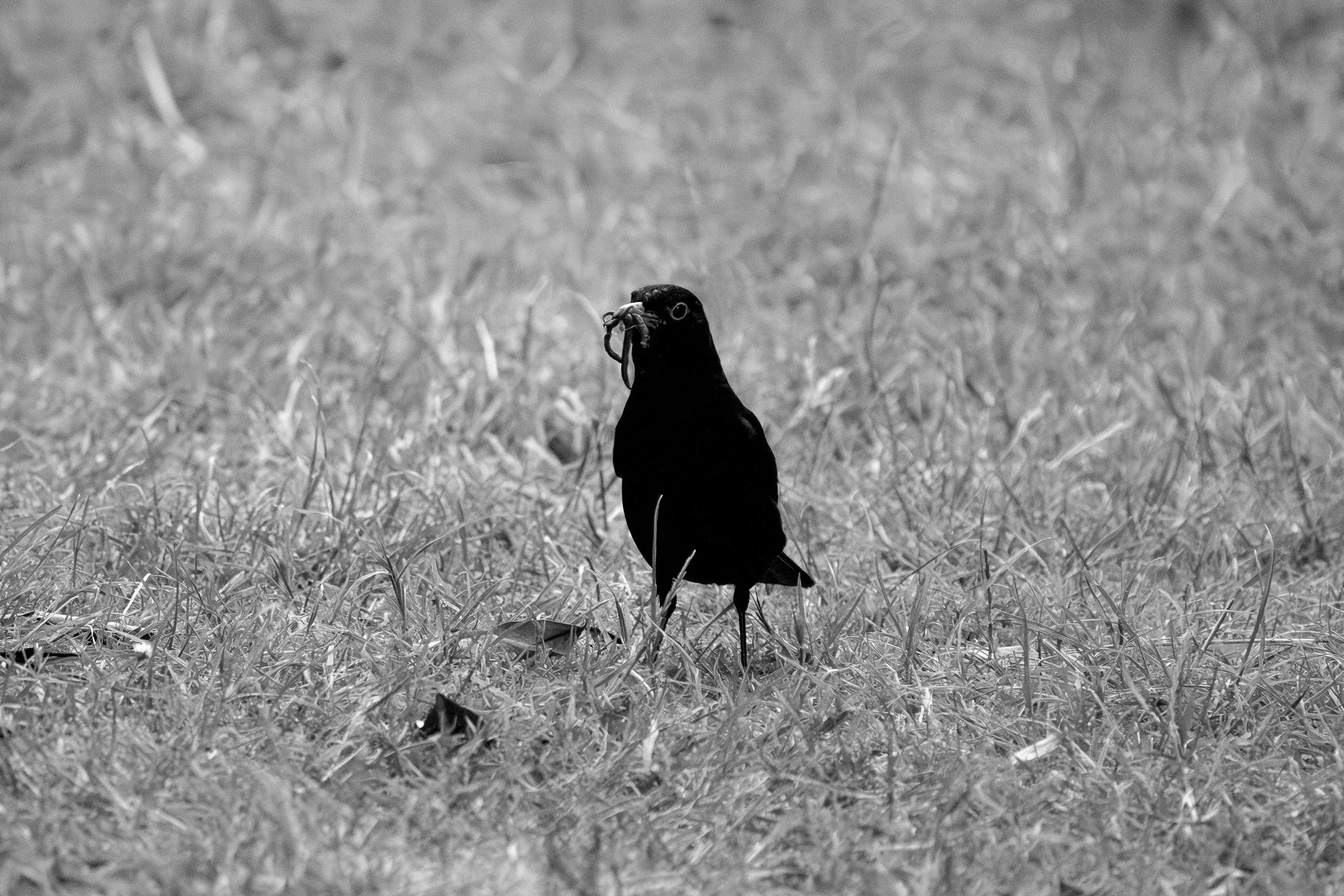
Blackbird
Blackbirds can raise three broods in a good season, sometimes four. By this point, the second is likely on the cusp of fledging, and that’s probably where these worms were headed.
From the way they were dangling out of his beak, my thought was to try and turn the shot into something Cthuloid. I think it’s a decent concept but the composition doesn’t really work for it - it needs a low camera and the bird looking straight down the lens. Still, fun to experiment.
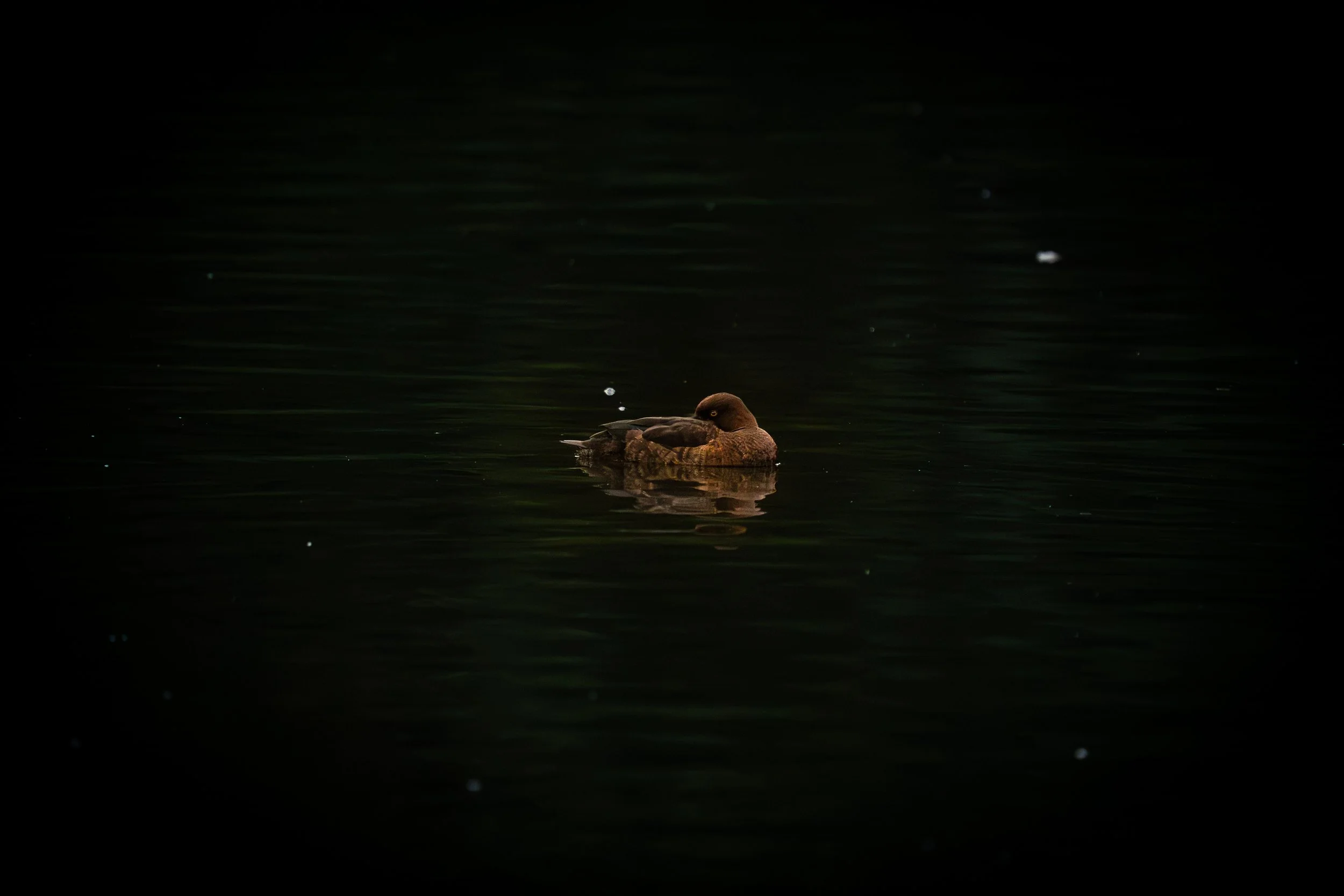
Tufted Duck
This one was also an experiment into something a bit more arty.
By the time I took this there was very little light left, so I tried leaning into that by making the surrounding pond even darker and giving the duck a golden glow, playing with the idea of isolation.
I think there’s something there, but it needs work. Not entirely sure what yet.
Lea Valley, 13th June 2026
This was a very pleasant but sometimes frustrating wander through the Lea Valley. A combination of the subject distance, heat haze and busy backgrounds meant even my extremely-overkill camera was struggling to focus a lot of the time, meaning I left with rather more record shots than pictures I’d want to put up on the wall.
But still, a bird’s a bird, and they’re nice to see even if you don’t get any pictures that will go into National Geographic - even more so when they’re not the kind of thing I’d see on a wander round Brockwell.
This walk featured:
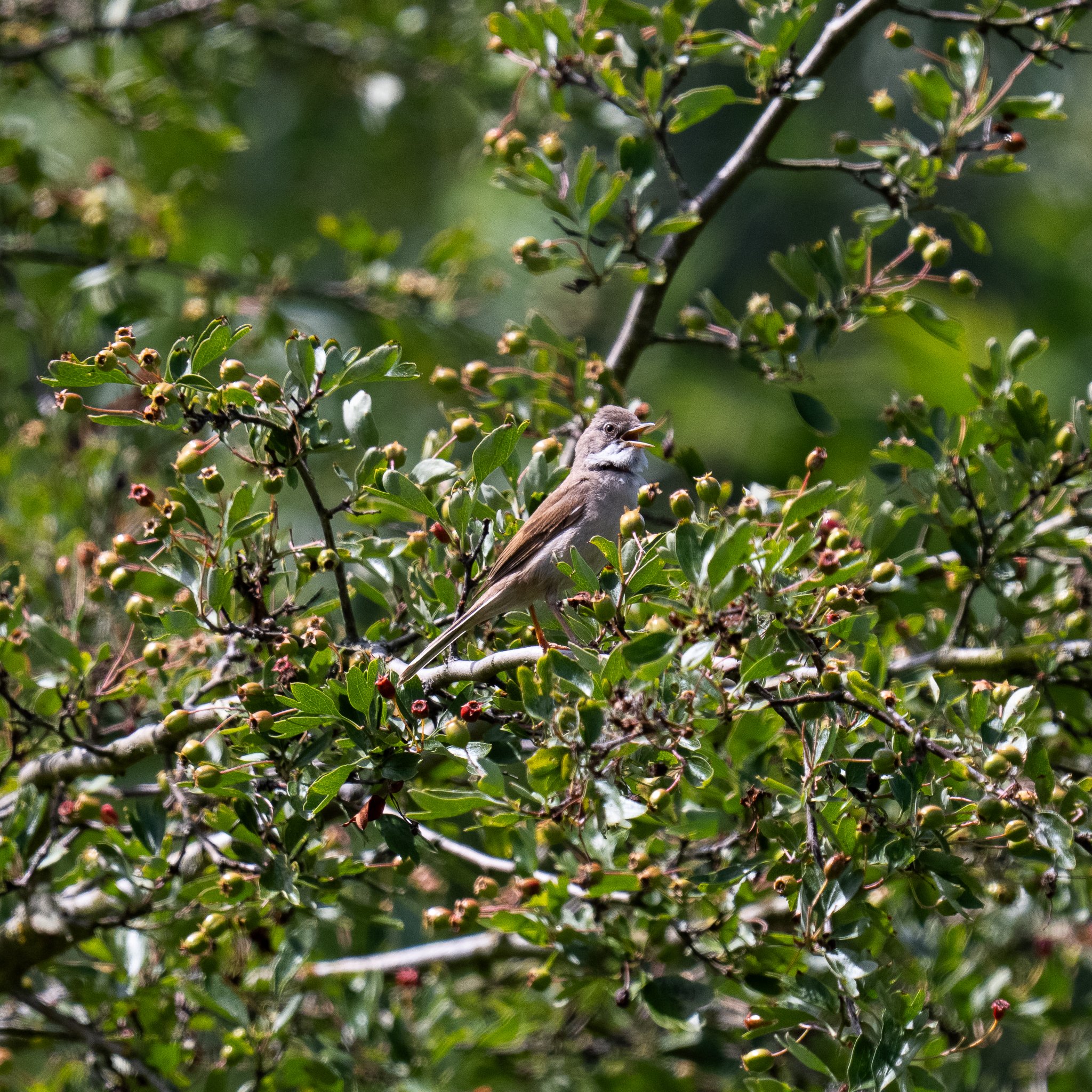
Common Whitethroat, miraculously in focus
It’s summer migrant season and the whitethroats were everywhere. Heard more than seen, but sometimes they’d obligingly jump out onto an exposed branch, like this one.
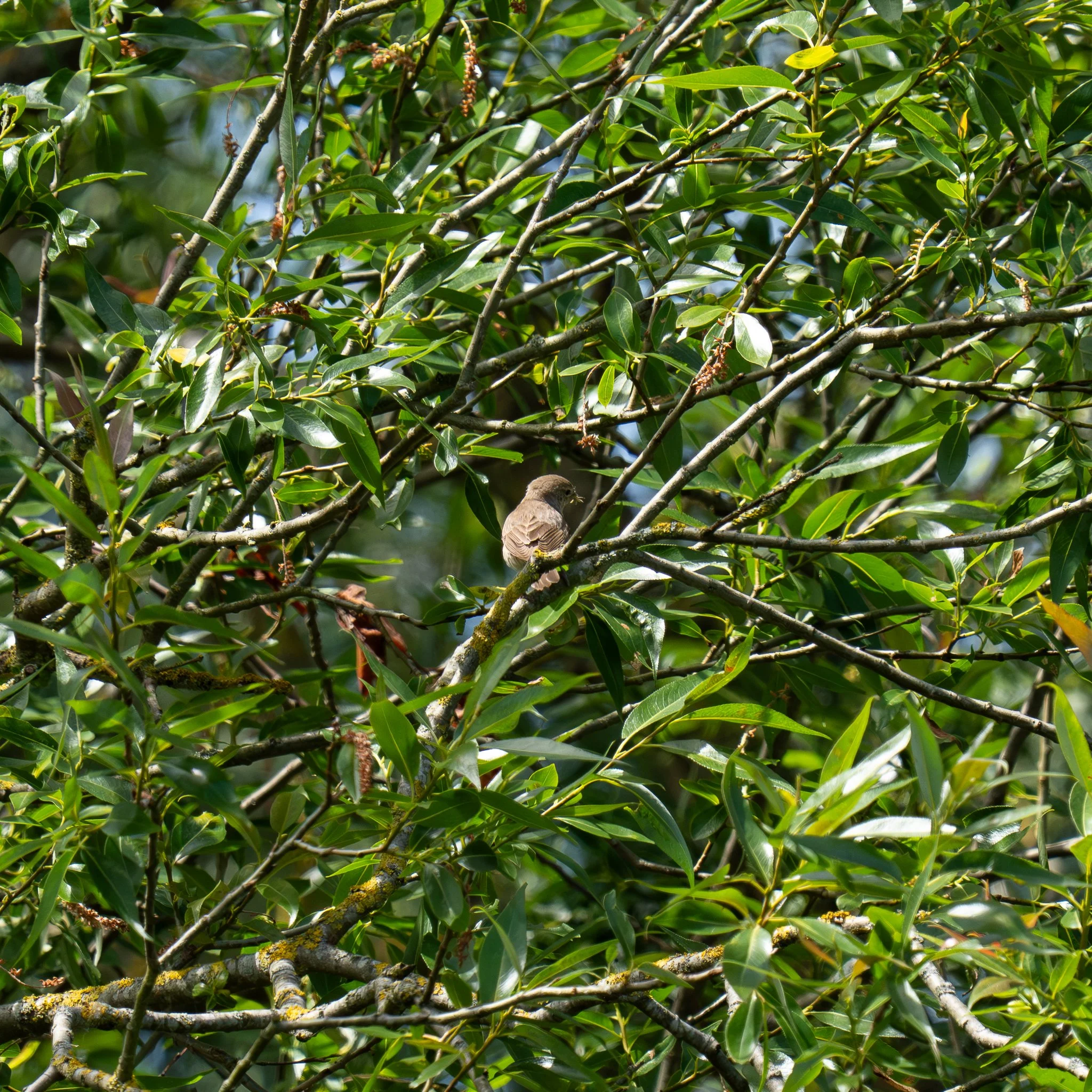
Actually don’t know what this one is. Possibly a flycatcher, on the basis it has caught some flies.
This one was jumping about in the far trees toward the railway track, as you take the path from Cheshunt toward Bowyer’s Water. I took so many pictures of it hoping to get at least something in focus, and this was as good as it got.
I’m not entirely sure what it is. My first thought was Spotted Flycatcher; Gemini thinks it’s a Nightingale, with an outside chance of Garden Warbler. Any of them would be pretty cool.
A while later, around the other side of the lakes, there was something angry in one of the bushes that Merlin thought was a Garden Warbler, so maybe that makes it more likely. Can’t give any kind of firm ID either way, though.
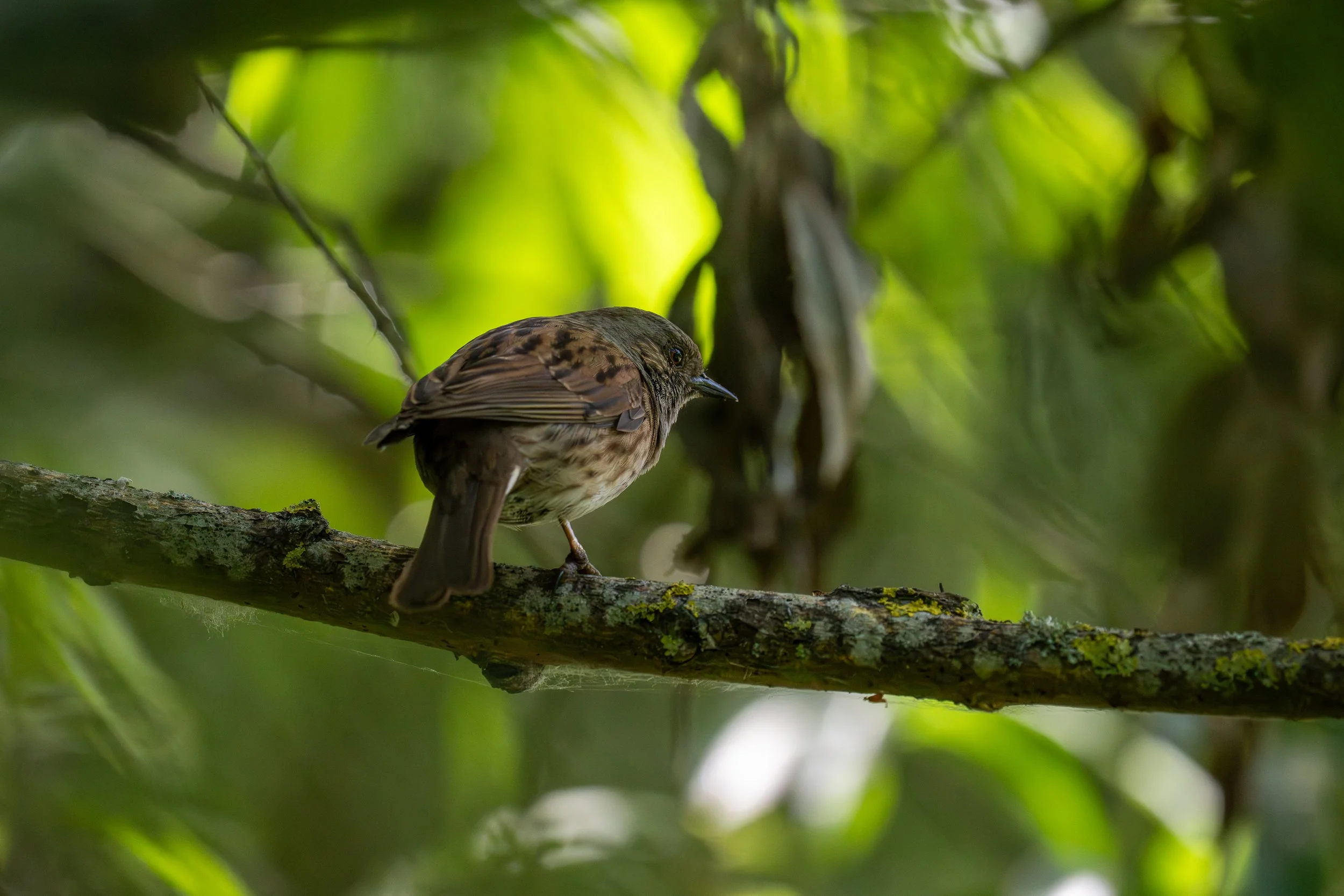
Summer shade is no match for Lightroom’s AI denoise.
Rather closer up, a far more amenable Dunnock sat on a branch for a bit while I paparazzed it.
Lightroom’s noise removal is amazing. This was in heavy shade and I was still at 1/1600 f8 from trying to grab the Nightinden Catcher, so the ISO was at 12800 and I had to raise exposure a bit in post. One run through in LR and it comes out clean as you like.
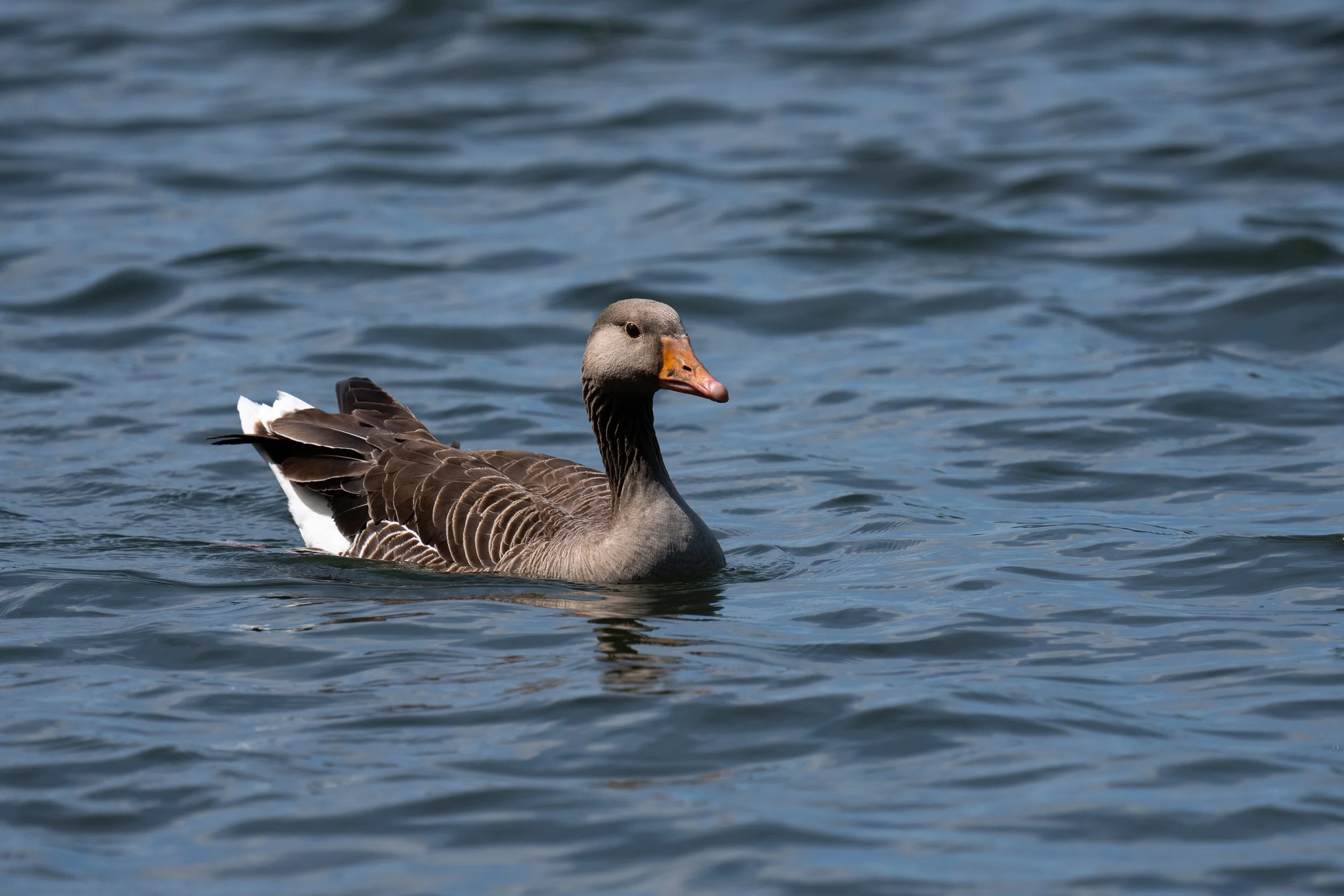
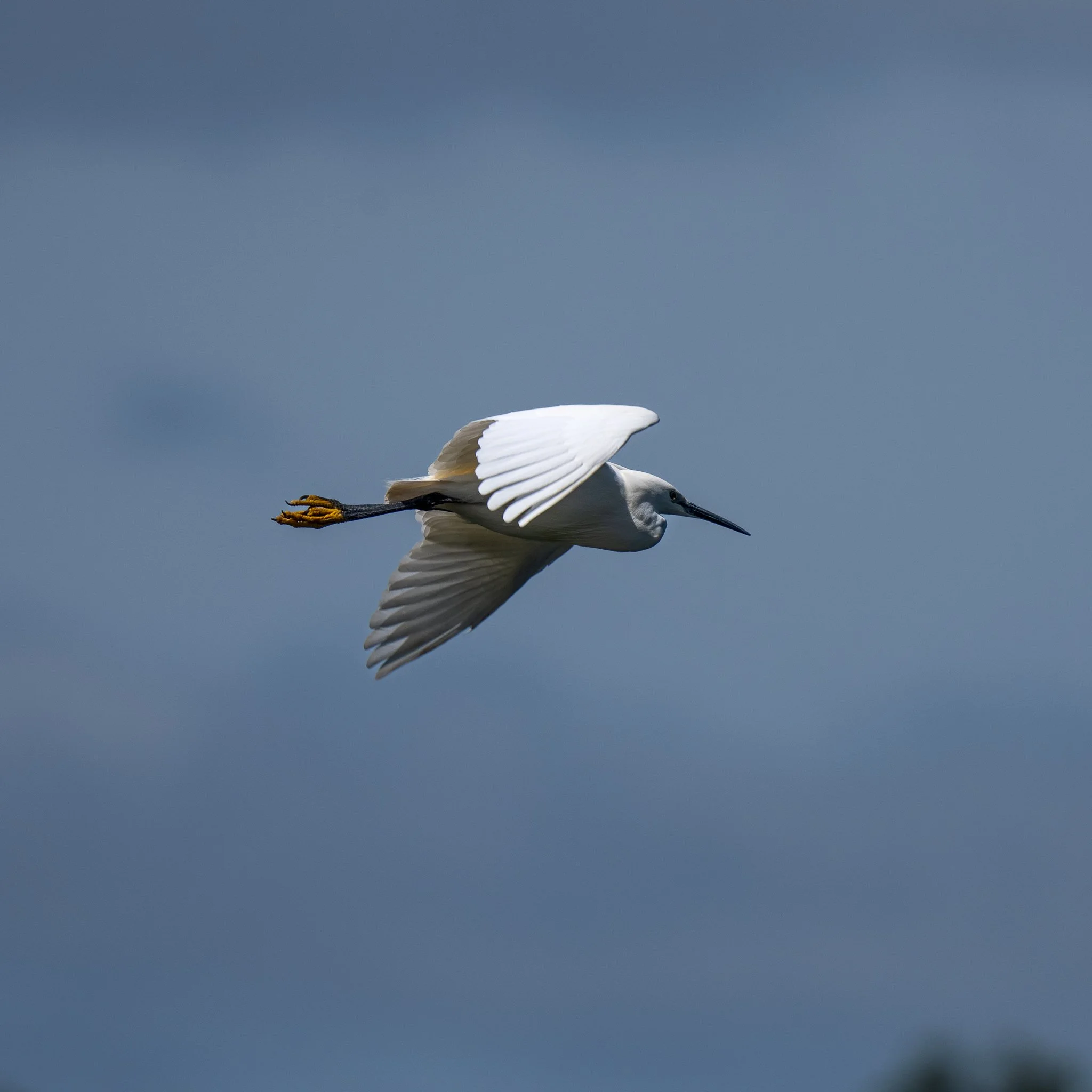
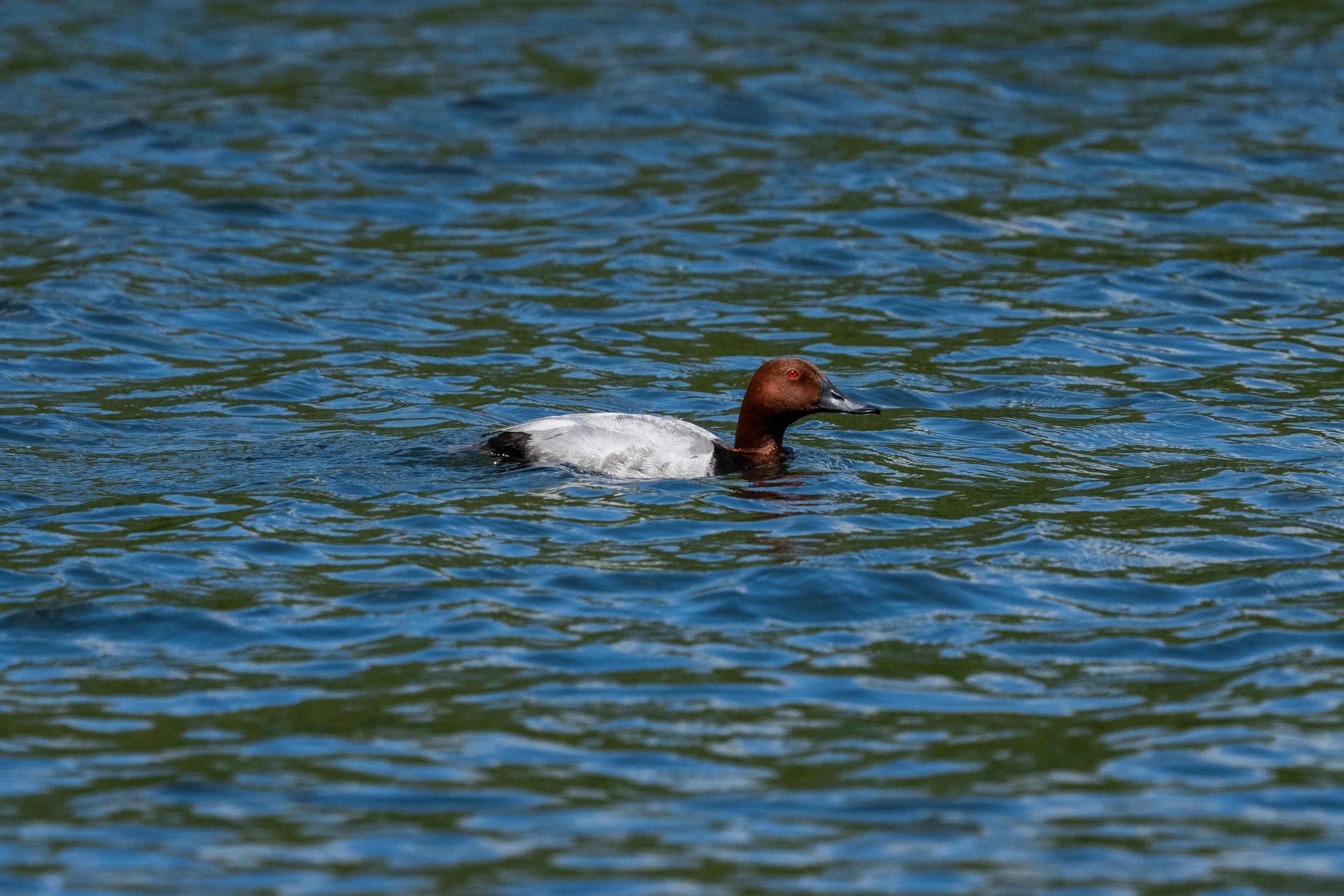
On Bowyer’s Water itself, Greylag geese were patrolling, a pair of Pochards floated in the middle distance and a Little Egret did a flyover. I didn’t stay there long; on this walk I was mostly interested in smaller birds, like this one:
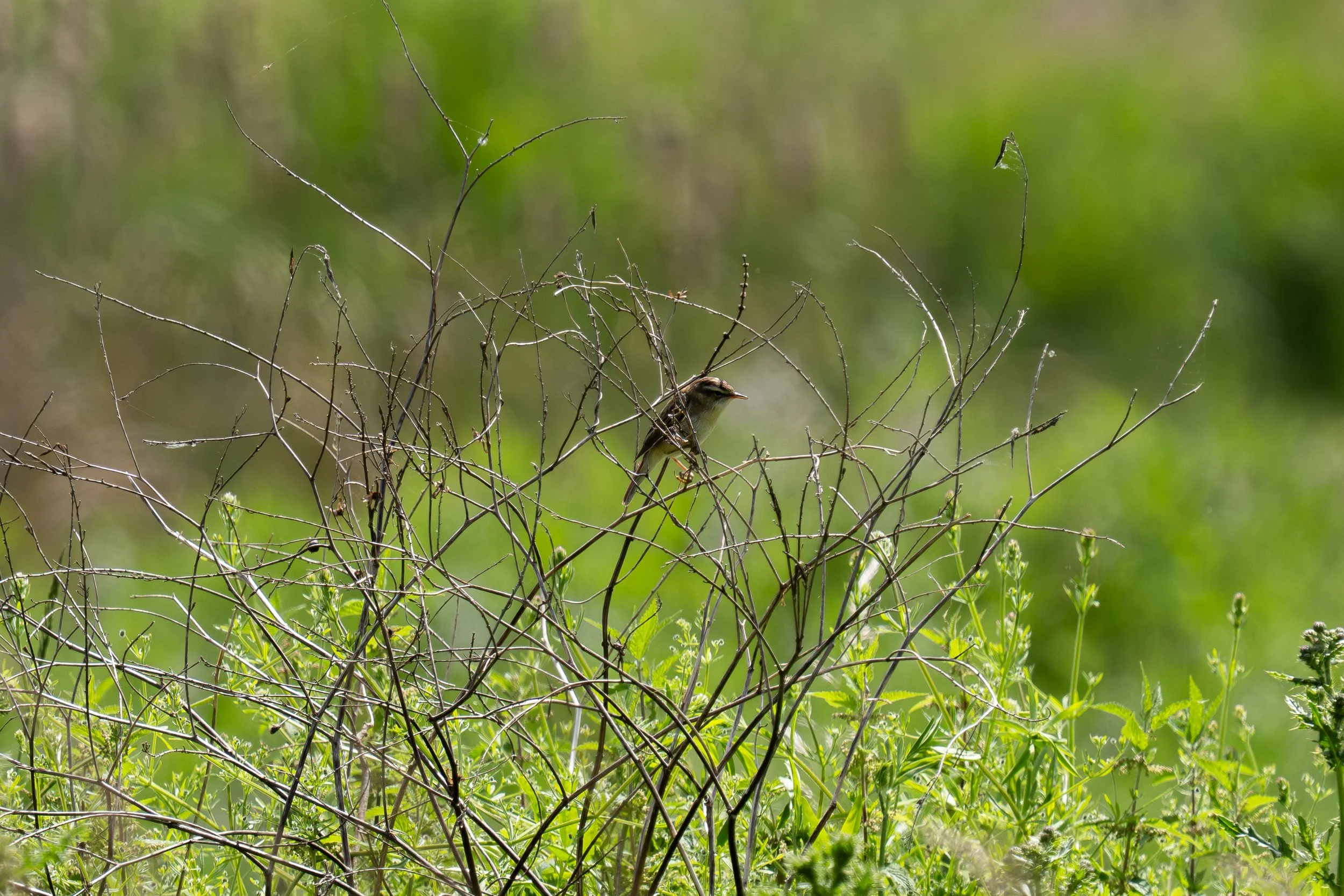
Sedge Warbler posing, camera struggling
The marsh between the River Lea Navigation and the River Lea itself had Sedge Warblers in the scrub. This was another one the camera had an incredibly hard time focusing on properly, and as such it’s not a good picture of a Sedge Warbler, but you can at least tell it definitely is a Sedge Warbler.
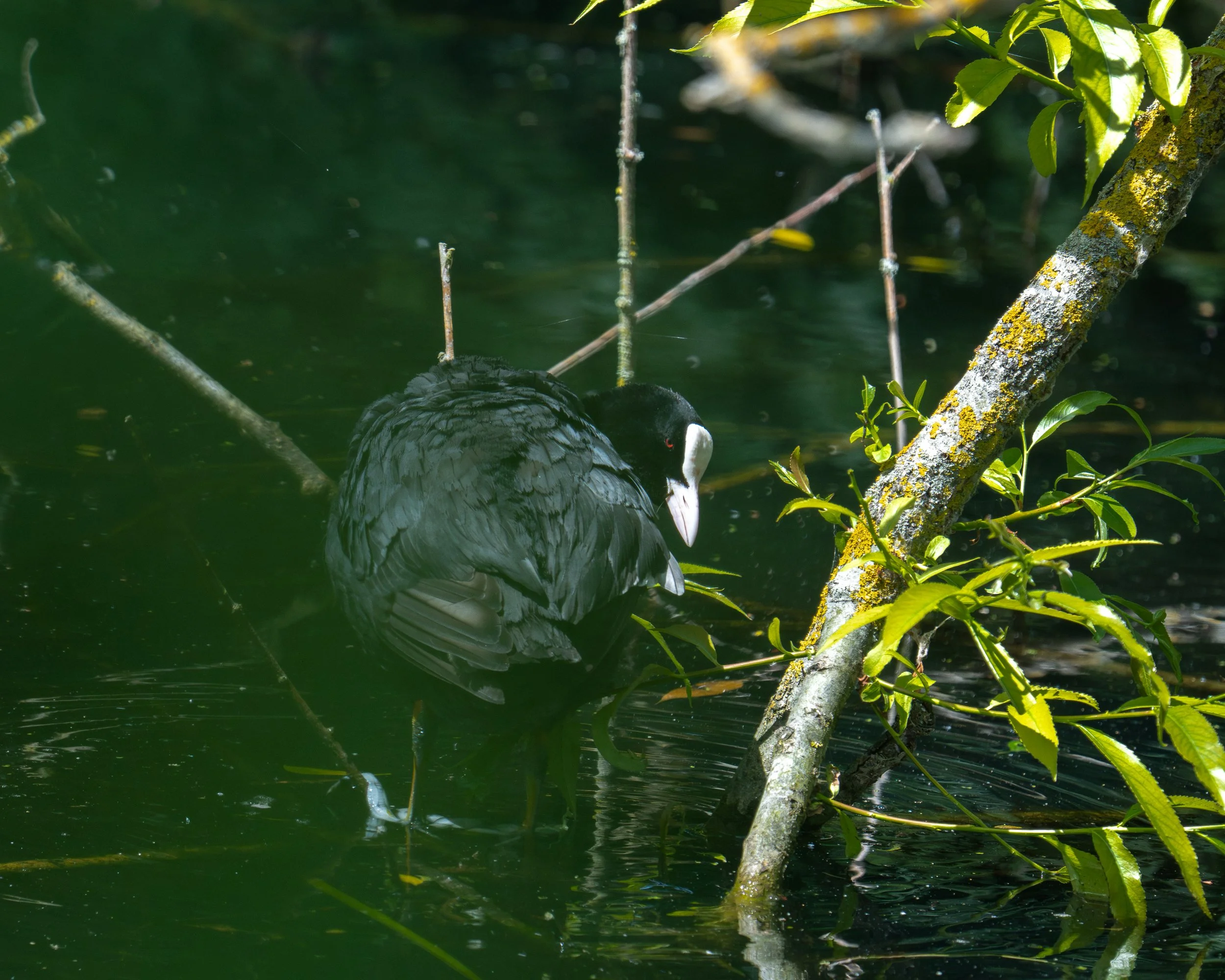
Preening Coot, which would sound like an insult anywhere else.
On the way toward the river, this Coot was parping gently to itself while preening. You can shoot coots on any bit of water in London, but this picture I genuinely like. The different grades of green, front he sharp bright leaves to the soft dark haze of the foliage I was shooting through, tie the whole thing together like the Dude’s rug, and then the red eye in the middle is a nice contrasting focus.
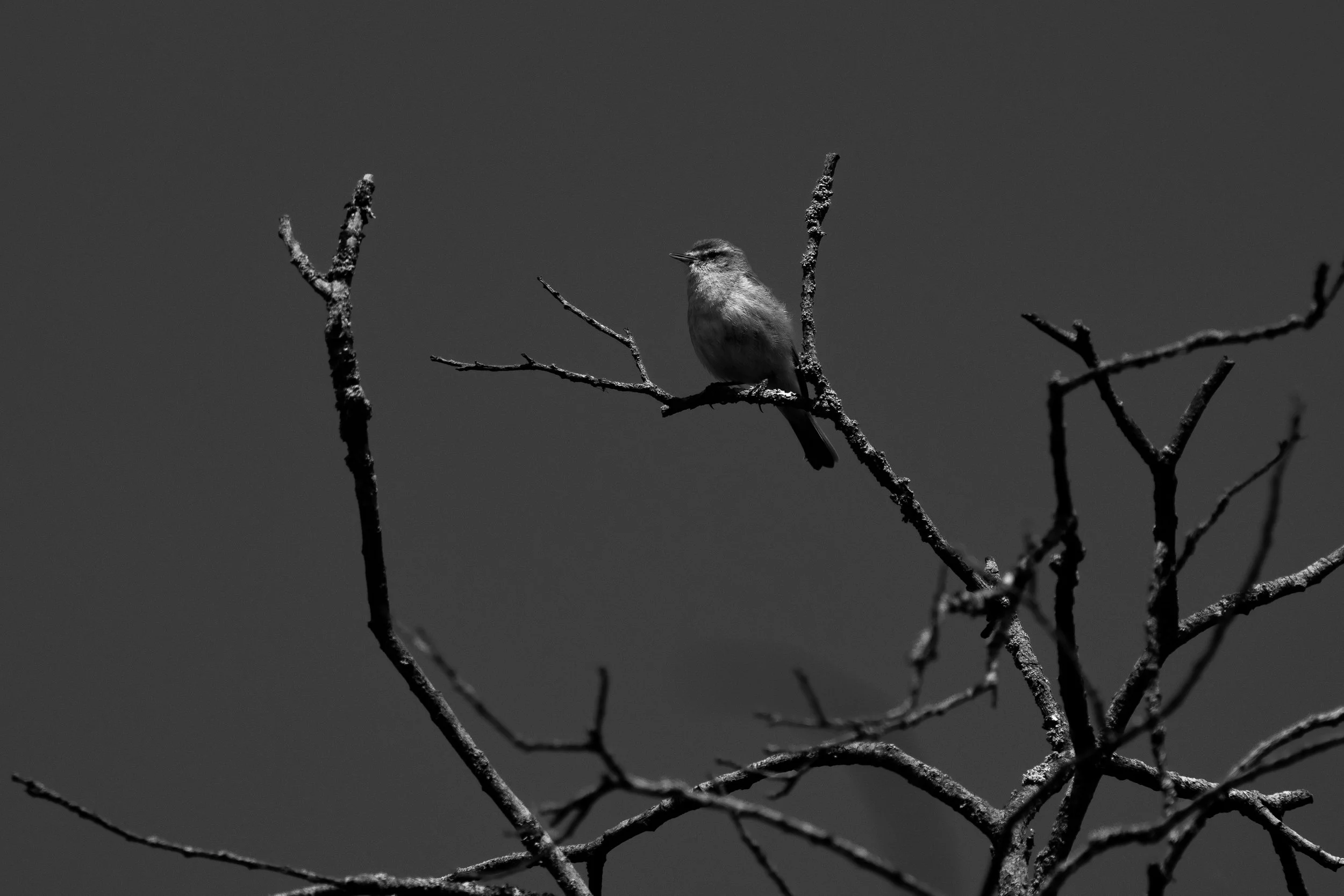
Chiffchaff, more goth than it should be.
This one was rather less successful. I’ve got about 27,000 pictures of Chiffchaffs, but I still can’t resist a picture when one’s just sitting there out in the open. But since I have 27,000 pictures of them, I tried to do something different, leaning into the dead tree it was sitting on and going for something gothic, with mono high-contrast. I don’t think it really worked, but eh, not everything you try will be a winner.
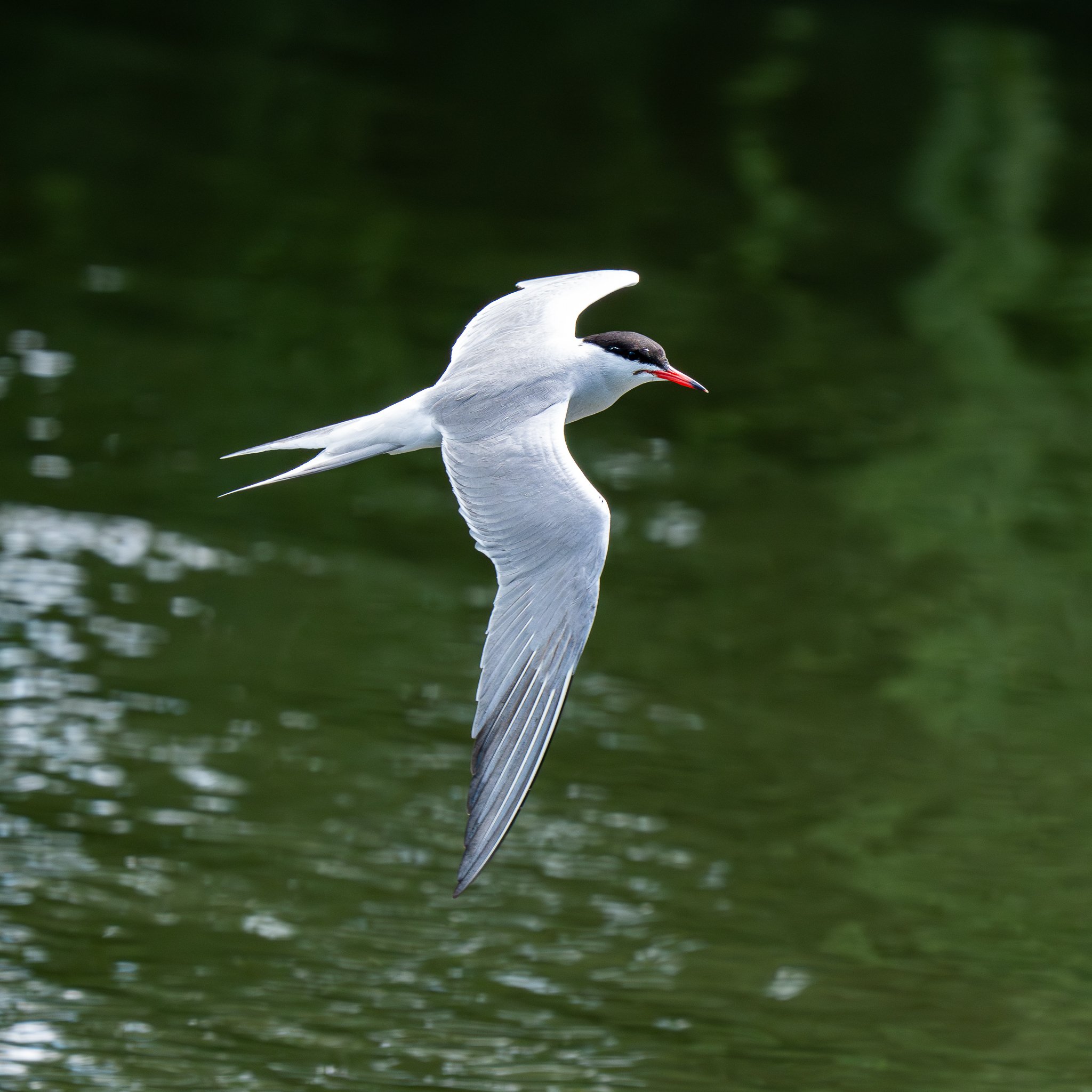
Common Tern
In the Hooksmarsh car park there was an ice cream van. This is relevant because it meant I was eating ice cream when this Common Tern came flashing up the river, in the company of a few Black-headed Gulls. So this picture was taken one-handed while I tried not to throw my cone into the hedge. If anyone ever asks you if you can really hand-hold the 200-600 - yes, yes you can.
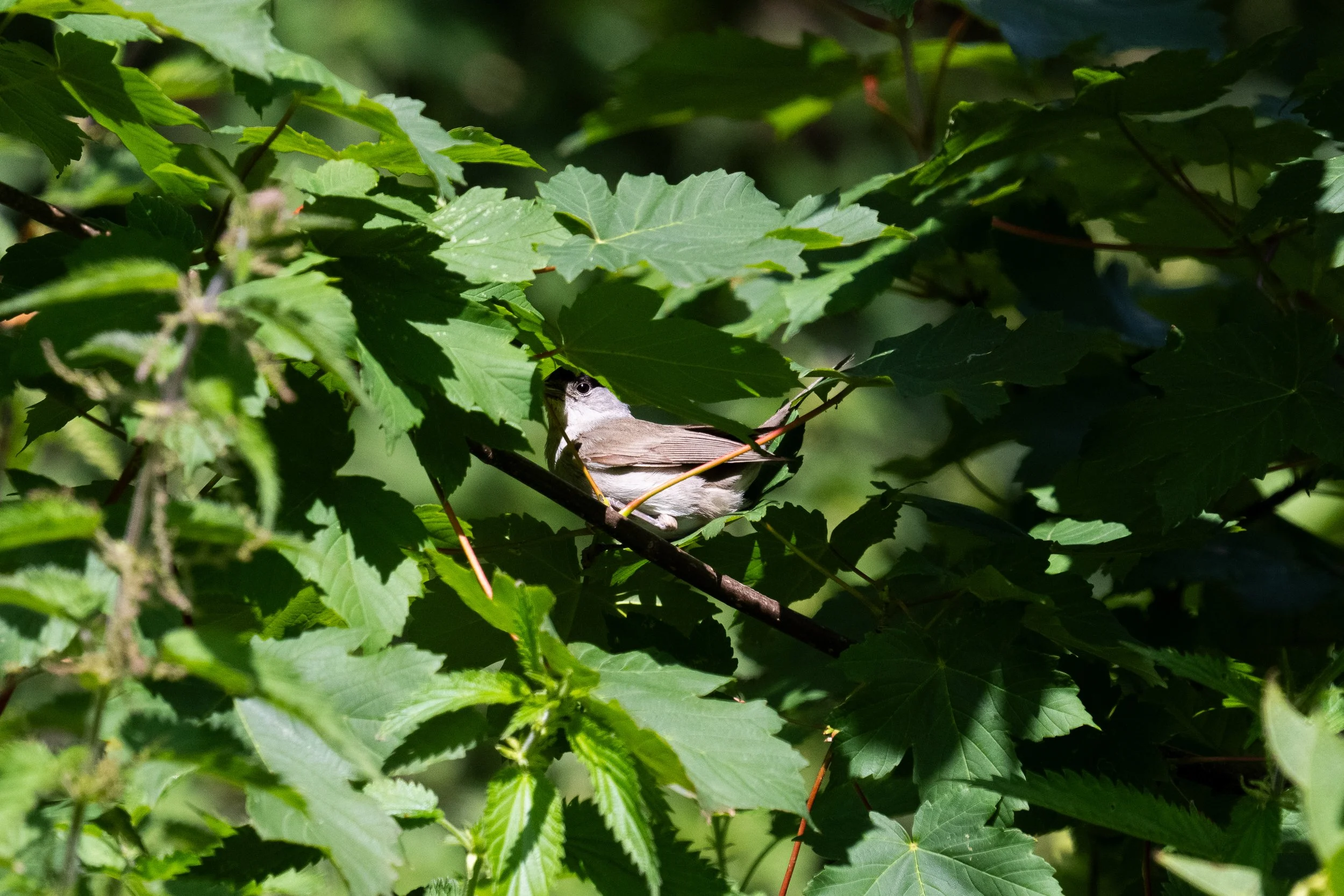
Blackcap, hiding.
On the way to the Bittern hide I met another migrant, this camera-shy Blackcap. They’re another bird you can see all over London at this time of year, but they can be quite shy, so I quite like image of it hidden in the branches. This also shows the lens can nail focus when it isn’t fighting against several disadvantages at once.
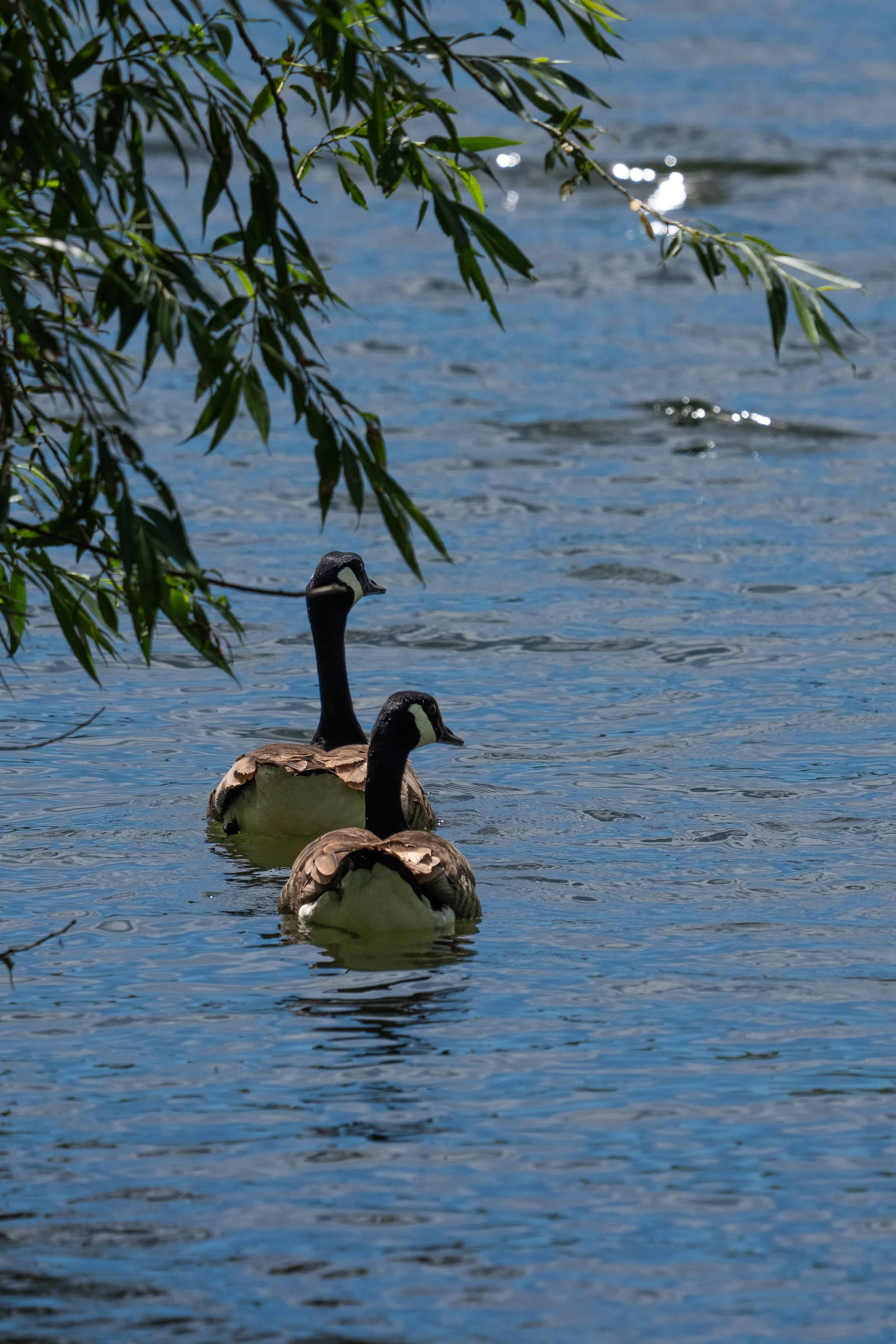
Calm, stately Canada Geese. Nothing like real life.
This is probably my favourite picture of the day just based on the picture itself, rather than because it’s got a cool thing in it. It’s bright and summery and the pair of Canada Geese look sedate and serene - two adjectives which could never seriously be applied to actual Canada Geese.
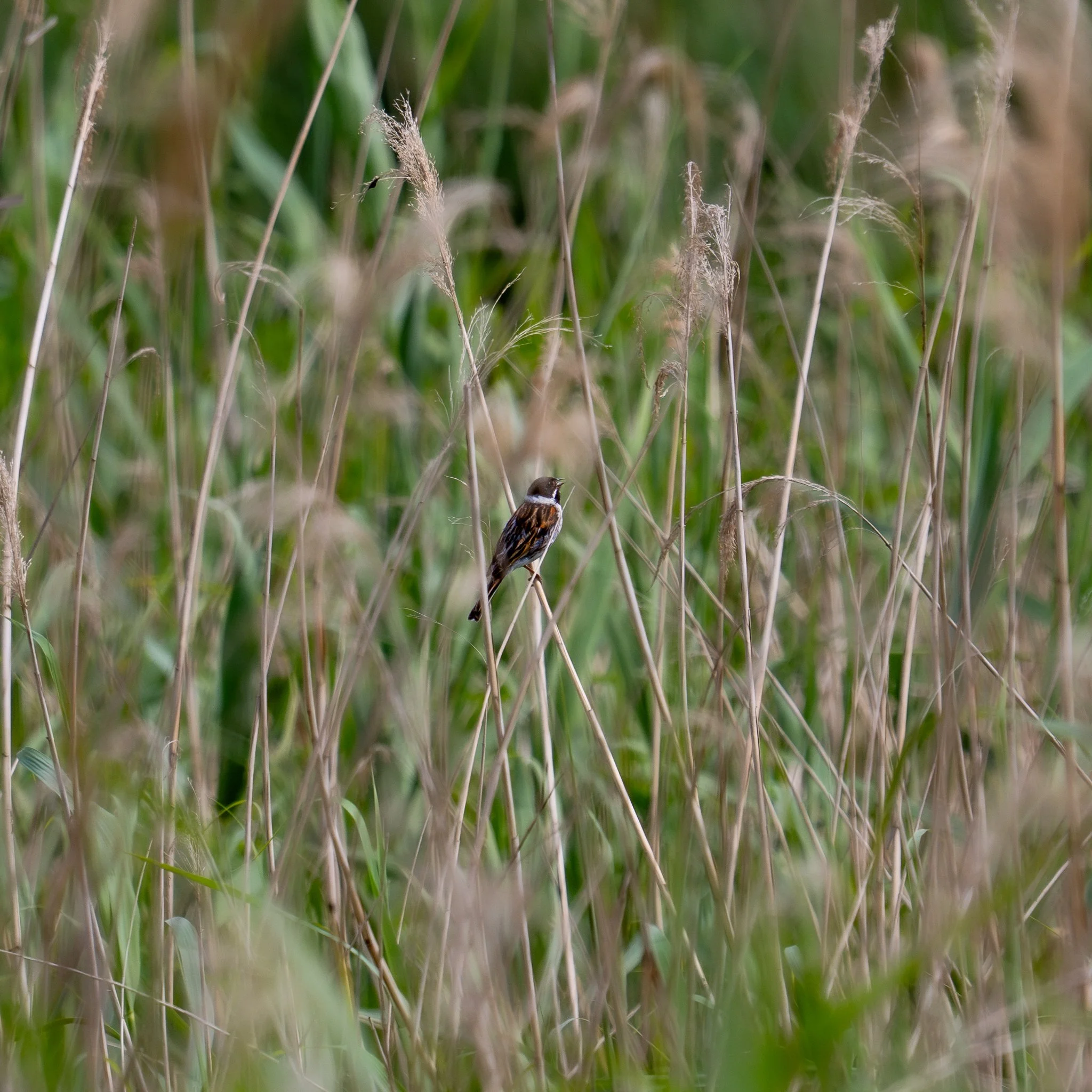
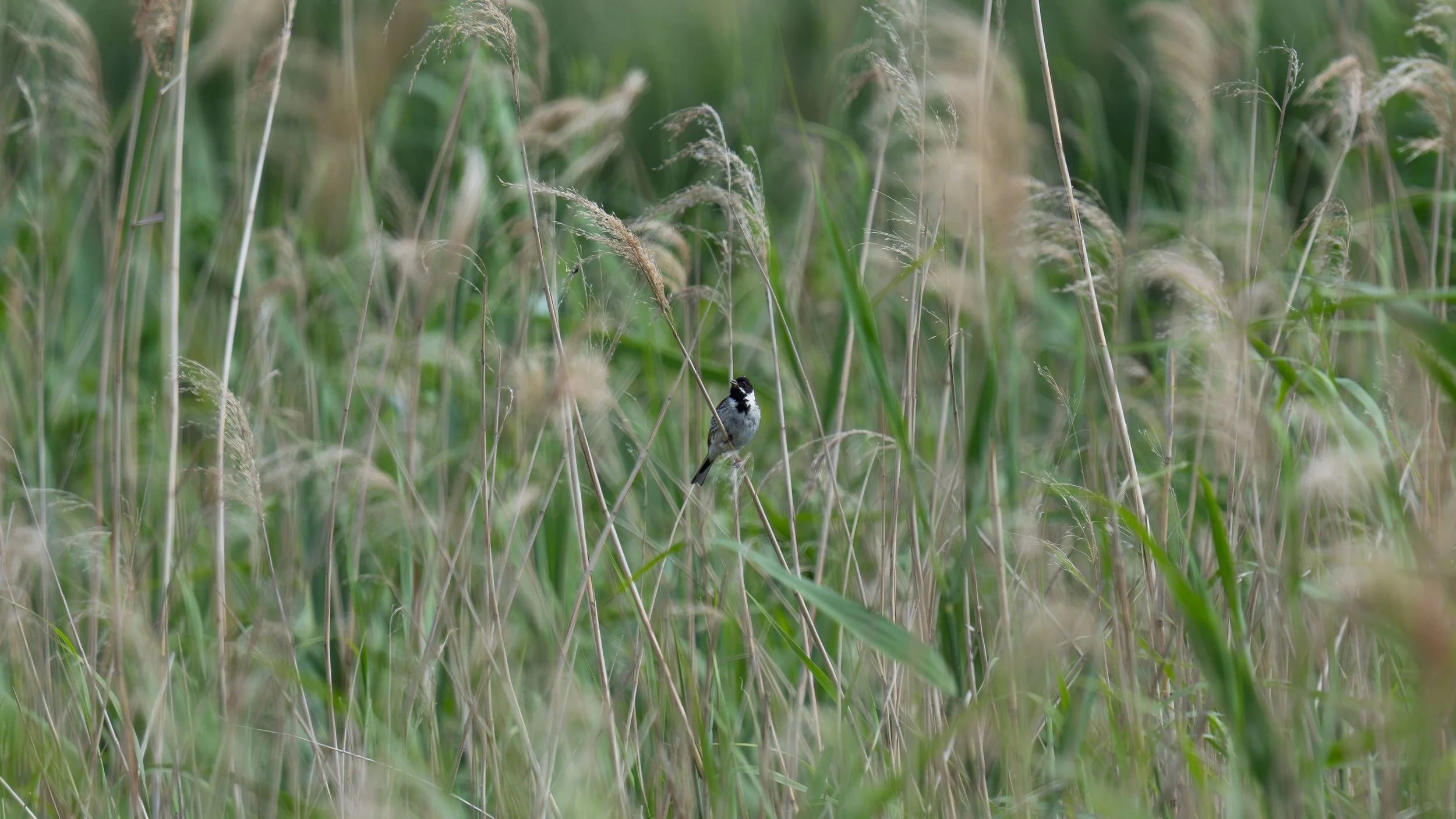
Reed Bunting
The day’s final spot was this Reed Bunting, hidden in the reedbeds on the way back to Cheshunt Lock. This picture I’ve made a bit stylised - extra contrast, texture on the background whacked all the way down with the bird itself slightly sharpened.
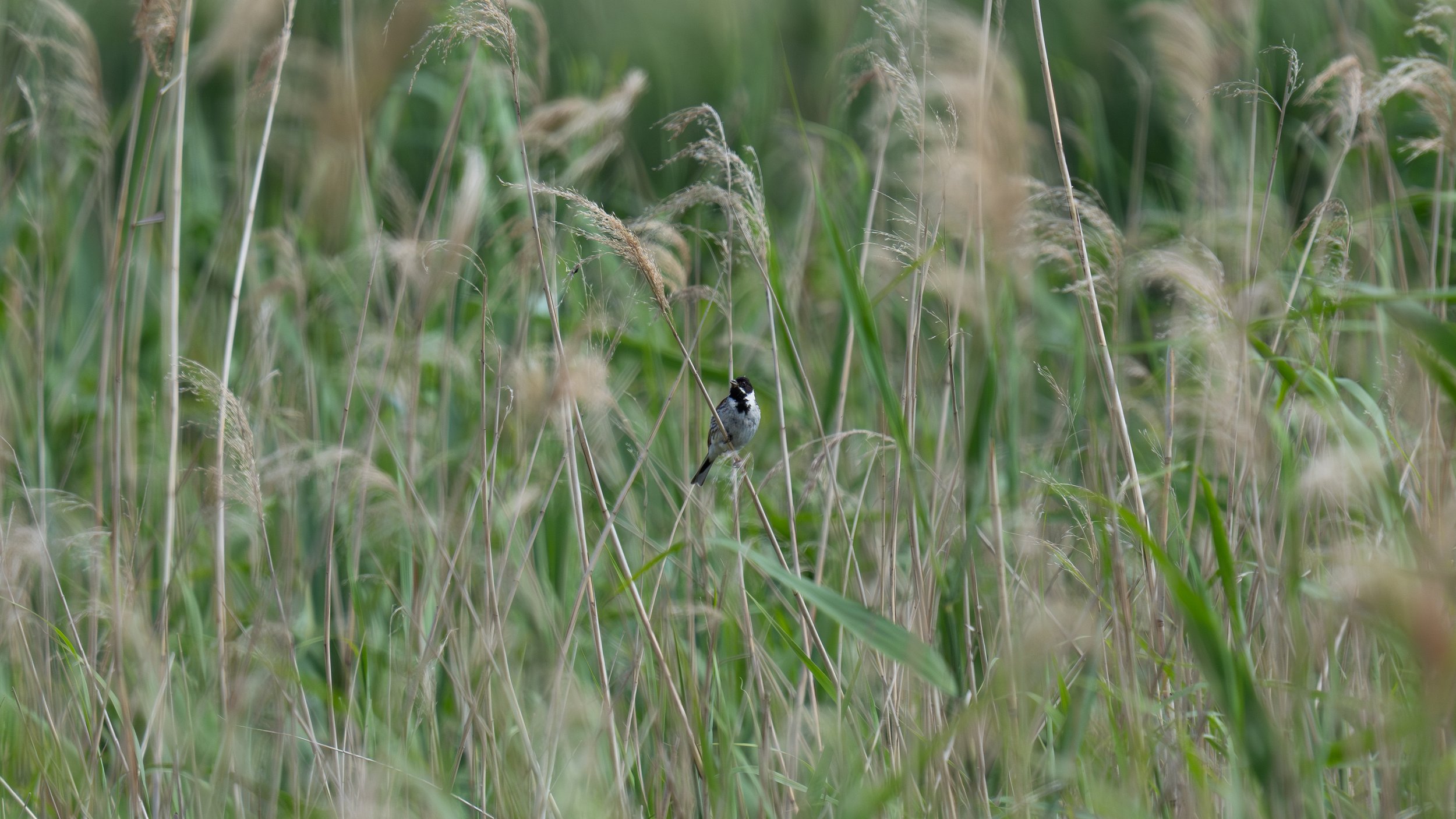
Also a Reed Bunting
This one’s rather more naturalistic, with a wide-angle crop to emphasise the small bird amongst the jungle of reeds.
The most surprising bird of the day I didn’t actually see at all. On the walk up past Lea Valley Lake, a cuckoo called from somewhere toward the river. It’s the first one I’ve heard this year and, given the time, could well be the last.
Queens, Monday 8th June
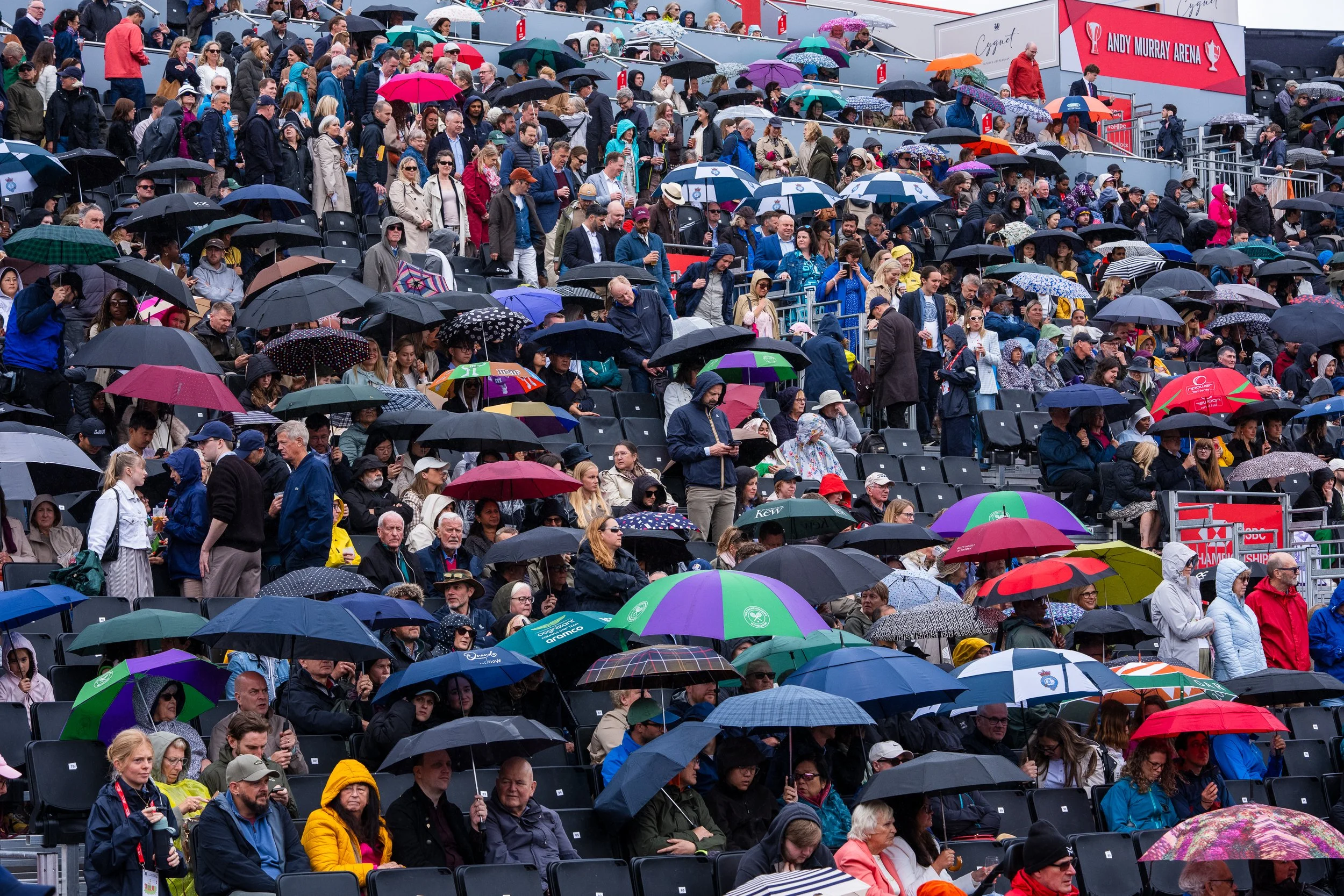
If any picture was going to sum up this day, it’d be this one:
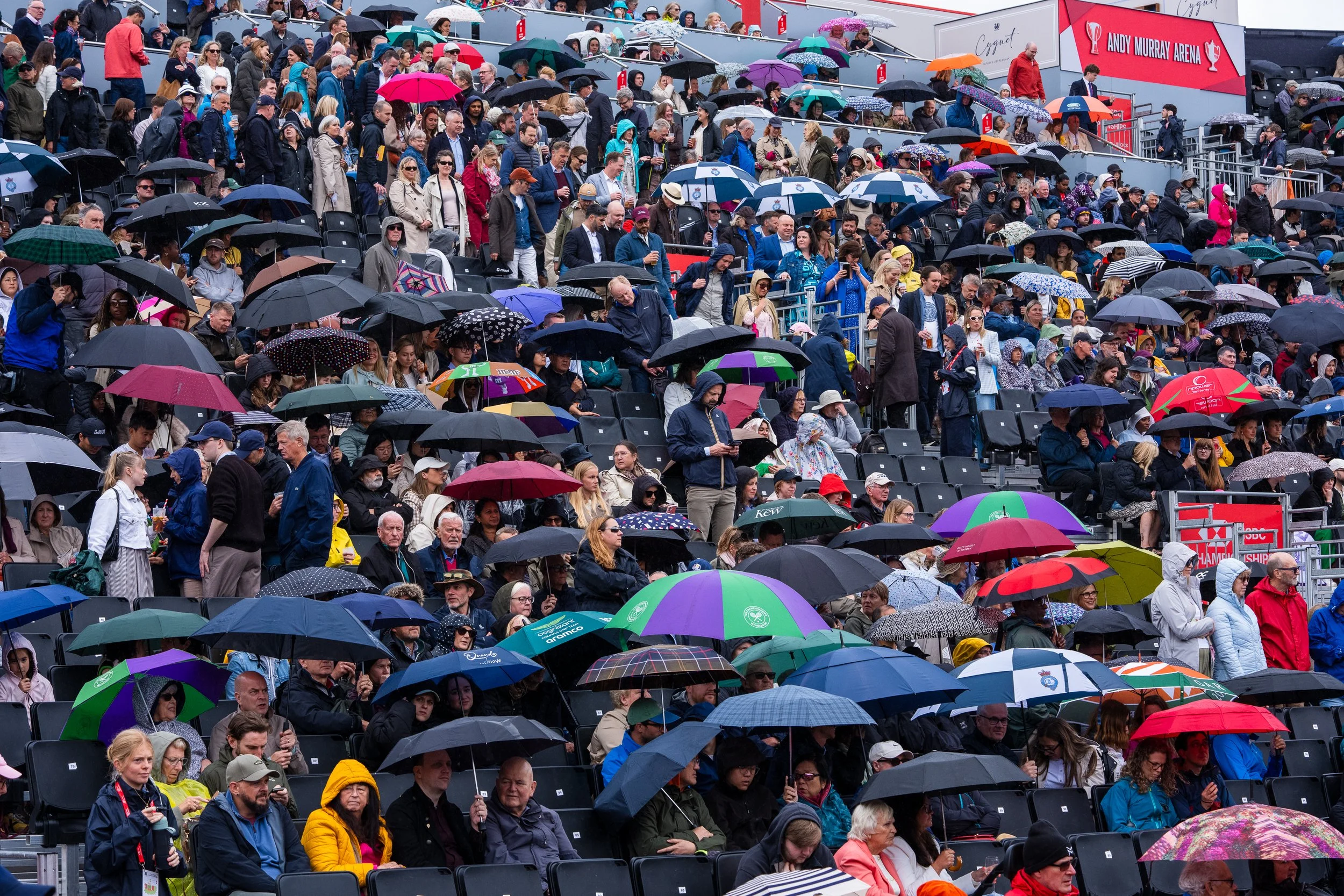
Shut up we’re having fun
It doesn’t take much rain to stop a tennis match and it was going almost all day. Play finally started around 6PM. It probably would have been earlier, but like an idiot I’d taken my raincoat off when they tried to get started earlier in the afternoon and jinxed the whole thing.
But we did, eventually, get some tennis. Qinwen Zheng played Jacqueline Cristian and lost a couple of tight sets, and then Leylah Fernandez played Katie Boulter for a set and a half until the light gave out.
All that said, it was still a lot of fun. I’ll be back next year.
…and obviously I took a load of pictures. The gallery’s here.
Ratboys @ The Garage, May 21st 2026
Last year, maybe the one before, a band called Ratboys were playing at the Windmill, which is a tiny music venue about ten minutes down the road from me. Because it was at the Windmill, the ticket price was probably less than a pint.
At that point, I only knew the band from Black Earth, WI, a meandering 8-minute jam about getting lazily lost in Wisconsin backroads - and it was great, justifying every second of its not-inconsiderable runtime, but I was feeling lazy and it was only one song so I didn’t bother going.
God, past me is a fucking idiot.
In my defence, they had not yet released Singin’ To An Empty Chair, which is a shoo-in for best album released this year and will feature heavily in any conversation about best albums released this decade. It was still a dumb-ass decision.
I did not make the same mistake this time, and fortunately got in early, as The Garage, which is a considerably larger venue than The Windmill, was entirely sold out.
Support came in the form of Former Champ, a Scottish janglepop outfit. I’d listened to their one album before coming out, and enjoyed it. I don’t know that they’re particularly distinctive from any other janglepop outfit, but the melodies are good and Claire McKay’s vocals are crystal-clean.
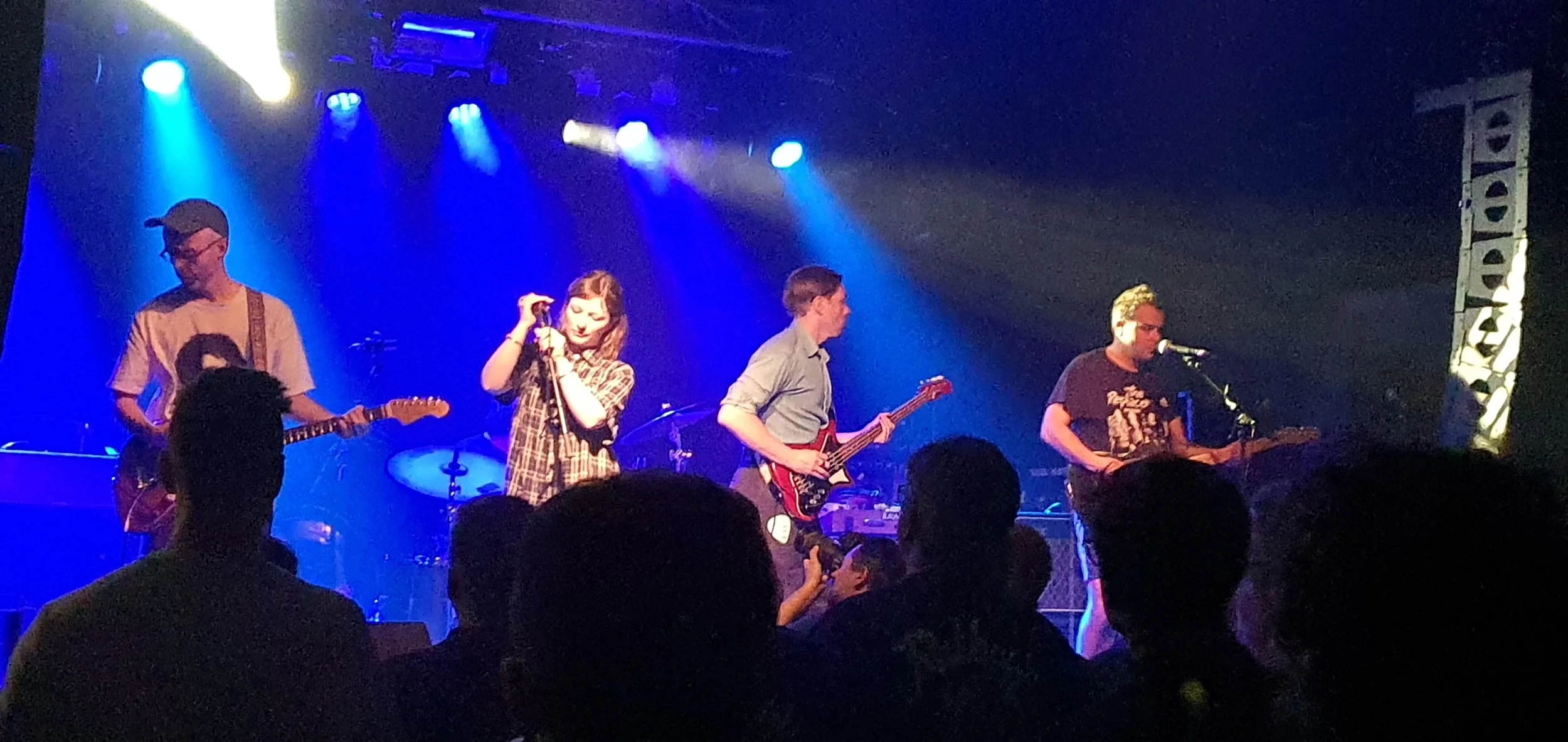
Former Champ, trying to get through the mix
Live, they were less impressive. Clear guitar lines and vocals on record were turned into mush by the mix. And this is not necessarily - or even likely to be - the band’s fault, venues have a highly annoying habit of muddying the sound on the support acts to make the main event sound better, but still a bit of a disappointment. I like the album enough that I’d try them again at a gig they were headlining.
Second up was Sunday Mourners, who I’d also listened to and written off as fairly average post-punk. But live, these guys killed it.
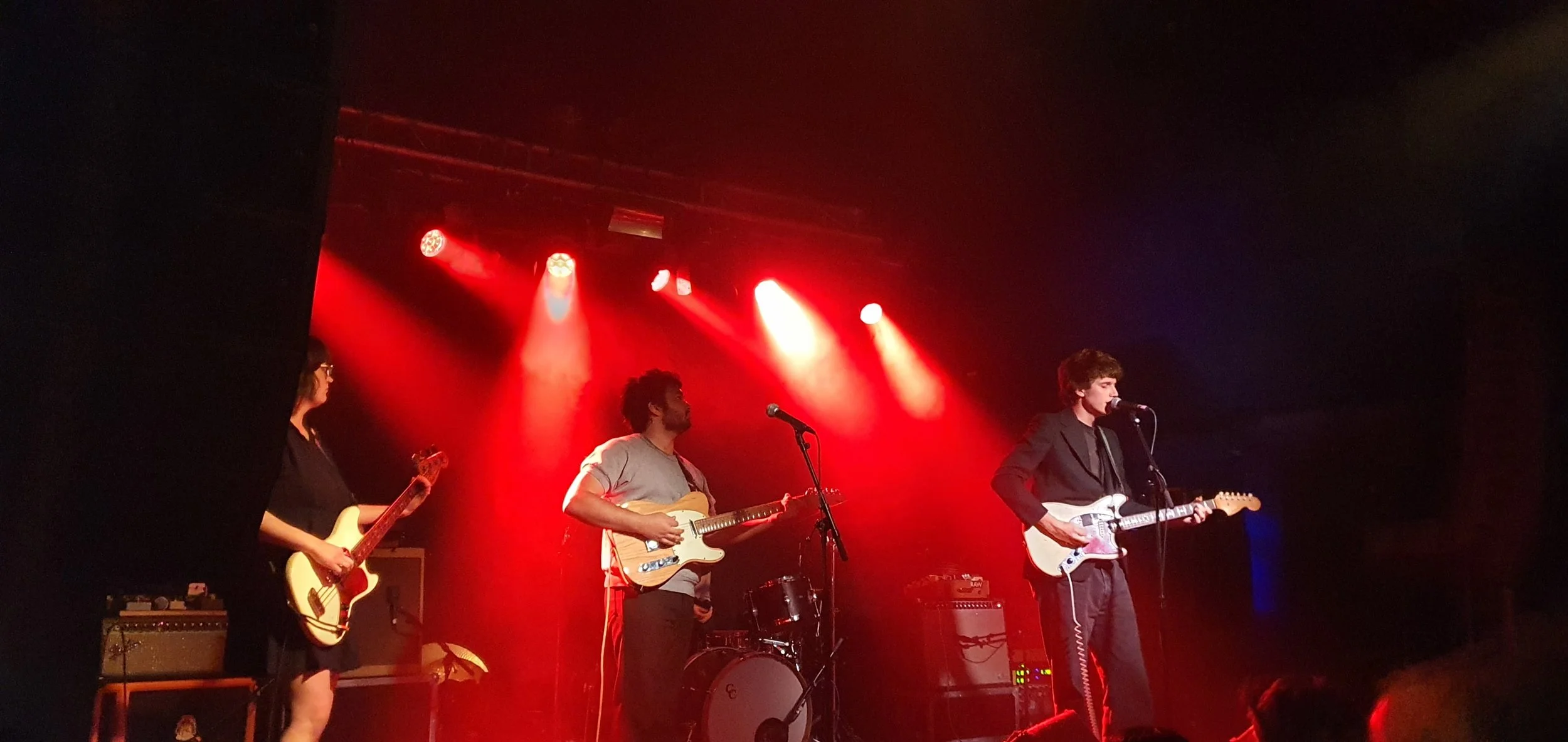
Sunday Mourners, rocking
The influences are worn on their sleeve - I had to laugh when the frontman said ‘This one’s a Television cover’ because my dude, they are all Television covers. You’ve clearly been mainlining Marquee Moon since you were seven years old. But when the influences are that good and you’re doing such a good job with them, who cares?
It was spiky, standoffish, and full of shuddering beats. Loved it, would definitely go and see them again.
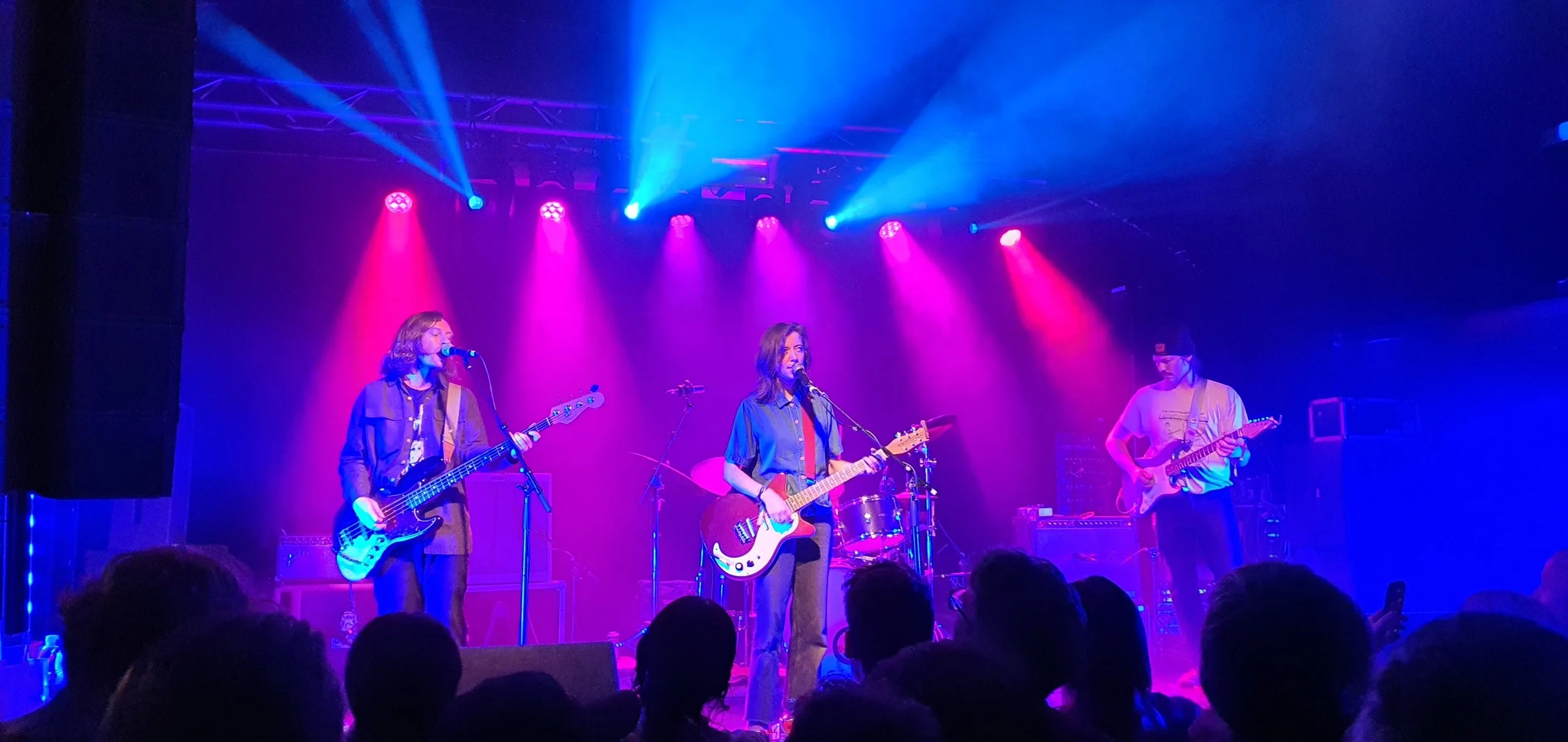
Ratboys themselves absolutely owned the stage. They do country-accented rock, not afraid of letting a song stretch out when it needs to, but just as capable of three-minute bouncers, and that variety was what made the set so good.
Obviously it was helped by the fact they were touring a truly superb album, and we got 8 out of the 11 songs on it, but there’s something special about a band who can so easily switch gears. Too often, there’ll be a set full of rockers and a token ballad, or a parade of folk songs and then some fanfare when the singer briefly straps on an electric guitar. Ratboys do whatever the hell they want and it still always sounds natural.
They kicked off with Open Up, Anywhere and Penny In The Lake, going from road-rock to dancer to singalong in just the first three songs. The gentle Strange Love slid straight into the significantly more frantic Light Night Mountains All That, a song that sounds like rising paranoia in a horror movie.
The centrepiece of the album and the set was Just Want You To Know The Truth, another lengthy meander, but this one through memories of a relationship, addressed to the partner no longer there, who left for unspecified but not good reasons, the one not occupying the empty chair of the album’s title. Live, the pained guitar which sits as an undercurrent on the studio track came right to the front, a howl of rage and frustration at the one who ran away.
Ratboys, who I intend to see multiple more times in the future
The main set closed with Black Earth, WI, so I did finally get to hear it live. It’s a song that would reward being stoned. You could get lost to that song. You could get lost with that song. You probably wouldn’t care. The guitar solo in the middle is the single best three minutes of music committed to record in the last five years. It’s such a perfect thing to drift out on it was almost a shame there was an encore.
I suspect the next time I see them will not be as good. There’s a perfect time to see a band - you’ve just got into them, you love their new stuff, and they’re performing every one of the bangers you want to hear. By the next time, the band’s career will have drifted on like the solo in Black Earth, WI, and you have to hope enough of your past favourites make it onto the list. But for me, this caught Ratboys at the perfect time. Very glad I wasn’t lazy again.
Brockwell Park, 3rd May 2026
I wasn’t carrying my camera on this walk. The idea was to have a quick pound around Brockwell to get some steps in and I didn’t want to get distracted.
I got distracted.
There’s a lot of flowers coming out at this time of year - even a casual walk around a park can find a load in different shapes and colours, so obviously I ended up hunting them.
Since I wasn’t carrying a camera, you’ll have to make do with snaps from my phone.
Herb Robert
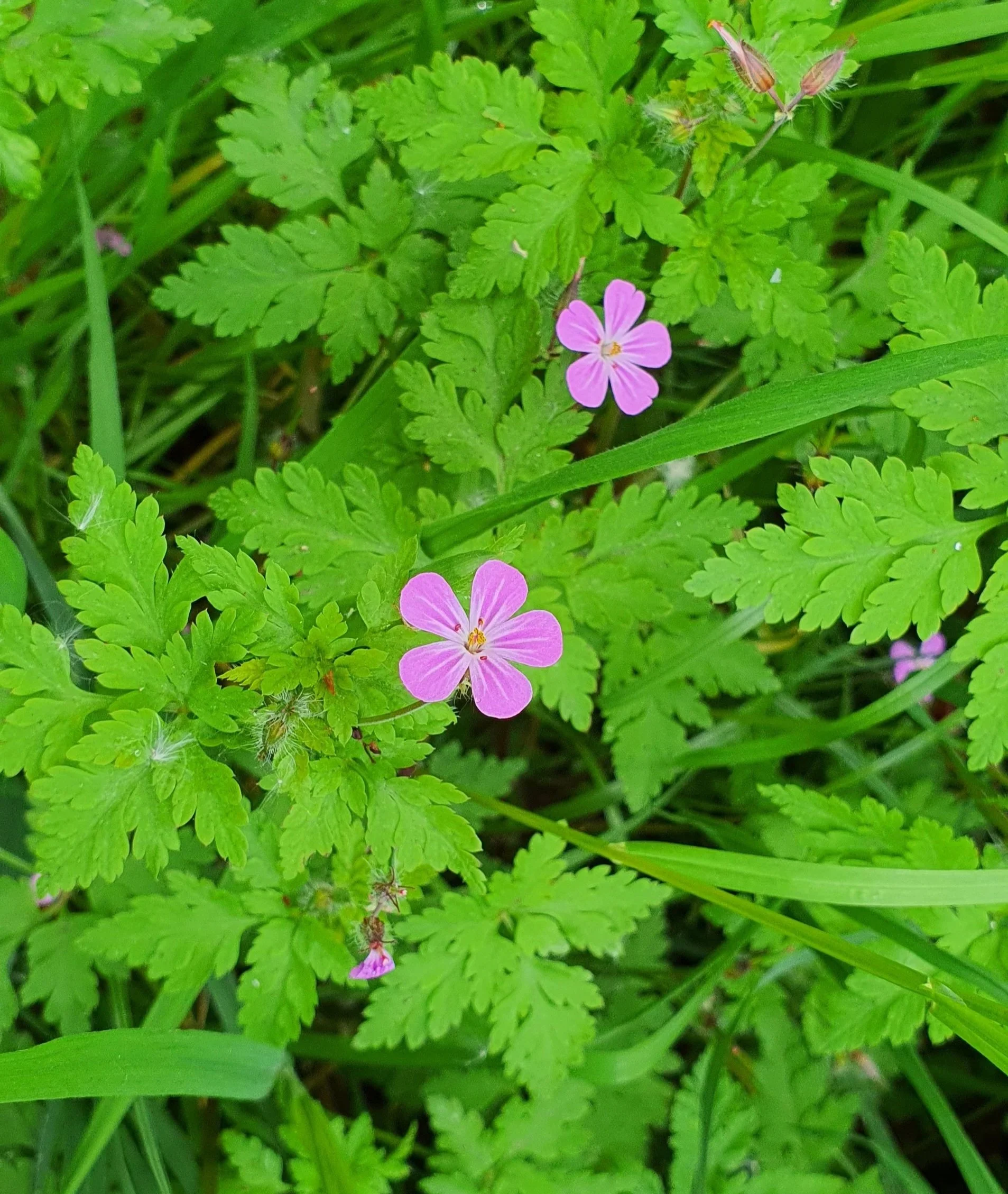
The little pink one that looks like a geranium is, in fact, a type of geranium. Generally found in the shade; this one was next to the middle pond.
Freshly picked leaves are said to be good at repelling mosquitoes.
Hawthorn
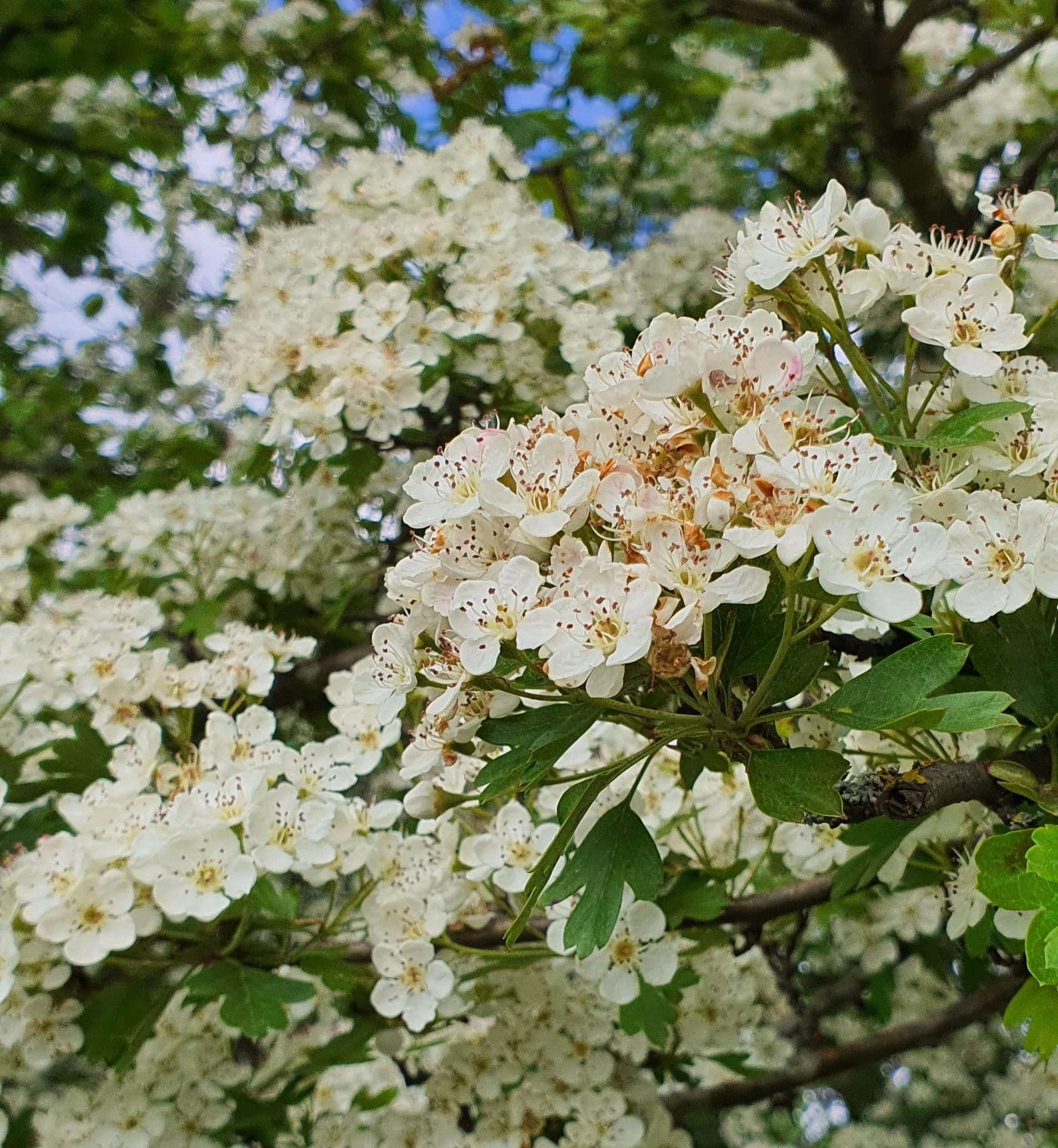
The hedges are full of flowering hawthorn at this time of year. Also called ‘Mayflower’ because it flowered in May, the Olden Times not having much energy to spare on imagination. These days it’s flowering by April and often as not done by May, as the year gets warmer earlier.
Leaves can apparently be used as a salad and the berries can be turned into wine. Haven’t tried the leaves, the wine is interesting but no Georgian red.
Green Alkanet
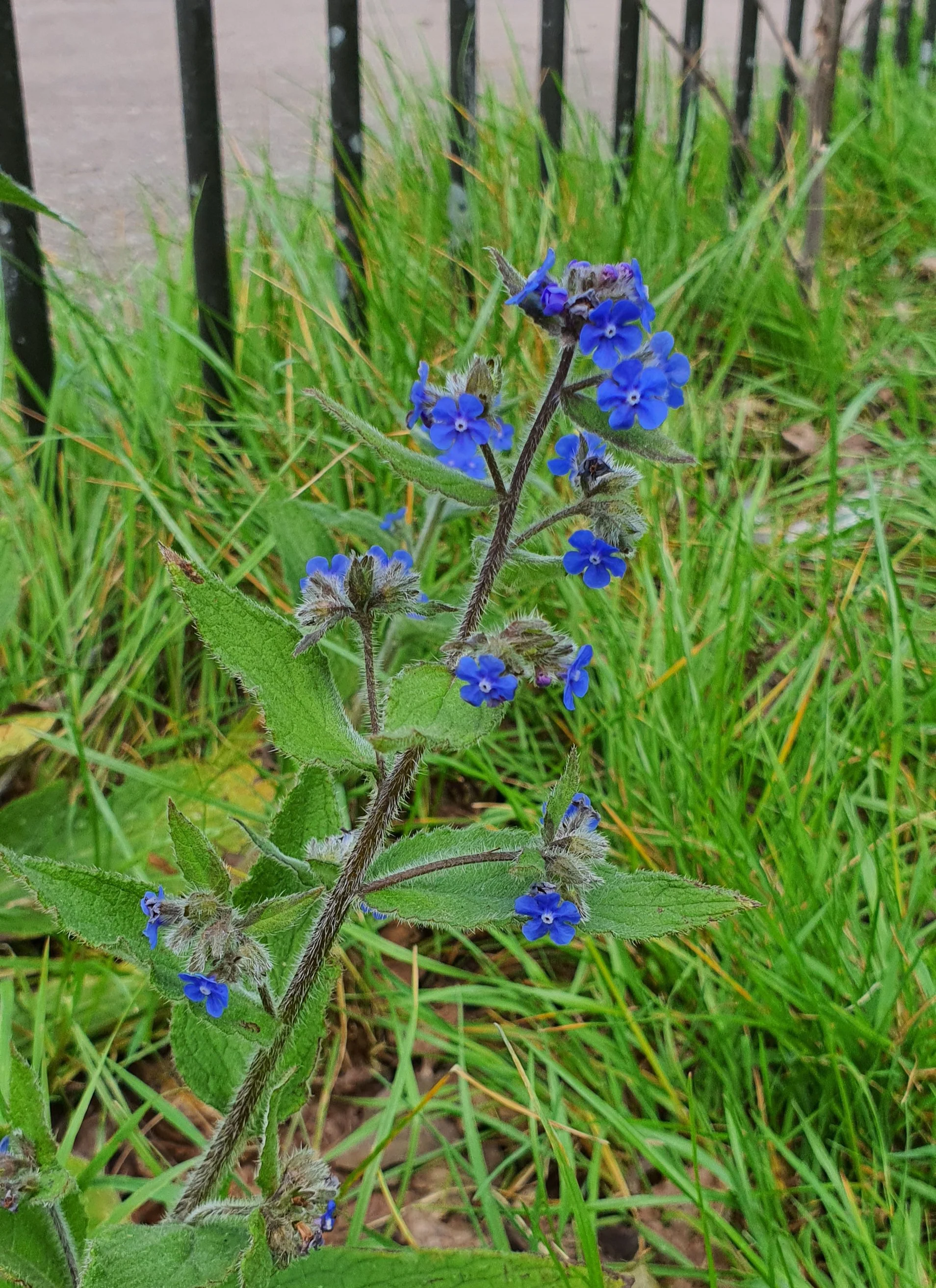
This stuff comes up on every verge, and until I looked it up I called it ‘speedwell’, but it turns out that’s a different little blue flower that I’d find on the lanes in Cornwall.
The roots used to be roasted and ground as a coffee substitute. Since they are toxic, I will not be attempting that.
Oxford Ragwort
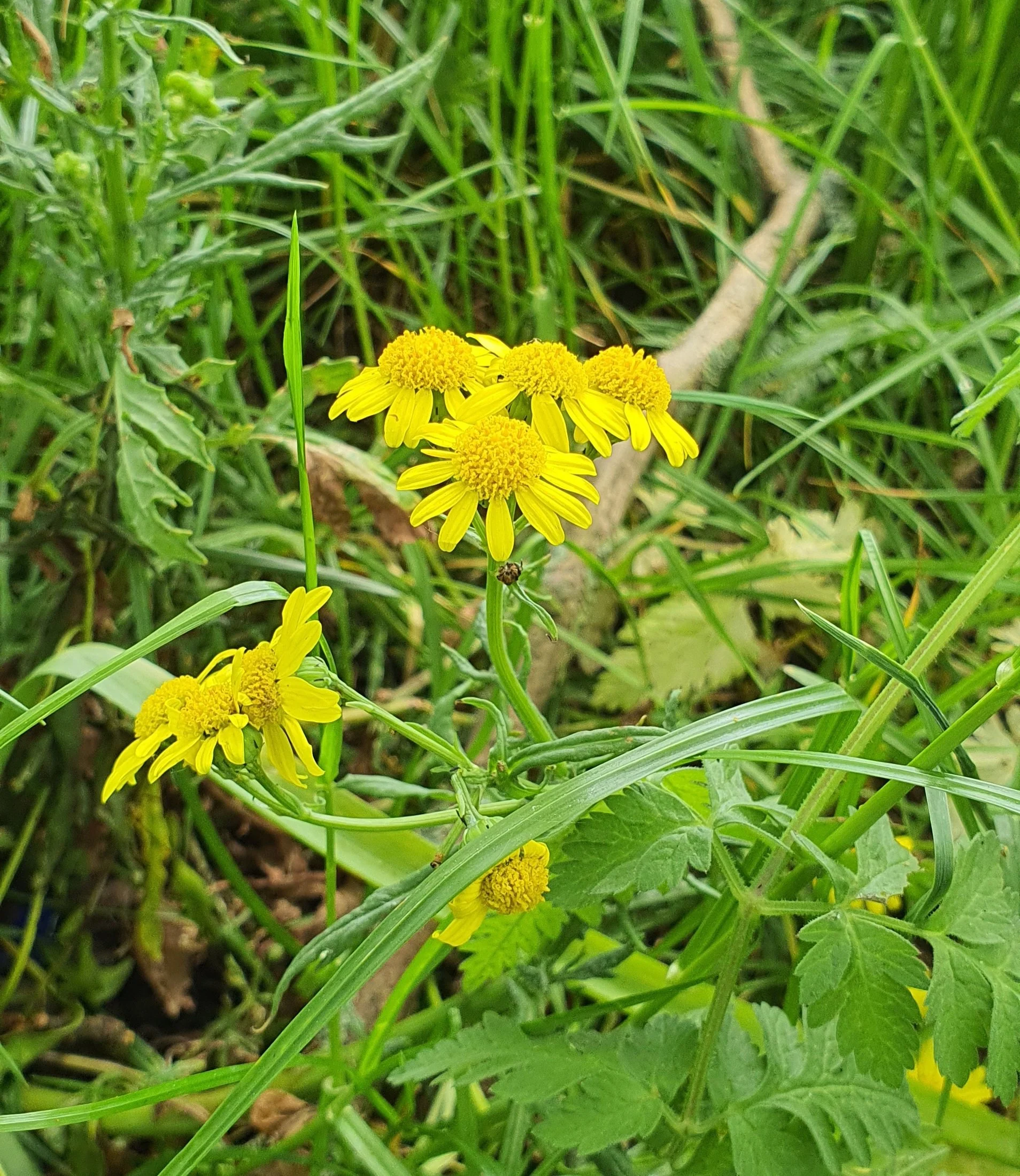
I love these little sunshines. They spring up all over the place, both in the verges and patches of it in the middle of any unman bit of parkland.
Like Green Alkanet, it was an 18th-century introduction which spread rapidly, this time via the train tracks, as the ballast was a close match to the kind of ground it liked where it grew in its native Sicily.
Cow Parsley
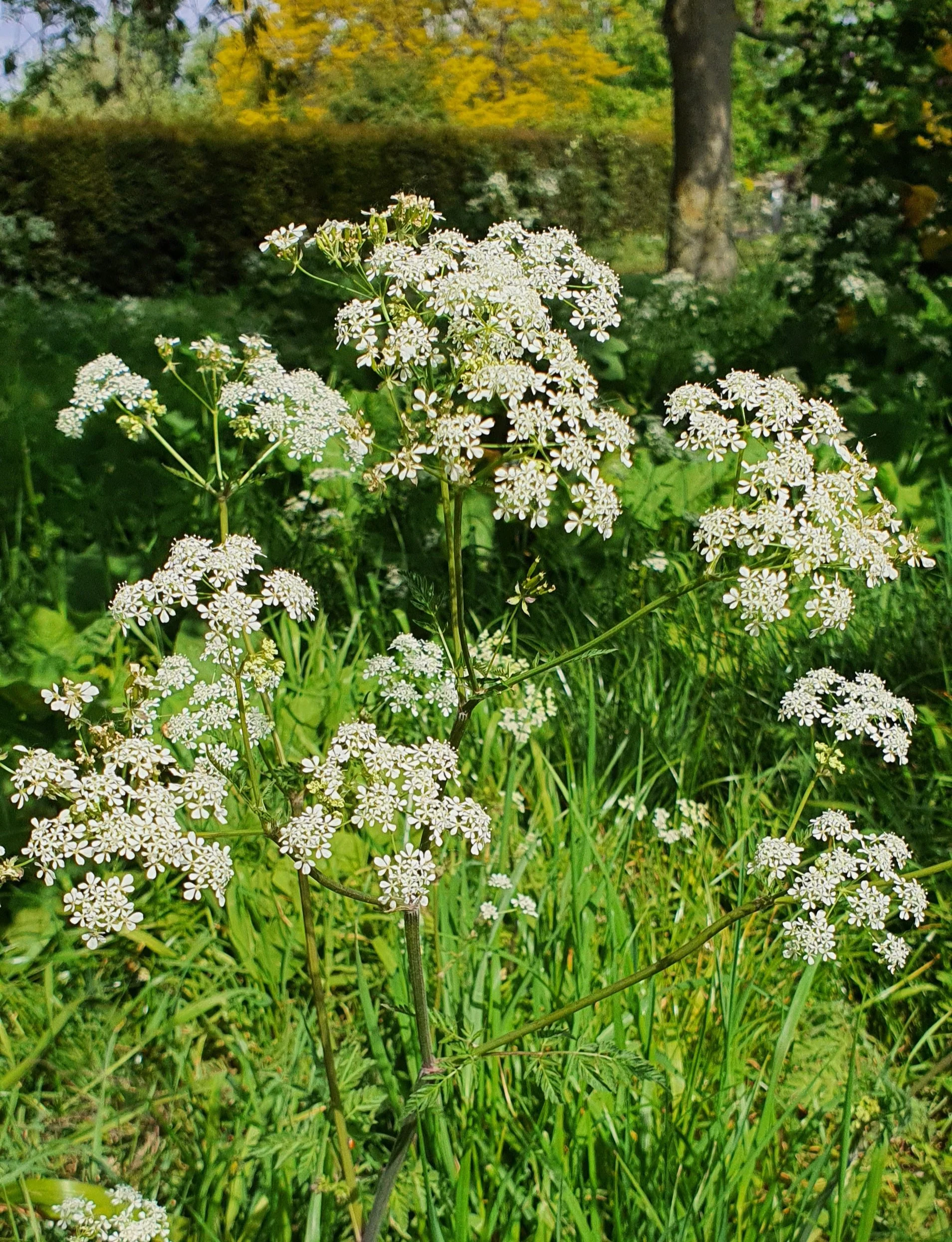
This is one of the earliest and most prolific signs of spring, and for me they pretty much define the smell of country lanes - which makes it a little odd to find in the middle of London. But cow parsley gets everywhere, enthusiastically. Each plant produces a huge amount of seeds so it spreads easily.
Apparently everything you can see above ground is edible, tasting similar to chervil or parsley with a hint of aniseed. You need to be careful when foraging, though, because it looks similar to hemlock, which is very much not edible. Or at least, not more than once.
And finally…
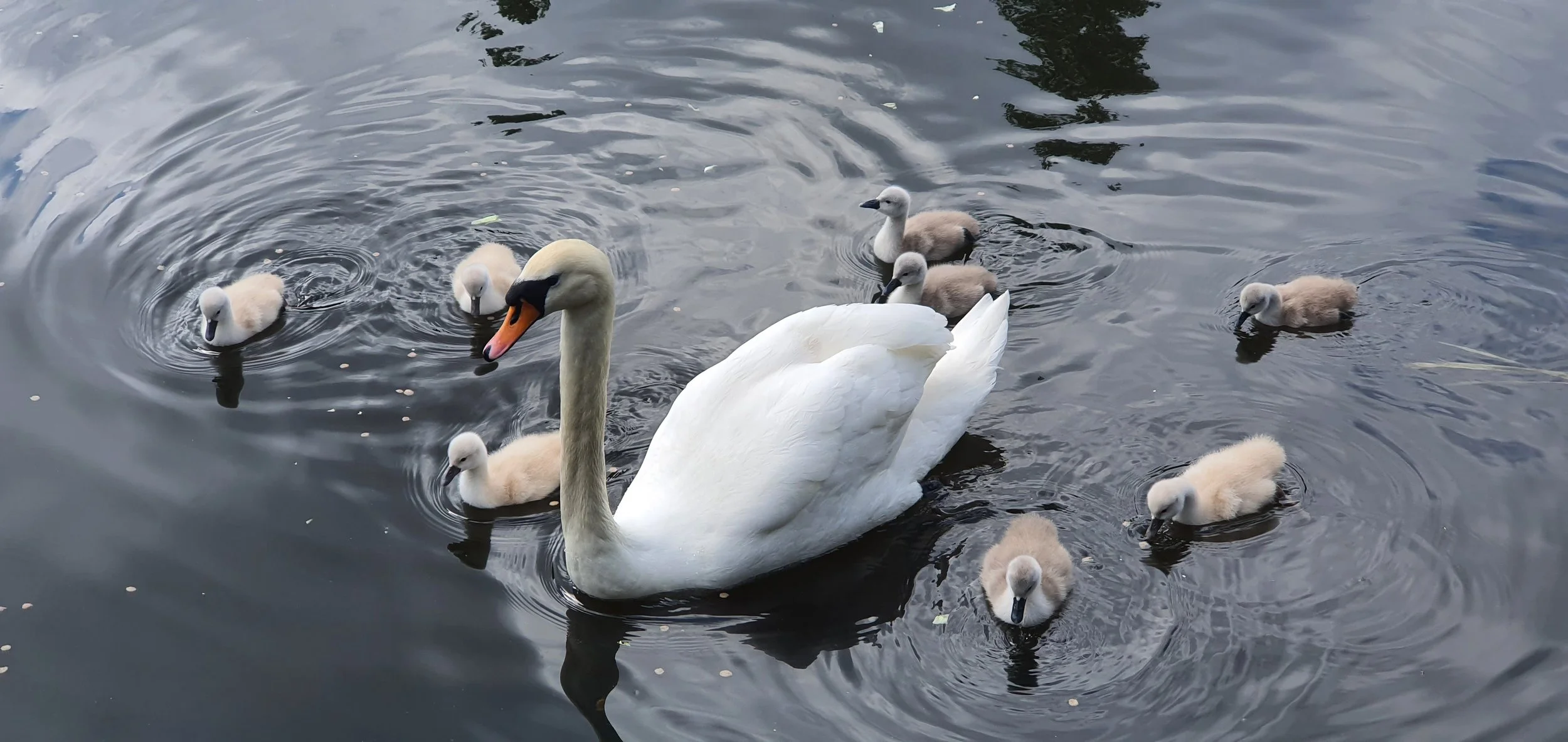
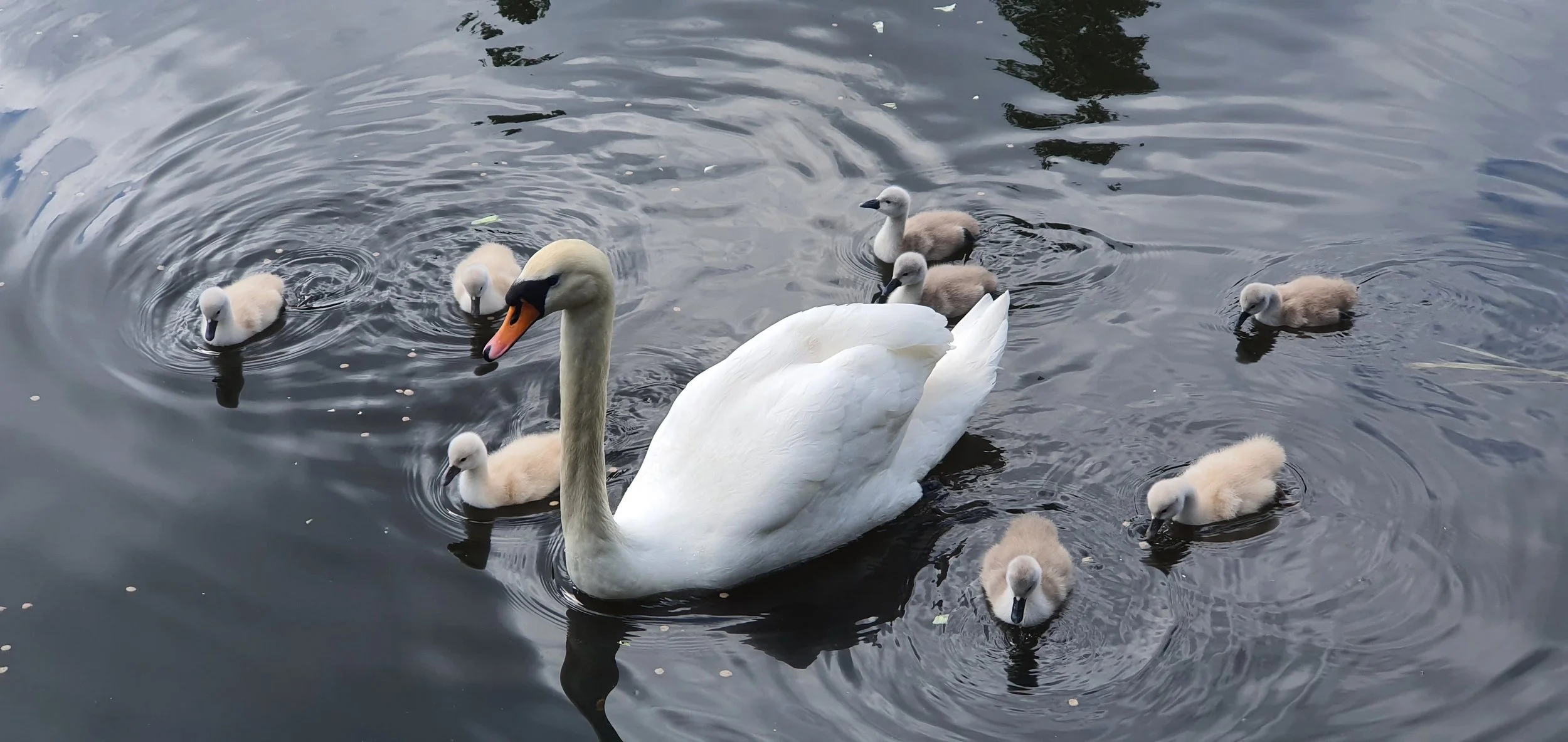
No, they’re not flowers. But the babies are back, another full set of 8 hatched and cheeping.
Beddington Farmlands and Mitcham Common, April 22nd 2026
Look who’s back:
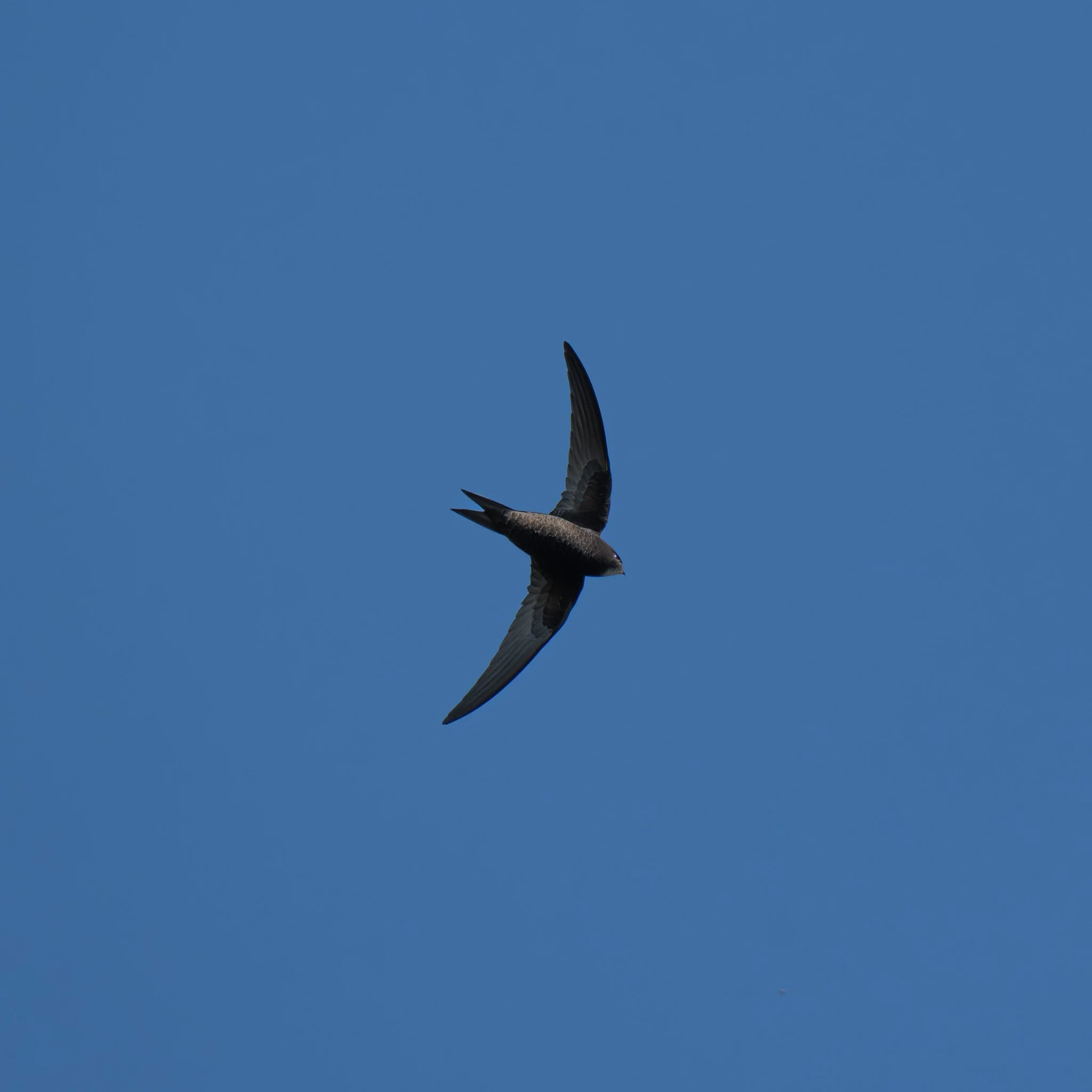
This is the earliest I’ve seen swifts in London. I wasn’t expecting to see them for another couple of weeks, but the skies above Beddington Farmlands were full of them wheeling and screaming.
They’re a bittersweet arrival for a winter-lover like me, but I do like them. Part of the reason I like them is that they’re so hard to get a decent picture of, being, as you might expect, swift.
Swifts jack-knife through the sky, and getting them in frame is distinctly non-trivial. My method is always to let the camera get focus, fire a burst for as long as I can hold the frame on them, and hope one of the hundreds of pictures I just took is decent.
This time I got a couple of nice ones. I like the feather detail on the one above, they’re so smooth they look almost scaly. It’s things like that which remind you that birds are just dinosaurs with ambition.
And in this one, I like the pose with the outstretched wings, like it’s ascending to heaven:
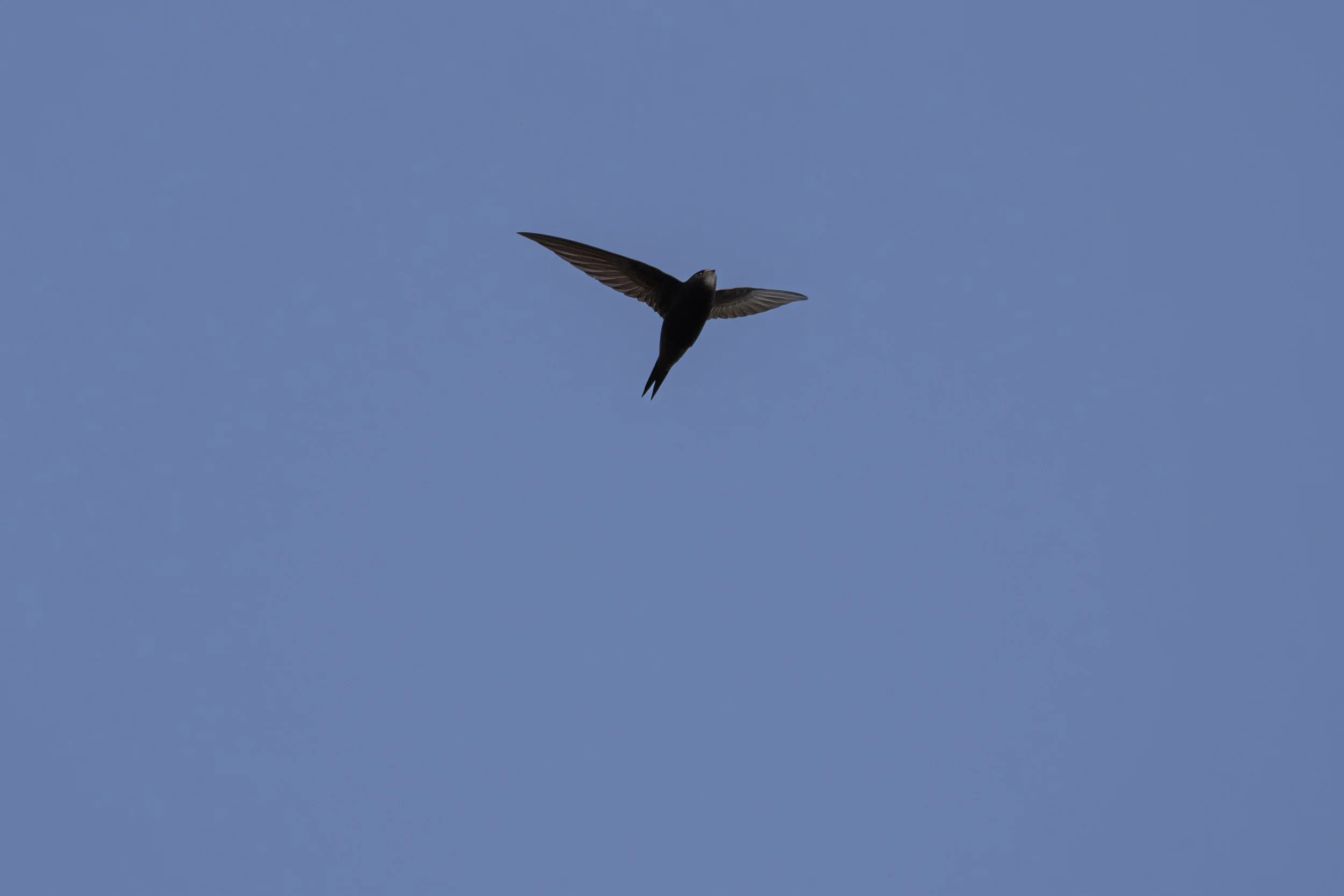
Standard composition advice for something like this is to put the empty space in the direction the bird is travelling, so it looks like they have somewhere to go. With this one, I did the opposite - I wanted it to look like the little goth angel was rising, and positioning it toward the top of the frame does that better.
The skies were also full of these guys:
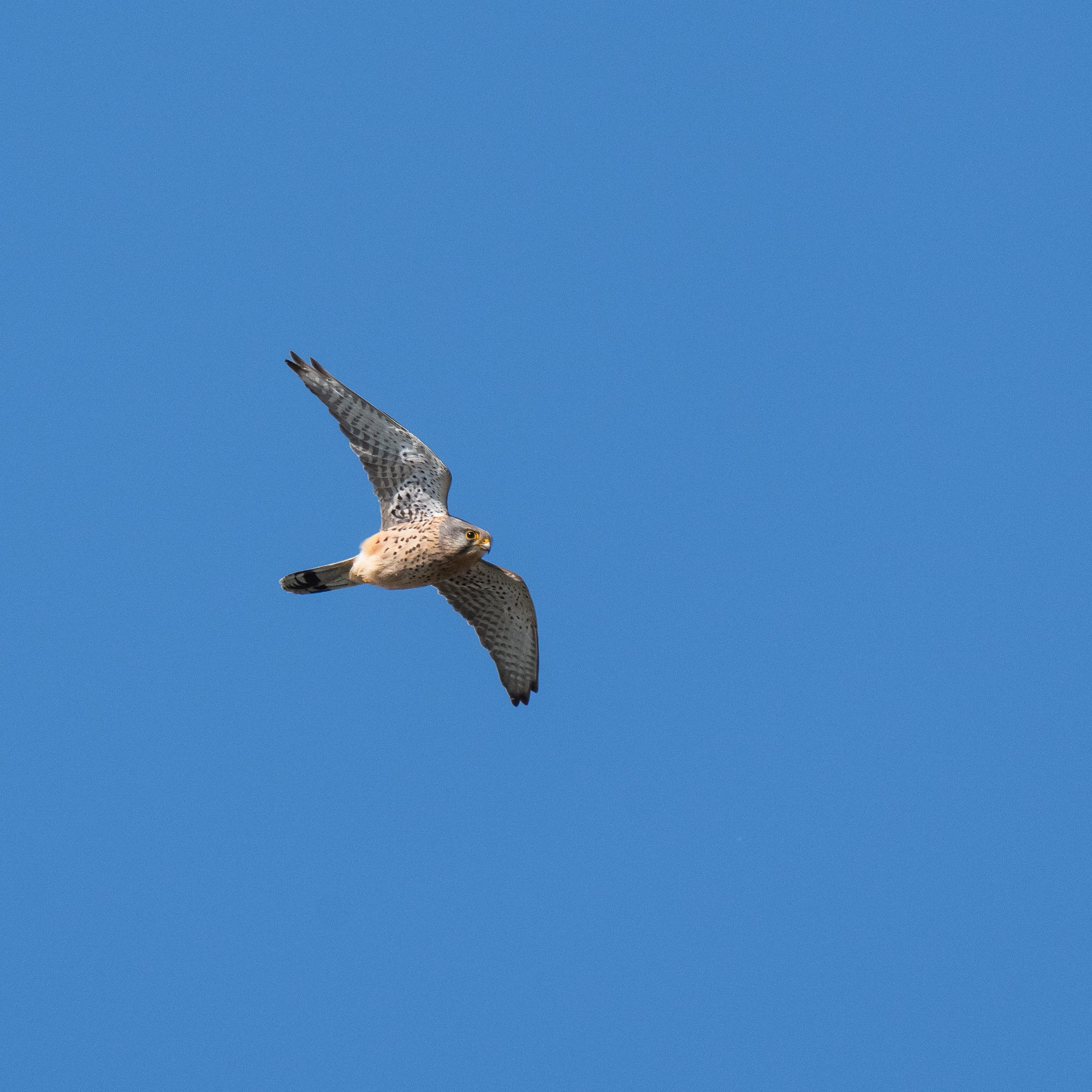
Kestrels are always a great thing to see. They ignored the swifts completely, rather looking for mice and voles in the scrub. Nothing that isn’t a hobby has any chance of chasing down a swift anyhow.
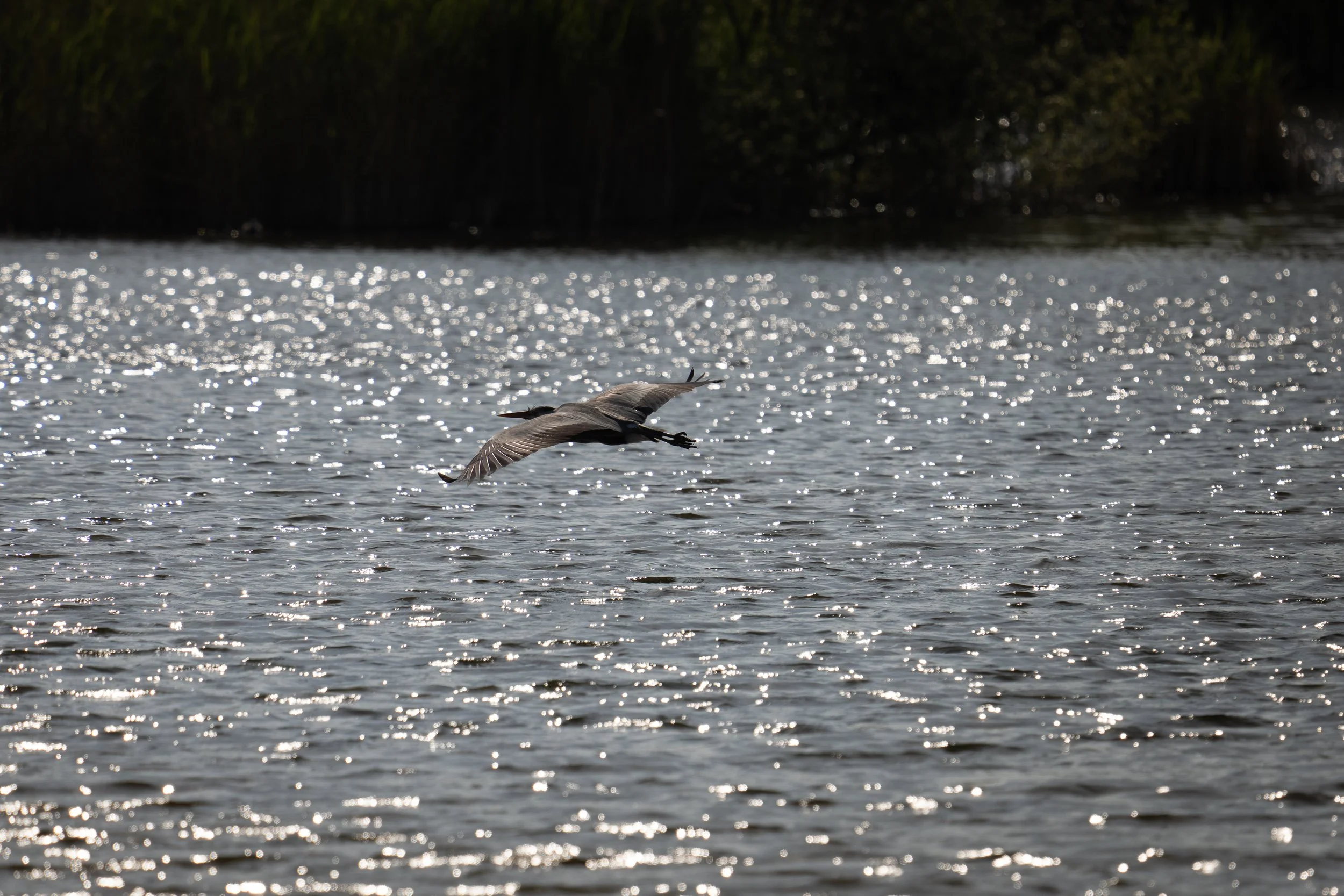
The lakes themselves were relatively empty this time, though I did get a good view of a heron flying over the south lake:
And I spent far longer than I should have done chasing a swallow. For whatever reason I barely see swallows in my bit of London at all, so having one in the crowd of swifts was a nice treat.
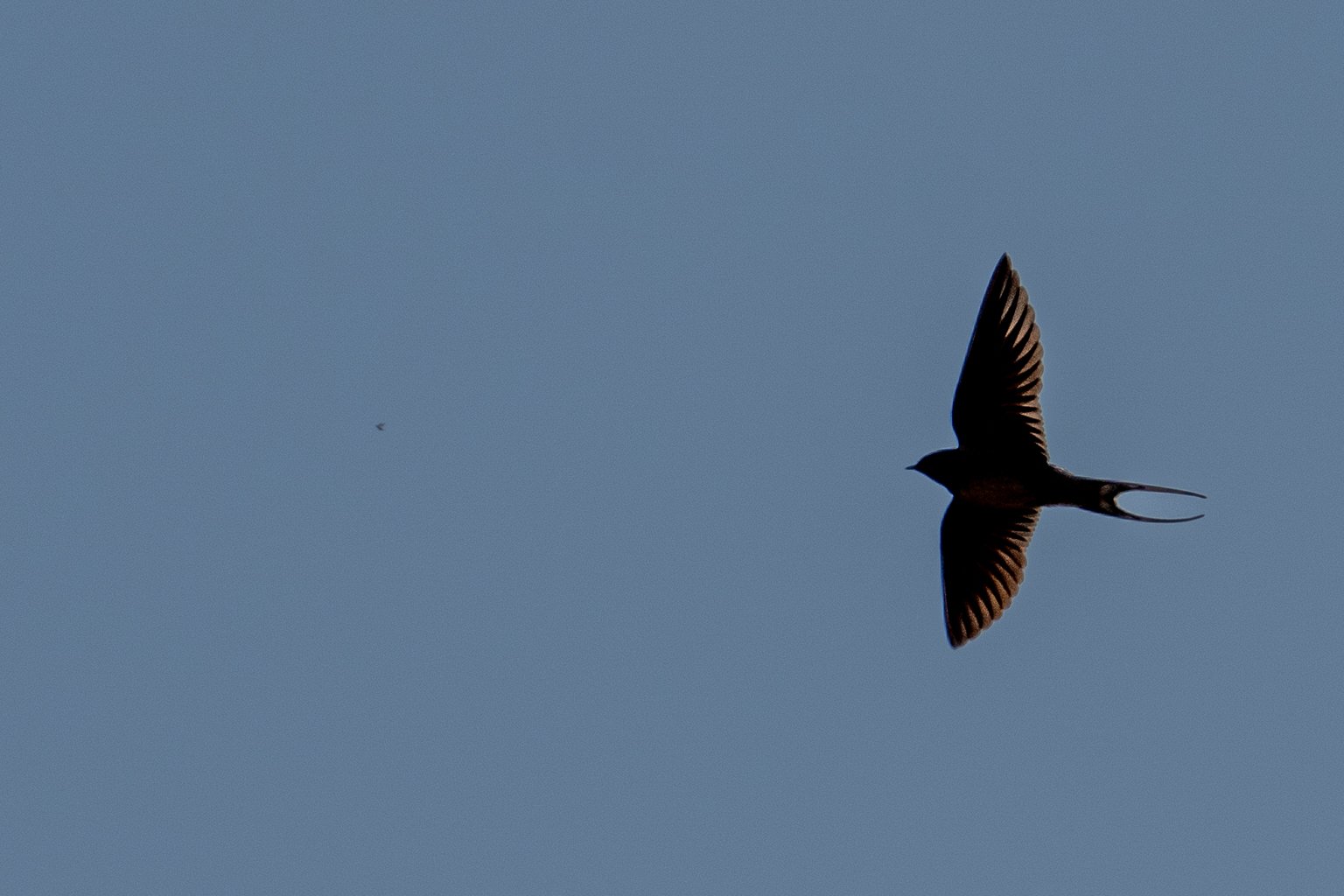
What I didn’t get were much in the way of great pictures. I almost binned this one, but then I spotted that it didn’t just have the swallow, but also the bug it was chasing. God only knows if you’ll be able to see it, but trust me, it’s there. Raising the shadows and whites on the swallow and then pushing down the blacks gave the glow through the feathers.
Beddington Farmlands is a good start for a few good walks. The one I’ll do most often is to turn left through the woods at the end of the reserve, then catch the Wandle trail from Watermead Lane and walk from there up to Morden, but this time I went the other way, to Mitcham Common.
On the way, I found this wren staking a territory claim:
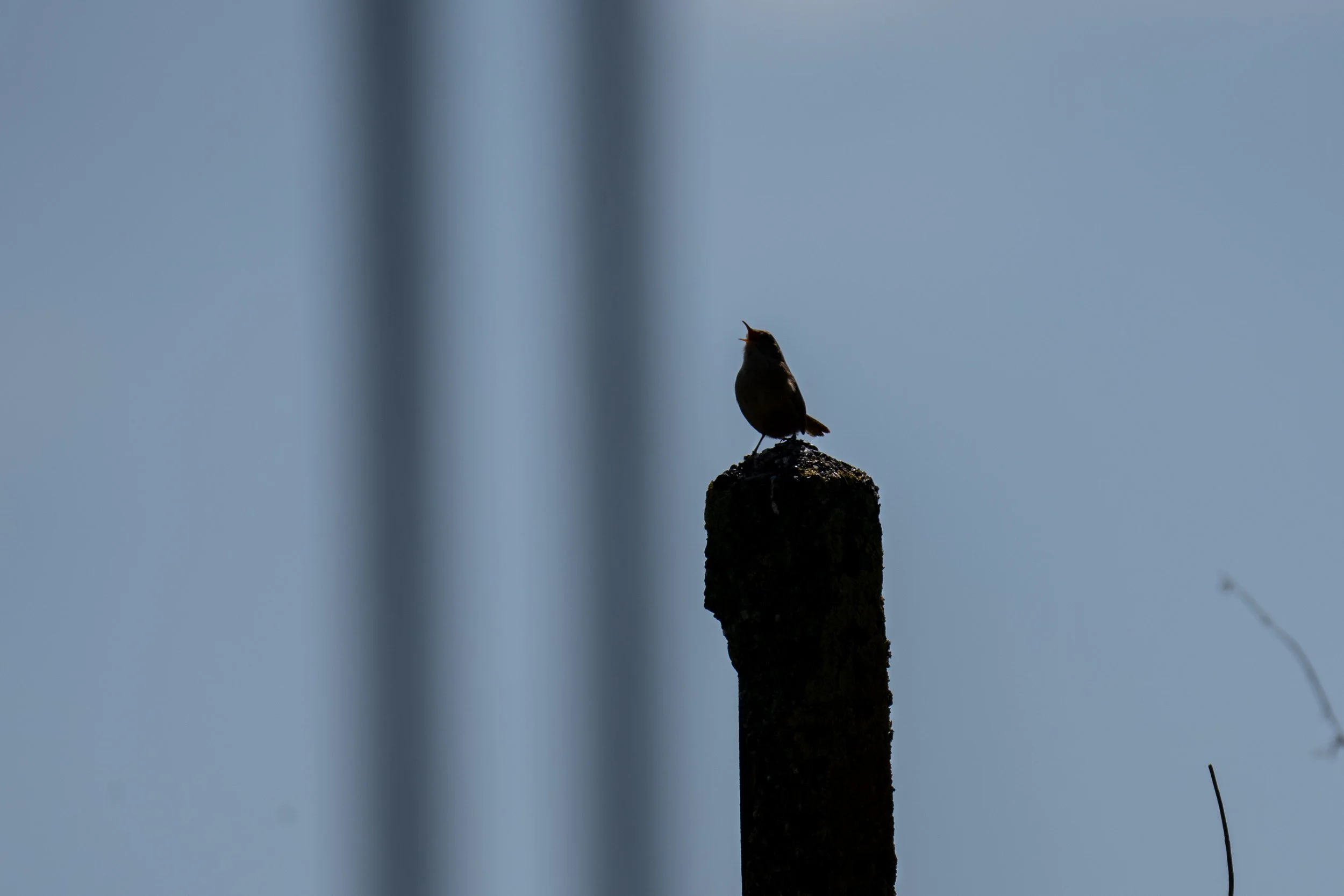
I am, you may have noticed, a sucker for a silhouette.
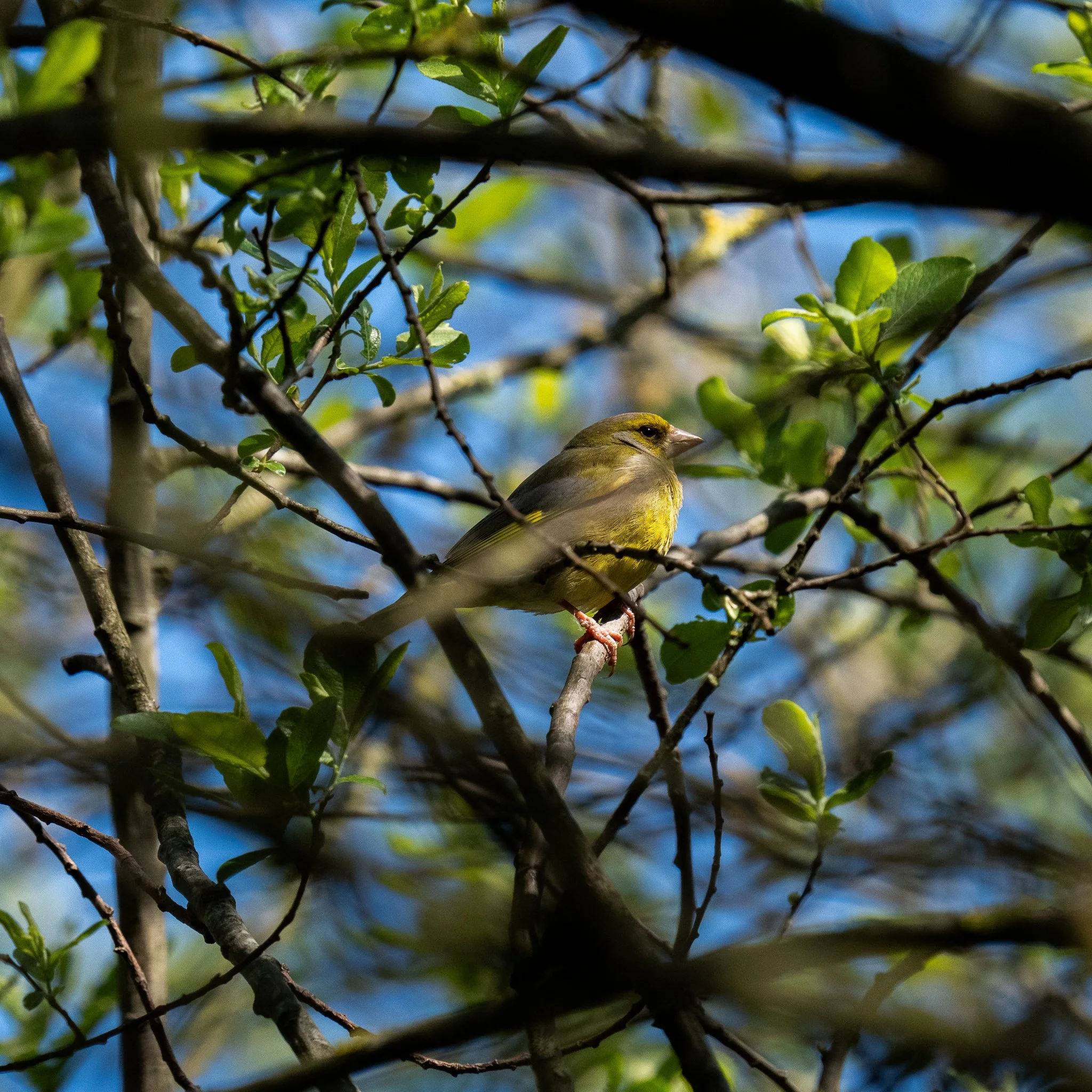
Mitcham Common is a strange space, huge and empty and entirely out of place for somewhere that’s really still quite a long way inside London. I walked up from the One Island Pond area, and walked around the pond to find a greenfinch hiding in the branches:
There were also a couple of spots that weren’t birds.
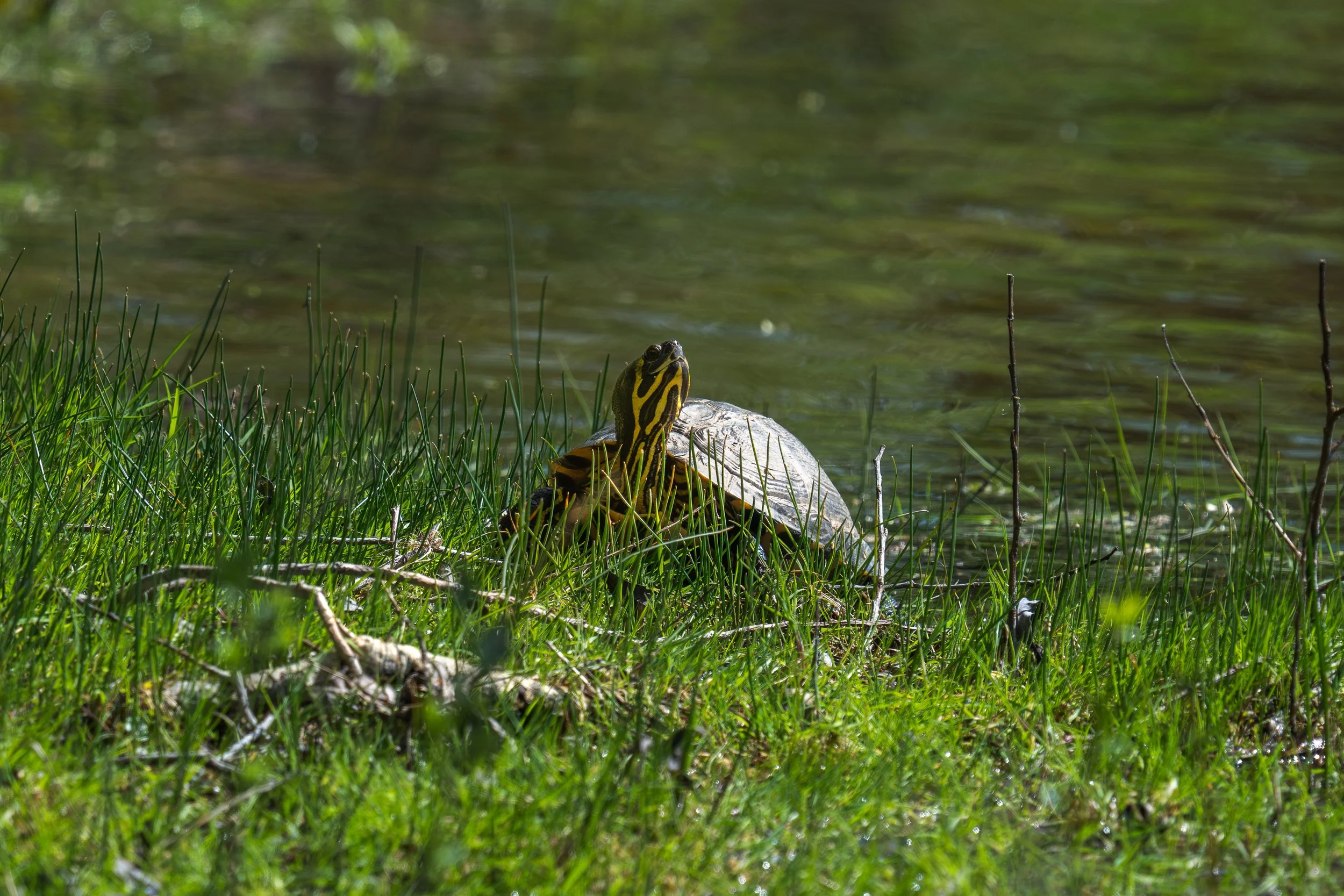
There seem to be terrapins in every pool in South London. I assume they’re abandoned pets, and probably aren’t great for the ecology since they’ll eat basically anything.
Climbing over the Mill House hill, there was also a native invader:
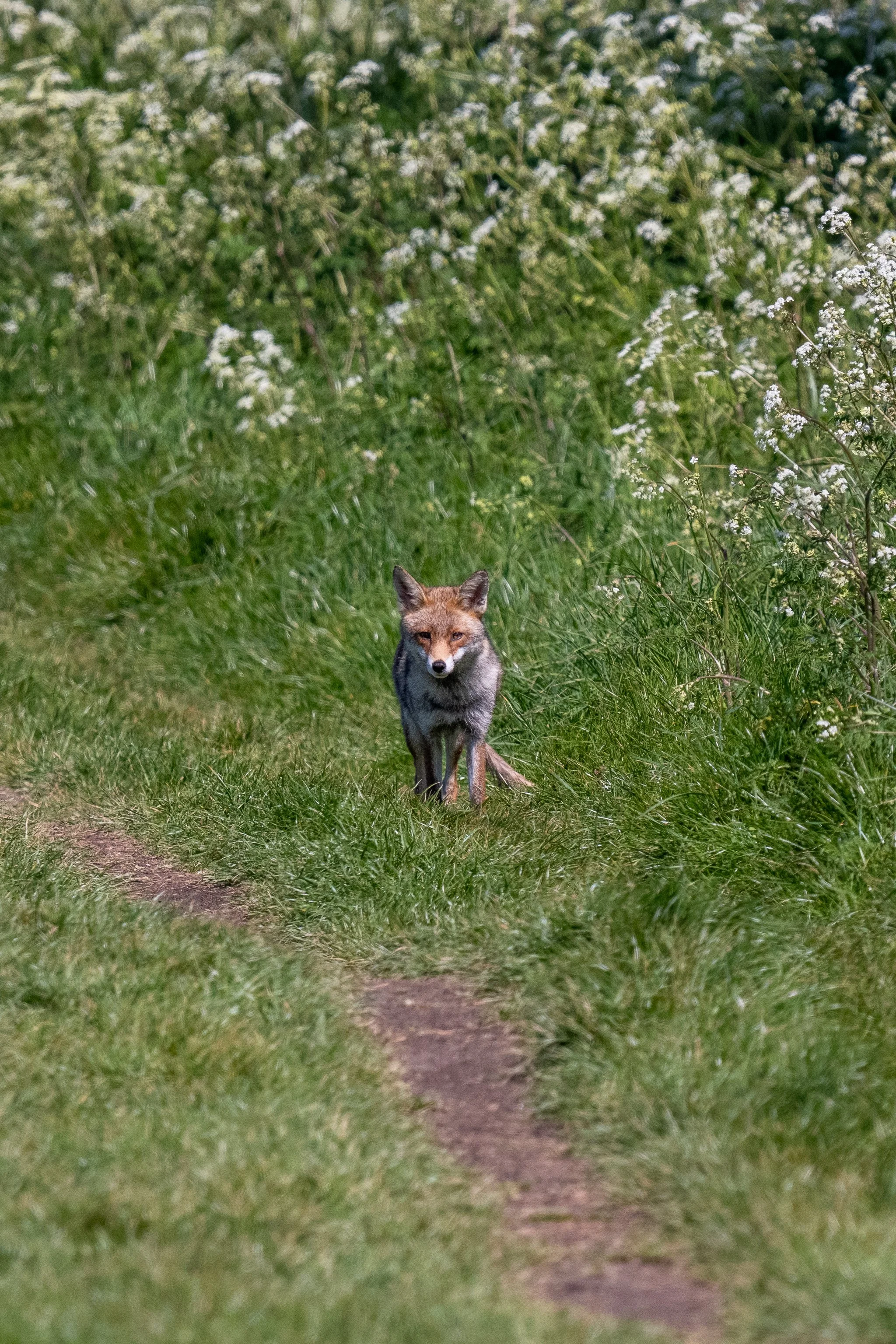
I see foxes everywhere in London - it’s unusual not to spot at least three just on the way home from the cinema - but usually at night, when I’m not carrying a camera, so seeing one in daylight is an event. Right now they’ve likely got cubs to feed, so are more likely to be out and about at all hours.
This one stood there and watched me for a couple of minutes, but turned tail when I attempted to get a bit closer.
The final spot of the day was another first for the year:
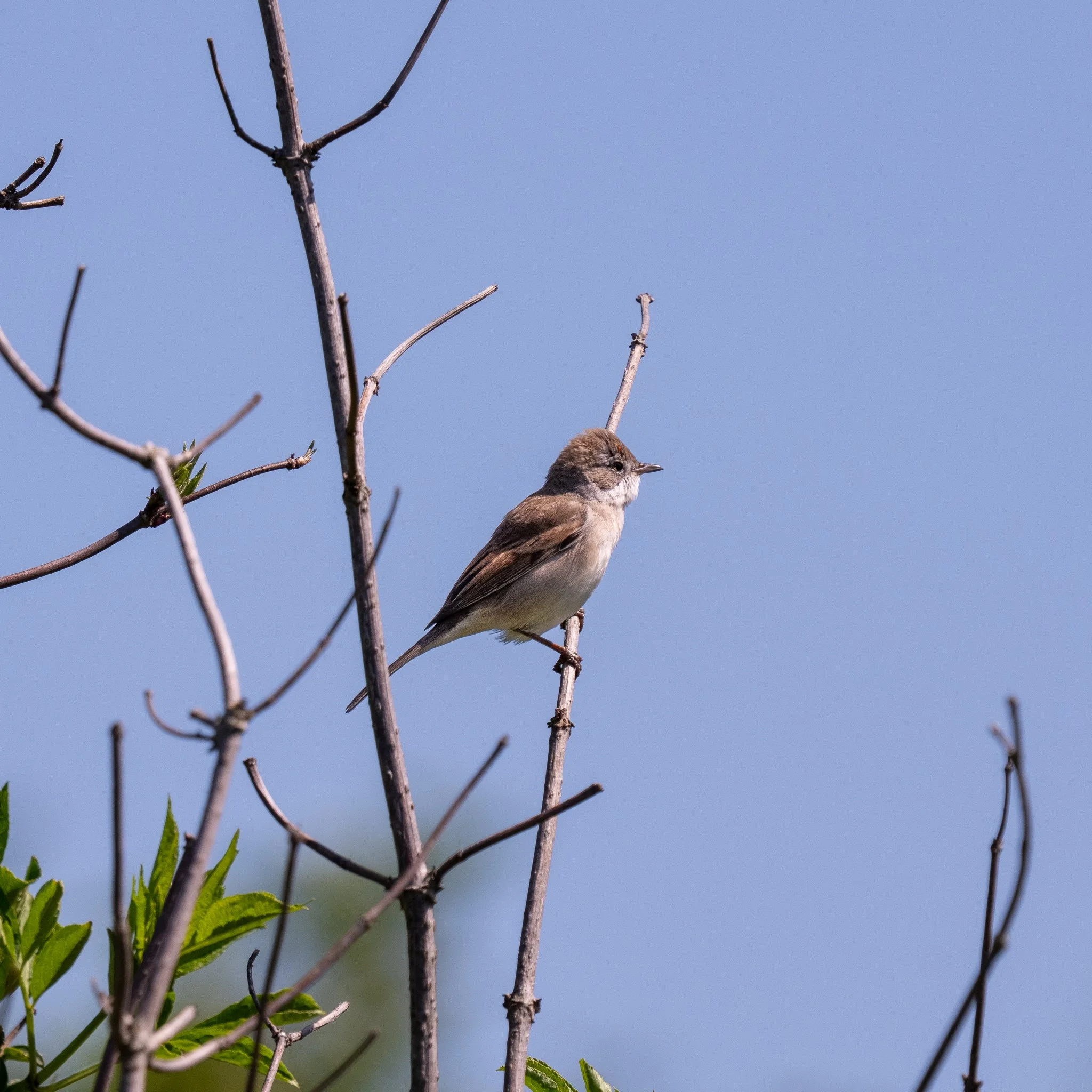
Whitethroats are summer migrants, just starting to arrive from Africa. Their song is a complex trill at high speed, mixing short and long phrases, the notes tumbling over the top of each other. There’s nothing quite like it from the birds which stay here all year, and they (along with the Blackcap) are a major reason why spring and summer have a different soundtrack to autumn and winter.
Almost makes summer worth looking forward to.
Pictures at an Exhibition 1: Samurai, British Museum, 6th April 2026
Every time I’ve been to an exhibition at the BM, they put in a showstopper piece right at the start to grab attention, an immediate ‘this is what you came here to see’. This means it tends to be both very impressive and surrounded by people at all times.
This time, there was a 16th century suit of full samurai armour, created for the Mori clan.
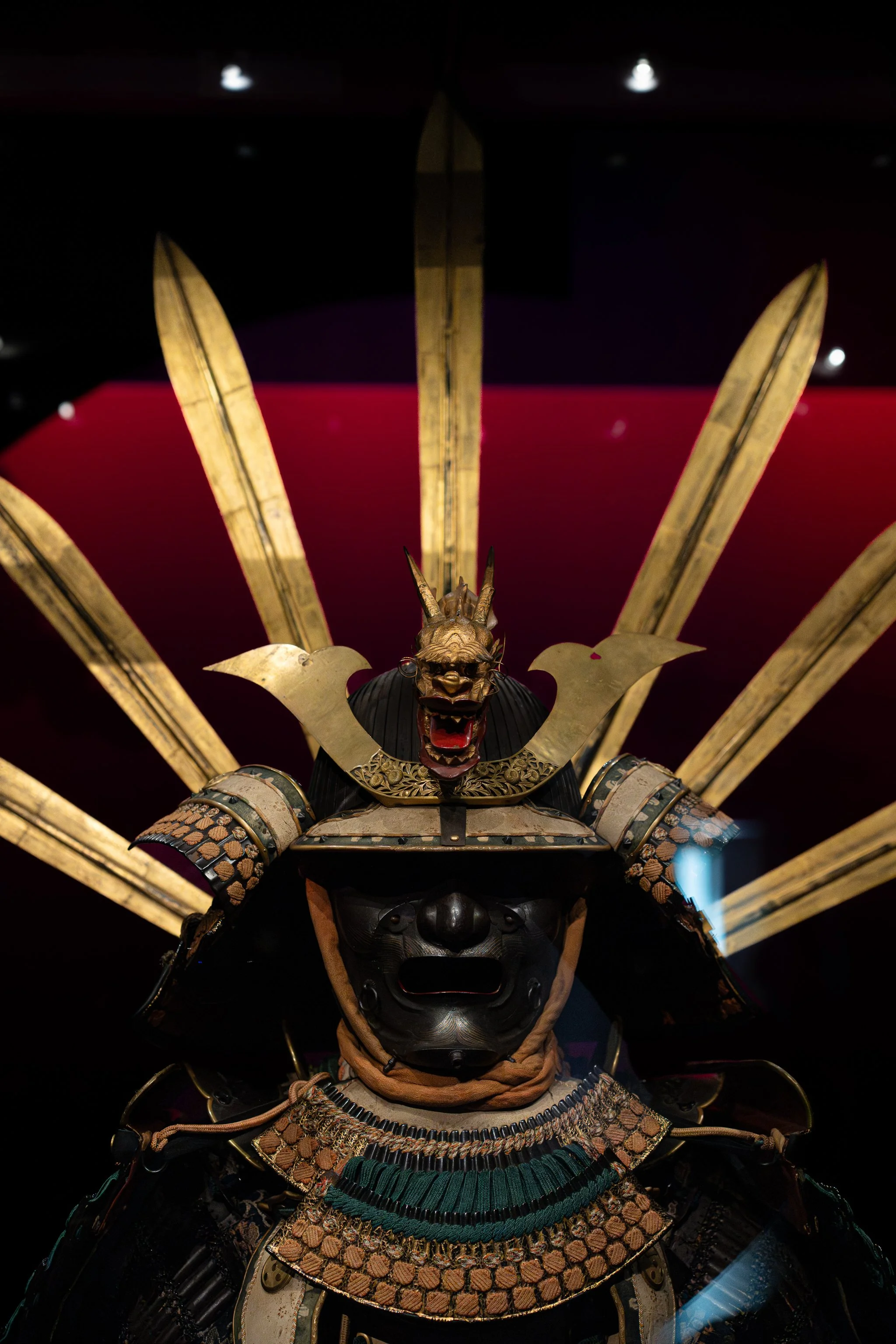
I think that’s true. I didn’t expect to be writing about it afterwards, I did not take notes. This post may be full of lies. Anyhow, I like how everything about it distracts from the samurai inside, from the glaring dragon headpiece to the intricacy of the threadwork on the chest. It’s bright and colourful and keeps the eye anywhere but the samurai’s face, which is masked and shadowed.
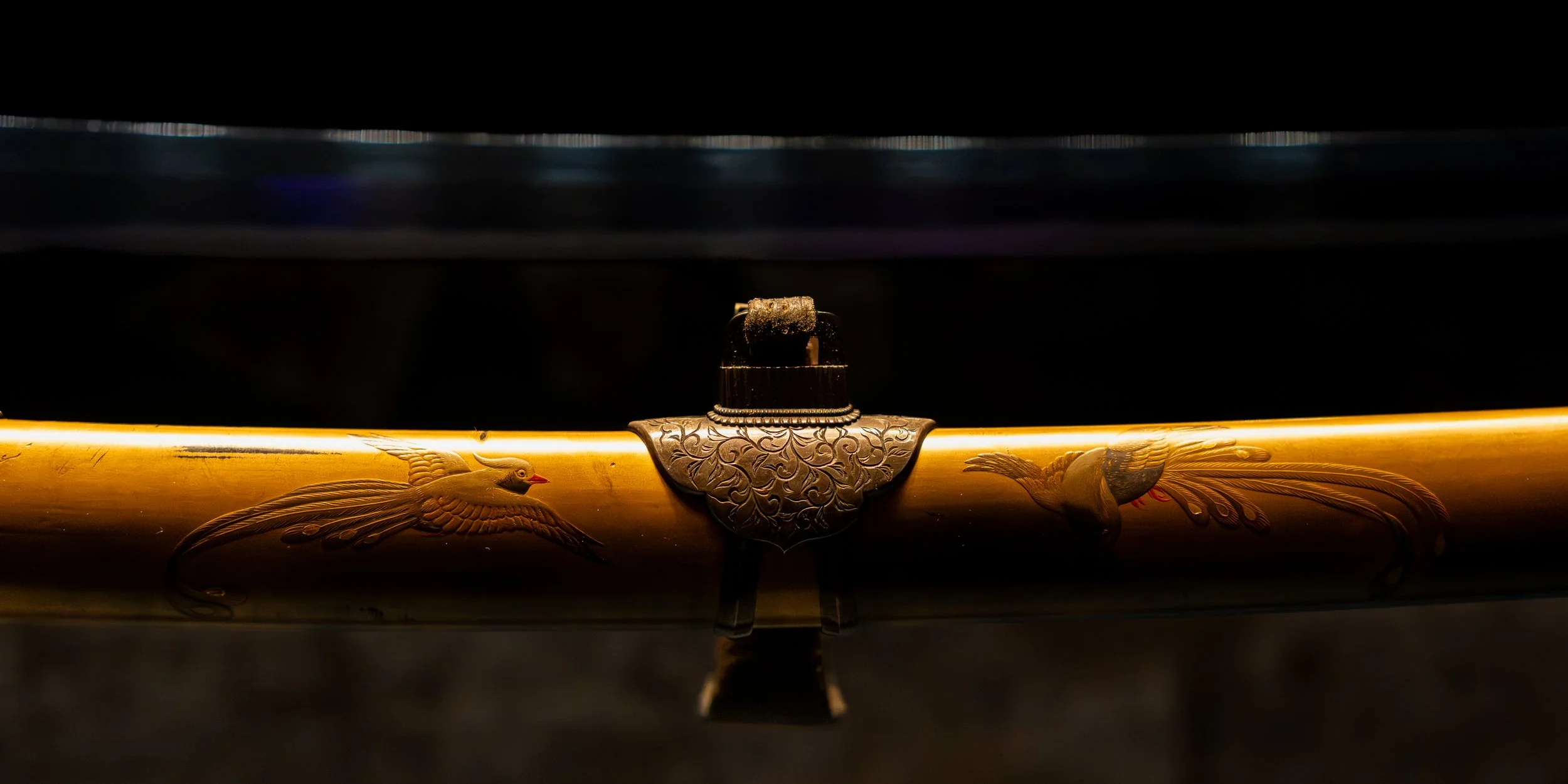
Here’s another couple of bits I liked a lot:
I am a little in love with the bird detailing on the scabbard. I don’t know enough about Japanese birds to know if they’re representations of real species or not, but they look amazing. I wanted the picture to really bring out them and the metal engraving, so it’s cropped in tight and the background exposure lowered on a gradient.
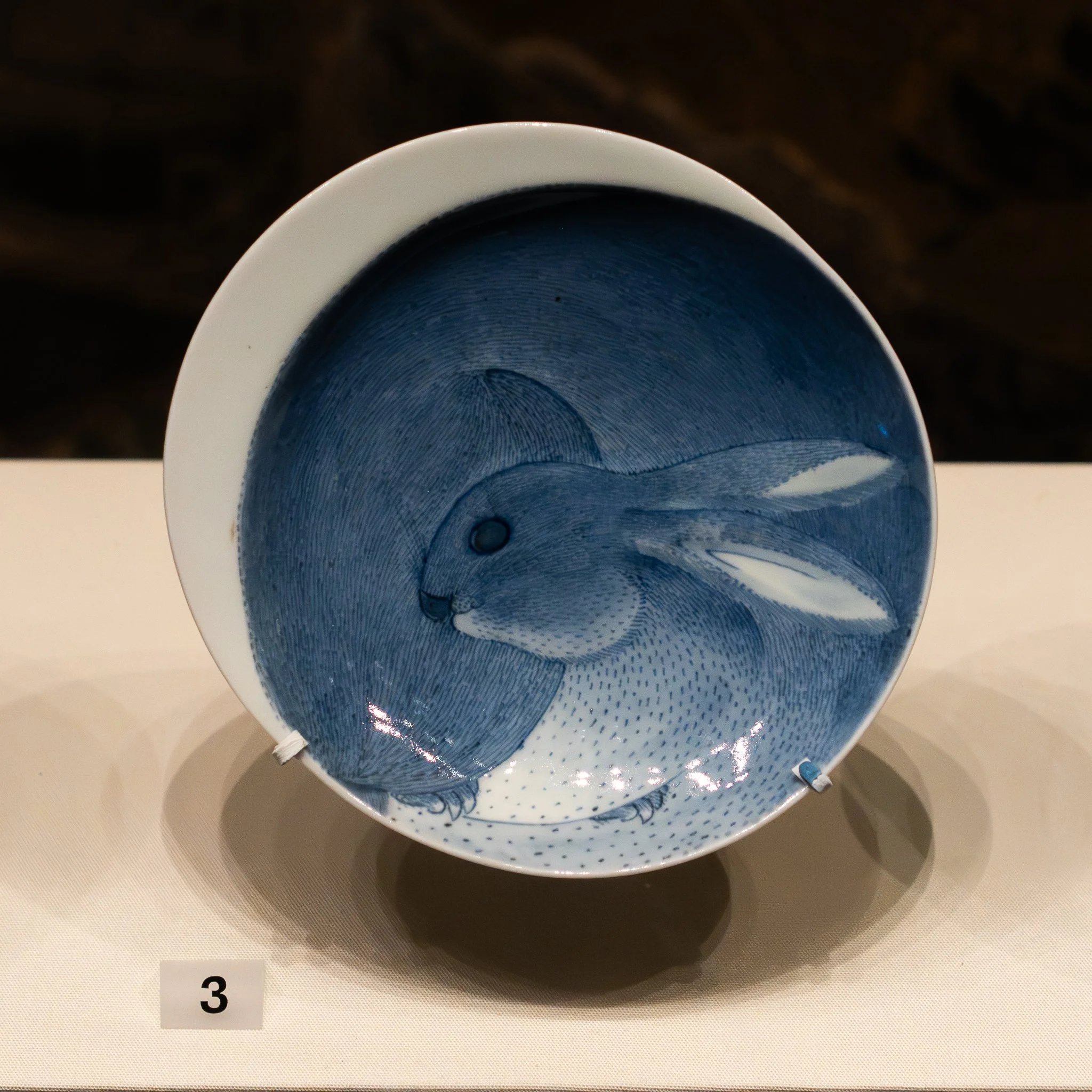
There is a rabbit that lives in the moon. Much as in the UK we talk about the man in the moon, in East Asian - and I think some indigenous American - culture, the shadows and dark marks are the Moon Rabbit. I don’t know if that’s what this dish is meant to represent, the caption was not forthcoming. But I like the story and it reminded me of that.
Another fun thing I learned: Japan had a brief Christian period. The Portuguese brought it when they turned up in the 1540s. It gained a fairly significant following, and in the 1580s a samurai delegation was sent to Rome to found an embassy in the Vatican. The spokesman was this guy:
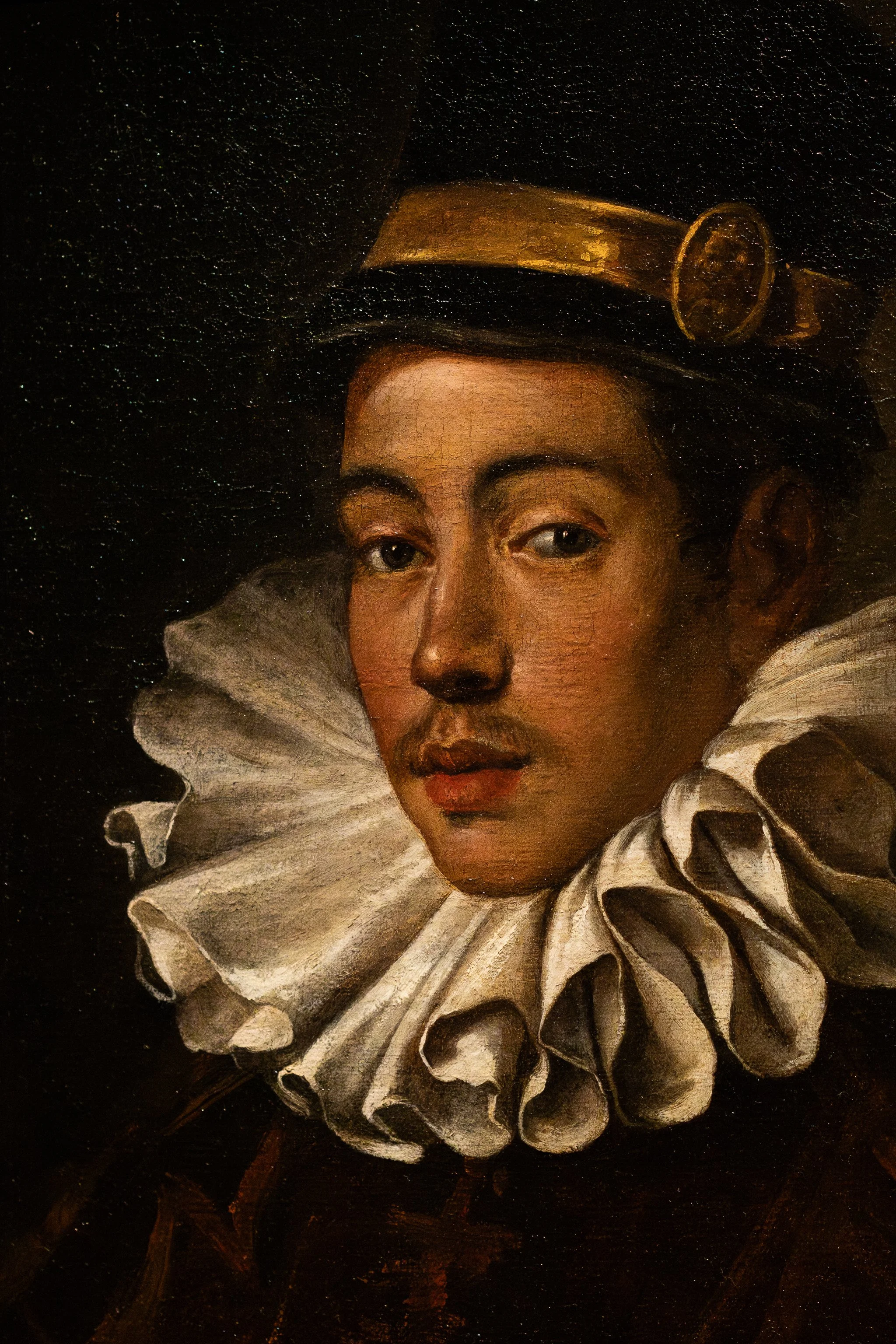
Ito Mancio, there painted by Tintoretto. If he looks young, he was. He was only 13, and was sent halfway round the world for this mission. There’s a movie in that somewhere.
Christianity ended up being a relatively brief thing. It was banned by the first Samurai shogun in 1614, worried about Western influence. Ito Mancio died just before that, in 1612, at the same age I am now.
This one is probably my favourite picture of the set:
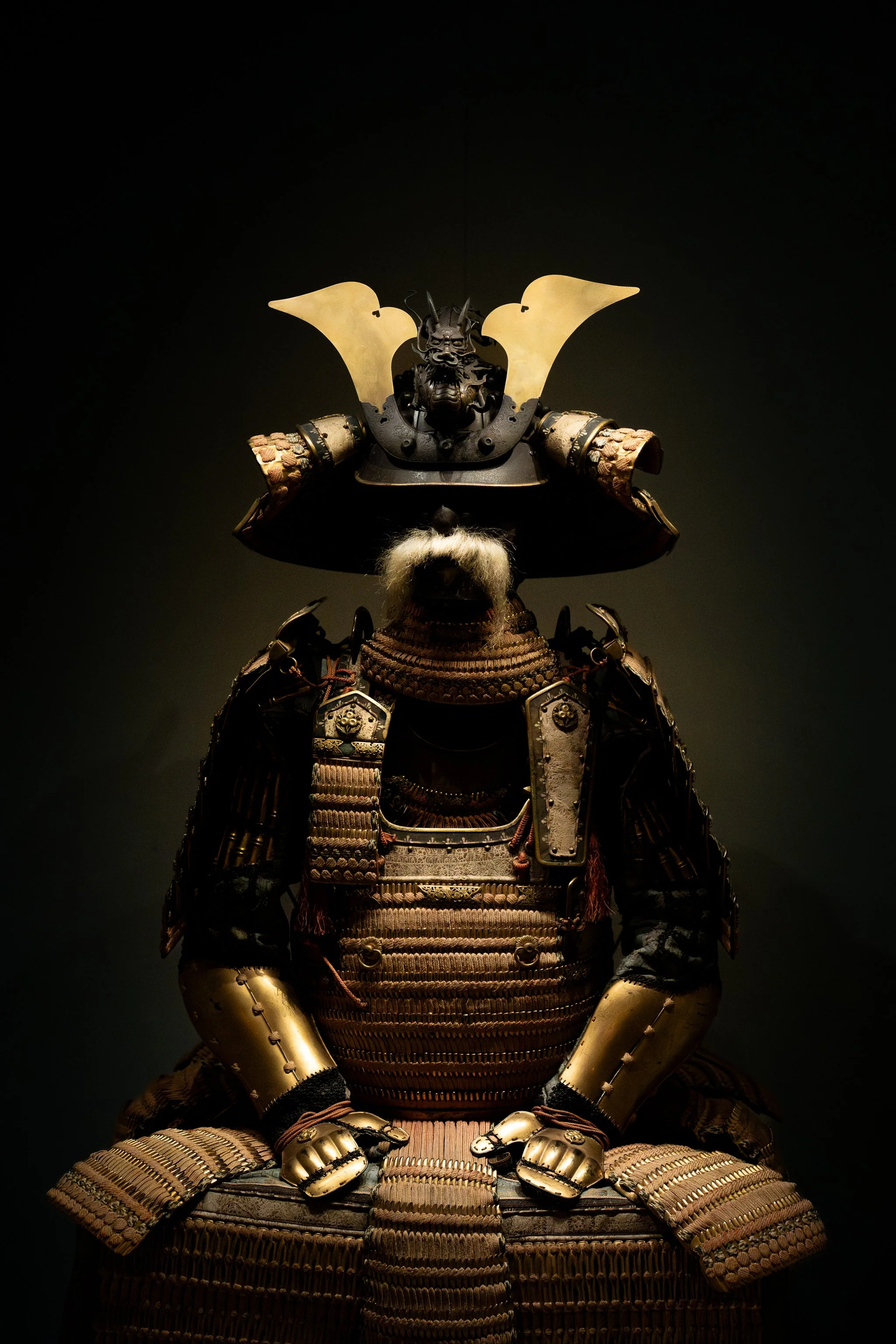
This wasn’t in a case so there’s no glare, and I like how the black-and-gold contrast came out. A radial gradient mask on the background with lowered exposure created a nice glow effect.
Another set of armour, this one from the ~18th century, but this one a reproduction of something far older, a 15th century style, because in 18th Century Japan people were also bemoaning modernity and yearning for a golden past.
And that’s a very samurai thing because Samurai themselves are also, it turns out, largely made up.
They did exist, there was a warrior caste in Japan from around the 11th century which gradually became more elite, and in the 16th they took political power as well.
But the common myth of samurai that we have - the code of Bushido, the systems of honour - are retroactive 19th century mythmaking, from a new government trying to create a sense of national identity, a way to explain why We are better than Them.
The Samurai were brought down in the 1860s; unequal trade deals with the West led to widespread discontentment and sparked off a far more aggressive version of Japan under the Meiji restoration. The Emperor Meiji banned samurai, westernised the military and launched successful invasions of China and Korea, largely thanks to the modern military tactics and weapons.
Despite that, the success was credited to Japan’s samurai heritage, the ‘bushido code’, things that made Japan different from the West. It used a history-that-never-was to generate nationalism and exceptionalism.
If you’re really eagle-eyed you might notice a few people doing that today, too.
Last picture:
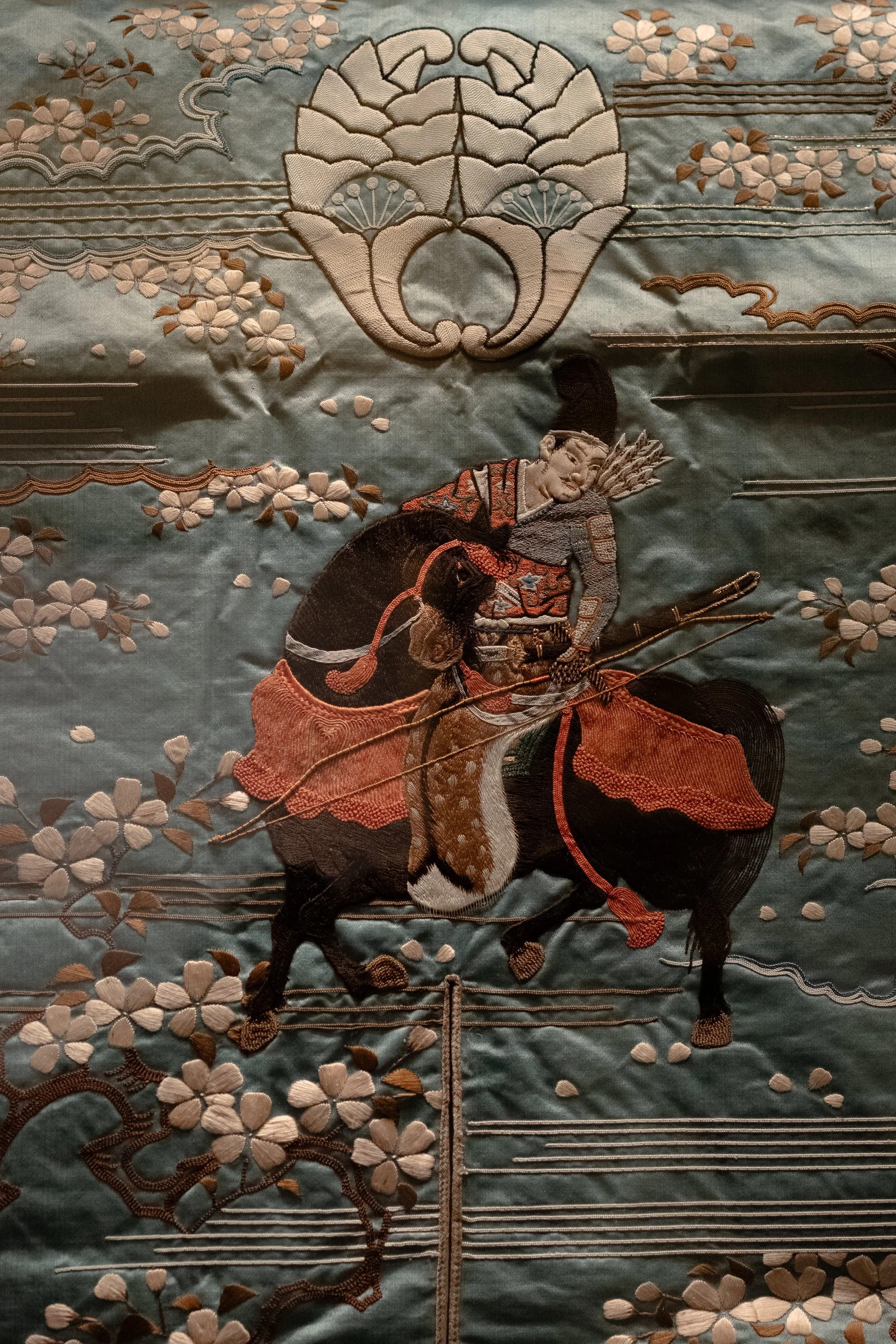
This is a detail from a kimono. The caption had some details of the story represented, I can remember none of them. But the embroidery is great, I love the horse’s tassel and the beaded bow.
I had some ideas for doing things with the colours here that didn’t really come off. With this one I definitely like the thing in the picture rather than the picture itself, but sometimes a photo is just a memory, it doesn’t have to be art.
Searows @ KOKO, 10th April 2026
“We’re going to play a rocker,” he says, 5 songs in. “I don’t have many of those.”
The band then launches into Dearly Missed, and it’s the best bit of the night, six minutes of grinding guitars and shuddering basslines.
I hadn’t heard of Searows (is it meant to be a play on ‘zeroes’? Not sure, only thought of that last night) until recently, when Spotify suggested the new album Death In The Business Of Whaling, and shortly after that when I felt like I should have more gigs in my life I found the KOKO listing.
And so here I was, at a gig for an artist I didn’t really know much about, with a pint of Meantime and an open mind. There’s something fun about these nights, coming into a band with no favourites you’re hoping to hear and no expectations of how they’ll sound.
Dearly Missed is an outlier. Searows is mostly drone-folk, heavy with reverb and melancholy. There’s lyrics in there somewhere, but they’re fuzzy despite being at the front of the mix, like you’re listening to a depressed Cocteau Twin. Bass and drums give you a sense the muscle is there, it’s just not often used. Accents of banjo and harmonica keep things folk instead of shoegaze.
Live, the sound is more intense. The banjo and harmonica aren’t there, and the bass and drums pick up the slack. Between songs, Searows gives the impression between songs that he doesn’t really know what he’s doing here, having just suddenly found himself on stage holding a guitar and in front of a band and so he says “I guess I should… play a song then. Yeah.” And then he does, another wave of sound slowly rolling toward you.
It was the first time I’d been to KOKO, and the venue grew on me through the night. It’s an old theatre and starts frustrating, in a maze of balconies and corridors. But once you find the main floor the acoustics are good and there’s plenty of space around the bar, even on a sell-out night. It’s probably a good club venue, which I might care about if I ever went clubbing any more. Also only £8.20 for a pint of Meantime - a sentence which should have no place for the word ‘only’ and yet, for London gig prices, is pretty reasonable.
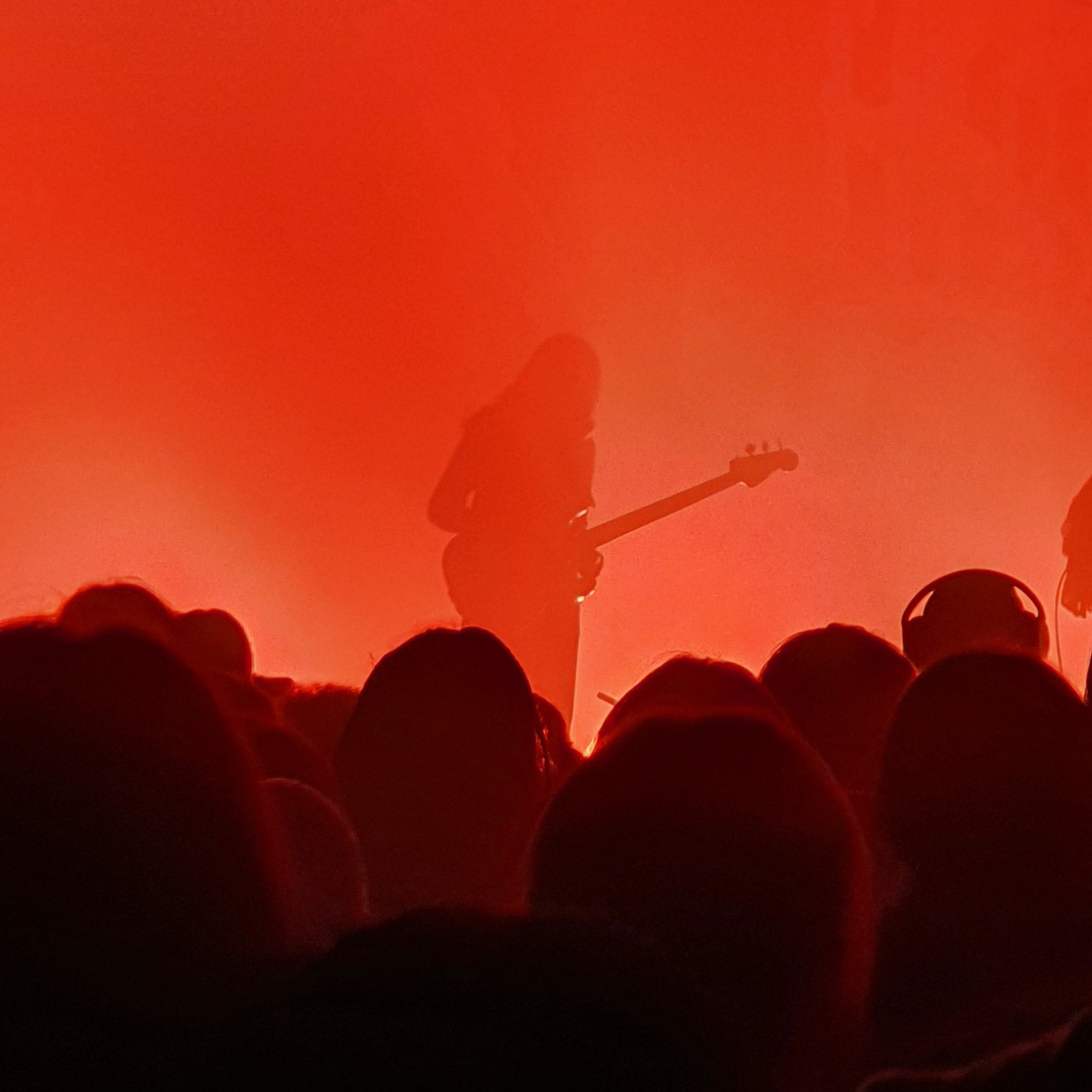
The lighting was also bang on, the stage intermittently cloaked in a dry-ice fog that left the band silhouettes, occasional sets of spotlights piercing and framing the stage, as if they were playing in the middle of a temple. It’s a good match for music that feels like it’s coming at you through fog.
The bass player, looking badass.
It felt almost weird coming out of the venue into a surprisingly-deserted Camden. There should have been an ocean and a lighthouse and a raven wheeling over a cliff. It was a gig where, Dearly Missed aside, I couldn’t remember much about individual songs, but it sure as hell had atmosphere.