Pictures at an Exhibition 1: Samurai, British Museum, 6th April 2026
Every time I’ve been to an exhibition at the BM, they put in a showstopper piece right at the start to grab attention, an immediate ‘this is what you came here to see’. This means it tends to be both very impressive and surrounded by people at all times.
This time, there was a 16th century suit of full samurai armour, created for the Mori clan.
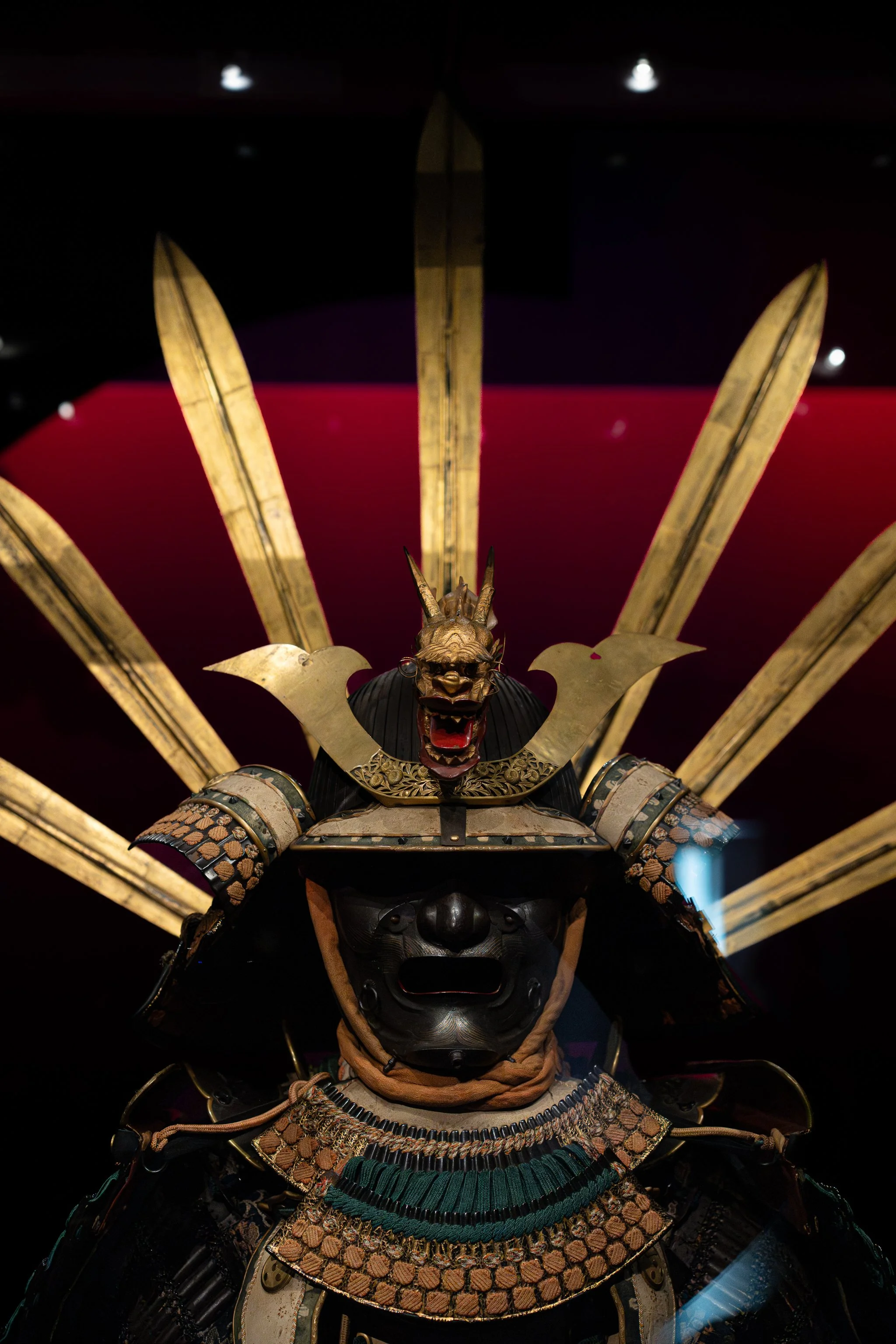
I think that’s true. I didn’t expect to be writing about it afterwards, I did not take notes. This post may be full of lies. Anyhow, I like how everything about it distracts from the samurai inside, from the glaring dragon headpiece to the intricacy of the threadwork on the chest. It’s bright and colourful and keeps the eye anywhere but the samurai’s face, which is masked and shadowed.
Here’s another couple of bits I liked a lot:
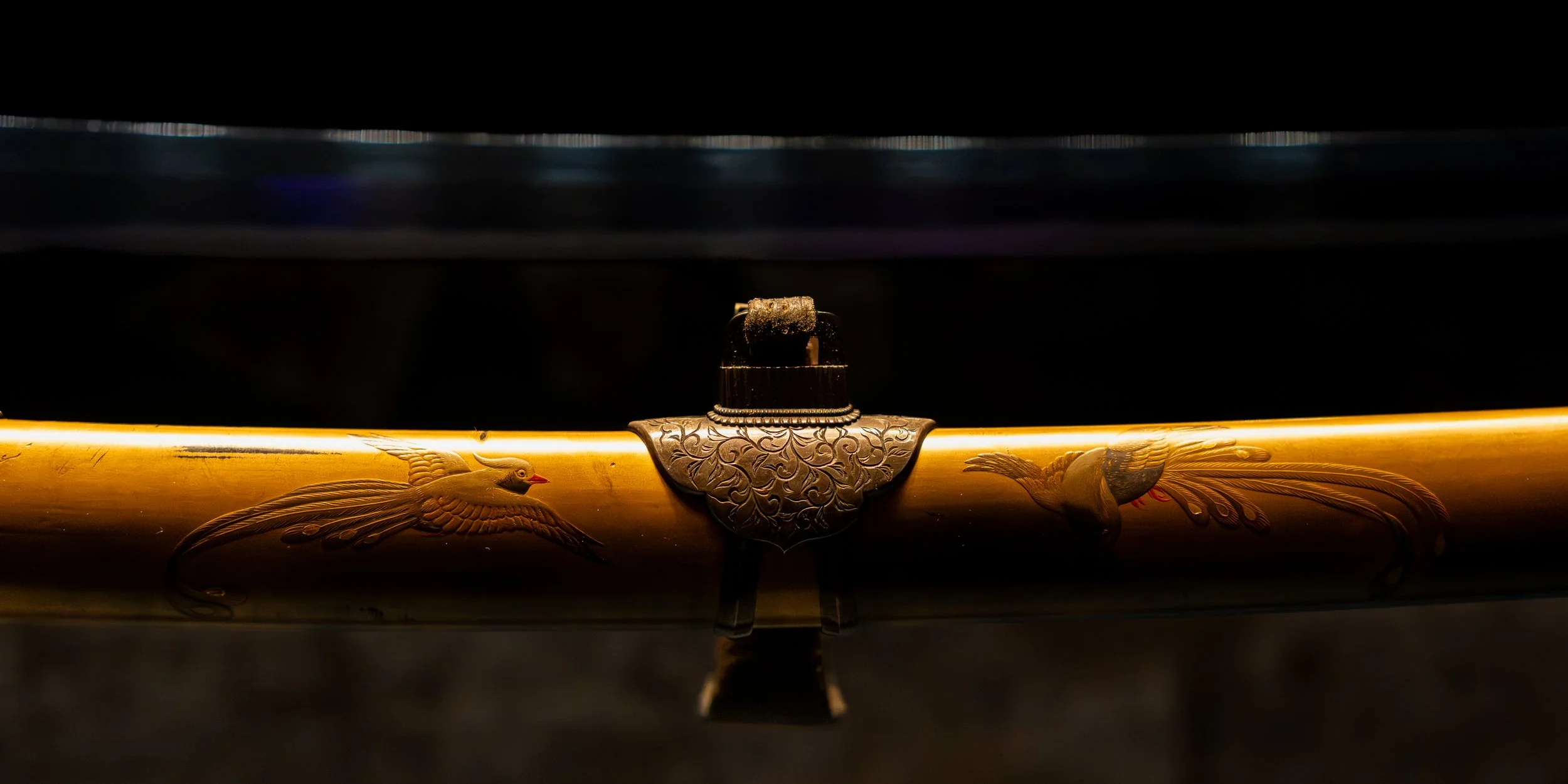
I am a little in love with the bird detailing on the scabbard. I don’t know enough about Japanese birds to know if they’re representations of real species or not, but they look amazing. I wanted the picture to really bring out them and the metal engraving, so it’s cropped in tight and the background exposure lowered on a gradient.
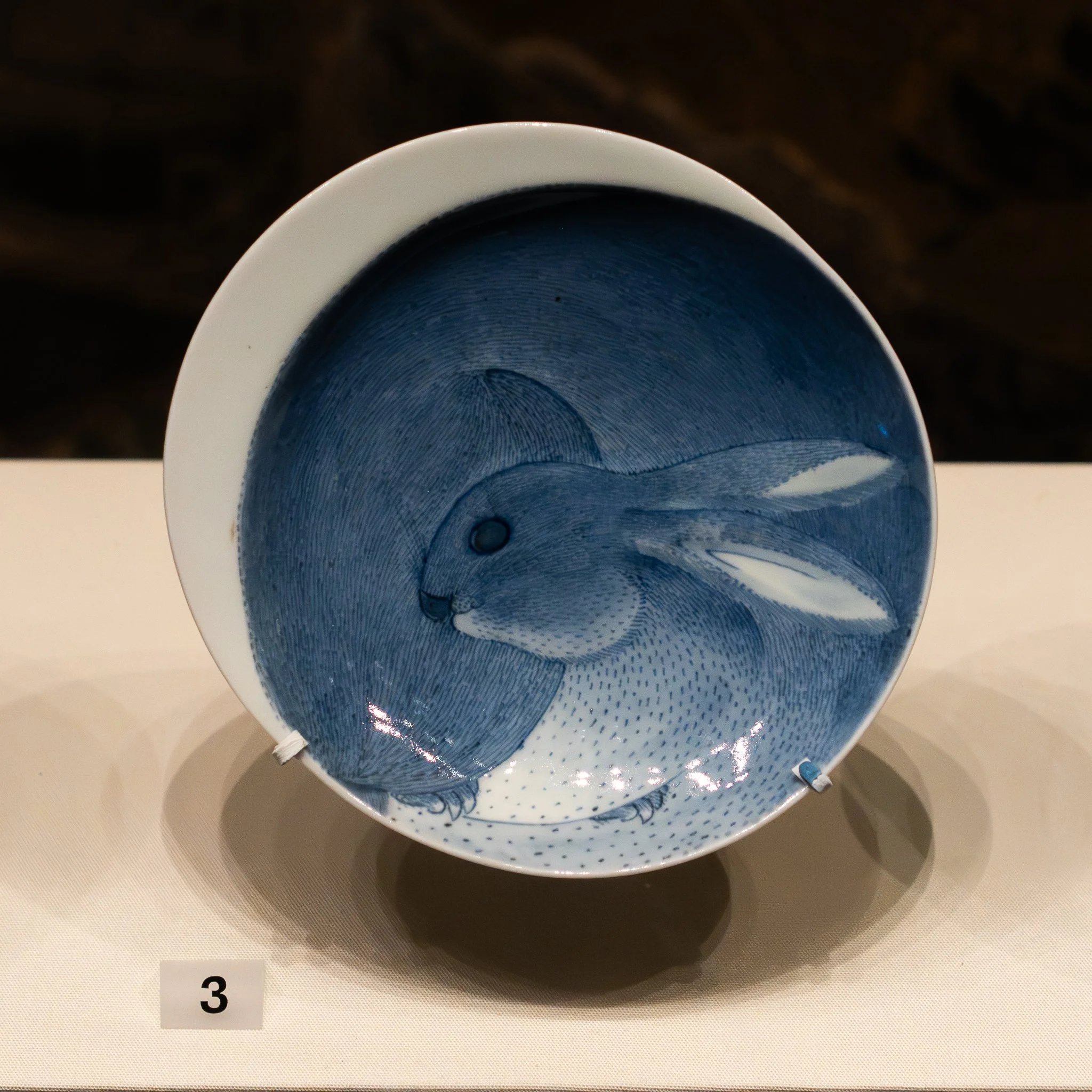
There is a rabbit that lives in the moon. Much as in the UK we talk about the man in the moon, in East Asian - and I think some indigenous American - culture, the shadows and dark marks are the Moon Rabbit. I don’t know if that’s what this dish is meant to represent, the caption was not forthcoming. But I like the story and it reminded me of that.
Another fun thing I learned: Japan had a brief Christian period. The Portuguese brought it when they turned up in the 1540s. It gained a fairly significant following, and in the 1580s a samurai delegation was sent to Rome to found an embassy in the Vatican. The spokesman was this guy:
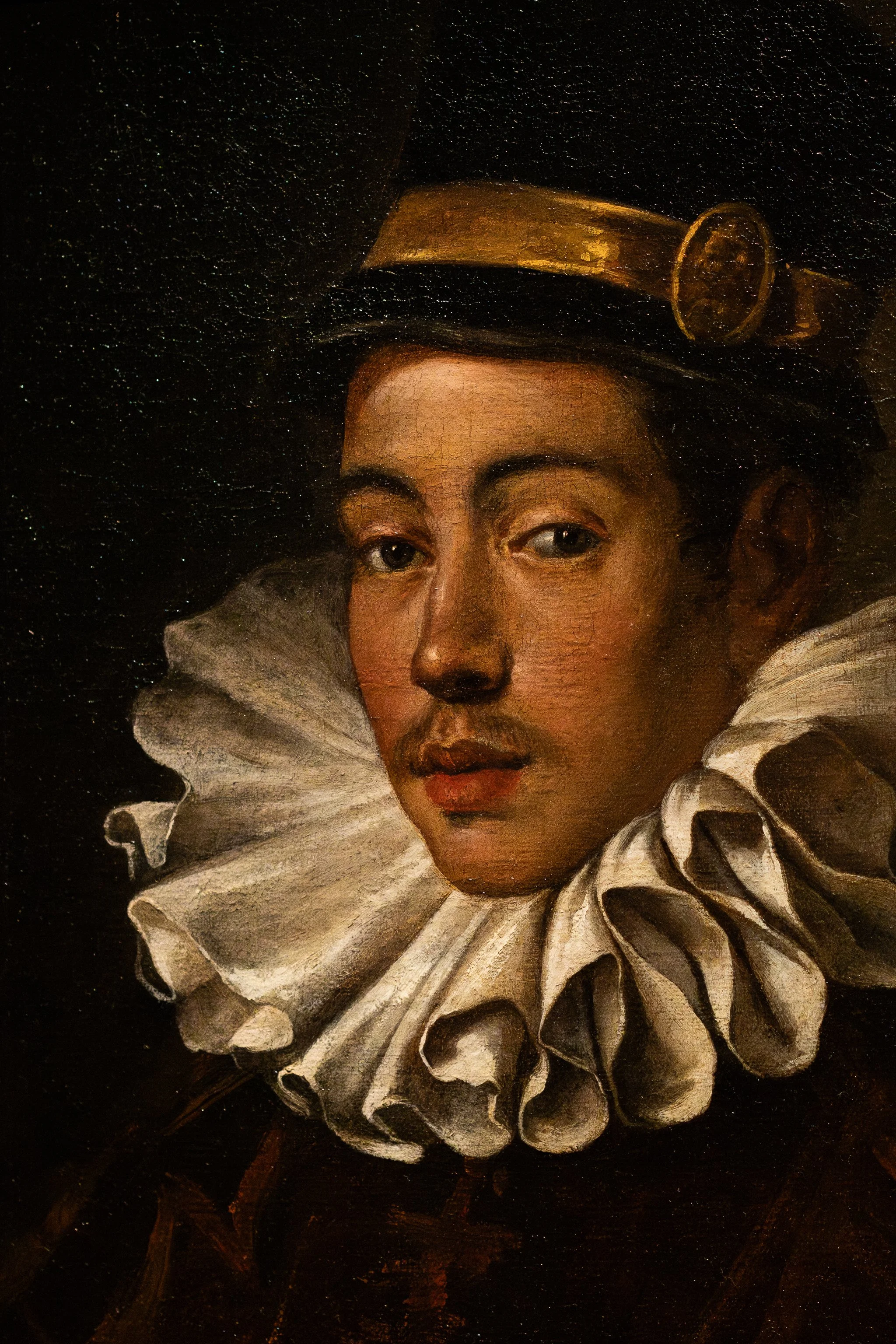
Ito Mancio, there painted by Tintoretto. If he looks young, he was. He was only 13, and was sent halfway round the world for this mission. There’s a movie in that somewhere.
Christianity ended up being a relatively brief thing. It was banned by the first Samurai shogun in 1614, worried about Western influence. Ito Mancio died just before that, in 1612, at the same age I am now.
This one is probably my favourite picture of the set:
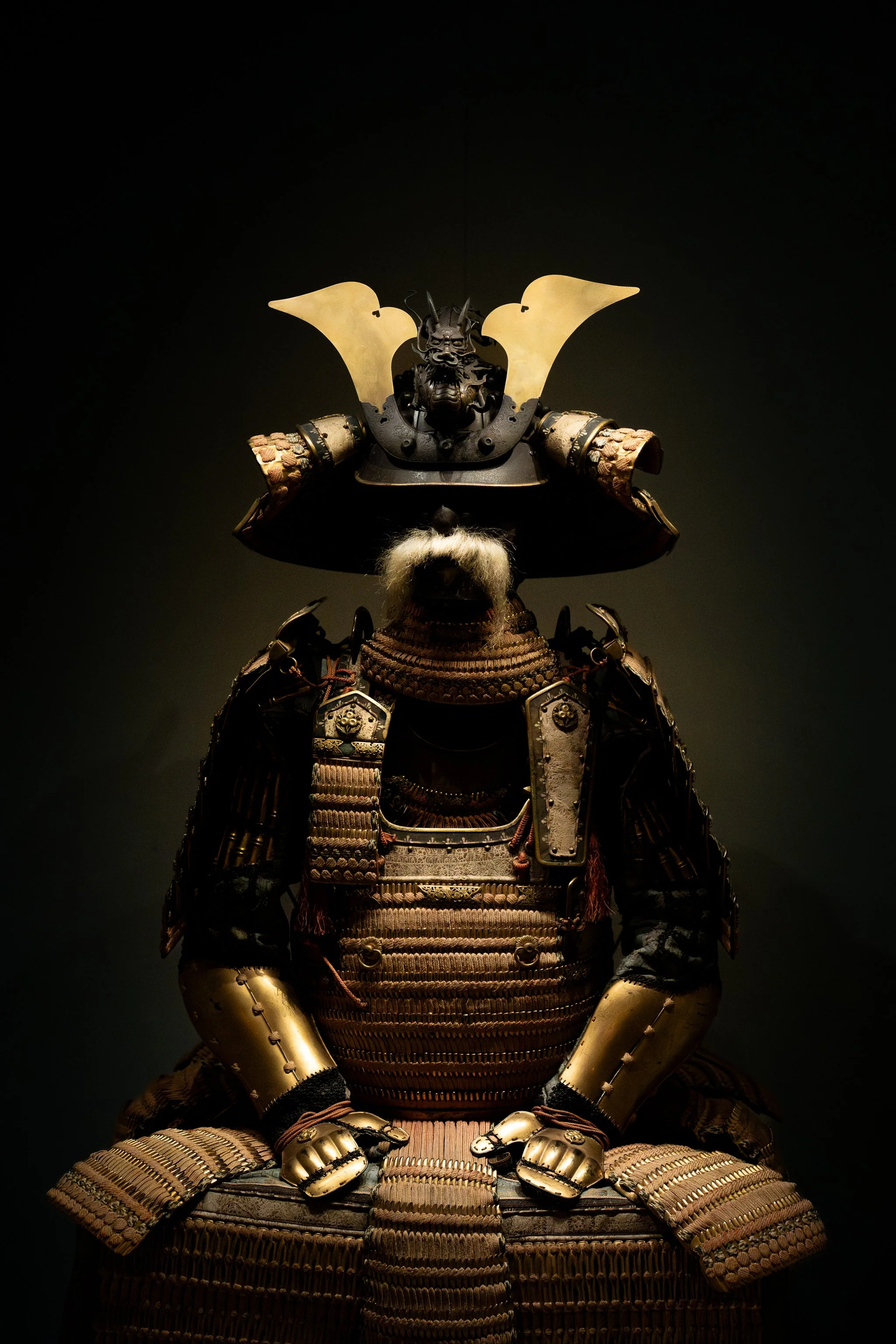
This wasn’t in a case so there’s no glare, and I like how the black-and-gold contrast came out. A radial gradient mask on the background with lowered exposure created a nice glow effect.
Another set of armour, this one from the ~18th century, but this one a reproduction of something far older, a 15th century style, because in 18th Century Japan people were also bemoaning modernity and yearning for a golden past.
And that’s a very samurai thing because Samurai themselves are also, it turns out, largely made up.
They did exist, there was a warrior caste in Japan from around the 11th century which gradually became more elite, and in the 16th they took political power as well.
But the common myth of samurai that we have - the code of Bushido, the systems of honour - are retroactive 19th century mythmaking, from a new government trying to create a sense of national identity, a way to explain why We are better than Them.
The Samurai were brought down in the 1860s; unequal trade deals with the West led to widespread discontentment and sparked off a far more aggressive version of Japan under the Meiji restoration. The Emperor Meiji banned samurai, westernised the military and launched successful invasions of China and Korea, largely thanks to the modern military tactics and weapons.
Despite that, the success was credited to Japan’s samurai heritage, the ‘bushido code’, things that made Japan different from the West. It used a history-that-never-was to generate nationalism and exceptionalism.
If you’re really eagle-eyed you might notice a few people doing that today, too.
Last picture:
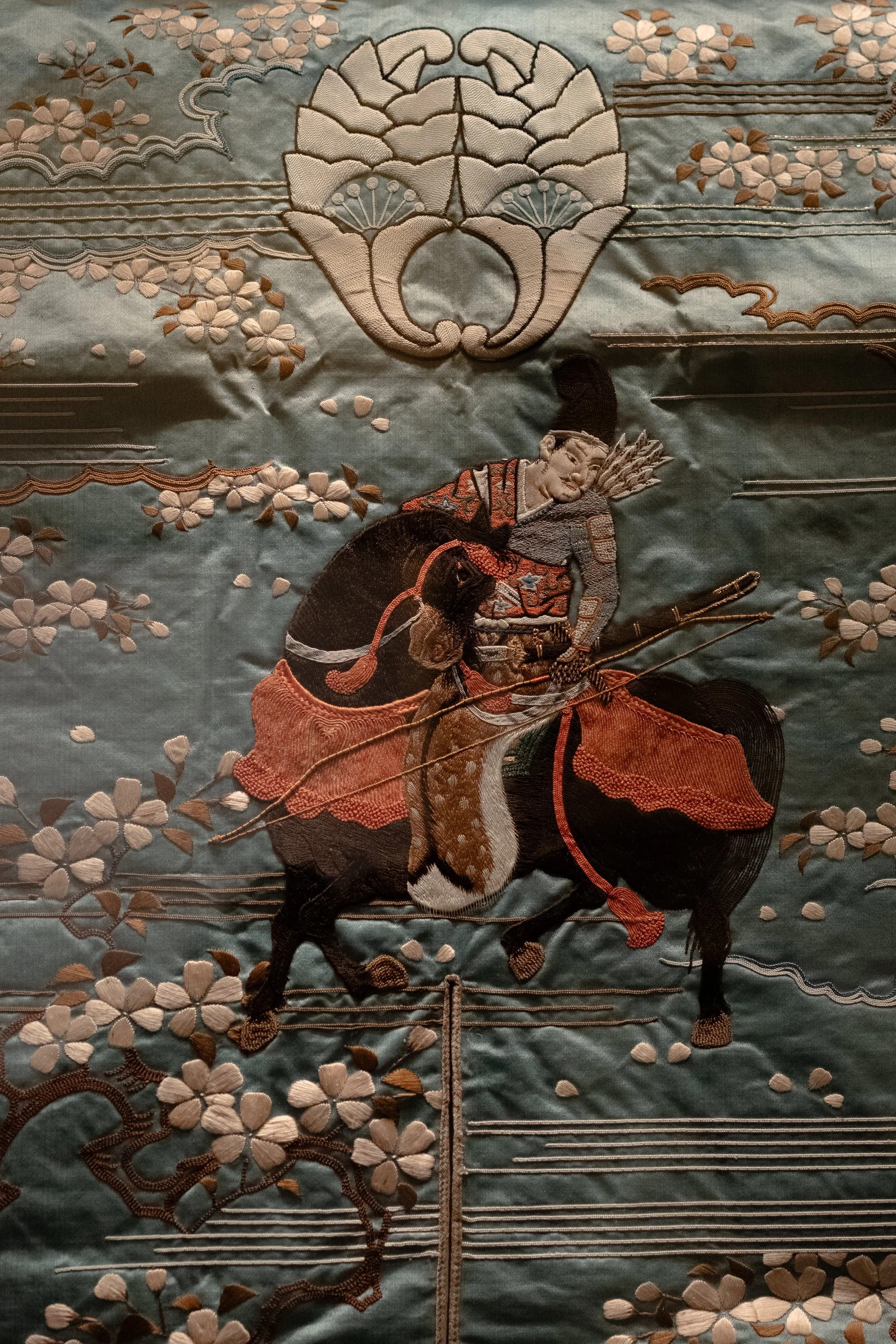
This is a detail from a kimono. The caption had some details of the story represented, I can remember none of them. But the embroidery is great, I love the horse’s tassel and the beaded bow.
I had some ideas for doing things with the colours here that didn’t really come off. With this one I definitely like the thing in the picture rather than the picture itself, but sometimes a photo is just a memory, it doesn’t have to be art.
