South Norwood Country Park, 28th August 2026
Wanderer, this is a refuge.
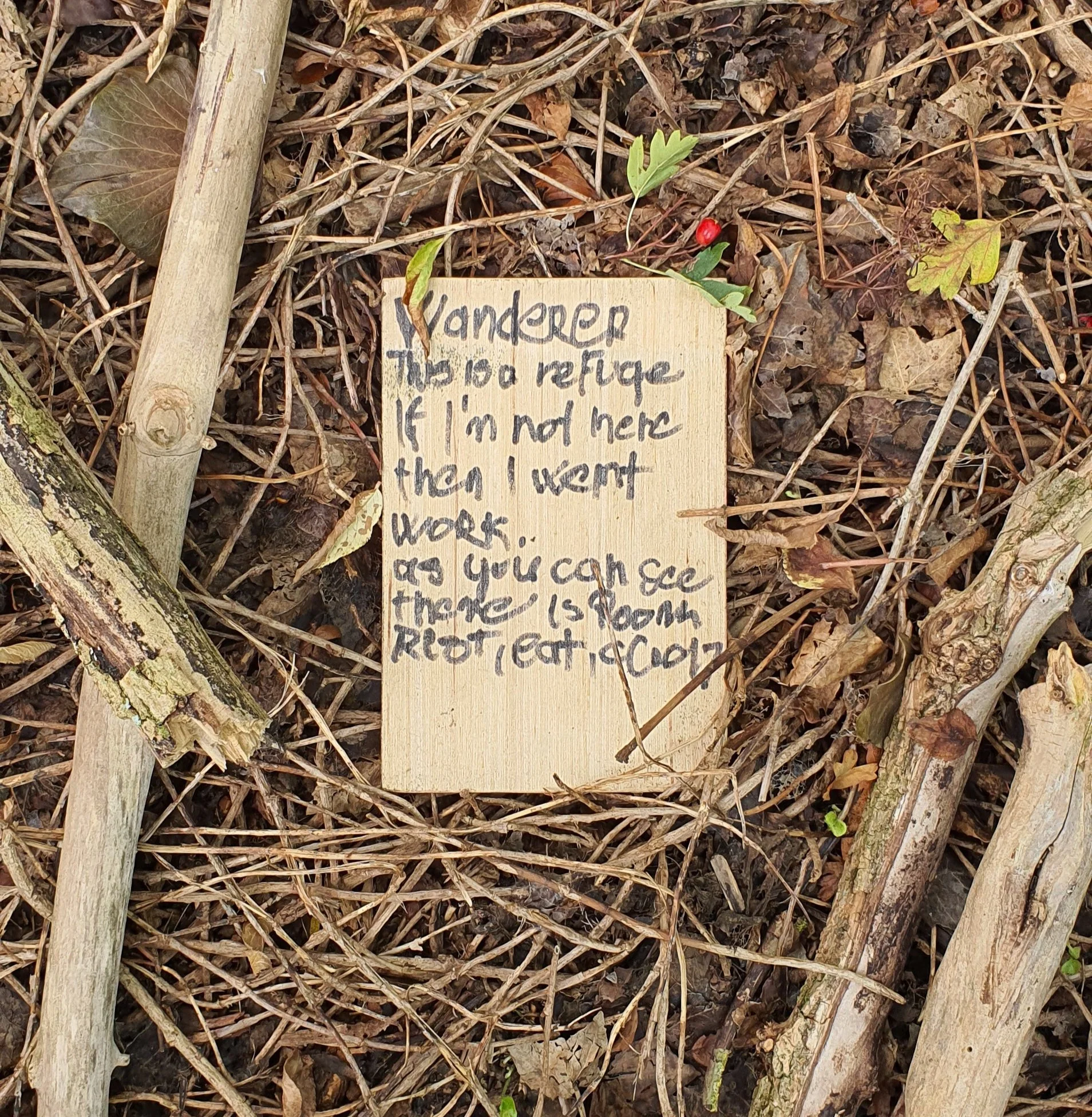
Welcome mat
I find that note following what looks like a desire path into some scrub in South Norwood Country Park. I’m expecting to cut through and end up in another meadow, burnt brown by this furnace of a summer we’ve been having. Instead, there’s a small clearing with a few signs of life, if not actual living. No shelter, but the remains of an old bounded fire, a pile of large branches which might have been a shelter once, a couple of personal items and an invitation.
I don’t stay long, just enough to grab a picture of the note on my phone. The note itself is clearly recent, and welcoming as it may be, it feels intrusive to hang around. There’s plenty more of this place to walk through.
I’m there too late, really. Birds get less active as the sun gets higher so my original plan was to drag myself out of bed early and get there between 8 and 9. In the end, bed is more attractive so I don’t actually make it there until 10:30.
But the lake still delivers. As well as the usual collection of geese, ducks, seagulls, coots and moorhens, there’s a little grebe bobbing up and down as it dives for food and a grey heron overseeing everything from a nearby tree.
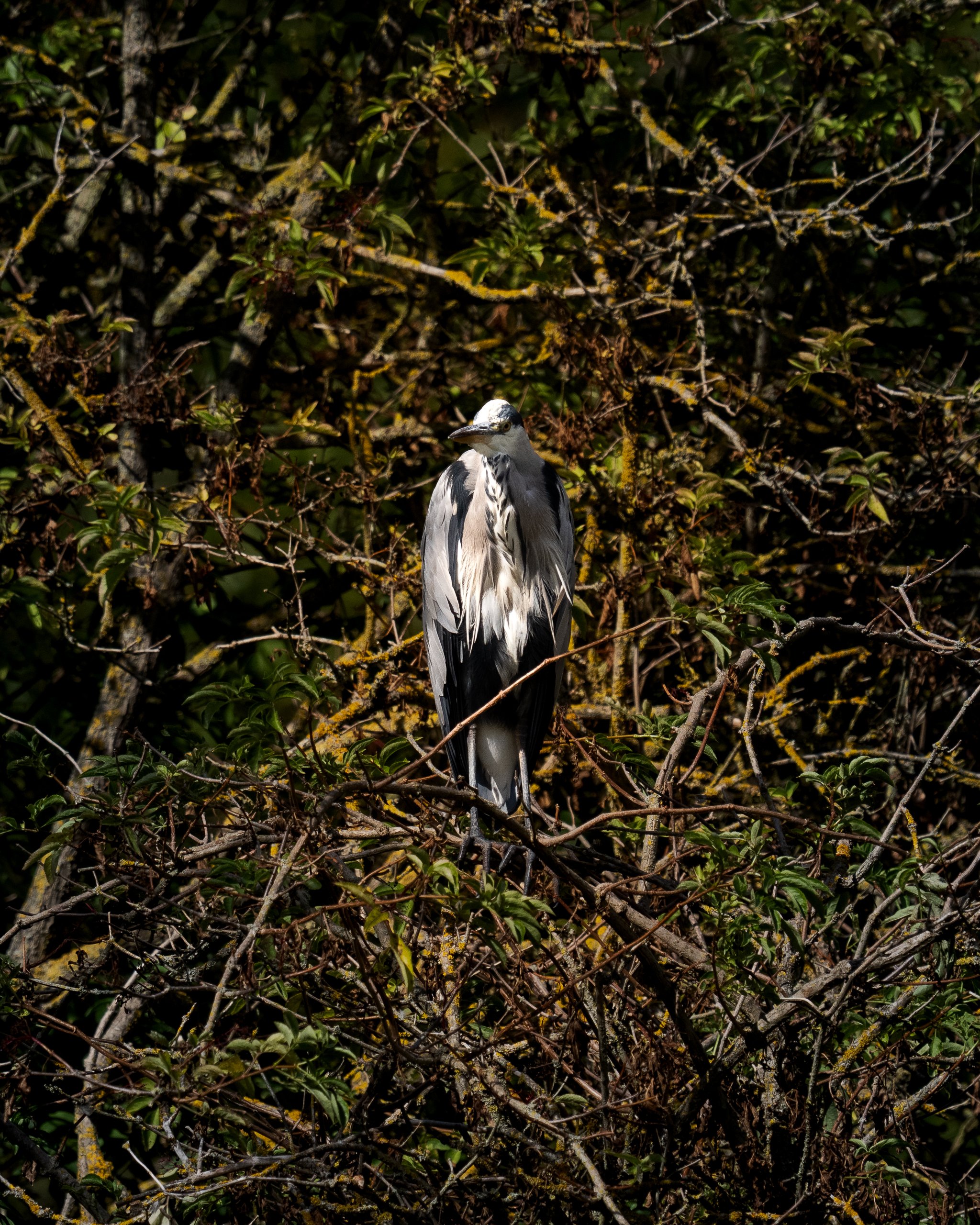
Grey Heron
Little grebes can be a right pain to get a picture of. They can dive for ages, eventually springing up in an entirely different bit of the lake, and you need to spot and swing the lens over before they go down again, constantly playing photographic whackamole.
I do get some shots of it, but it’s too distant for them to be worth sharing.
A little egret stands on the edge of the island repeatedly stabbing at something in the water. There might have been fish there, but the only thing I saw it catch was a leaf.
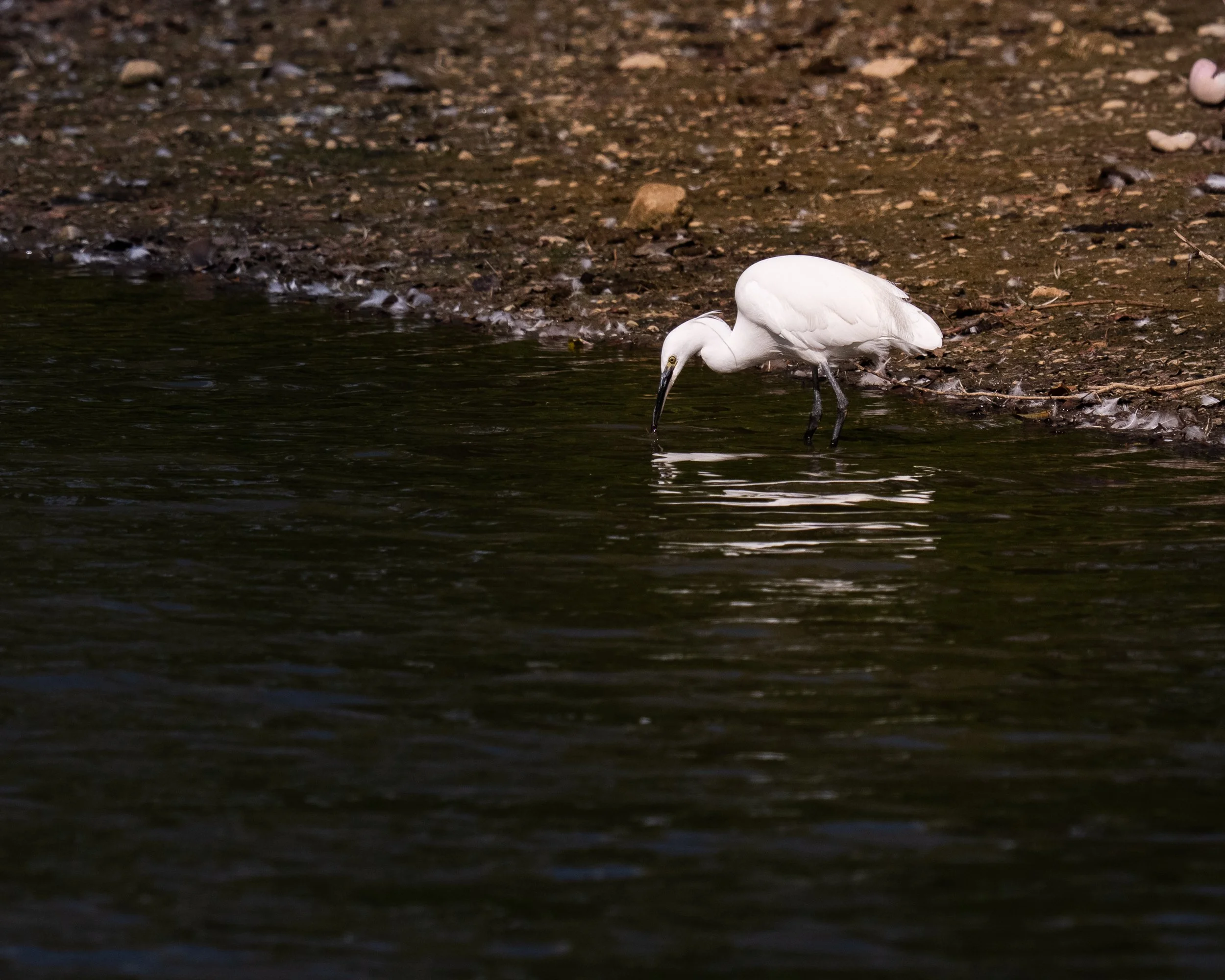
Little Egret, trying to catch something that isn’t a leaf
I’m briefly distracted from the egret by movement over to the left. There’s a fox there, trotting across some of the shoreline, newly revealed as the lake has shrunk over summer. It watches me for a couple of seconds before slipping off into the reeds.
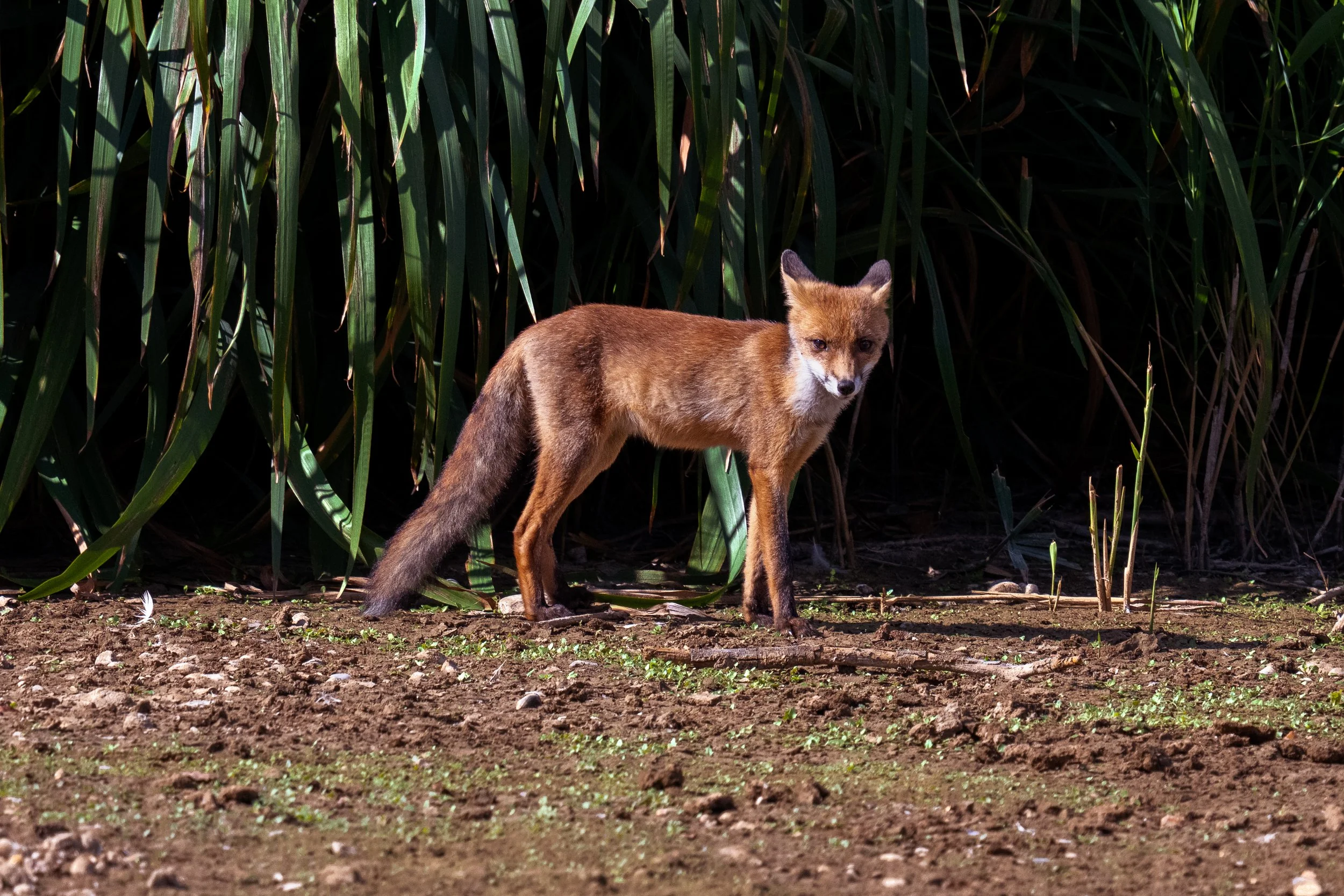
Fox, as we spotted each other
Movement up top - a female kestrel flies in and wheels around the lake. It’s hawking rather than hovering, jack-knifing so much through the sky that for a minute I think it’s a hobby, but the barred tail and stubbier wings give it away as it comes closer.
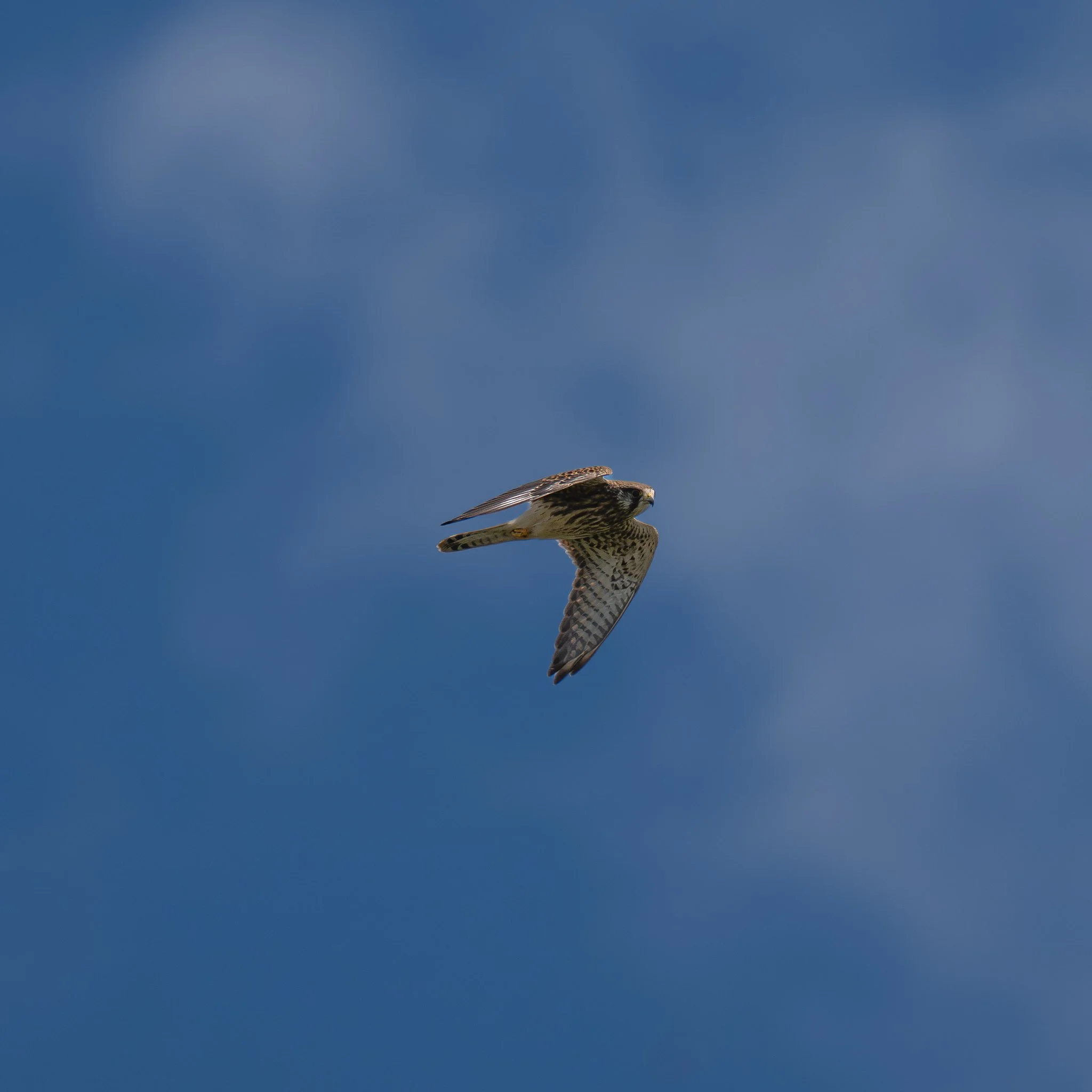
Kestrel swooping over the lake.
And that’s about it for pictures on this trip.
I hear plenty of tits in the overgrowth, the occasional chiffchaff, warbler and robin, but they’re all hidden in the branches. I see a couple of great tits but don’t get a lens on them, even with today’s tech focusing on a small bird in the middle of a hedge is a big ask. Earlier, they would have been moving more, and I would have had more chance, but I was lazy so instead it’s birdsong only.
Instead I find myself noticing the landscape itself. Dust-dry paths, metre-high stalks topped with crumbling seed heads. The blackberries are almost done, being replaced by big red hawberries and fat sloes. I remember blackberries being at their best at this time of year, gathering tubs of them at the end of the summer holidays back in Cornwall. But that was years ago, and I’m not sure if earlier ripening is geography, climate change, incorrect memory or a combination of all three.
The land here is still a tinderbox, but it’s noticeably fresher after some rain. Even the dried-out stems in the wildflower meadows don’t feel so brittle. It’s like it’s breathing a bit again.
This place feels more wild than a standard London park. It is scrub and meadow, lake and copse, not lawn or formal garden. But it’s just a veneer. The habitats here are managed, there are signs explaining what species are being encouraged. The wildflower meadow is not what would grow if this area was left to its own devices, it’s planted specifically for a type of butterfly. A brief conversation at the top of the viewing mount with a woman who came exploring in flip flops reveals someone is thinking of introducing beavers here in 2027.
“They want to put them in the river here,” she says, “so I thought I’d go and have a look at it.”
I think the river here feels a bit small, but that’s not coming from an informed opinion on the requirements of beavers, and I say as much.
“Yes,” she says. “I was wondering about that too.”
So this place is still more Park than Country, not so much an outcrop of wilderness in London as a place where we’re trying to give homes to things that don’t have them.
But that’s OK. This is a refuge, after all.
