Brockwell Park, 29th June 2026
I am not a child of summer.
I like wearing layers. I like boots crunching through frosted grass. I like seeing my breath fog out in front of me when I leave the house in the morning. The heat can, respectfully, do one.
But there are some good parts about the thoroughly uncivilised British summer. Long twilights, when the bats chitterflit above the garden. Grass-court tennis. And the warm afternoons are great for photographing bugs.
The 90mm macro f2.8 was the second lens I bought, and it’s seen a lot of use. The thing is sharp enough to cut steel and as well-balanced as a Shaolin monk.
I have, guiltily, late at night, looked at the new 100mm macro GM, which as well as having a little extra reach is apparently significantly faster focusing, but it still feels like a relatively marginal upgrade for what would be close to £1,000 even on the grey market.
And when the 90mm still gives results like these, it’s hard to argue it’d be a noticeable difference.
All the pictures here were taken at either 1/640 or 1/800 to try and freeze the movement of the plants in the breeze, and f13 for the depth of field.
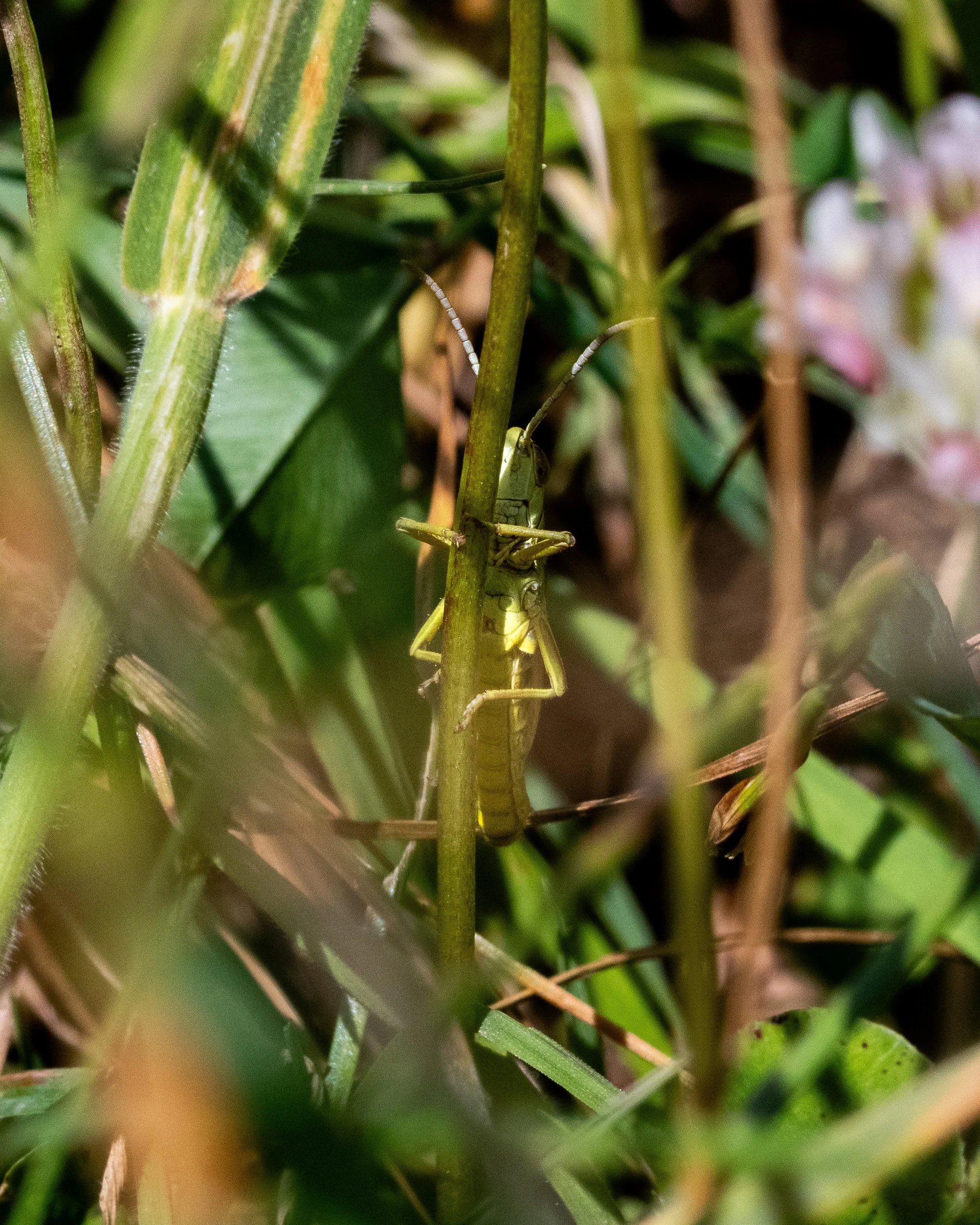
Grasshopper
The top half of Brockwell is given over to meadow and left unmowed for a large amount of the year. This means the air is constantly fizzing with grasshopper song. They can be hard to spot amongst the forest of stalks, you’ll just see a twitch of movement as they bounce and then vanish again.
The best way to spot them, I find, is just to sit watching a patch of grass for a few minutes. Eventually, some of the green will resolve into a grasshopper.
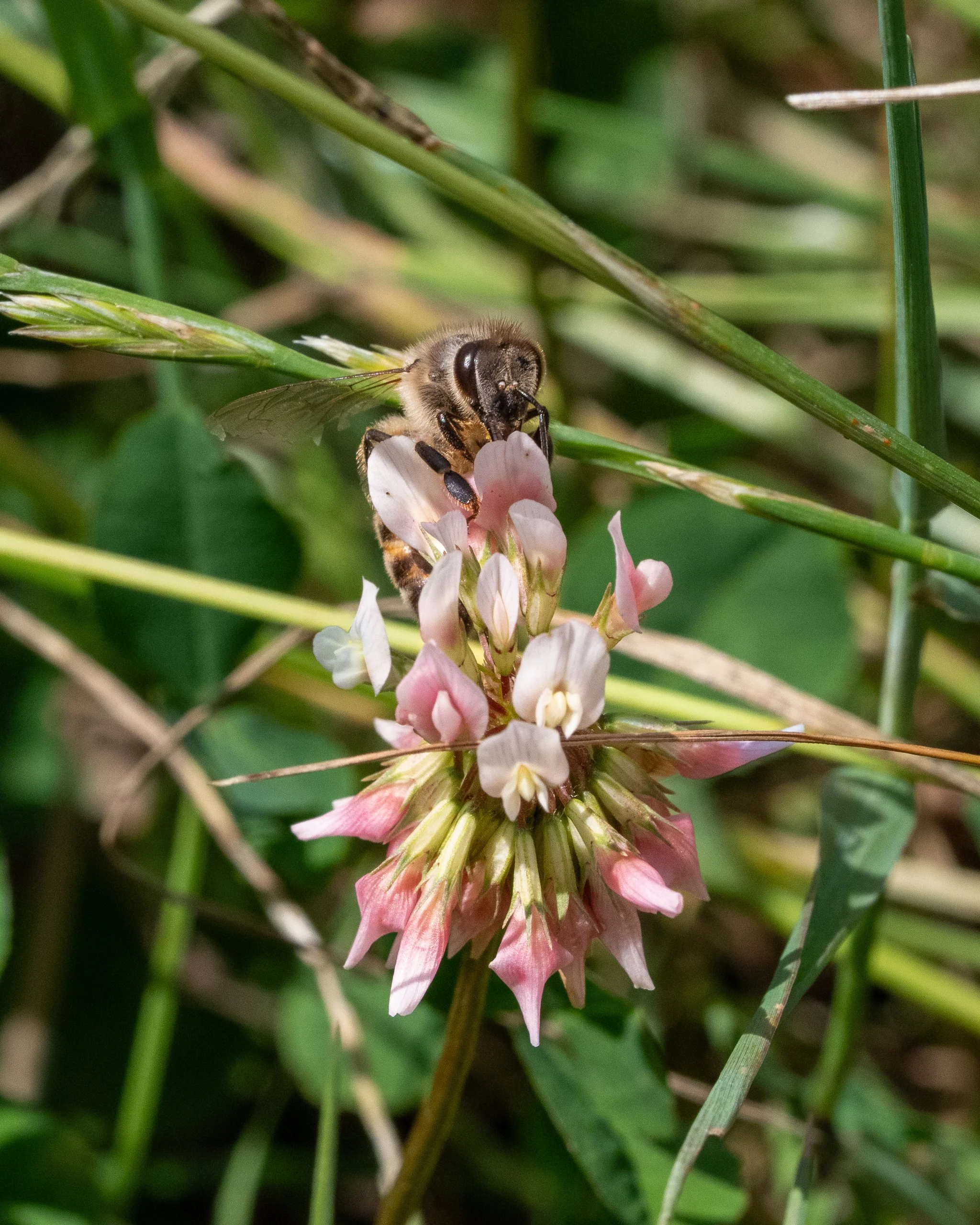
Honey bee
The meadow is also run through with clover and Oxford ragwort, honey bees being industrious in the sunshine.
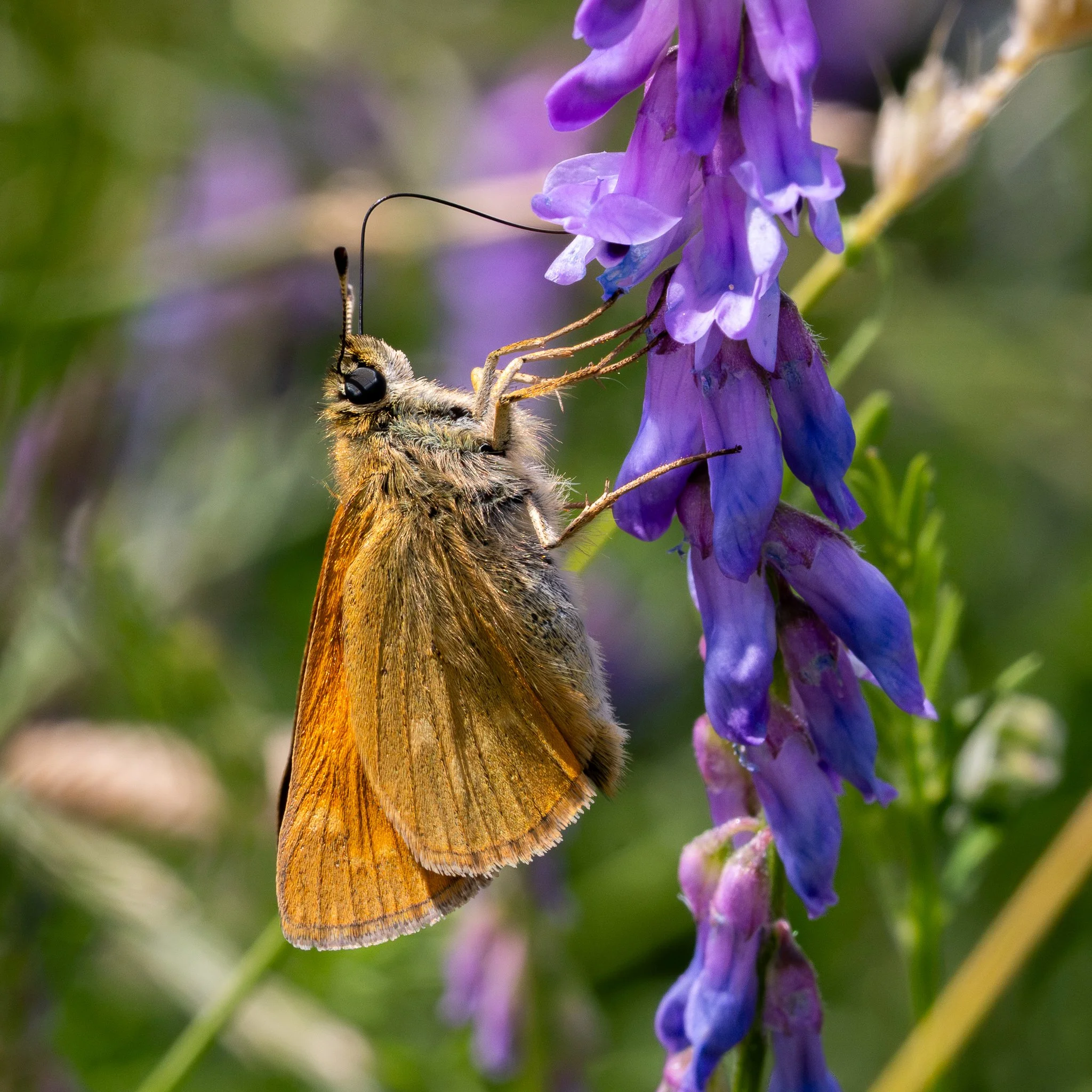
Skipper
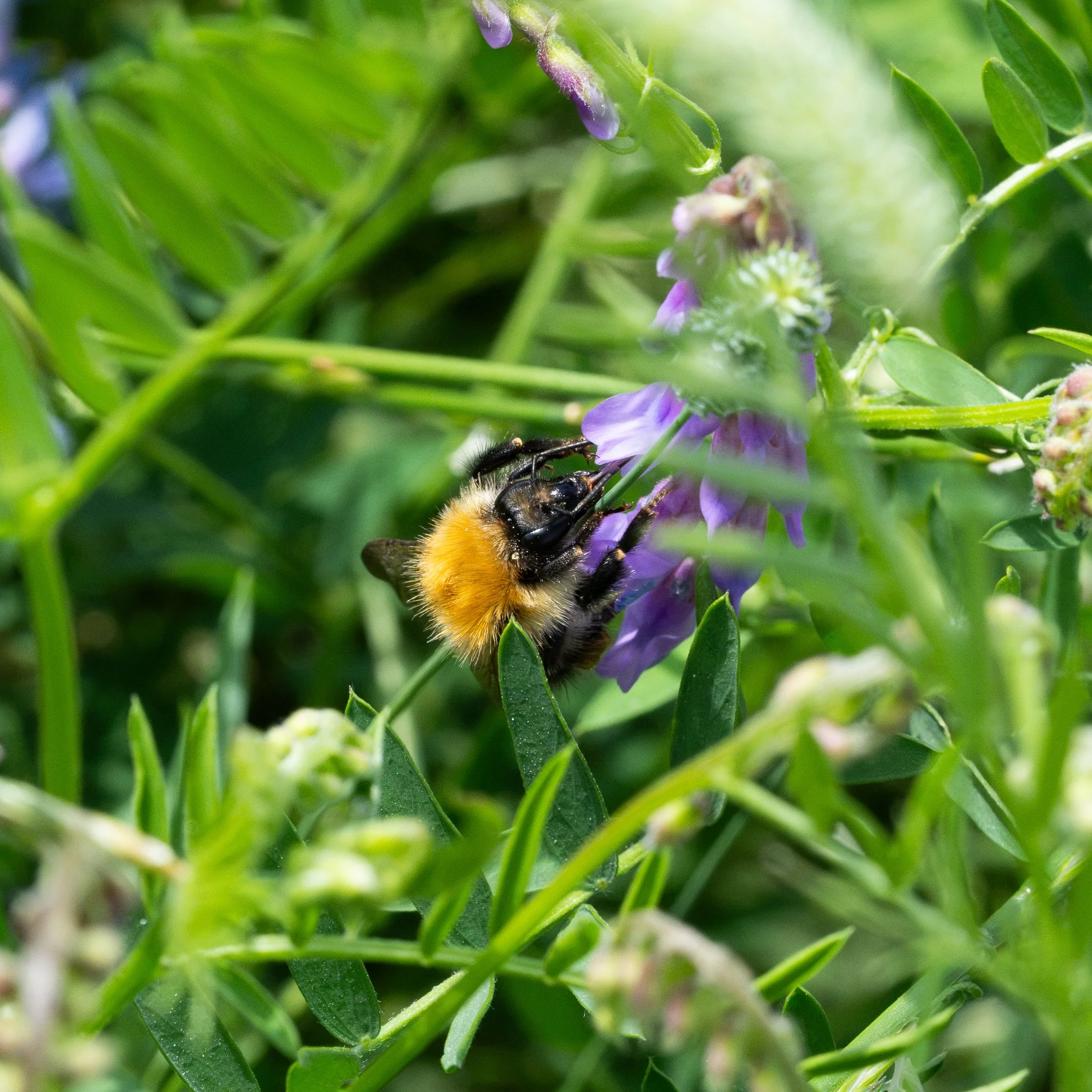
Carder bee
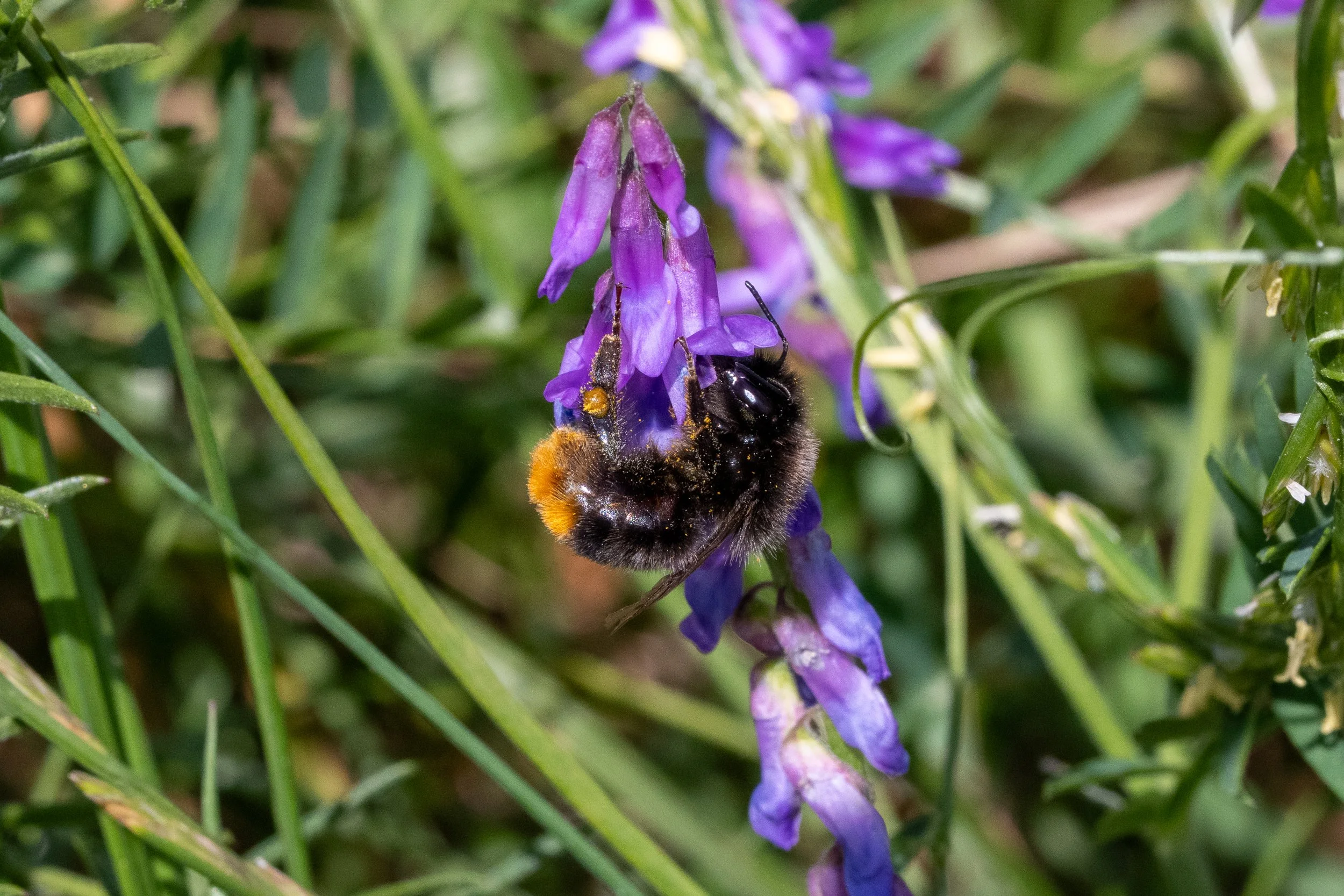
Red-tailed bumblebee
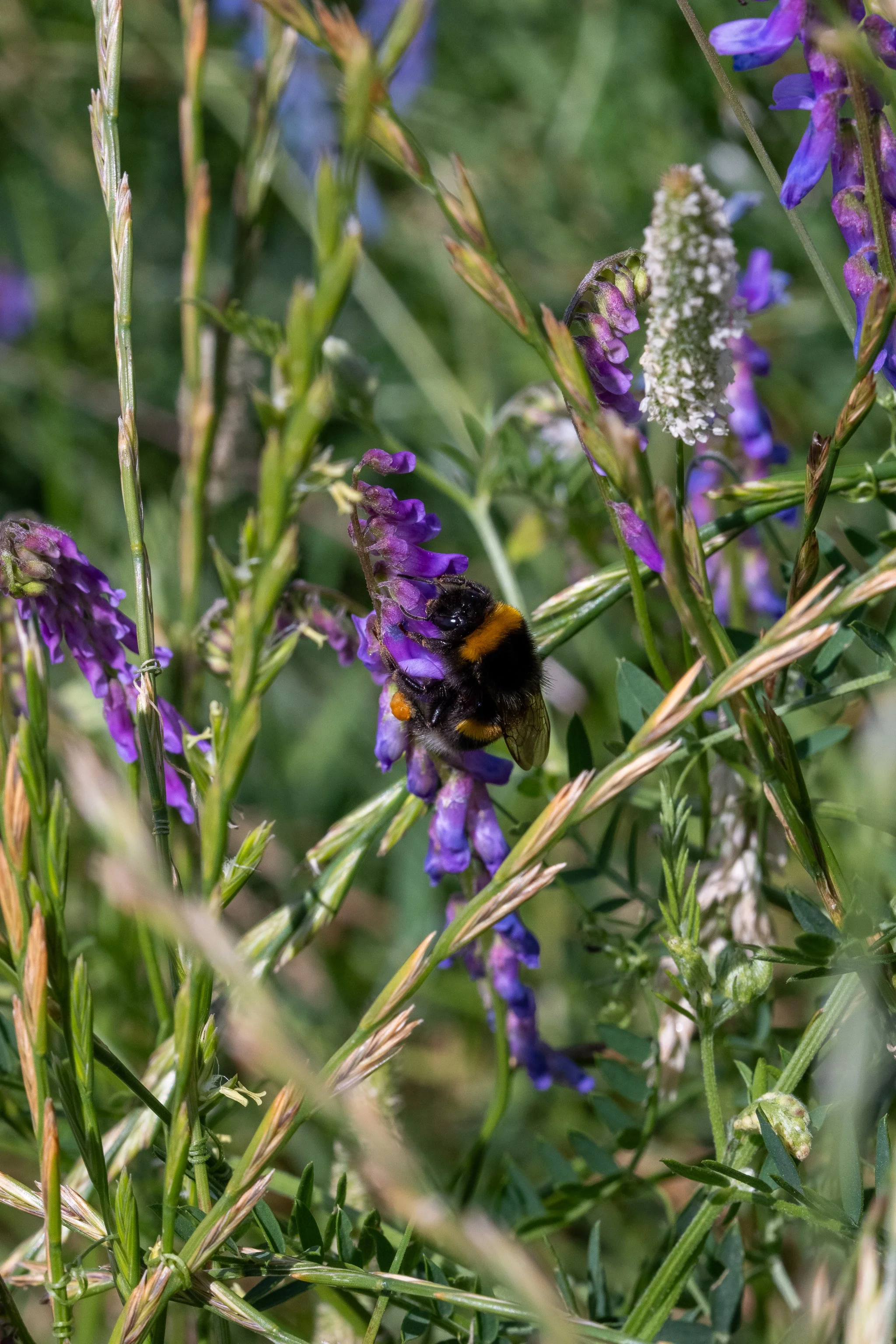
Buff-tailed bumblebee
In the crook of the small valley at the bottom of the meadow is a patch of tufted vetch, and it was covered in skipper butterflies and bumblebees. Bumblebees like this flower because they’re strong enough to pry open the flowerhead to get the nectar inside.
There were three different bumblebee species at a quick glance - Buff Tailed, Red Tailed and Carder, but there could well have been more in the mix.
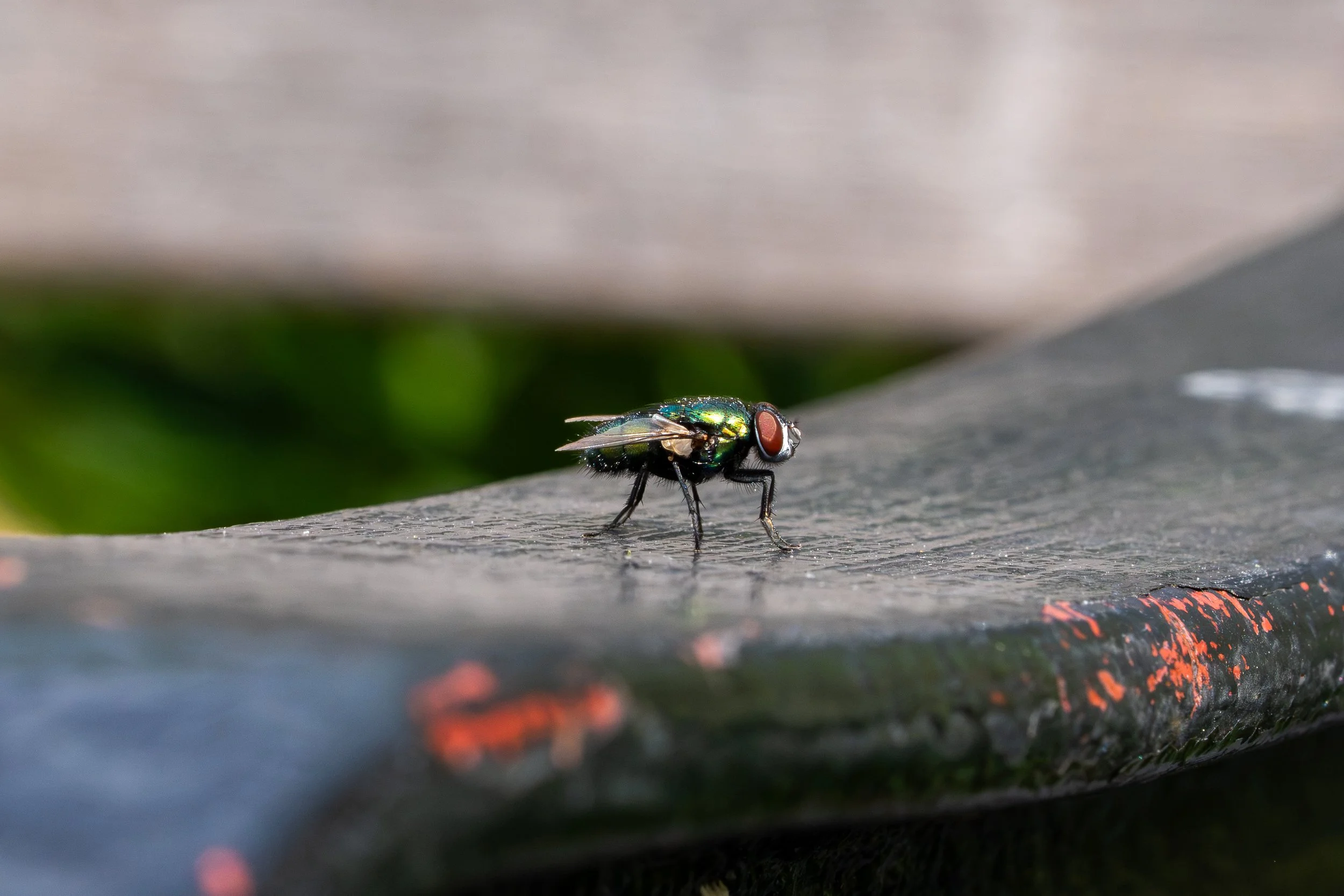
Greenbottle
In the formal garden, the wide variety of flowers leads to a large variety of bugs. Various kinds of fly are plentiful. The greenbottle will be familiar to everyone and mostly considered an annoyance, but they don’t bite and the colours are beautiful.
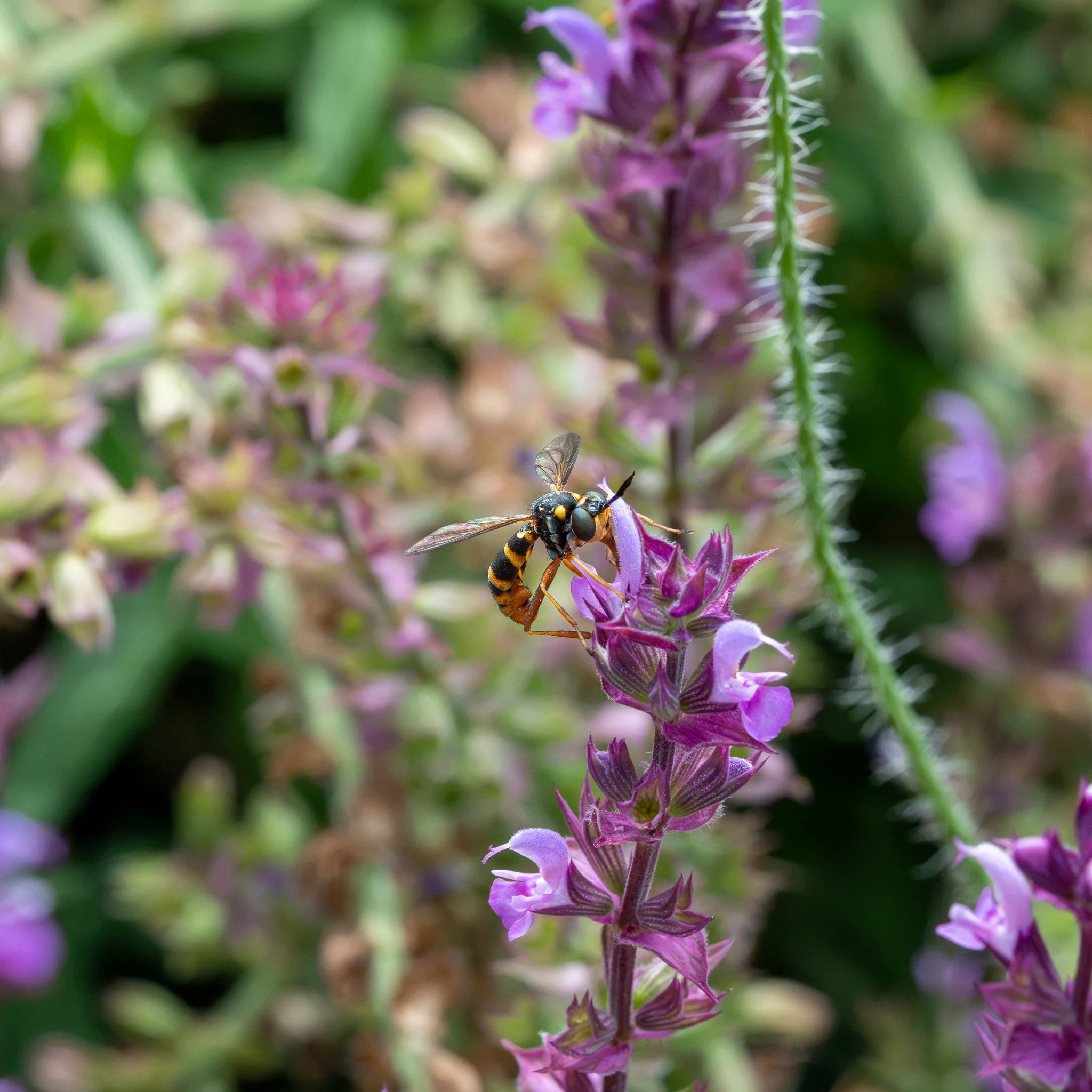
Thick-headed fly
Thick-headed flies are mimics, and aren’t wasps even if they look like them. I’m not sure which particular type of thick-headed fly that is; there are several and they look pretty similar to the untrained eye (by which I mean me).
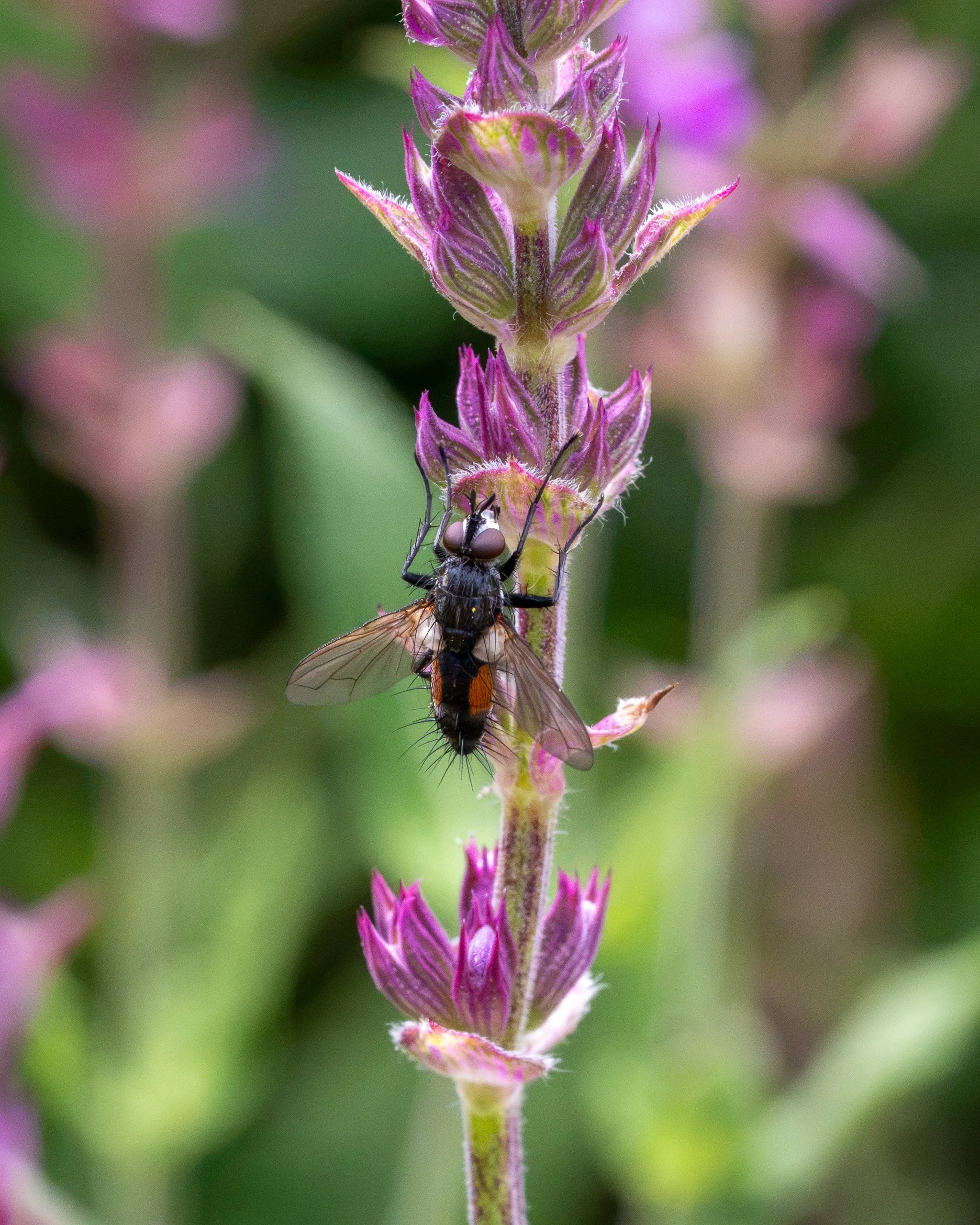
Red-sided parasite fly
The red-sided parasite fly doesn’t look friendly but is good for pest control. As their name suggests, they are parasites, generally on caterpillars. Some of these in the garden will mean less of the garden gets eaten.
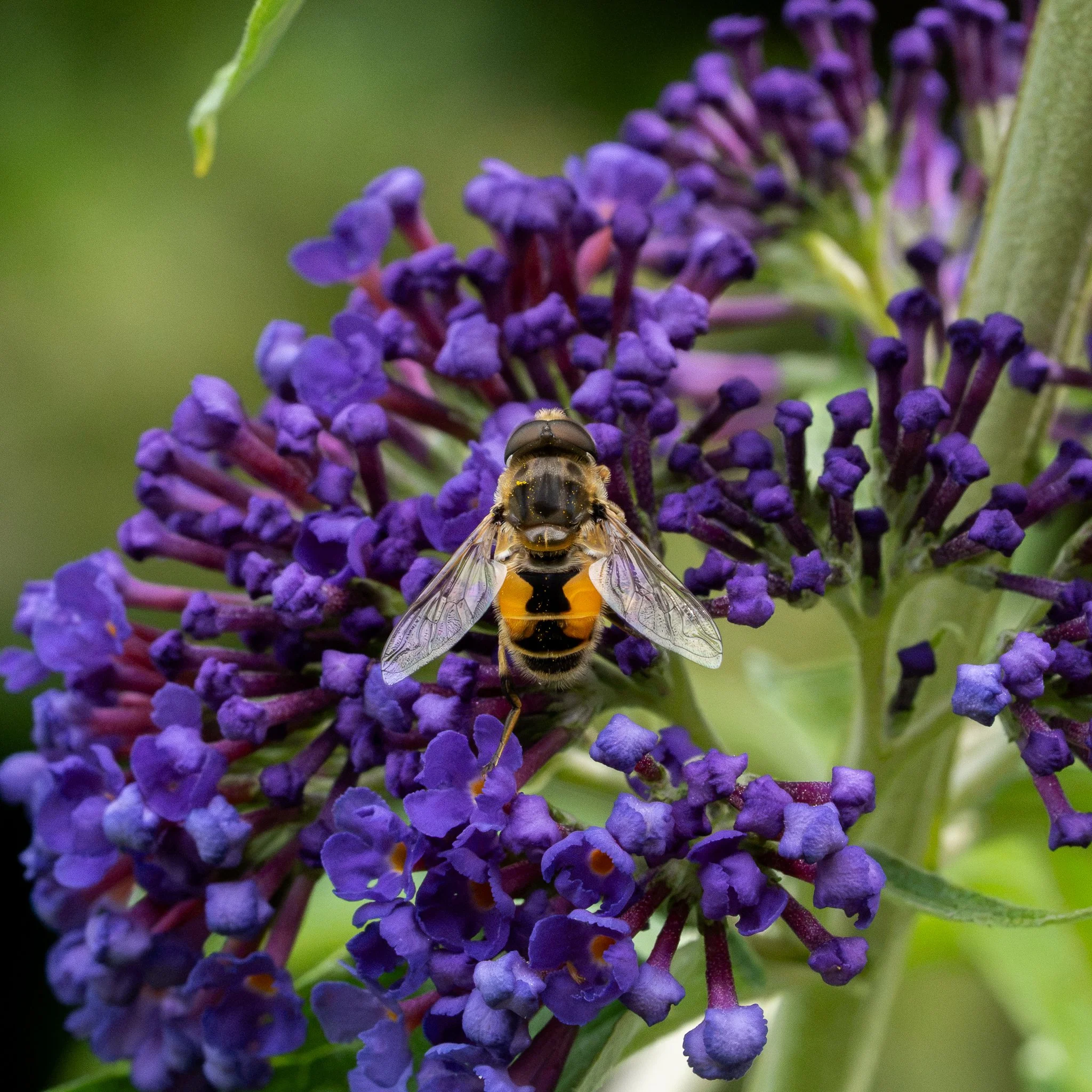
Tapered hoverfly
This one is another mimic - it looks like a bee but it’s actually a type of hoverfly. The key giveaway is the eyes, stretching like a shield all the way across the head.
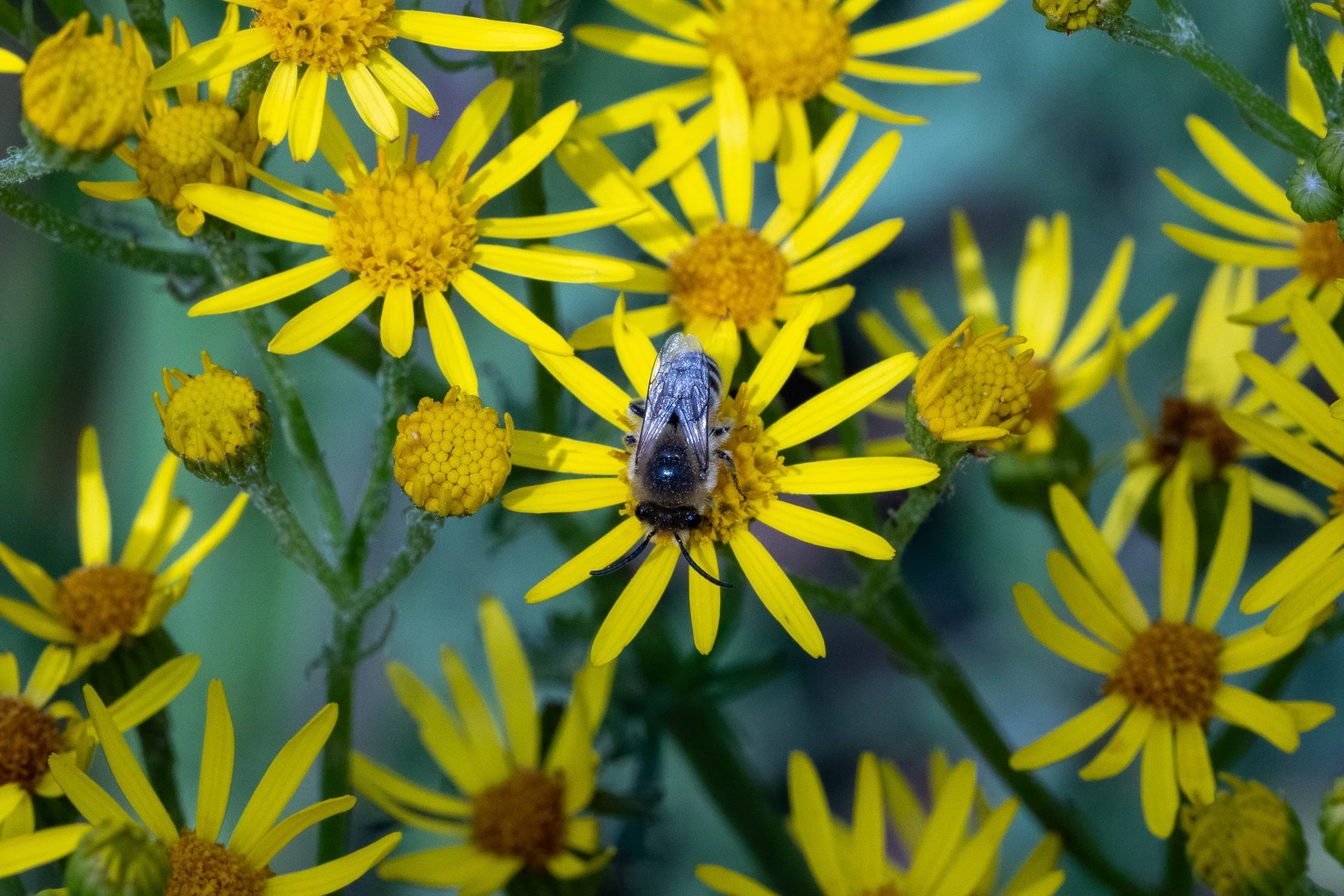
Unidentified mining bee
There were also some actual bees. This one is some kind of mining bee, though I’m not sure which one.
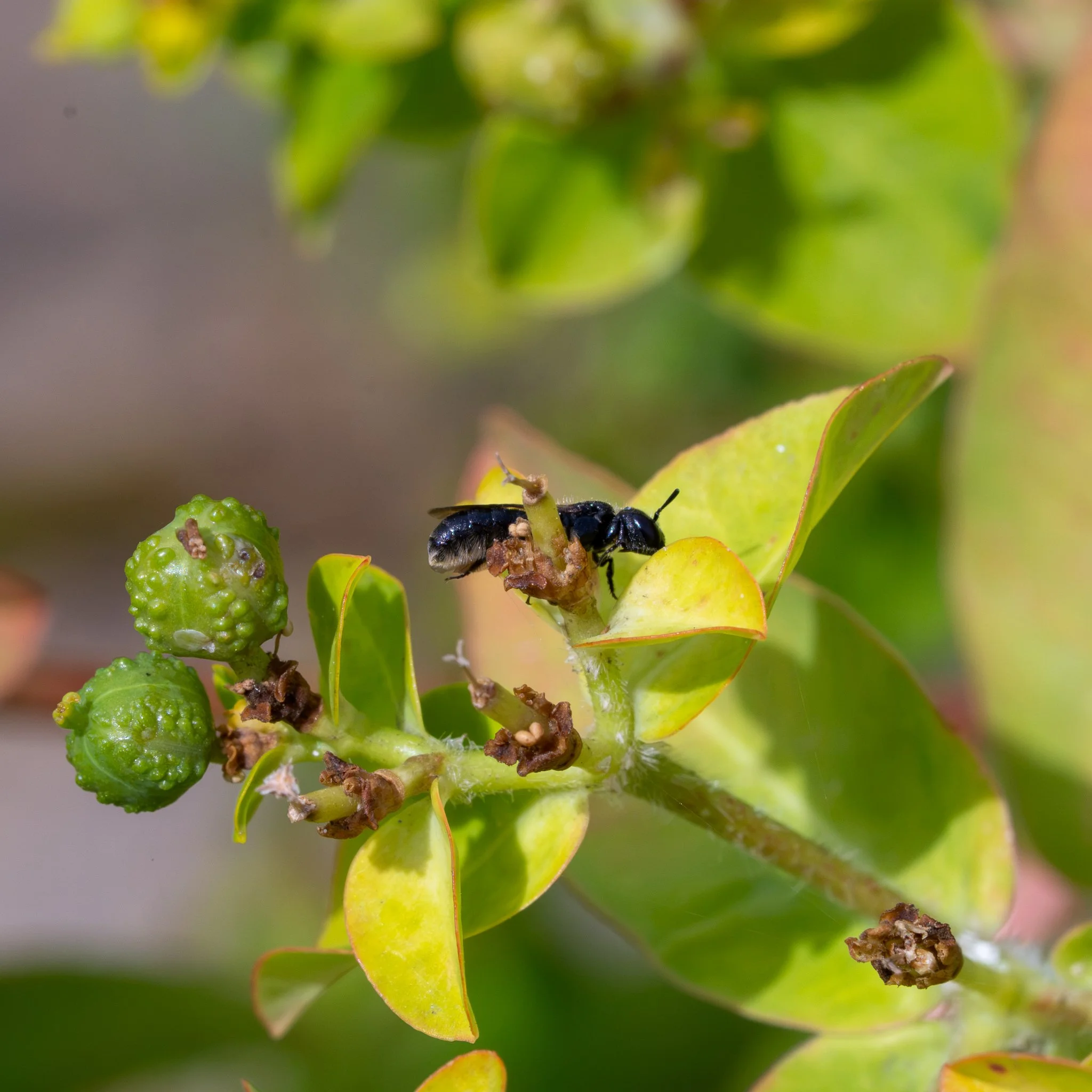
Blue carpenter bee
This one’s fun. I’m pretty certain it’s a blue carpenter bee, which are still considered to be quite scarce - albeit increasing - in this bit of the world. It’s a tiny little inkdrop of a thing, just a few millimetres long. They’ll dig out a nest in bramble or rose stems, and overwinter in groups.
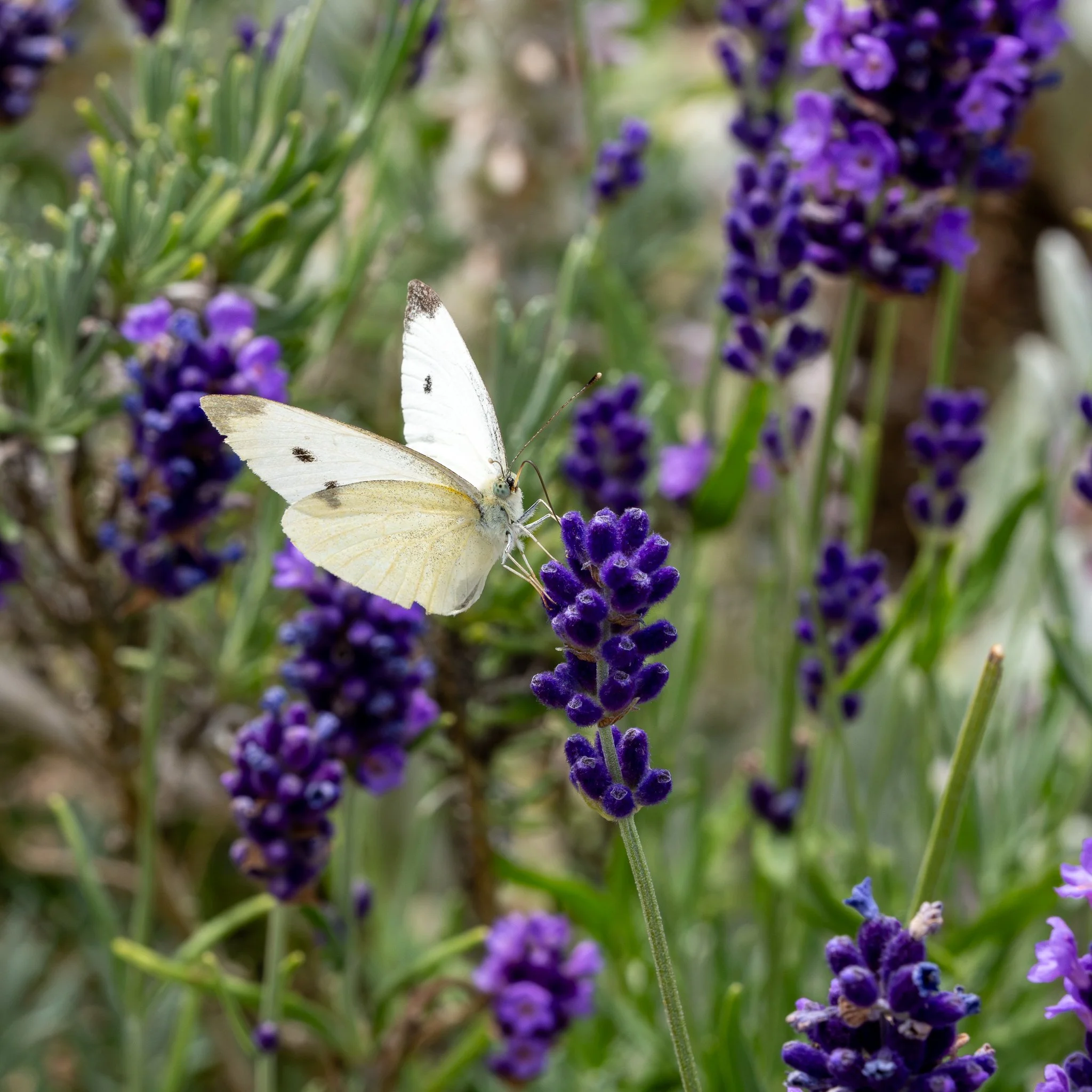
Small white butterfly
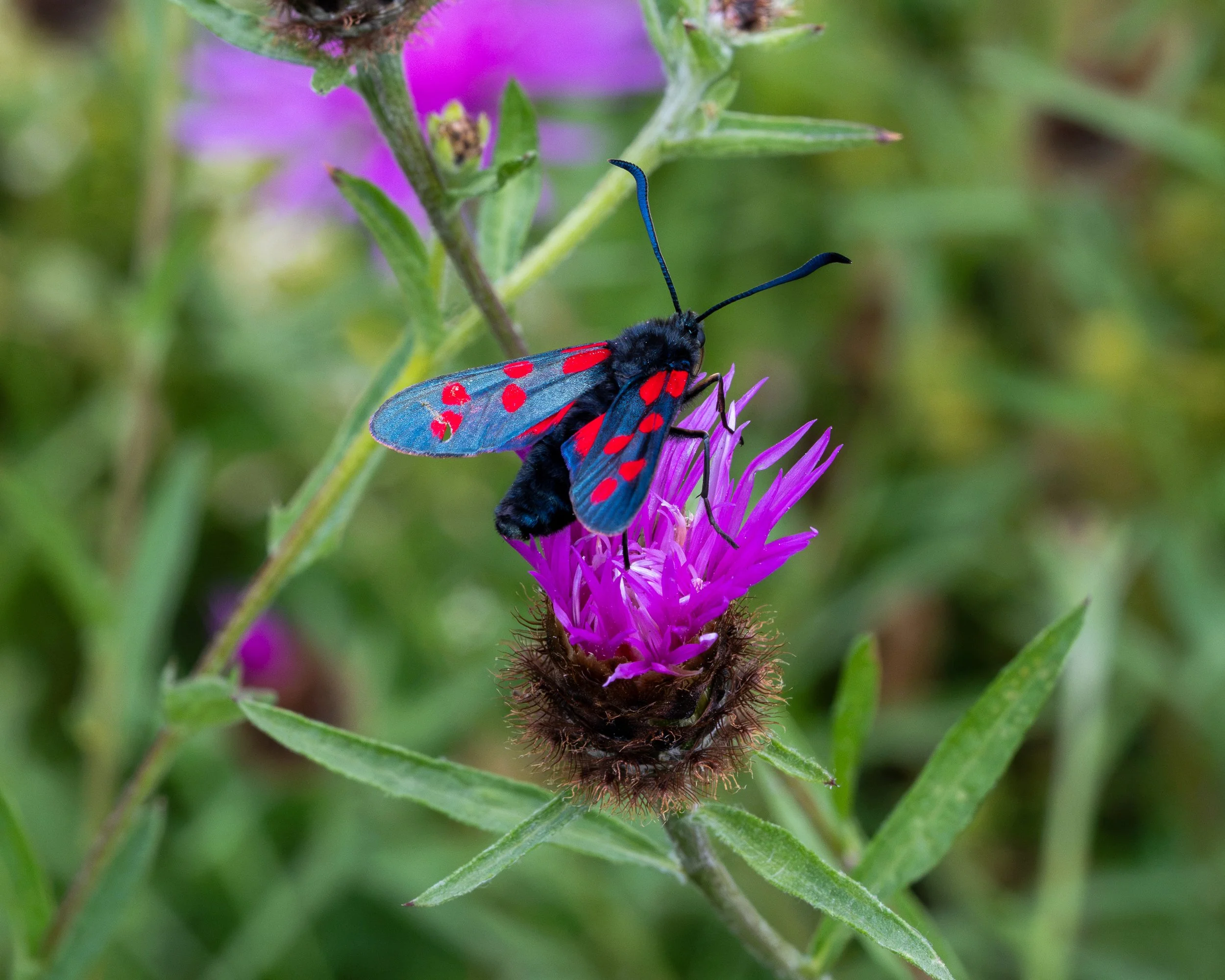
Six-spotted burnet moth
Finally I wandered up toward what used to be the wild area, just to the west of the cinders, pausing briefly to get some pictures of a Small White butterfly on the lavender patch. The fence which once separated the wild area is gone, presumably because it was so frequently ignored by people wanting a quieter area to sunbathe or walk their dogs there was no point in repairing it, but there’s a still a swathe of wildflowers growing here rather than just manicured lawn, and on them was a six-spotted burnet moth (not a botnet moth, as my autocorrect is currently insisting). This is a relatively common moth, but very dramatic and goth as absolute fuck.
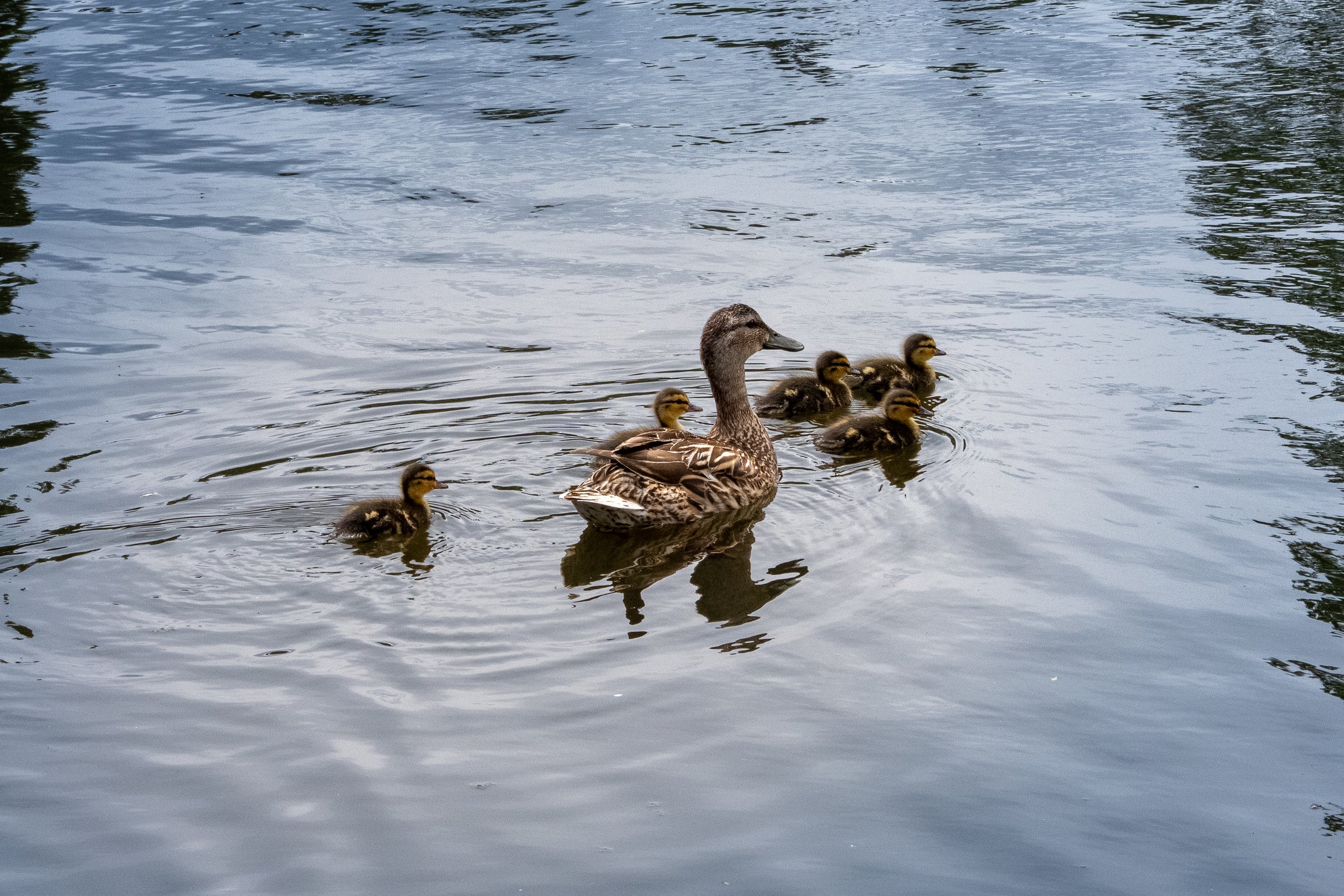
Miniducks
I put the camera away at that point, but had to get it out again as I passed the ponds on the way home. We may have lost the cygnets, but there’s a few new arrivals to make up for it.
They are children of summer. I’m still looking forward to frost.
